Empowering Efficiency: The New MINIESP32LP Low-Power Module Redefines Compact IoT Design
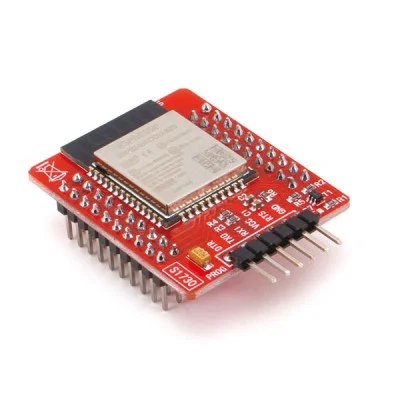
The landscape of the Internet of Things (IoT) is undergoing a significant shift. As developers push for longer battery life, smaller form factors, and more robust wireless connectivity, the hardware components driving these innovations must evolve. Enter the MINIESP32LP, a specialized variant of the ubiquitous ESP32 architecture designed specifically for developers who demand high performance without the energy overhead of unnecessary interface components.
By stripping away non-essential hardware—most notably the dedicated USB-to-UART bridge—the MINIESP32LP offers a streamlined solution for energy-sensitive projects. This article explores the technical nuances, market implications, and strategic advantages of this new module in the rapidly expanding world of embedded systems.
Main Facts: What is the MINIESP32LP?
The MINIESP32LP is a low-power wireless module built upon Espressif Systems’ renowned ESP32 SoC (System on a Chip). At its core, it retains the powerful, dual-core processing capabilities and robust wireless features that have made the ESP32 the industry standard for hobbyists and industrial engineers alike.
Core Technical Specifications
- Architecture: Based on the Espressif ESP32 SoC.
- Wireless Connectivity: Integrated 802.11 b/g/n Wi-Fi transceiver and dual-mode Bluetooth (Classic and Bluetooth Low Energy/BLE).
- Programming Environment: Full compatibility with the Arduino IDE, facilitating a seamless transition for developers familiar with the ESP32 ecosystem.
- Design Philosophy: A "stripped-back" design focusing on power efficiency. By removing the onboard USB interface, the module reduces static power consumption and minimizes the physical footprint, making it ideal for compact, battery-operated devices.
- Form Factor: High-density surface-mount compatibility, intended for professional integration into custom PCBs.
The primary differentiator here is the "Low Power" designation. In many standard ESP32 development boards, the USB-to-Serial converter (often an external chip like the CP2102 or CH340) remains powered even when the microcontroller is in a deep-sleep state, creating a "leakage" current that drains batteries prematurely. By removing this interface, the MINIESP32LP addresses one of the most common complaints in field-deployed IoT sensors.
Chronology: The Evolution of the ESP32 Ecosystem
To understand the importance of the MINIESP32LP, one must look at the historical trajectory of the ESP32.
2016: The Arrival of the ESP32
Espressif Systems launched the ESP32 in 2016 as a successor to the ESP8266. It brought dual-core processing, hardware encryption, and superior connectivity to the low-cost microcontroller market.
2018–2020: The Rise of Development Boards
During this period, the market was flooded with development boards like the "DevKit V1." While these were excellent for prototyping, they were often bulky and inefficient. They prioritized ease of use—plug-and-play USB connectivity—over power optimization.
2021–2023: The Shift Toward Industrialization
As IoT moved from home automation (where devices are often plugged into walls) to remote sensing (where devices live in forests, factories, or fields for months on end), the demand for "bare-metal" modules increased.
2024: The Launch of the MINIESP32LP
The introduction of the MINIESP32LP marks a deliberate pivot back to the fundamentals of power engineering. By providing a module that maintains full IDE compatibility but eliminates the "convenience" hardware, manufacturers are acknowledging the maturation of the IoT developer base. Developers no longer need the USB port on every board; they need the efficiency to deploy devices that last for years on a single coin cell or a small LiPo battery.

Supporting Data: Why "Low Power" Matters
In the world of wireless sensor nodes, power consumption is the single most important metric. If a device requires a battery change every week, it is commercially non-viable for large-scale deployments.
The Power Leakage Problem
Traditional development boards often consume between 20mA and 50mA simply because of the status LEDs and the USB-to-Serial interface chip. When the ESP32 is set to "Deep Sleep" mode, it should theoretically consume less than 10µA. However, if the supporting circuitry (the USB chip) is still powered, the device might consume 5mA to 10mA.
The MINIESP32LP effectively removes the secondary components that draw this "phantom" power. This enables developers to fully exploit the ESP32’s deep-sleep capabilities, keeping the device in a near-zero-power state until it is awakened by an external trigger (such as a timer or a sensor interrupt).
Wireless Versatility
Despite its power-sipping design, the module retains:
- Wi-Fi 802.11 b/g/n: Essential for cloud-connected applications.
- Dual-mode Bluetooth: Providing both the high-speed data transfer of Classic Bluetooth and the ultra-low-power benefits of BLE for mobile phone integration.
This combination ensures that the module remains a powerful edge-computing node, capable of processing data locally before transmitting only the necessary information to the cloud, further saving battery life by minimizing radio uptime.
Official Responses and Industry Perspectives
The reception of the MINIESP32LP within the engineering community has been largely positive. Industry experts point out that this module fills a specific "pro-sumer" gap.
"For years, we have been asking for a version of the ESP32 that doesn’t waste energy on features we only need during the first five minutes of coding," says an lead engineer at a prominent IoT hardware consultancy. "The MINIESP32LP allows us to integrate the exact same software stack we’ve perfected in the lab directly into a final, battery-efficient product without having to redesign our PCB to accommodate unnecessary USB hardware."
Open-Electronics, the primary provider for this module, emphasizes the shift toward professional, field-ready hardware. By offering a module that balances the ease of the Arduino ecosystem with the requirements of professional power management, they are providing a bridge between the hobbyist community and industrial manufacturers.
Implications: The Future of Battery-Operated IoT
The release of the MINIESP32LP has profound implications for several industries.

1. Agriculture and Environmental Monitoring
Remote sensors monitoring soil moisture, humidity, or air quality often operate in locations without power grids. The reduction in power consumption afforded by this module could extend the field life of these devices by months, drastically reducing maintenance costs.
2. Wearable Technology
In the health and fitness space, size and battery life are paramount. The MINIESP32LP allows engineers to create smaller, more comfortable wearable devices that do not require bulky batteries, thanks to the module’s optimized power profile.
3. Industrial Asset Tracking
Companies tracking logistics, inventory, or machinery health need devices that can stay "awake" or "listening" for long periods. The combination of BLE and efficient power management makes this module a prime candidate for the next generation of asset trackers.
4. The "Prototyping to Production" Pipeline
The most significant implication is the simplification of the product development lifecycle. Because the MINIESP32LP is compatible with the Arduino IDE, a developer can prototype on a standard, USB-enabled development board and then migrate the exact same code to the MINIESP32LP for the final product. This removes the friction typically associated with transitioning from a "dev board" to a "custom PCB."
Conclusion: A Strategic Choice for Efficiency
The MINIESP32LP is not a replacement for the feature-rich development boards that beginners use to learn the ESP32. Instead, it is a specialized tool for the next stage of development. It serves as a reminder that as the IoT industry matures, the focus must shift from "getting it working" to "making it last."
By stripping away the unnecessary, the MINIESP32LP provides exactly what modern IoT designers need: a robust, reliable, and highly efficient foundation for the next generation of connected devices. Whether you are building a smart-home sensor, an agricultural monitor, or a wearable device, the efficiency gains offered by this module are not just a technical preference—they are a competitive necessity in an increasingly energy-conscious market.
For those looking to transition from the workbench to the field, the MINIESP32LP offers the reliability of a proven architecture with the power-management capabilities required for long-term, autonomous operation. As we look toward a future where billions of devices are interconnected, components like the MINIESP32LP will be the silent workhorses that keep the network running, one battery cycle at a time.
For further details, technical documentation, or to acquire the module, developers are encouraged to visit the Open-Electronics Store, where they can find full support for integrating this module into their upcoming projects. The era of the "always-on" but "power-hungry" IoT device is coming to an end; the era of the lean, efficient, and intelligent node has arrived.