From Silent Observers to Industrial Intelligence: The Evolution of Displacement Sensors

For decades, the displacement sensor was the humble "workhorse" of the industrial landscape. Often relegated to the background of factory floors and laboratory benches, these devices were viewed as simple, one-dimensional tools—measuring the distance between two points, checking for alignment, or verifying that a component had reached its designated position. They did their work quietly, reliably, and without much fanfare.
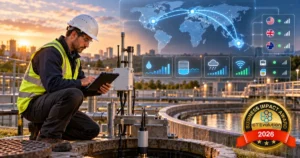
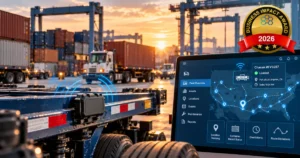
However, we are currently witnessing a paradigm shift. In the age of Industry 4.0, the Internet of Things (IoT), and the rapid expansion of automated infrastructure, the displacement sensor has been transformed. No longer mere passive measuring instruments, they have become the critical "eyes and ears" of the modern industrial ecosystem. By feeding high-fidelity data into intelligent networks, these devices are now the bedrock of predictive maintenance, safety protocols, and the creation of high-fidelity digital twins.
The Core Mechanics: Understanding Displacement Technology
At their most fundamental level, displacement sensors detect changes in position—whether linear or angular—and convert those physical movements into measurable electrical signals. The technological diversity behind these sensors is vast, ranging from laser and optical systems for non-contact measurement to capacitive, inductive, and ultrasonic methods for more rugged or specific industrial applications.
Historically, the implementation of these sensors was reactive. A sensor would trigger a simple binary response: "Is the part in position?" or "Has the machine moved out of tolerance?" If the answer was no, the machine stopped. Today, the role has expanded from binary checking to continuous data streaming. By integrating these sensors into a broader, connected digital architecture, manufacturers and infrastructure managers are shifting from simple observation to high-level system optimization.
Chronology of Evolution: From Mechanical Gauges to AI-Integrated Nodes
To understand the current state of displacement sensing, one must look at its historical trajectory:
- The Mechanical Era (Pre-1980s): Displacement was largely measured using dial indicators, calipers, and rudimentary mechanical switches. Data was read manually or used to trigger simple mechanical interlocks.
- The Analog Integration Era (1980s–2000s): The rise of Programmable Logic Controllers (PLCs) allowed displacement sensors to feed analog signals (4-20mA or 0-10V) into central control systems. This enabled automated process control but kept data silos contained within single machines.
- The Digital/Bus Era (2000s–2015): The introduction of fieldbus communications (like Profibus or EtherCAT) allowed for faster, more precise data transmission, enabling tighter tolerances in high-speed manufacturing.
- The Smart IoT Era (2015–Present): With the advent of cloud computing, edge analytics, and advanced connectivity, displacement sensors now function as IoT nodes. They don’t just report a position; they report the health of the system by identifying micro-trends in movement that precede catastrophic failure.
Supporting Data: Why Precision Matters
The importance of this transition is supported by the economic reality of modern manufacturing. Research indicates that downtime costs in automotive and aerospace manufacturing can exceed $20,000 per minute. By deploying advanced displacement sensors that provide real-time vibration, thermal expansion, and wear-pattern data, companies can reduce unplanned downtime by as much as 30% to 50%.
In structural health monitoring, the economic impact is even more profound. For a bridge costing hundreds of millions of dollars, the cost of installing a robust sensor network—comprising hundreds of displacement sensors—is a fraction of 1% of the total infrastructure budget. Yet, the data gathered can extend the lifespan of the structure by decades by allowing for targeted, rather than generalized, maintenance interventions.
Official Perspectives: Industry Experts on the Digital Shift
Leading engineers and industry analysts note that the "smart" sensor market is no longer just about hardware—it is about the "Data-as-a-Service" model.
"We are moving away from the era where we only care about the measurement itself," says a senior systems architect at a leading industrial automation firm. "Today, the value is in the context. A displacement sensor telling you a bridge shifted by 2 millimeters is just a number. That same sensor telling you it shifted by 2 millimeters specifically during a high-wind event, compared to a baseline established over three years of seasonal change, is intelligence. It tells you whether the bridge is settling normally or if a critical structural fatigue point has been reached."
Industry regulators and safety boards have also begun to favor systems that integrate continuous monitoring. In the aerospace sector, for instance, displacement sensors are now mandated in various testing environments to ensure that structural digital twins remain perfectly synchronized with physical flight-test articles.
Implications for Modern Industry
Structural Health Monitoring (SHM)
Bridges, tunnels, and high-rise buildings are subject to constant dynamic forces—traffic load, seismic shifts, and thermal expansion. Traditional inspection methods involve periodic human visits, which are subjective and infrequent. Displacement sensors, installed at joints and structural supports, provide a continuous heartbeat of the asset. If a displacement pattern deviates from the expected norm, an automated alert is sent to engineers, allowing for proactive intervention before structural integrity is compromised.
The Rise of the Digital Twin
A digital twin is only as good as the data it consumes. If the virtual replica of a jet engine or a robotic assembly arm does not account for the real-time displacement of its components, the model will fail to predict future behavior. Displacement sensors act as the bridge between the physical and digital, ensuring that the "twin" evolves in lockstep with its physical counterpart. This allows manufacturers to run "what-if" simulations on the digital twin to optimize performance without risking the physical asset.
Predictive Maintenance vs. Reactive Servicing
Traditional maintenance relies on fixed intervals (e.g., servicing a machine every 1,000 hours). This is inherently inefficient; it often leads to servicing machines that don’t need it or missing the early signs of a failure that occurs at 900 hours. Displacement sensors identify the subtle, creeping changes in position that signify wear, misalignment, or bearing degradation. This enables "Condition-Based Maintenance," where service is performed exactly when needed—optimizing equipment lifespan and minimizing overhead costs.
Challenges in Implementation
Despite the clear benefits, the transition to high-density sensor networks is not without hurdles:
- Environmental Resilience: Sensors in heavy industry must withstand extreme heat, corrosive chemicals, and high-intensity electromagnetic interference (EMI). Choosing the right technology (e.g., laser vs. inductive) is critical for long-term viability.
- Data Overload: When thousands of sensors report data in milliseconds, the resulting "big data" can overwhelm local networks. The industry is responding with "edge computing," where the sensor itself or a local gateway processes the raw data, sending only the actionable insights to the cloud.
- Cybersecurity: As sensors become IoT-connected nodes, they become potential entry points for network breaches. Manufacturers must now prioritize end-to-end encryption and secure authentication for every sensing device.
The Future: Toward Autonomous Systems
As we look toward the next decade, the role of the displacement sensor will evolve from "observer" to "participant." In future smart factories, the sensors will be part of a closed-loop autonomous system. If a displacement sensor detects a slight misalignment in a robotic arm, the system will not just alert a technician; it will automatically calibrate the arm’s software to compensate for the deviation, or schedule an autonomous maintenance drone to perform a tighten-and-grease operation.
In smart cities, infrastructure will become self-aware. Bridges may communicate with traffic management systems, automatically reducing the load on a specific lane if sensors detect an unusual displacement pattern following a seismic tremor.
Conclusion: The Quiet Revolution
The story of the displacement sensor is a testament to how "quiet" technology can have a thunderous impact on global progress. What was once a simple tool for distance measurement has become an indispensable building block of the Fourth Industrial Revolution.
By turning physical movement into actionable intelligence, these devices are enabling a level of precision, safety, and efficiency that was once relegated to the realm of science fiction. As industries continue to embrace the digital transformation, the humble displacement sensor will remain at the heart of the machine, silently ensuring that the physical world and the digital world remain perfectly in sync.
As we move forward, it is clear that the most advanced technologies of the future will rely on the most accurate measurements of the present. In that light, the displacement sensor is not just a tool—it is the compass by which we navigate the future of industrial engineering.