Harnessing the Invisible: Building a 1,000W ZVS Induction Heater
The modern world is saturated with invisible forces. From the pervasive hum of power distribution lines to the high-frequency pulses of our mobile devices, we live in a sea of electromagnetic radiation. While we often view these fields as background noise or sources of mild interference—the crackle of a speaker near a smartphone, or the faint glow of a fluorescent tube held under a high-voltage line—there exists a threshold where these invisible waves transition from subtle phenomena to raw, physical power.
At the intersection of power electronics and material science lies the ZVS (Zero Voltage Switching) induction heating project. By leveraging a 1,000W RLC resonant circuit, this project demonstrates the ability to harness magnetic induction to bring steel to incandescence in a matter of seconds. This article explores the mechanics, design, and profound implications of this high-power induction system.
Main Facts: The Physics of Induction
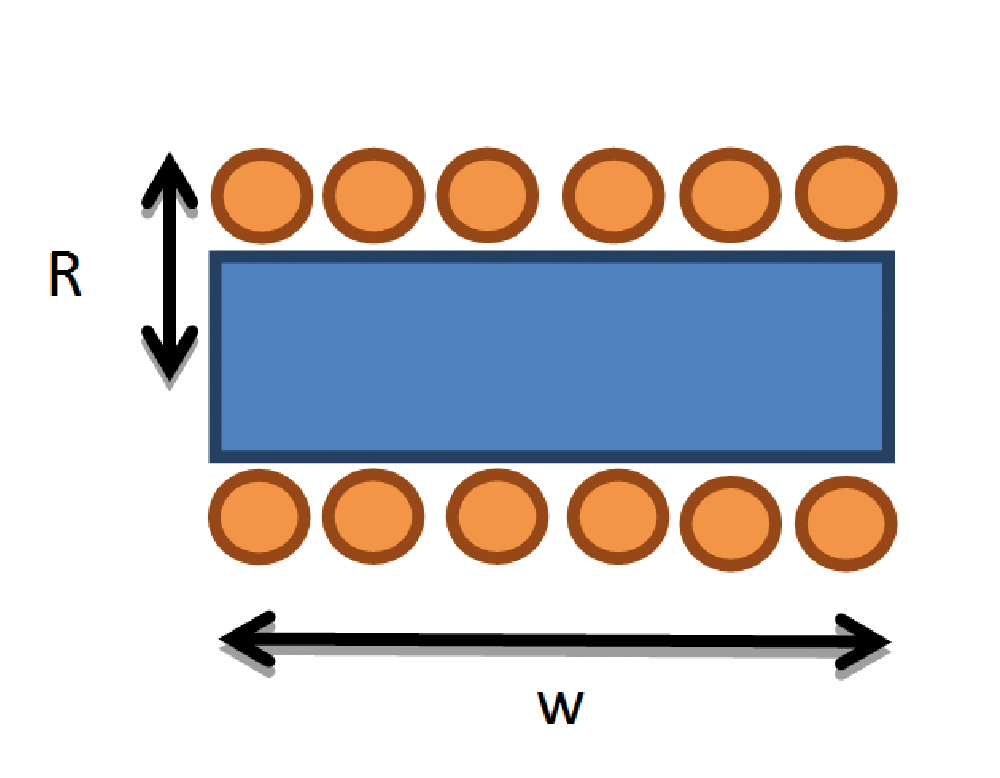
The project is built upon three fundamental pillars of classical physics: magnetic induction, eddy currents, and the Joule effect. At its core, the system operates as an air-core transformer where the work coil acts as the primary winding and the metallic object inserted within acts as a short-circuited secondary winding.
When a high-frequency alternating current flows through the copper work coil, it generates a rapidly oscillating magnetic field. According to Faraday’s Law of Induction, this time-varying magnetic flux induces an electromotive force (EMF) in any conductive material within its reach. This EMF drives "eddy currents"—vortex-like electrical currents that swirl within the material. As these currents encounter the inherent electrical resistance of the metal, they dissipate energy as heat via the Joule effect.
Unlike a microwave oven, which targets molecular dipoles (like water) to generate heat, induction heating targets the conductive properties and magnetic permeability of the material itself. This explains why a steel pot is essential for induction cooking, while meat itself remains cold unless inside such a vessel. By tuning the circuit to the 100 kHz range, we can efficiently couple energy into ferromagnetic materials, turning a simple steel bolt into a glowing rod of molten potential.
Chronology of Development: From Concept to Resonance
The development of this project followed a rigorous engineering path, moving from theoretical circuit topology to practical validation.
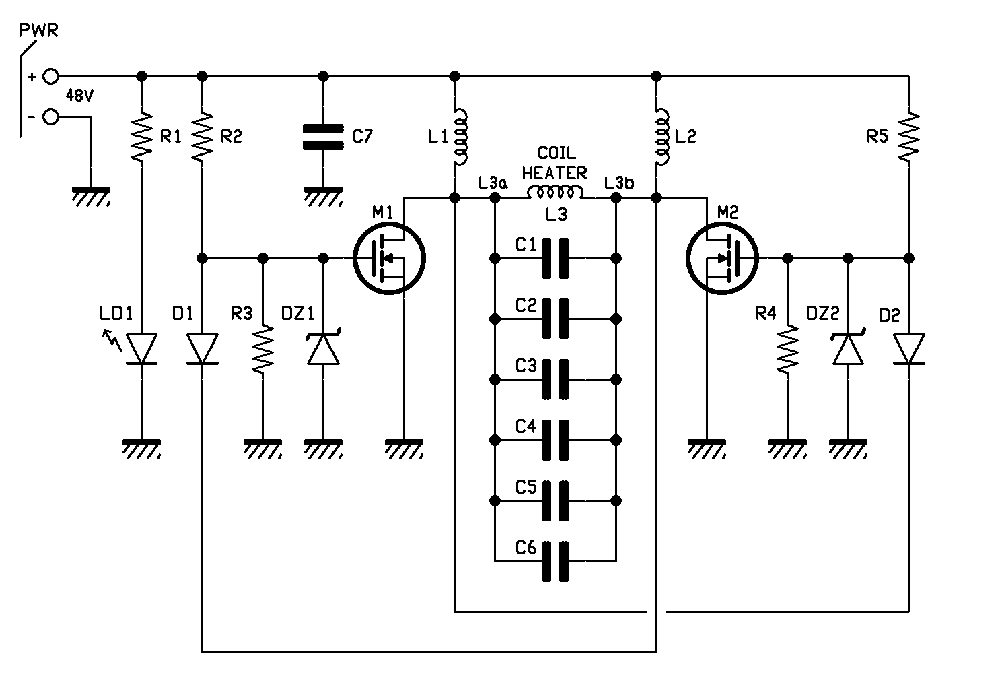
- Topology Selection: The project utilizes a "Royer Oscillator" configuration. This symmetrical, self-oscillating design is chosen for its ability to naturally track the resonant frequency of the RLC tank circuit, ensuring the system remains efficient even as variables change.
- ZVS Implementation: The defining feature of this circuit is Zero Voltage Switching. By ensuring that the MOSFETs transition between states only when the voltage across them is near zero, we drastically minimize switching losses—the product of voltage and current (V x I). This allows the system to sustain power levels between 1,000W and 1,500W without catastrophic thermal runaway.
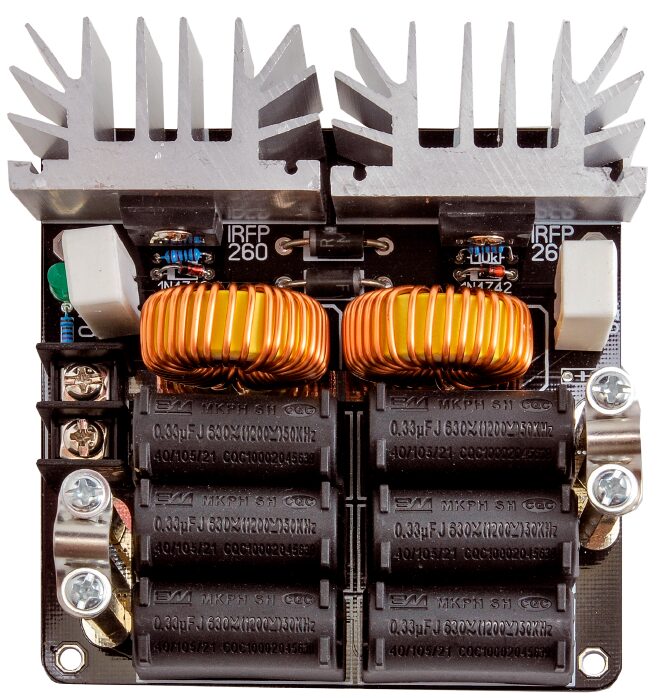
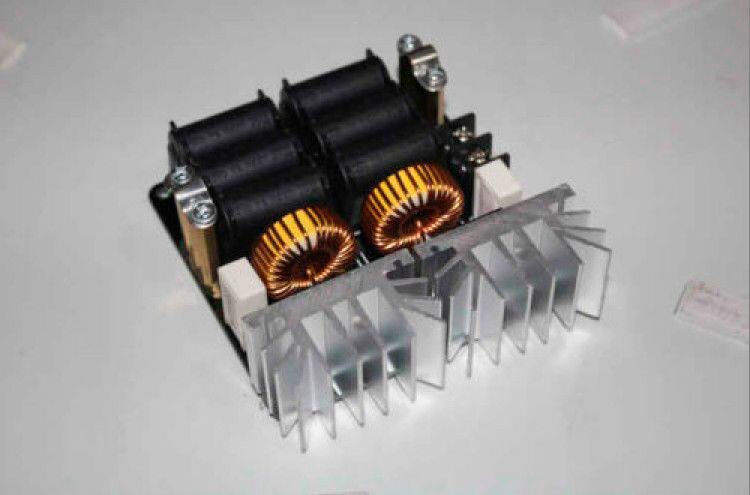
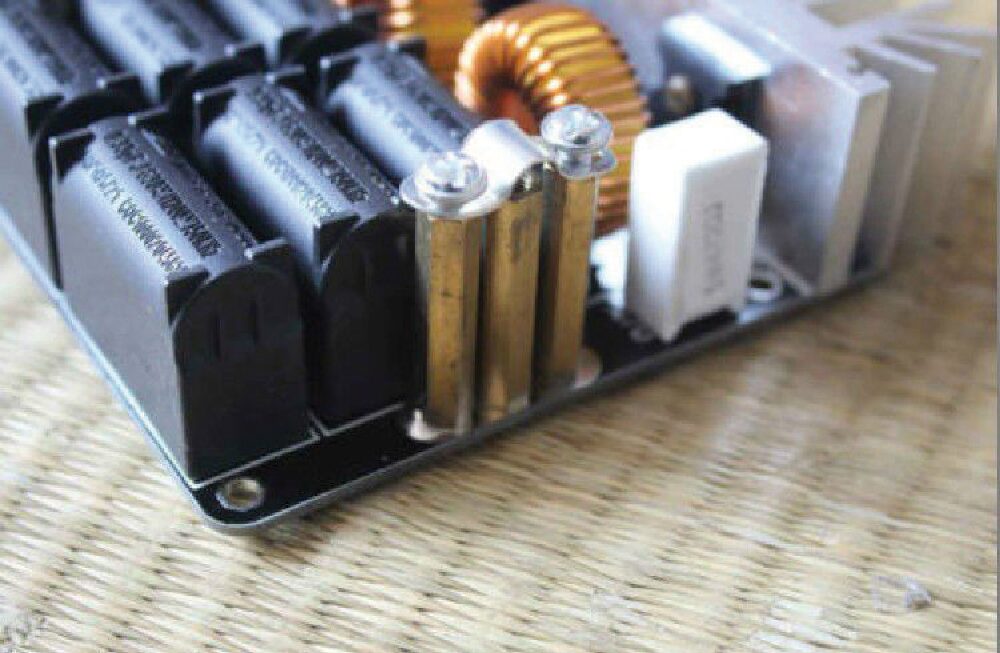
- Component Integration: The design utilizes IRFP260N MOSFETs for their low Rds(on) (40 mΩ) and high current handling (50A). These were paired with MKP polypropylene capacitors to form the 2μF tank bank, capable of handling the extreme currents required to sustain resonance.
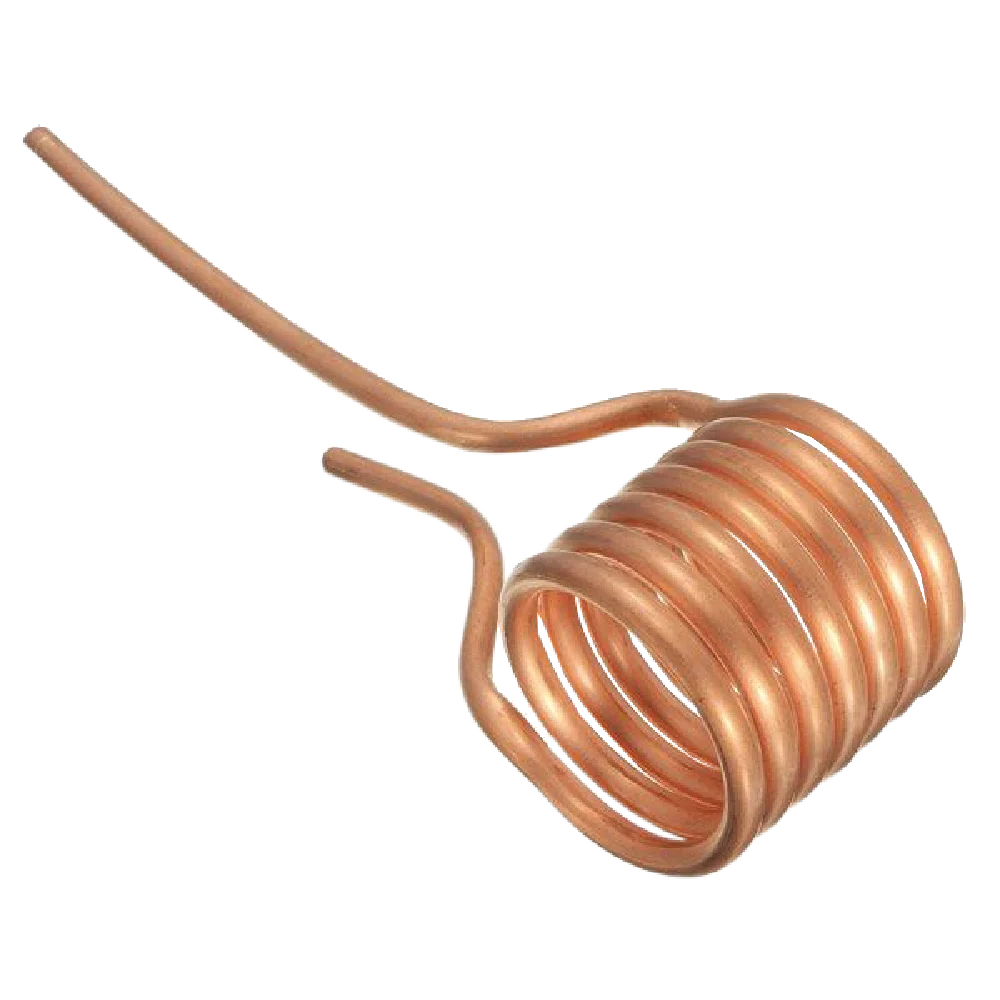
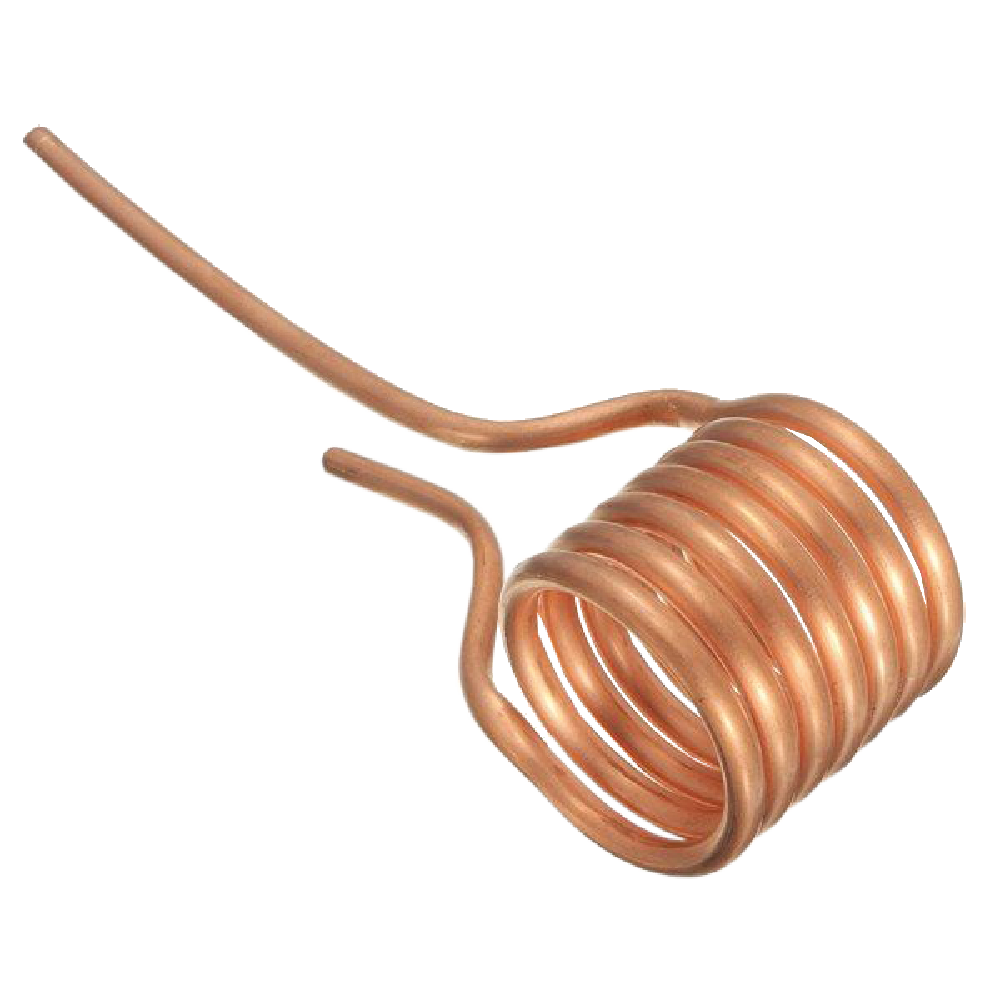
- Coil Calibration: The final stage of development involved winding the 6-turn hollow copper tube work coil. By balancing the inductance (calculated at 1.26 μH) with the capacitor bank, the team achieved a resonant frequency of approximately 100.3 kHz.
Supporting Data: Technical Specifications and Performance
The performance of the system is best understood through its electrical waveforms and thermal output. When powered by a 48V DC source, the circuit draws approximately 17A.
Key Technical Metrics:
- Operating Frequency: ~100 kHz.
- Peak Coil Voltage: ~150V (sinusoidal).
- Magnetic Flux Density: ~10.7 mT (107 gauss) within the coil.
- MOSFET Switching: Optimized via feedback diodes (MUR420) to prevent cross-conduction.
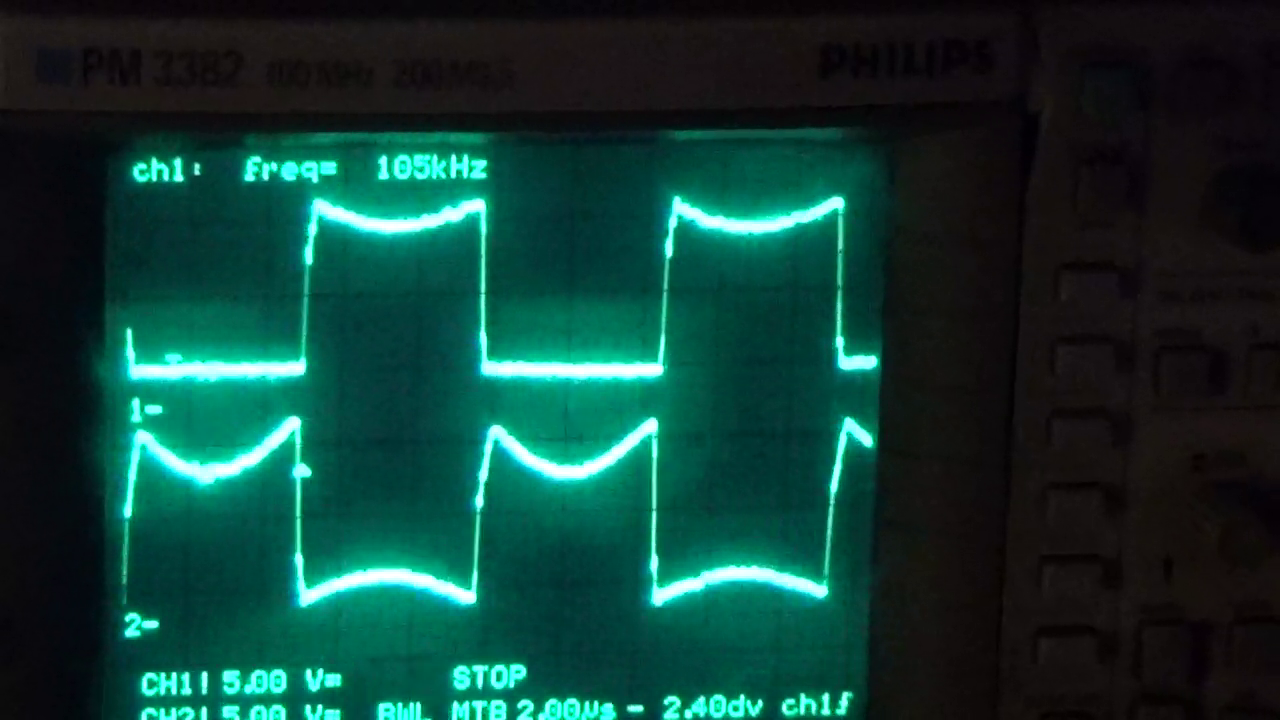
The use of an oscilloscope reveals the precision of the ZVS operation. The gate-source voltages of the two MOSFETs are perfectly antiphase. As one transistor prepares to switch, the other has already exited the conduction state, preventing the "shoot-through" currents that typically destroy high-power switching circuits. The resulting voltage across the coil is a clean, continuous sine wave, demonstrating that the RLC block is operating in an ideal resonant state.
Official Observations and Operational Guidelines
During testing, the research team noted that the efficiency of the induction heater is highly dependent on the "coupling factor" between the work coil and the target.
"The system is remarkably efficient," notes the lead engineer, "but it is also unforgiving." The following operational guidelines were established:
- Safety First: Due to the extreme temperatures generated (the metal glows bright yellow-orange), the use of insulated pliers is mandatory. Direct contact with the coil or the heated workpiece will result in immediate severe burns.
- Coil Maintenance: After sustained use, the copper coil will oxidize and darken. This is a normal byproduct of the extreme radiant heat and does not degrade the electrical performance of the circuit.
- Power Supply Requirements: Because the circuit can draw up to 1,500W under load, it is imperative to use a stabilized 48V DC power supply capable of handling high-current surges. Insufficient power supply capacity will lead to voltage drops that pull the system out of resonance, potentially causing the MOSFETs to fail.
Implications: The Future of High-Efficiency Heating
The implications of this ZVS project extend far beyond the workshop. The technology utilized here is the same principle powering the global shift toward induction cooktops—a transition driven by the need for higher energy efficiency compared to traditional resistive or gas-based heating.
Energy Efficiency and Sustainability
In many countries, induction is now the preferred method for home cooking because it minimizes ambient heat loss. Unlike a gas flame, which heats the air around the pot, induction heats only the pot itself. The ZVS technique presented here further optimizes this process by reducing the switching losses inherent in power converters.
Industrial and Experimental Utility
Beyond domestic use, this circuit design serves as a foundational prototype for:
- Wireless Power Transfer: By tuning coupled coils to the same resonance frequency, the system can be adapted for contactless energy transmission.
- Metalworking: Small-scale metallurgy, such as brazing, annealing, and localized hardening, can be performed with extreme precision using this compact, 1,000W footprint.
- Plasma Ignition: The circuit’s ability to generate high-frequency, high-voltage resonant fields makes it a viable driver for Tesla coil ignition circuits and other high-voltage discharge experiments.
Conclusion
The 1,000W ZVS induction heater is more than a tool for melting metal; it is a masterclass in the elegant application of power electronics. By embracing the principles of resonance and switching efficiency, this project demystifies the invisible electromagnetic fields that permeate our environment.
For the electronics enthusiast, this build represents a significant milestone in understanding how to manipulate high-frequency energy. While it demands respect for the physics involved—specifically regarding high current, high heat, and electromagnetic interference—the reward is a deeper connection to the invisible forces that drive modern technology. Whether applied to metallurgy, wireless power, or simply the pursuit of scientific knowledge, the ZVS technique remains a pinnacle of efficient power conversion, reminding us that with the right circuit, we can indeed bend the laws of nature to our will.