Harnessing the Invisible: Mastering High-Power Metal Melting with ZVS Induction Technology
In our modern world, we are bathed in a sea of invisible electromagnetic radiation. From the low-frequency hum of power distribution grids to the high-frequency bursts of mobile telecommunications and remote controls, electromagnetic waves are the silent sentinels of the 21st century. While we often view these fields as mere background noise—evidenced by the familiar crackle of a speaker near a smartphone—their potential for raw, concentrated power is immense.
Today, we delve into a project that pushes the boundaries of home-lab electronics: a 1,000W Zero Voltage Switching (ZVS) induction heater. By leveraging the principles of magnetic induction, eddy currents, and the Joule effect, this project demonstrates how we can harness these invisible fields to bring metallic conductors to incandescence in mere seconds, effectively turning electrical energy into a localized, intense thermal forge.
Main Facts: The Physics of Induction
At the heart of this project lies the ZVS induction circuit, a sophisticated power electronics topology designed to maximize efficiency. Induction heating is a process that has revolutionized everything from high-end culinary tools to industrial metallurgy.
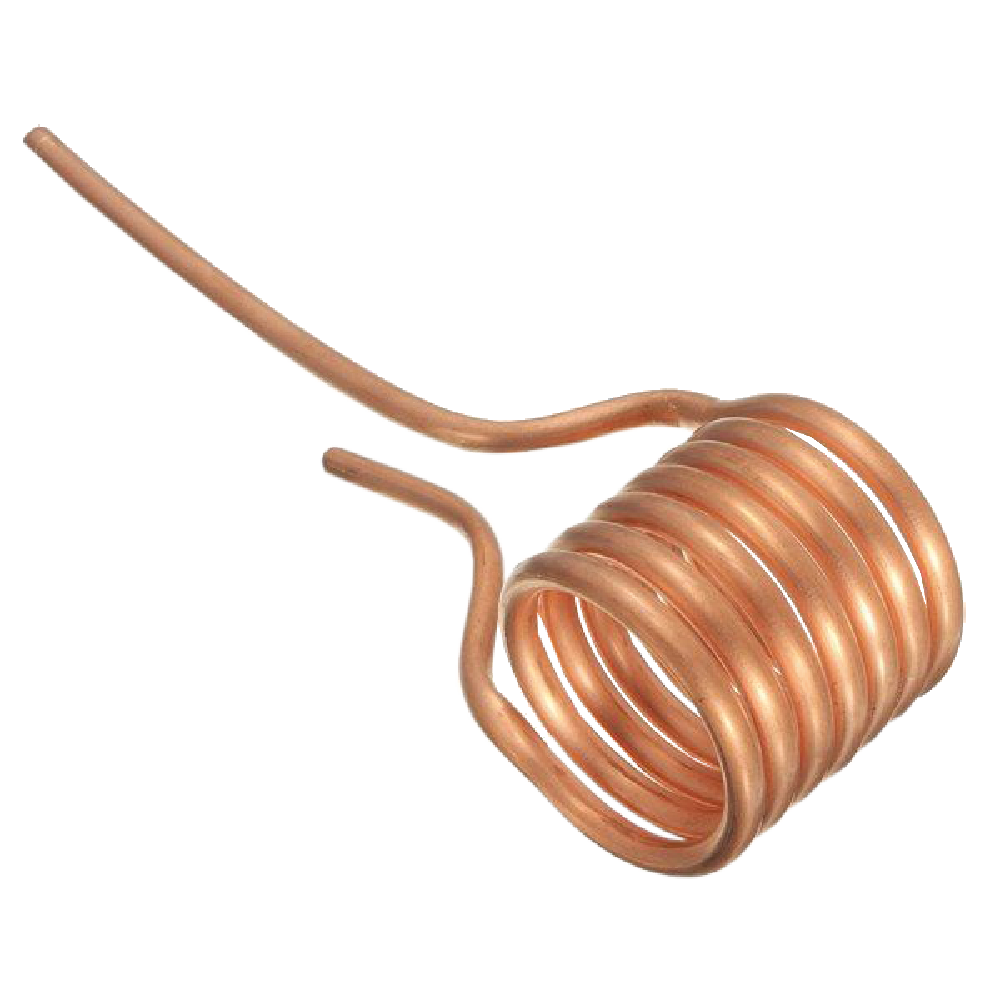
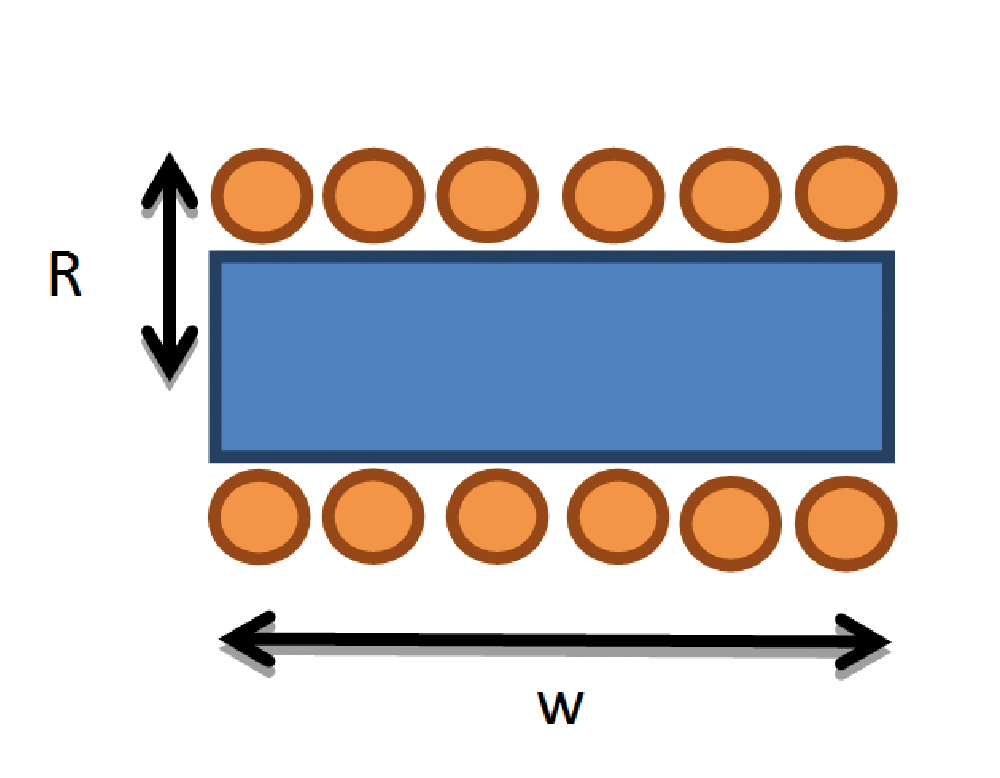
The mechanism is elegant in its simplicity: an alternating current flows through a copper work coil, creating a dynamic magnetic field. When a conductive material—such as a steel bolt—is introduced into this field, Faraday’s Law of Induction takes over. The time-varying magnetic flux induces an electromotive force (EMF) within the material, creating circular "eddy currents."
These currents are essentially parasitic in many electrical systems, but here they are our primary goal. As these currents swirl through the metal, they encounter internal resistance, resulting in the dissipation of energy as heat—a phenomenon known as the Joule effect. Because the ZVS circuit operates at a high frequency (approximately 100 kHz), the heating effect on ferromagnetic materials is rapid and highly efficient.
Chronology of Development: The Evolution of ZVS
The journey toward a compact, 1,000W induction heater is rooted in the development of the "Royer oscillator," a self-oscillating circuit topology that has been a staple in power electronics for decades.
- Foundational Concepts: Early induction heaters were bulky and inefficient, relying on linear power supplies and rigid switching. The introduction of high-speed MOSFETs allowed designers to switch from bulky transformers to high-frequency resonant circuits.
- The ZVS Breakthrough: The primary hurdle in high-power switching is the energy lost during the transition phase between "on" and "off." By employing Zero Voltage Switching (ZVS), engineers ensure that the MOSFETs switch only when the voltage across them is near zero. This drastically reduces switching losses, which are typically defined by the product of voltage and current (V x I).
- Modern Implementation: The current design, utilizing the IRFP260N MOSFETs, represents the maturation of this technology. These components provide the low RDS(on) (40 mΩ) necessary to handle currents up to 50A, allowing hobbyists to build industrial-grade heating systems on a modest workbench footprint.
Supporting Data and Technical Specifications
Achieving a 1,000W output requires more than just a clever circuit; it demands precise component selection and an understanding of resonant behavior.
Circuit Architecture
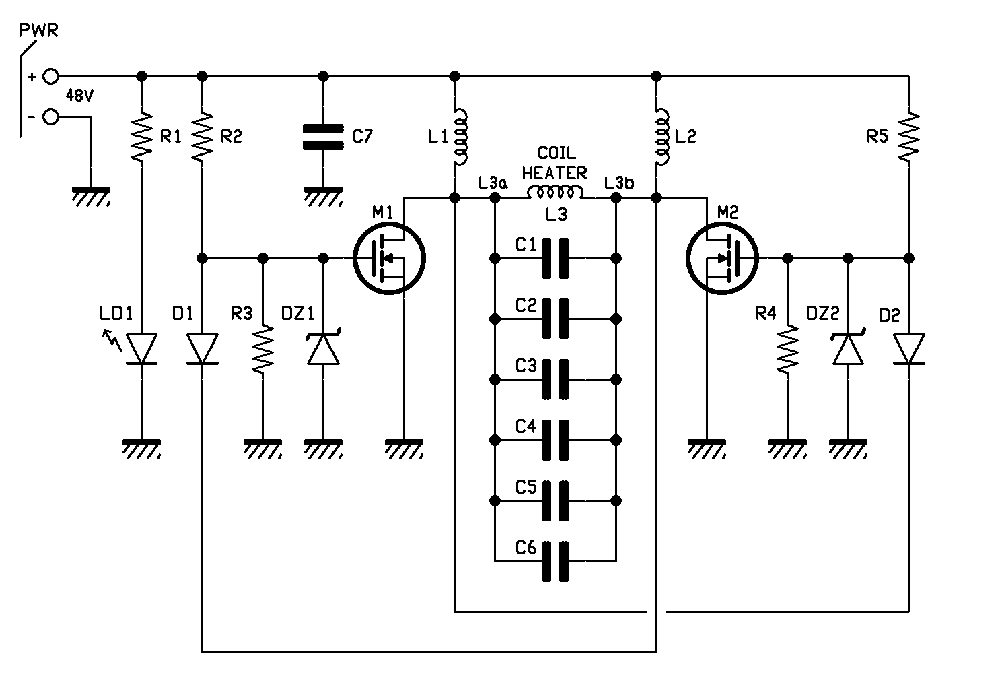
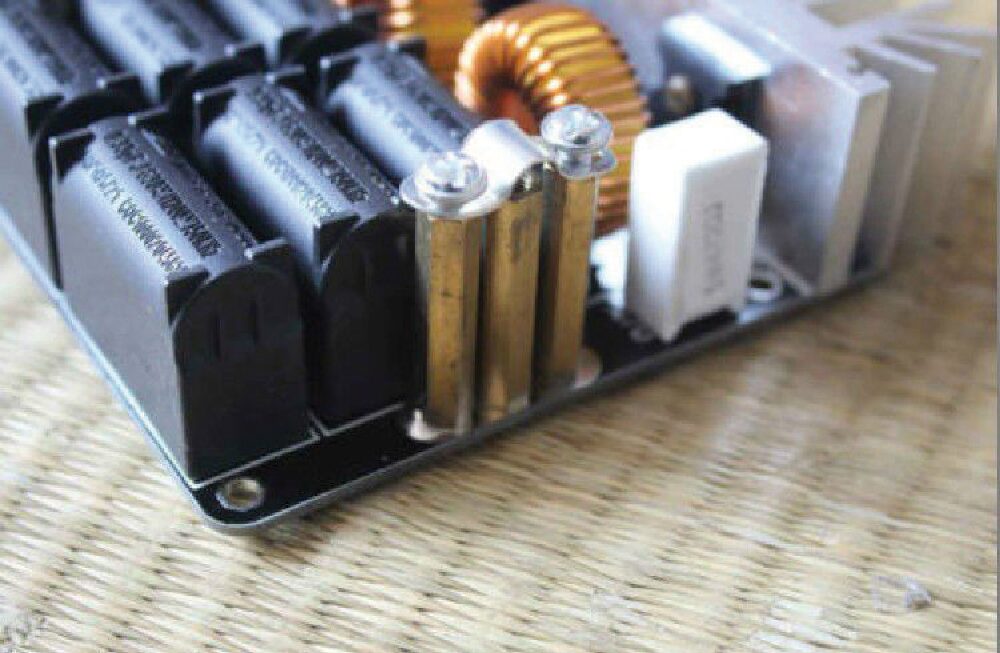
The circuit operates as a symmetrical two-branch oscillator. When power is applied, manufacturing tolerances ensure one MOSFET begins conducting slightly before the other. This initiates the oscillation. A feedback loop, consisting of diodes (MUR420) and a tank circuit (inductor L3 and capacitors C1–C6), maintains this oscillation at the resonant frequency.
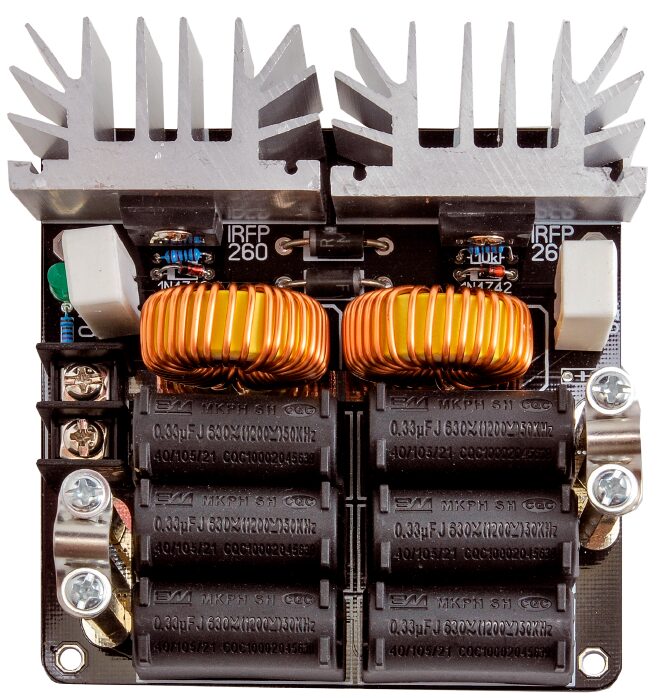
- Resonant Frequency: Calculated at approximately 100.3 kHz, ensuring high-frequency operation that is optimal for eddy current generation.
- Power Handling: While rated at 1,000W, the circuit can peak at 1,500W under specific load conditions.
- Safety Thresholds: To prevent catastrophic failure, the design includes Zener-resistor pairs (DZ1/DZ2, R3/R4) to clamp gate voltages, and 100µH inductors (L1/L2) to suppress high-frequency voltage spikes.
The Work Coil
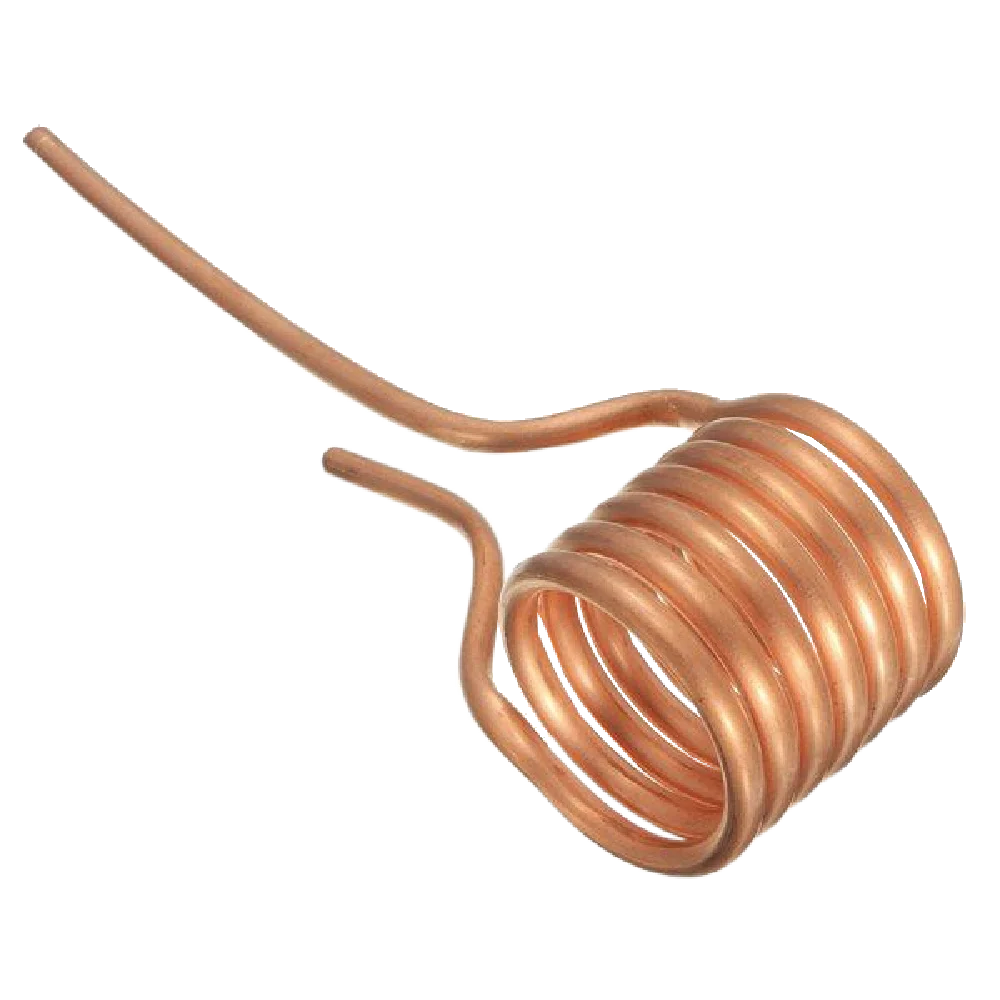
The "work coil" is the physical interface between the electronics and the material. In this project, it is constructed from six turns of 6mm hollow copper tubing. The hollow design is intentional: it allows for the high current density required while providing a path for cooling if necessary. With a theoretical inductance of 1.26µH, the coil acts as a focused solenoid, concentrating the magnetic flux density (calculated at ~10.7 mT) into the target object.
Official Guidelines and Safety Protocols
Working with 1,000W of power and high-frequency magnetic fields carries inherent risks. This is not a project for the novice; it requires a strict adherence to safety protocols.
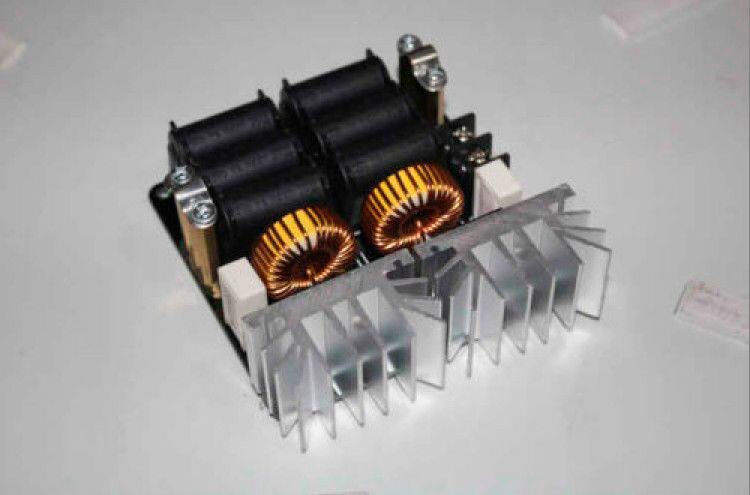
- Power Supply: A 48V DC power supply capable of delivering at least 31A (1,500W) is mandatory. Undersized supplies will lead to voltage sags and potential circuit instability.
- Thermal Management: The MOSFETs generate significant heat. While ZVS minimizes switching loss, conduction loss is still present. Proper heatsinks are non-negotiable.
- The "No-Touch" Rule: During operation, the work coil and any object inside it will reach extreme temperatures. Even a short exposure can result in deep tissue burns. Always use insulated pliers to manipulate samples.
- Electromagnetic Compatibility (EMC): The intense magnetic field generated by the coil will interfere with nearby sensitive electronics, pacemakers, and magnetic storage media. Operation should be conducted in a shielded or isolated environment.
Implications: Beyond the Workbench
The implications of mastering ZVS induction technology extend far beyond the ability to glow a bolt red-hot.
Industrial and Academic Applications
- Material Science: Induction heating is the gold standard for annealing, brazing, and heat-treating steel components. Being able to perform these tasks in a small-scale, high-frequency environment allows for rapid prototyping of metal parts.
- Wireless Power Transfer: The same resonant principles used to melt metal are currently being refined for wireless energy transmission. By tuning coupled coils to the same resonant frequency, power can be transferred over distances without physical contact.
- Educational Value: This project serves as a comprehensive masterclass in power electronics. It forces the builder to grapple with skin effect losses, parasitic capacitance, gate-drive timing, and resonant tank behavior—concepts that are the bedrock of modern electrical engineering.
The Future of Induction
As we move toward a future of cleaner energy and more efficient manufacturing, the ZVS technique stands out for its elegance. By improving the efficiency of power conversion, we reduce the total energy footprint required for industrial tasks. The ability to concentrate energy precisely where it is needed—in the workpiece, rather than the surrounding environment—is a key tenet of sustainable engineering.
Conclusion
The ZVS induction heater is more than a tool; it is a testament to the power of resonance and the mastery of invisible forces. By carefully aligning the MOSFET switching with the natural frequency of the RLC tank circuit, we create a device that defies the limitations of conventional heating methods. Whether utilized for scientific experimentation, metallurgical hobbyism, or as a gateway to understanding advanced power electronics, this 1,000W system provides an unparalleled look into the raw power of electromagnetism.
As you approach the assembly and testing of your own unit, remember that respect for the underlying physics is your best safety mechanism. The invisible field is powerful, precise, and—with the right circuit design—entirely under your control.