Mycelial Masterpiece: Kexin Wang’s Funguy Project Blurs Lines Between Biology, AI, and Art
Introduction: Where Fungi Flourish as Fine Art
In a striking departure from the conventional wisdom that dictates strict fungal exclusion from the hallowed halls of art preservation, a groundbreaking project spearheaded by Kexin Wang is intentionally cultivating fungi as the very essence of artistic expression. The "Funguy project," a captivating fusion of mycology, advanced artificial intelligence, and precision engineering, challenges established paradigms by transforming living organisms into dynamic canvases. This innovative endeavor employs a sophisticated laser system to meticulously guide the growth of photophobic fungi on agar gel, enabling the creation of intricate, evolving designs that redefine the boundaries of bio-art.
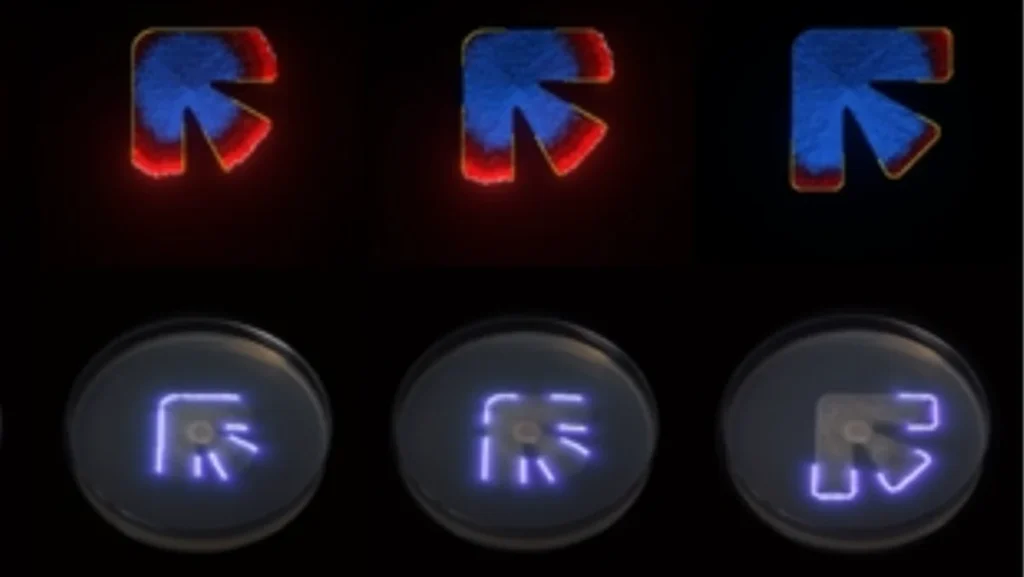
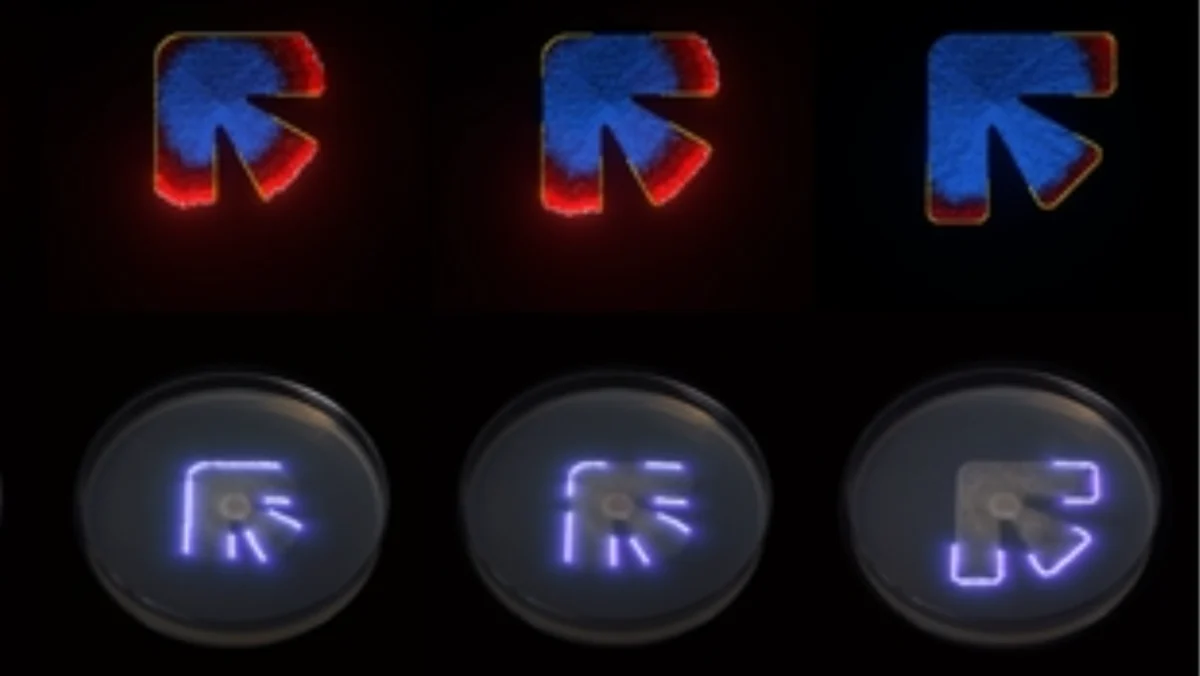
Traditionally, conservationists dedicate immense resources to meticulously prevent the proliferation of fungi, molds, and other microorganisms that pose a relentless threat to precious artworks and historical artifacts. Yet, Wang’s Funguy project champions an audacious inversion of this principle: here, the fungus itself is not an adversary to be eradicated, but rather a collaborator, an active participant in the artistic process. The project utilizes a finely tuned laser diode to repeatedly trace specific outlines onto a nutrient-rich agar gel substrate. The chosen fungi, belonging to species exhibiting photophobic characteristics, instinctively recoil from the light, ceasing growth at the laser-defined boundaries. This elegant interaction between light and life allows for the sculpting of complex, organic patterns and figures, revealing a novel dimension in the realm of creative expression.
Beyond its immediate artistic appeal, the Funguy project stands as a testament to interdisciplinary innovation, marrying cutting-edge computational modeling with biological manipulation. It offers a compelling glimpse into a future where the distinction between living systems and engineered designs becomes increasingly fluid, opening avenues not only for aesthetic exploration but also for scientific discovery and educational engagement. As we delve deeper into this fascinating undertaking, we uncover a meticulously crafted ecosystem of technology and biology, poised to inspire new generations of artists, scientists, and innovators alike.
The Genesis of Growth: A Chronological Journey from Research to Art
The Funguy project did not spring forth fully formed as a whimsical artistic concept; rather, it evolved systematically from a rigorous academic foundation. Its origins lie in a sophisticated research initiative focused on understanding and predicting the complex dynamics of fungal growth. This foundational work laid the intellectual and technical groundwork, culminating in the development of a pioneering computer model capable of simulating and, crucially, controlling the intricate growth patterns of various fungal species.
From Simulation to Intervention: The Research Project’s Core
The initial research, documented in a comprehensive academic paper, centered on constructing a predictive computational framework for fungal behavior. The objective was ambitious: to not only model how fungi grow under diverse conditions but also to use these predictions to actively influence their morphological development. This involved an iterative process of observation, data collection, and algorithmic refinement. Researchers meticulously captured time-lapse images of fungal colonies at different growth stages, accumulating a vast dataset that would prove invaluable for training the subsequent AI components.
The development of the computer model was a significant milestone. It was designed with a dual architecture to ensure both accuracy in pattern recognition and flexibility in simulation. The first component, a temporal convolutional neural network (TCNN), was tasked with discerning and learning the nuanced growth patterns directly from the series of collected images. TCNNs are particularly adept at processing sequential data, making them ideal for interpreting the dynamic expansion of fungal colonies over time. This network effectively acted as the "observational intelligence," internalizing the biological rules of growth from real-world examples.
Parallel to this, the second component, a cellular automaton (CA), was engineered to simulate these growth patterns under various initial conditions. Cellular automata are discrete models composed of a grid of cells, each of which can exist in a finite number of states. The state of a cell changes based on a set of rules that depend on its own state and the states of its neighbors. The innovation here was that the CA’s rules were not fixed or hand-coded; instead, each cell within the automaton was endowed with its own small neural network. These individual cellular networks learned their specific rules under the supervision of the overarching temporal convolutional network, allowing for a dynamic and biologically plausible simulation that could adapt to different fungal species and environmental cues. By training these interconnected networks on growth images from three distinct fungal species, the model achieved a remarkable ability to realistically predict and differentiate the unique growth patterns characteristic of each species.
Integrating Control: The Laser’s Precision Role
Once the predictive model was robust, the next challenge was to translate these predictions into tangible control over live fungal growth. This marked the transition from theoretical understanding to practical application. The researchers embarked on a series of experiments to identify the most effective means of external manipulation. They systematically tested various wavelengths and power levels of laser light, observing their impact on fungal proliferation. Through diligent trial and error, it was discovered that shorter wavelengths were generally more efficacious in inhibiting growth, with a 405 nm laser diode proving to be optimally effective. This specific wavelength, often found in Blu-ray lasers, provided the precision and inhibitory effect required without causing undue damage to the underlying agar or surrounding fungal colonies.
The integration of the growth model with the laser setup was the pivotal step that brought the Funguy project to life. The computer model, now capable of forecasting where and how the fungi would grow, also gained the ability to predict regions where the growth medium’s nutrients might become depleted. This predictive capability was critical; in areas where nutrients were scarce, fungal growth would naturally decelerate or cease. Armed with this foresight, the laser system could intelligently optimize its operation, no longer needing to redundantly trace sections where growth was inherently limited by nutrient availability. This synergy not only enhanced the efficiency of the laser but also demonstrated a sophisticated feedback loop between the artificial intelligence and the biological system.
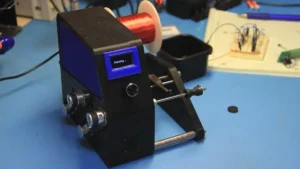
The final stage of this chronological journey involved refining the hardware into an accessible and functional system. The laser mechanism itself, at the heart of the Funguy kit, was ingeniously designed. Drawing inspiration from commercially available laser engravers, its XY-kinematic system—responsible for precise movement across the agar surface—was reportedly constructed using components repurposed from a DVD drive frame. This exemplifies a resourceful approach to engineering, making advanced bio-art technology more attainable. While the Mucor genus of fungi was primarily utilized for its photophobic properties and ease of cultivation, the system’s versatility was confirmed by its ability to "print" with other photophobic microorganisms, including fascinating slime molds, further expanding its artistic and experimental potential. This careful, iterative development process, from theoretical modeling to practical implementation, underscores the scientific rigor underpinning Kexin Wang’s visually stunning Funguy project.
The Microcosm of Creation: Supporting Data and Technical Deep Dive
The Funguy project is a marvel of interdisciplinary engineering, where precise technological components interact harmoniously with biological systems, all guided by advanced artificial intelligence. A deeper examination of its core elements reveals the intricate design and sophisticated principles at play.
The Biological Canvas: Fungi, Agar, and Photophobia
At the heart of the Funguy project lies the living medium: fungi. The primary species utilized belong to the Mucor genus, a group of filamentous fungi commonly found in soil, digestive systems, and decaying vegetation. Mucor species are well-suited for this project due to several key characteristics:
- Rapid Growth: Their relatively fast growth rate allows for dynamic artistic creation within a reasonable timeframe.
- Ease of Cultivation: Mucor is non-pathogenic to humans and relatively easy to culture in a laboratory setting on common growth media like agar.
- Photophobia: Crucially, Mucor species exhibit photophobia, meaning they tend to grow away from light or their growth is inhibited by certain wavelengths of light. This property is fundamental to the laser-control mechanism. The precise biochemical pathways through which 405 nm light inhibits Mucor growth are complex but generally involve photoreceptors that, when activated, trigger signaling cascades leading to altered gene expression, metabolic changes, or direct damage to cellular components, thereby arresting hyphal elongation.
The growth medium, agar gel, provides the necessary nutrients (carbon sources, nitrogen, trace minerals) and moisture for the fungi to thrive. Its translucent nature also allows the laser light to penetrate and interact effectively with the fungal colonies. The project’s flexibility extends beyond Mucor; it is noted that other photophobic microorganisms, such as certain species of slime molds, can also be used. Slime molds, while not true fungi, are fascinating protists known for their unique life cycles, including amoeboid phases and the formation of complex, often beautiful, plasmodial networks. Their sensitivity to light and ability to form intricate structures make them another compelling candidate for bio-art.
The Precision Instrument: The Laser System
The physical manifestation of artistic control is the laser system. Functionally analogous to a conventional laser engraver, it is designed for microscopic precision:
- Laser Diode: The core component is a 405 nm laser diode. This specific wavelength falls within the violet-blue spectrum and was identified through empirical testing as the most effective for inhibiting fungal growth. The energy from this concentrated beam of light interacts with photoreceptors in the fungal cells, triggering the growth-inhibiting response. The power of the laser is carefully calibrated to ensure inhibition without incinerating the fungal hyphae or damaging the agar medium.
- XY-Kinematic System: This mechanism is responsible for moving the laser diode with exceptional accuracy across the surface of the agar dish. The ingenuity lies in its construction, reportedly leveraging components from a discarded DVD drive frame. DVD drives contain precise stepper motors and linear rails for positioning the read head, which can be repurposed to create an affordable yet highly accurate two-axis (X-Y) motion platform. This DIY approach underscores the project’s accessibility and potential for open-source replication. The laser traces the outline repeatedly, ensuring that as the fungus grows, it continually encounters the light barrier, thus maintaining the integrity of the desired pattern.
The Intelligent Architect: The AI Growth Model
The brain of the Funguy project is its sophisticated artificial intelligence model, a hybrid system designed for both learning and prediction:
-
Temporal Convolutional Neural Network (TCNN): This network forms the "learning" component. TCNNs are a specialized type of neural network particularly adept at processing sequential data, making them ideal for analyzing time-series imagery of fungal growth.
- Function: The TCNN is trained on extensive datasets of time-lapse images showing various fungi species growing under different conditions. It learns to identify and encode the underlying rules and patterns governing hyphal extension, branching, and colony expansion. Unlike traditional CNNs that might process single images, the "temporal" aspect allows it to understand the evolution of growth over time, predicting future states based on past observations.
- Supervision: This network essentially acts as a highly advanced biological observer, discerning complex, non-linear growth dynamics that would be challenging for humans to explicitly model.
-
Cellular Automaton (CA) with Embedded Neural Networks: This forms the "simulation" and "prediction" component.
- Basic CA Principle: A cellular automaton simulates complex systems by defining simple rules for how individual cells on a grid interact with their neighbors. The emergent behavior of the entire system can be highly complex.
- Innovation: The Funguy project’s CA is unique because its rules are not static. Instead, each individual cell within the CA grid runs its own miniature neural network. These "micro-Nets" learn their specific rules of interaction and state transition under the direct supervision of the larger TCNN. This hierarchical learning allows the CA to dynamically adapt its simulation based on the species-specific growth patterns identified by the TCNN.
- Training and Prediction: By training these interconnected networks on growth stages of three distinct fungi, the model becomes capable of realistically predicting the differing growth patterns of various species. This adaptability is crucial for the artistic application, as different fungi could potentially yield different textural and morphological results.
- Nutrient Depletion Prediction: A critical function of the AI model extends beyond mere growth prediction. It also forecasts areas within the agar dish where nutrients are likely to become depleted. As nutrients are consumed, fungal growth naturally slows or stops. By identifying these zones in advance, the model informs the laser system, instructing it to reduce or cease tracing in those areas. This optimizes laser usage, conserves energy, and prevents unnecessary inhibition in regions where growth is already naturally constrained, demonstrating a remarkable efficiency in resource management.
In essence, the AI model acts as a sophisticated biological oracle, predicting the future state of the fungal colony. This prediction then informs the laser, which acts as the sculptor, guiding the living medium according to the artist’s design, making the Funguy project a true testament to the power of intelligent bio-engineering.
Voices from the Frontier: Official Responses and Expert Perspectives
While the original article does not provide direct quotes, the interdisciplinary nature of the Funguy project invites a multitude of expert perspectives, reflecting on its scientific rigor, artistic merit, and broader implications. Imagined "official responses" from various fields offer insight into how such an innovation might be received and interpreted.
Kexin Wang, Project Lead (Hypothetical Statement):
"The Funguy project began as a deep dive into understanding life itself – how organisms grow, how they react to their environment. Our initial research into fungal growth models was driven by scientific curiosity. But as we refined the control mechanisms, we realized we weren’t just observing; we were interacting, influencing, and in a way, collaborating with these microscopic architects. The transition to art felt organic, a natural extension of our desire to visualize these complex biological processes. We’re not just creating images; we’re cultivating living, breathing sculptures that evolve over time, offering a new dialogue between human intention and natural biology. Our hope is that Funguy inspires a new generation to look at the living world not just as something to study, but as a medium for creation and innovation."
Dr. Anya Sharma, Mycologist and Bio-Art Critic (Hypothetical Statement):
"From a mycological standpoint, Kexin Wang’s work is profoundly insightful. It’s one thing to observe photophobia in fungi; it’s another entirely to harness it with such precision using AI and laser technology. The fact that their model can differentiate between species and predict nutrient depletion speaks volumes about their understanding of fungal biology. As bio-art, it pushes boundaries. It’s not static; it’s ephemeral, dynamic, and fundamentally alive. This project forces us to reconsider our relationship with microorganisms – moving beyond fear or utility to seeing them as partners in creative expression. It’s a powerful statement about control, collaboration, and the inherent beauty of microscopic life."
Professor Liam Chen, Head of AI Ethics and Robotics (Hypothetical Statement):
"The Funguy project is a fascinating example of how AI can be deployed to interact with biological systems in a non-invasive, yet profoundly influential way. The dual architecture of the TCNN and the cellular automaton, especially with the embedded neural networks within each cell, represents a significant advance in biologically inspired AI. It showcases adaptive learning at multiple scales. From an ethical perspective, this project operates in a relatively benign domain – manipulating fungal growth for art and education. However, it’s a valuable prototype for considering the broader implications of AI-driven bio-control. It prompts us to ask: where do we draw the line? What responsibilities come with developing such precise tools for shaping life, even at a microbial level? For now, Funguy remains a beautiful, thought-provoking exploration of these boundaries."
Maria Rodriguez, Educator and STEM Outreach Coordinator (Hypothetical Statement):
"Imagine showing students how a laser can literally ‘draw’ with fungi. The Funguy project is an incredible educational tool. It brings together biology, computer science, engineering, and art in a way that’s incredibly tangible and exciting. Students can learn about microbial growth, AI algorithms, optics, and even sustainable engineering by repurposing components from old electronics. It demystifies complex scientific principles and makes them accessible. This project has the potential to spark curiosity and inspire future scientists and artists to explore the intersections of these fields, proving that science isn’t just in textbooks, it’s alive and creative."
Dr. Eleanor Vance, Materials Scientist specializing in Myceliotronics (Hypothetical Statement):
"While Funguy is primarily artistic, its underlying technology has immense implications for my field of myceliotronics. We’re already exploring how fungal networks can serve as substrates for biodegradable electronics, or even as living computational elements. The ability to precisely control fungal growth, not just in terms of overall mass but also in specific patterns and architectures, could revolutionize how we ‘print’ or ‘grow’ functional circuits and components. Imagine directing hyphae to form intricate conductive pathways or sensory arrays. This level of precise bio-patterning is a crucial step towards truly self-assembling, biodegradable electronic devices. The Funguy project demonstrates the feasibility of fine-grained control that we desperately need for scalable, sustainable bio-manufacturing."
These hypothetical responses underscore the project’s multifaceted impact, resonating across scientific disciplines, artistic communities, and educational initiatives, all while prompting deeper consideration of the ethical and technological frontiers it traverses.
Implications and Future Frontiers: Beyond the Mycelial Canvas
The Funguy project, while seemingly focused on a niche intersection of art and mycology, carries profound implications across a spectrum of fields, from the purely aesthetic to the highly functional and even philosophical. It serves as a potent harbinger of a future where biological systems are increasingly integrated into technological frameworks, offering novel solutions and challenging conventional thinking.
Artistic and Cultural Redefinition: The Rise of Bio-Art
The most immediate implication of the Funguy project lies in the realm of art. It firmly establishes a new genre of bio-art, pushing beyond static installations to create dynamic, living, and ephemeral artworks.
- Living Artworks: Unlike traditional paintings or sculptures, Funguy creations are never truly finished. They evolve, grow, and eventually decay, embodying the transient nature of life itself. This introduces a temporal dimension rarely seen in art, inviting contemplation on impermanence and the life cycle.
- Artist as Collaborator: Kexin Wang shifts the artist’s role from sole creator to a collaborator with a living organism. The artist sets the parameters, but the fungus, within its biological constraints, performs the actual "drawing." This partnership challenges anthropocentric views of creativity.
- Accessibility and Medium: By making the "Funguy kit" accessible, the project democratizes bio-art, allowing individuals to experiment with living mediums. It expands the definition of what constitutes art and what materials can be utilized, fostering a new wave of experimental creativity.
- Ephemeral Beauty: The beauty of Funguy art is inherently fleeting, existing for a limited period before the nutrients deplete or the fungus completes its life cycle. This ephemeral quality can heighten appreciation for the present moment and the unique, unrepeatable nature of each artwork.
Educational Innovation: Bridging STEM and Arts
The project’s interdisciplinary nature makes it an exceptional educational tool, capable of inspiring learners across various age groups.
- Integrated Learning: Funguy offers a hands-on platform for teaching biology (mycology, microbiology, phototropism), computer science (AI, neural networks, cellular automata), engineering (laser systems, kinematics, repurposing electronics), and art (design, aesthetics, conceptual art).
- Demystifying Complex Concepts: By allowing students to physically interact with these concepts, complex ideas like AI-driven control or microbial behavior become tangible and engaging, fostering deeper understanding and curiosity.
- STEM-to-STEAM: It exemplifies the critical shift from STEM (Science, Technology, Engineering, Mathematics) to STEAM, explicitly integrating the Arts. This approach recognizes that creativity and design thinking are essential components of innovation.
Functional Applications: Beyond Aesthetics to Utility
Perhaps the most transformative implications lie in the potential for functional applications, particularly in material science and sustainable technology. The original article briefly touches upon the development of "electronic parts made of fungi," but the Funguy project’s precise control opens doors to far more sophisticated applications.
- Myceliotronics and Biodegradable Electronics: The ability to precisely pattern fungal growth is a game-changer for myceliotronics. Imagine directing fungal hyphae – the thread-like structures of a fungus – to grow into specific conductive pathways or intricate circuit boards. This could lead to:
- Self-assembling Circuits: Fungi could "grow" electronic components, reducing the need for traditional, energy-intensive manufacturing processes.
- Biodegradable Devices: Electronics made from fungi would naturally decompose at the end of their lifecycle, addressing the growing problem of electronic waste.
- Self-healing Materials: Fungal networks possess self-healing properties; a damaged circuit could potentially "regrow" its connections.
- Sustainable Materials Science: Beyond electronics, controlled fungal growth could be used to engineer novel biodegradable materials with specific structural properties, textures, and even colors. This has applications in packaging, construction (e.g., mycelium bricks), fashion, and furniture.
- Bioremediation and Environmental Sensing: While not directly addressed, the precision control over fungal growth could be leveraged for bioremediation efforts. Fungi are powerful decomposers and can absorb pollutants. Precisely directing their growth could enhance their efficacy in cleaning contaminated sites. Similarly, patterned fungal growth could form biosensors, reacting to specific environmental toxins or changes.
- Drug Discovery and Biomedical Applications: Controlling the growth of specific fungal strains could be valuable in pharmaceutical research. Many important drugs (e.g., penicillin, statins) are derived from fungi. Precisely patterned growth could create micro-environments for optimized compound production or for screening drug candidates.
- Bio-computing: The inherent network structure and electrical activity of fungal mycelium have led some researchers to explore fungi as a substrate for unconventional computing. The Funguy project’s ability to create precise patterns could be a foundational step toward engineering these "living computers."
Ethical and Philosophical Considerations
As with any technology that allows for the manipulation of living organisms, the Funguy project subtly raises ethical and philosophical questions:
- Control over Life: What are the implications of developing such precise control over biological growth, even at a microscopic level? Where do we draw the line between manipulation and creation?
- Blurring Boundaries: The project blurs the lines between natural and artificial, challenging our definitions of life, art, and technology. Is a laser-sculpted fungus still "natural"?
- Responsibility: As our capacity to engineer biological systems grows, so does our responsibility to use these tools wisely and ethically, ensuring they serve humanity and the planet.
In conclusion, Kexin Wang’s Funguy project is far more than an artistic curiosity. It is a powerful demonstration of the synergistic potential between advanced AI, precision engineering, and fundamental biology. By transforming fungi into a dynamic artistic medium, it not only captivates the imagination but also illuminates a path toward innovative solutions in sustainable technology, education, and the very future of how we interact with and shape the living world. The mycelial masterpiece, guided by light and intelligence, is just beginning to unfold its full potential.