Proton’s Evolution: A Deep Dive into the Capabilities and Limitations of Lumo 2.0


When Proton first introduced its AI assistant, Lumo, the tech community was understandably skeptical. In an era dominated by industry giants like OpenAI and Google, the promise of an open-source, privacy-focused AI seemed like a monumental challenge. Yet, following my initial testing last year, it became clear that Proton was onto something substantial. Lumo wasn’t just another wrapper; it was a functional, albeit budding, ecosystem.
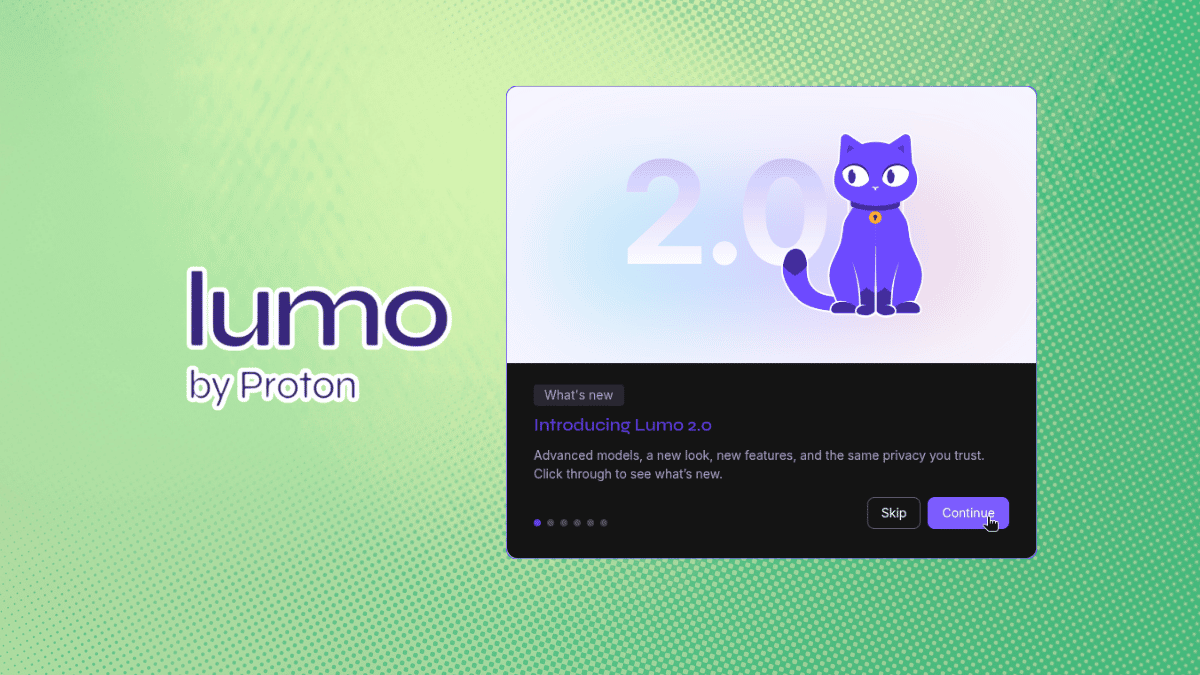
Fast forward to today, and the launch of Lumo 2.0 marks a significant pivot. Proton is no longer just "testing the waters"; they are positioning Lumo as a direct competitor to the most advanced models on the market. By integrating user-controlled memory, enhanced web-grounding, and sophisticated image generation, Lumo 2.0 represents the most significant leap in Proton’s AI trajectory to date.
Main Facts: What Defines Lumo 2.0?
The core value proposition of Lumo 2.0 remains rooted in Proton’s fundamental philosophy: privacy-first, zero-access encryption. However, this version introduces three pillars that bridge the gap between "experimental assistant" and "productivity powerhouse":
- User-Controlled Memory: Unlike previous iterations that treated every session as a blank slate, Lumo 2.0 allows users to define what the AI "knows" about them. This persistence is managed locally and remains encrypted, ensuring that your preferences—such as a penchant for technical clarity or a specific coding style—are carried across threads.
- Live Web Grounding: The assistant has transitioned from relying solely on its internal training data to performing real-time web searches. Critically, these searches are accompanied by verifiable source citations, mitigating the "hallucination" problem common in LLMs.
- Advanced Multimodality: Lumo 2.0 now supports image analysis, editing, and generation. By leveraging the new Lite and Max model architectures, users can upload visual data for interpretation or request image synthesis, all within an encrypted workspace.
A Chronological Progression: From Lumo 1.0 to 2.0
To understand the weight of this update, one must look at the timeline of Proton’s AI development.

- The Inception (Lumo 1.0): The original launch focused on accessibility and basic query handling. It was a functional, bare-bones interface that proved the underlying infrastructure could support an AI-driven workflow.
- The Structural Pivot (Lumo 1.3): The introduction of Projects was the real game-changer. By allowing users to bundle chats, files, and custom instructions into encrypted workspaces, Proton successfully integrated AI into a professional workflow. The integration with Proton Drive provided a seamless bridge for data retrieval, which was a clear competitive advantage for existing Proton users.
- The Maturity Phase (Lumo 2.0): With the latest release, the focus has shifted from infrastructure to intelligence. The addition of a model switcher, allowing users to toggle between Lite and Max—as well as Fast vs. Thinking modes—shows that Proton is catering to both power users who need deep reasoning and casual users who prioritize speed.
Supporting Data and Performance Metrics
During my hands-on testing, the performance difference between the new model tiers was palpable. When I asked the assistant to identify its own internal version, the original Lumo would often fumble, providing generic responses or directing me to a support link. Lumo 2.0 Max provided an accurate, nuanced overview of its release parameters, demonstrating a significant improvement in self-awareness and contextual understanding.
The Power of "Thinking"
The Thinking mode is particularly impressive. When presented with complex queries—such as analyzing the current geopolitical and economic climate surrounding the cryptocurrency market—the model pauses to deliberate. By visibly searching the web, it synthesizes data from multiple reputable sources like Politico, Forbes, and Business Insider. This level of transparency in source attribution is a critical step forward for AI reliability.
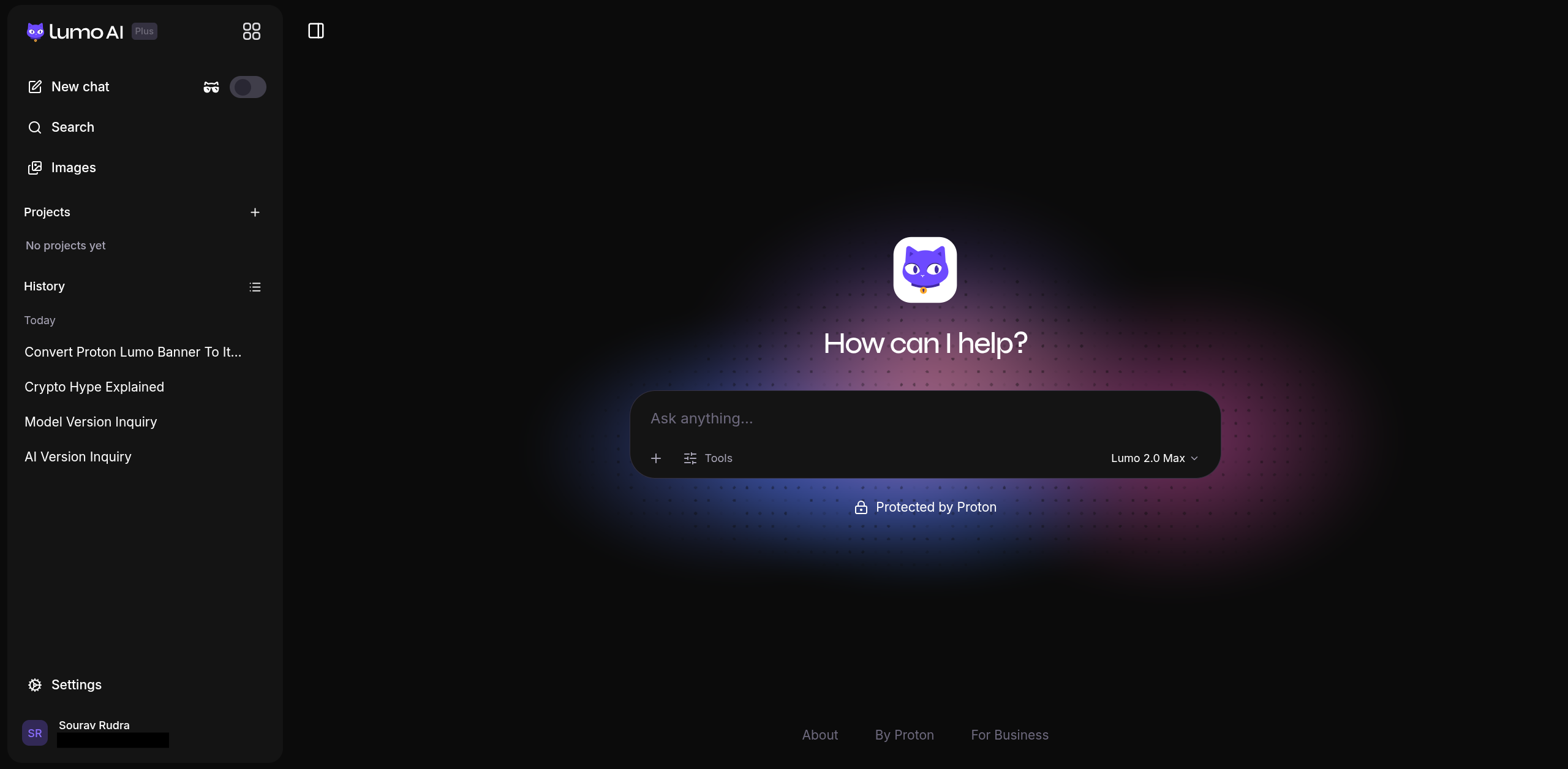
However, data also highlights the persistent challenges of modern generative AI. While the assistant performed admirably with text, image generation remains a "black box." In my attempt to have Lumo rebrand an image to match the It’s FOSS visual identity, the model successfully adjusted the color palette and mascot but struggled significantly with typography. The consistent failure to render the simple text "It’s FOSS" without typos serves as a reminder that even advanced models still struggle with basic linguistic-to-pixel mapping.
Official Stance and Strategic Implications
Andy Yen, CEO and founder of Proton, has been vocal about the company’s intent to challenge the hegemony of Silicon Valley’s AI giants. According to Proton’s internal benchmarks, the Max model performs on par with the latest iterations from OpenAI and Anthropic in several key categories.

The strategic implication here is clear: Privacy is no longer a niche requirement. By offering Lumo for Business plans that adhere to GDPR and HIPAA standards, Proton is betting that enterprise clients will prioritize the security of their data over the slightly more "creative" but less secure offerings from other AI providers. The fact that the entire Lumo stack runs on Europe-based, zero-access encrypted infrastructure is a powerful marketing lever in an age of increasing data scrutiny.
The Broader Implications for the AI Ecosystem
The release of Lumo 2.0 has several broader implications for the future of AI:

- The Death of the "One-Size-Fits-All" Model: Proton’s decision to offer distinct models (Lite and Max) suggests that the industry is moving away from a single, massive model towards a modular approach. Users are increasingly demanding the ability to choose between cost-effective, fast performance and expensive, deep reasoning.
- Privacy as a Differentiator: By baking memory, search, and image generation into a zero-access encrypted wrapper, Proton is forcing a conversation about data sovereignty. If a user can have a highly capable AI that doesn’t "leak" their data to third-party trainers, the incentive to use non-private alternatives diminishes rapidly.
- The "Last Mile" Problem in Image Generation: Despite the advancements, the failure to render simple text in images highlights a specific, persistent bottleneck in current AI development. As LLMs become more integrated into business workflows, the expectation for precision—especially regarding branding and text—will only grow.
Getting Started: A Tiered Approach
Proton has maintained a tiered accessibility strategy that lowers the barrier to entry:
- Guest Access: Available via the official website, this allows users to test core capabilities without an account. It is the best way to experience the Fast model’s latency and the interface’s responsiveness.
- Free Account: Unlocks extended prompt limits and retains chat history, making it a viable tool for casual, day-to-day use.
- Lumo Plus: The subscription tier that unlocks the full suite: Max models, Thinking mode, image generation, and Project-based workspaces. For power users, this is the recommended path.
- Lumo for Business: This is where the real value lies for organizations. With administrative controls and compliance support, it positions Lumo as a legitimate alternative for corporate environments where data leakage is a non-negotiable risk.
Final Thoughts: The Path Forward
Lumo 2.0 is a testament to Proton’s commitment to building a privacy-centric digital future. While it is not yet perfect—the typographic errors in image generation are a stark reminder of the limitations of current generative models—the progress made in just a few months is undeniable.

By prioritizing user-controlled memory and verifiable search citations, Proton is addressing the most glaring weaknesses of the current AI landscape. As we look toward the next iteration, the focus will likely shift to refining these multimodal capabilities and further integrating Lumo into the wider Proton ecosystem (Mail, Drive, Calendar, and Pass).
For now, Lumo 2.0 stands as a robust, secure, and increasingly intelligent assistant that proves you don’t have to sacrifice your privacy to access the cutting edge of artificial intelligence. Whether you are a privacy advocate or a professional looking for a secure research partner, Lumo is no longer just a "spin"—it is a platform worth keeping an eye on.