RF Rebel: Engineer Hacks Dreo Ceiling Fan for Local Smart Home Control, Bypassing Cloud Dependency
Main Facts
In an era increasingly dominated by interconnected smart devices, the promise of seamless automation often comes tethered to proprietary cloud services. This reliance can introduce concerns ranging from data privacy and internet dependency to potential vendor lock-in and the obsolescence of devices should a company cease support. It was precisely this conundrum that recently spurred engineer Sam Wilkinson to action. Faced with a new Dreo CLF513S ceiling fan that performed admirably in its core function but exclusively offered smart control through an "ugly cloud-only smart home setup," Wilkinson embarked on a sophisticated reverse-engineering project. His goal: to liberate the fan from its cloud confines and integrate it seamlessly into his existing, locally-controlled Home Assistant ecosystem.
Wilkinson’s successful endeavor, meticulously documented on his blog on June 24, 2026, represents a significant win for the burgeoning community of DIY smart home enthusiasts. Through a methodical process of radio frequency (RF) signal capture, analysis, and replication, he bypassed the manufacturer’s intended control mechanism. Leveraging readily available open-source hardware and software tools such as an RTL-SDR dongle, an ESP32-C6 microcontroller, and the MQTT protocol, Wilkinson crafted a custom solution that now allows his Dreo fan to be controlled entirely locally, without any reliance on external internet servers or proprietary applications. This hack not only provides a blueprint for others seeking to reclaim control over their smart devices but also underscores a growing user demand for open, interoperable, and privacy-centric smart home solutions. His work exemplifies how ingenuity and technical prowess can overcome the limitations imposed by manufacturers, fostering a more robust and user-empowered smart home landscape.
Chronology of the Hack
Sam Wilkinson’s journey to local control began with a seemingly straightforward purchase, quickly evolving into a compelling case study in consumer empowerment through reverse engineering.
Initial Frustration and the Spark of Innovation
The narrative commences with Wilkinson’s acquisition of the Dreo CLF513S ceiling fan. His choice was driven by practical considerations: the fan was affordably priced, appropriately sized for his living space, and, crucially, performed its fundamental task of air circulation effectively. However, the initial satisfaction was quickly overshadowed by the revelation of its "smart" capabilities. While advertised as smart-enabled, the fan’s control mechanism was exclusively tied to a cloud-based application, a common but increasingly contentious feature in the modern smart home market.
For Wilkinson, like many privacy-conscious and technically proficient users, this cloud-only dependency presented a significant hurdle. Cloud services introduce inherent vulnerabilities: they can be slow, unreliable if internet connectivity falters, and raise serious questions about data privacy and user control. The thought of his fan’s operational data potentially traversing external servers, or worse, the device becoming a brick if the manufacturer’s cloud service was discontinued, was simply unacceptable. This fundamental incompatibility with his preference for a robust, local, and private smart home ecosystem served as the catalyst for his hacking efforts. The decision was made: the fan, despite its manufacturer-intended limitations, would be made to conform to his will.
Deciphering the Remote: The RF Clue
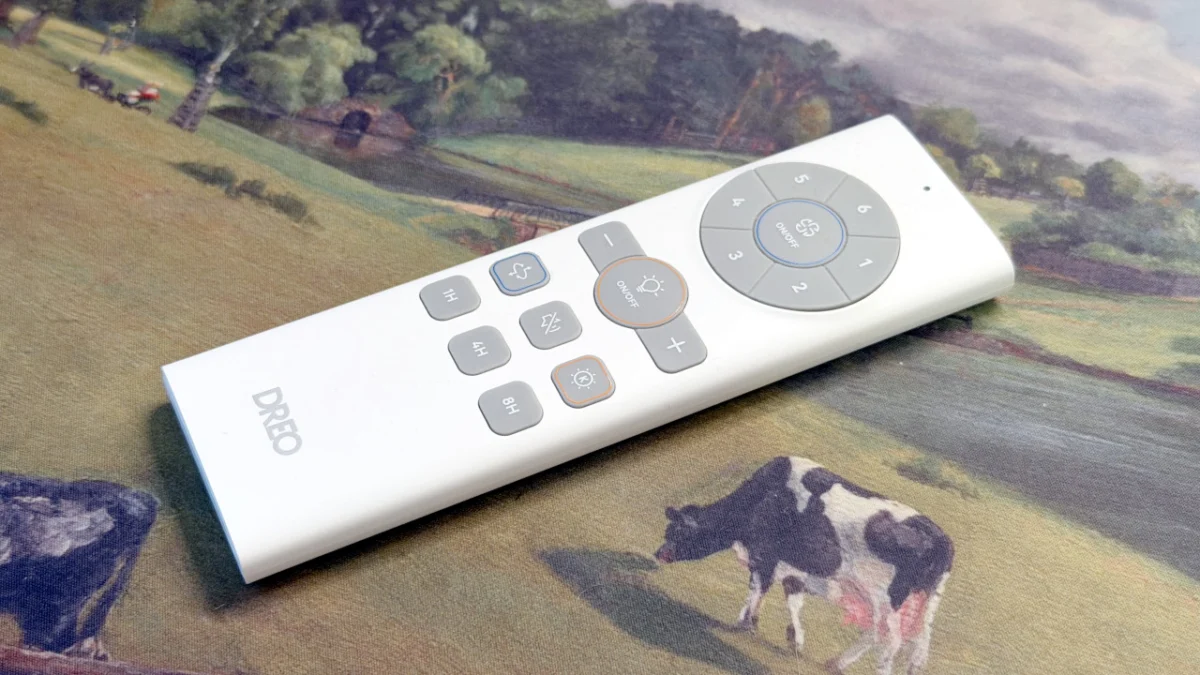
Wilkinson’s hacking efforts began with the most tangible piece of the puzzle: the physical remote control included with the Dreo fan. This ubiquitous accessory, often overlooked, held the key to unlocking the fan’s hidden commands. His initial observation was critical: the remote operated flawlessly without requiring a direct line of sight to the fan. This immediately suggested that the communication method was not infrared (IR), which requires a clear path, but rather radio frequency (RF) transmission. RF signals, unlike IR, can penetrate walls and operate over longer distances, making them ideal for devices like ceiling fans where the receiver might be obscured.
Further corroborating this hypothesis was the presence of an FCC ID on the back of the remote control. The Federal Communications Commission (FCC) in the United States mandates that all electronic devices emitting RF energy must be tested and certified, with a unique identifier assigned. This ID typically provides crucial information about the device’s operating frequencies and compliance. For Wilkinson, the FCC ID served as a definitive confirmation that he was dealing with an RF-controlled device, narrowing down the scope of his investigation significantly.
Armed with this knowledge, the next logical step was to identify the precise frequency at which the remote communicated. Through research and potentially cross-referencing the FCC ID, Wilkinson confirmed that the remote operated on 433.92 MHz. This frequency is a well-known and widely utilized band for low-power, short-range wireless devices, including garage door openers, wireless weather stations, and, indeed, many smart home appliances and their remotes. Its commonality meant that off-the-shelf tools existed to interact with it, making the hacking process more accessible.
Capturing and Analyzing Signals: The RTL-SDR Advantage
With the operating frequency identified, Wilkinson moved into the crucial phase of capturing the actual commands transmitted by the remote. For this, he enlisted the help of an RTL-SDR (Software-Defined Radio) dongle. An RTL-SDR is a remarkably versatile and affordable device, typically a USB dongle originally designed for receiving digital television broadcasts, that can be repurposed to receive and demodulate a wide range of radio frequencies. It effectively transforms a standard computer into a sophisticated radio receiver and spectrum analyzer.
Wilkinson connected the RTL-SDR to his computer and used specialized software to tune into the 433.92 MHz frequency. By pressing various buttons on the Dreo fan’s remote, he captured the raw RF data being transmitted. The software allowed him to visualize this data in a spectrogram, a graphical representation of signal strength over time and frequency. Analysis of the spectrogram quickly revealed the modulation scheme employed by the remote: simple On-Off Keying (OOK).
On-Off Keying is one of the simplest forms of digital modulation, where the presence of a carrier wave (an "on" state) represents a binary ‘1’ and its absence (an "off" state) represents a binary ‘0’. This straightforward method is common for low-data-rate applications like remote controls due to its ease of implementation and robustness against noise. By observing the distinct patterns of "on" and "off" pulses corresponding to each button press (e.g., fan on, fan off, speed up, speed down, light on/off), Wilkinson was able to decode the unique digital sequences that controlled the fan’s various functions. This critical step essentially provided him with the "language" the fan understood.
Building the Custom Transmitter: ESP32-C6 and RFM69HCW
Having successfully decoded the fan’s commands, the next challenge was to replicate them. Wilkinson needed a device that could transmit these custom RF signals on demand and be integrated into his existing Home Assistant setup. His solution involved a powerful yet accessible combination of microcontroller and radio transceiver.
For the brain of his custom transmitter, he selected an ESP32-C6 microcontroller. The ESP32 family of microcontrollers, developed by Espressif Systems, is highly favored in the DIY smart home community due to its integrated Wi-Fi and Bluetooth capabilities, powerful processing core, and ample General Purpose Input/Output (GPIO) pins. The ESP32-C6, a newer variant, offered excellent performance and connectivity, making it ideal for this application. Its Wi-Fi capability was particularly crucial for allowing it to communicate with Home Assistant over the local network.
To handle the actual RF transmission, Wilkinson interfaced the ESP32-C6 with an RFM69HCW radio transceiver module. The RFM69HCW is a high-performance, low-power RF module designed for two-way communication in the ISM (Industrial, Scientific, and Medical) bands, including the 433 MHz band. Its ability to transmit the specific OOK signals decoded from the original remote made it a perfect match for the project. The wiring involved connecting the data output pins of the ESP32 to the input of the RFM69HCW, along with power and ground connections.
Software Development and Home Assistant Integration: The MQTT Bridge
With the hardware assembled, the final stage involved programming the ESP32-C6 and integrating it into Wilkinson’s Home Assistant ecosystem. The ESP32 was programmed using a suitable development environment (likely the Arduino IDE or PlatformIO), where custom firmware was written. This firmware’s primary function was to receive commands from Home Assistant and, in response, trigger the RFM69HCW to transmit the corresponding decoded RF sequences. For instance, when Home Assistant sent an "on" command for the fan, the ESP32 would retrieve the specific OOK sequence for "fan on" and broadcast it via the RFM69HCW.
To facilitate communication between Home Assistant and the ESP32, Wilkinson leveraged MQTT (Message Queuing Telemetry Transport). MQTT is a lightweight, publish-subscribe messaging protocol widely used in IoT (Internet of Things) applications due to its efficiency and low bandwidth requirements. In this setup, Home Assistant would publish commands (e.g., "fan/livingroom/power/set" with a payload of "ON") to an MQTT broker running on Wilkinson’s network. The ESP32, acting as an MQTT client, would subscribe to these topics. Upon receiving a message, the ESP32’s firmware would parse it and activate the RFM69HCW to transmit the appropriate RF signal to the Dreo fan.
The result was a remarkably seamless integration. Wilkinson could now control his Dreo CLF513S ceiling fan directly from his Home Assistant dashboard, alongside all his other smart devices, without ever touching the manufacturer’s cloud app or the physical remote. This custom solution not only provided the desired local control but also offered enhanced flexibility for automation, allowing the fan to be controlled by schedules, sensors, or other smart home triggers, all within the secure and private confines of his own network.
Supporting Data & Context
Wilkinson’s hack is more than an isolated technical achievement; it resonates with broader trends and philosophical underpinnings within the smart home industry and the maker community. It underscores a growing push for greater user autonomy, privacy, and interoperability.
The Ascendance of DIY Smart Homes and Local Control
The smart home market has exploded in recent years, promising convenience and automation. However, a significant segment of consumers and enthusiasts, like Sam Wilkinson, have grown wary of the pervasive reliance on cloud-dependent systems. This wariness stems from several key concerns:
- Privacy: Cloud services often collect vast amounts of user data, raising questions about how this data is stored, used, and protected. Local control minimizes data exposure by keeping information within the user’s private network.
- Reliability: Cloud-dependent devices cease to function optimally, or sometimes entirely, if the internet connection drops or if the manufacturer’s servers experience an outage. Local control ensures functionality regardless of external network conditions.
- Vendor Lock-in and Obsolescence: When a device is tied to a specific manufacturer’s cloud, users are locked into that ecosystem. If the company changes its policies, introduces subscriptions, or goes out of business, the "smart" functionality of the device can be rendered useless, turning expensive gadgets into bricks.
- Response Time: Commands routed through distant cloud servers can introduce noticeable latency, diminishing the responsiveness of smart home actions. Local processing offers near-instantaneous feedback.
- Customization and Interoperability: Proprietary cloud systems often limit how devices can interact with products from other brands. Local control platforms like Home Assistant thrive on interoperability, allowing users to integrate a diverse array of devices from different manufacturers into a unified system.
These factors have fueled a significant movement towards DIY smart home solutions, where users prioritize local processing, open standards, and the ability to customize their environments without external dependencies. Wilkinson’s project perfectly encapsulates this philosophy, demonstrating how a common appliance can be transformed to meet these stringent requirements.
The Role of Open-Source Tools and Communities
The feasibility of Wilkinson’s hack is deeply rooted in the accessibility and power of open-source hardware and software, supported by a vibrant global community.
- Home Assistant: At the heart of many DIY smart homes, Home Assistant is a free, open-source home automation platform designed for local control. Its extensive integration capabilities, active development community, and focus on privacy make it the go-to choice for enthusiasts looking to build highly customized and robust smart home systems. It acts as the central brain, coordinating diverse devices and automations.
- RTL-SDR: The Software-Defined Radio dongle, originally a humble DVB-T TV tuner, has been transformed by the open-source community into an indispensable tool for RF experimentation, signal analysis, and even radio astronomy. Its affordability and versatility make it accessible to hobbyists and engineers alike, democratizing access to RF research.
- ESP32 Microcontrollers: These low-cost, high-performance microcontrollers with integrated Wi-Fi and Bluetooth have become the workhorses of the IoT and maker communities. Their open-source SDKs (Software Development Kits) and vast community support allow for rapid prototyping and deployment of custom smart devices.
- MQTT: As a lightweight, open-source messaging protocol, MQTT provides an efficient and reliable way for devices to communicate in an IoT environment. Its publish-subscribe model simplifies data exchange and is widely adopted across various smart home platforms.
- Community Knowledge Sharing: Platforms like Hackaday, Sam Wilkinson’s own blog, GitHub, and numerous online forums (e.g., Reddit’s r/HomeAssistant, r/diysmartthings) serve as critical hubs for knowledge sharing. Engineers and hobbyists freely share code, schematics, tutorials, and troubleshooting tips, accelerating innovation and enabling individuals to build upon each other’s work. This collaborative spirit is fundamental to the progress of the DIY smart home movement.
Economic Motivation and Bridging the Gap
Beyond philosophical arguments for privacy and control, there’s a significant economic driver behind hacks like Wilkinson’s. Often, budget-friendly appliances, like the "cheap, well-sized" Dreo fan, lack the sophisticated local control features found in premium smart devices. Manufacturers tend to reserve advanced, open integrations for higher-priced models, or they default to simple cloud solutions for mass-market appeal and ease of development.
Hacking provides a powerful alternative. Instead of paying a premium for a device that offers local control out-of-the-box (if one even exists for a specific appliance), users can acquire a functional, affordable product and then invest their time and relatively modest sums in open-source hardware (like the ESP32 and RFM69HCW) to add the desired "smart" capabilities. This approach allows consumers to effectively "upgrade" their devices, making them smarter and more aligned with their personal preferences, without incurring the often substantial cost of premium, fully-integrated solutions. It’s a testament to the idea that with a bit of tinkering, existing appliances can indeed be shaped to bend to the user’s will, offering a compelling cost-benefit analysis for those willing to engage in DIY efforts.
Official Responses & Industry Perspective
While individual hacks like Sam Wilkinson’s typically do not elicit direct official responses from manufacturers, his project highlights a significant tension within the broader smart home industry: the ongoing struggle between proprietary systems and the growing demand for open standards and user control.
Manufacturer’s Stance: The Dreo Example
Dreo, like many consumer electronics manufacturers, likely opts for cloud-based smart solutions for several compelling business reasons. Cloud platforms simplify development, streamline firmware updates, and provide a unified user experience across multiple products. Crucially, they also enable manufacturers to collect valuable user data, which can inform future product development, marketing strategies, and potentially pave the way for subscription-based services. For a company focused on mass-market appeal, a cloud-first approach often represents the path of least resistance and greatest perceived return on investment.
From Dreo’s perspective, Wilkinson’s hack, while demonstrating ingenuity, technically circumvents their intended control mechanisms. Such activities are rarely officially sanctioned and may even be discouraged by warranty clauses or terms of service that prohibit reverse engineering. However, the sheer volume of similar projects across various brands suggests that a significant portion of the market is actively seeking alternatives to cloud dependency. While Dreo may not publicly comment on this specific hack, the underlying sentiment among users is a clear indicator of evolving consumer expectations.
Industry Trends: Proprietary vs. Open Standards
The smart home industry is at a crossroads. For years, it has been fragmented by a multitude of proprietary ecosystems (e.g., Amazon Alexa, Google Home, Apple HomeKit), each with its own set of compatible devices and cloud services. This fragmentation has led to interoperability challenges and user frustration.
However, there is a strong movement towards more open standards. Initiatives like Matter, developed by the Connectivity Standards Alliance (CSA), represent a significant industry-wide effort to create a unified, open-source connectivity standard for smart home devices. Matter aims to enable devices from different manufacturers to communicate seamlessly and locally, addressing many of the issues that motivated Wilkinson’s hack. While Matter is still in its early stages of adoption, its emergence signals a recognition by major industry players that a more open and interoperable future is necessary for the smart home market to truly flourish.
Hacks like Wilkinson’s serve as powerful reminders to manufacturers that consumers are increasingly sophisticated and demand more control over their devices. They push the industry to consider the long-term implications of closed ecosystems and to explore more user-centric approaches, whether through direct support for local control or through embracing open standards like Matter. The tension between profit-driven proprietary models and community-driven open solutions will continue to shape the evolution of the smart home landscape.
Implications & Future Outlook
Sam Wilkinson’s successful RF hack of his Dreo ceiling fan carries significant implications for both individual consumers and the broader smart home industry, pointing towards a future where user empowerment and open standards may increasingly challenge traditional proprietary models.
Empowerment of Consumers
Perhaps the most profound implication of projects like Wilkinson’s is the message of empowerment it sends to consumers. It demonstrates unequivocally that users are not merely passive recipients of technology dictated by manufacturers. With sufficient curiosity, technical literacy, and access to affordable tools, individuals can reclaim control over their devices, tailoring them to their specific needs and values. This empowerment fosters a sense of digital sovereignty, allowing users to build smart homes that prioritize their privacy, reliability, and personal preferences over the commercial interests of large corporations. It encourages a "maker" mindset, where technology is seen not as a black box, but as something to be understood, modified, and improved.
Security Considerations
While empowering, the act of hacking and creating custom smart home solutions also carries inherent responsibilities, particularly regarding security. Any custom integration introduces a new attack surface. Users must ensure that their self-built solutions, especially those involving network connectivity (like the ESP32 communicating via Wi-Fi and MQTT), are securely configured. This includes using strong passwords, keeping software updated, and understanding potential vulnerabilities. Wilkinson’s approach, which emphasizes local control and open-source components, generally contributes to a more secure environment by reducing reliance on external cloud services, but vigilance remains paramount.
The Evolving Future of Smart Homes
The ongoing tension between convenience (often provided by cloud-based, proprietary systems) and control (championed by local, open-source solutions) will continue to shape the future of smart homes. Projects like Wilkinson’s are not isolated incidents but rather part of a growing movement that collectively exerts pressure on manufacturers. This pressure can manifest in several ways:
- Increased Demand for Local Control: As more users become aware of the benefits of local control, market demand for devices that natively support it, or are easily hackable, will likely increase.
- Adoption of Open Standards: The success of DIY projects provides further impetus for industry-wide adoption of open standards like Matter, which promises to bridge the gap between proprietary ecosystems and deliver greater interoperability and local control out-of-the-box.
- Innovation in the Maker Community: The accessibility of tools like ESP32, Raspberry Pi, and RTL-SDR will continue to drive innovation within the maker community, leading to more sophisticated and user-friendly DIY smart home solutions.
Ultimately, Wilkinson’s hack is a testament to the ingenuity of the human spirit in overcoming technological limitations. It serves as a compelling reminder that the "smart" in smart home should truly empower the homeowner. As the landscape evolves, the contributions of individual engineers and enthusiasts will play a crucial role in shaping a future where smart devices are truly at the service of their owners, rather than the other way around. For those inspired by Wilkinson’s journey and embarking on their own smart home customization projects, the community remains eager to learn from your experiences. Don’t hesitate to share your discoveries and contributions with the wider world through platforms like Hackaday, continuing this cycle of innovation and empowerment.