Security Catastrophe: CISA Contractor Exposes Sensitive Infrastructure via Public GitHub Repository
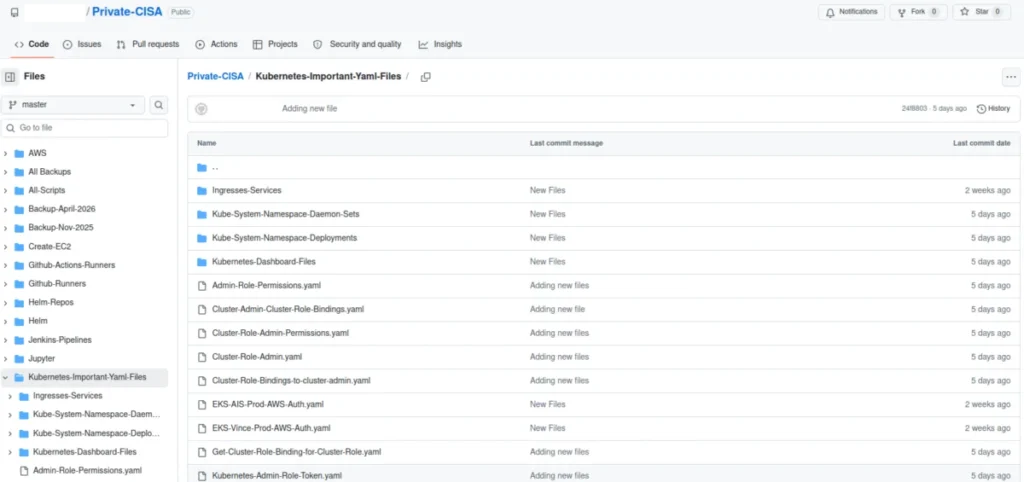
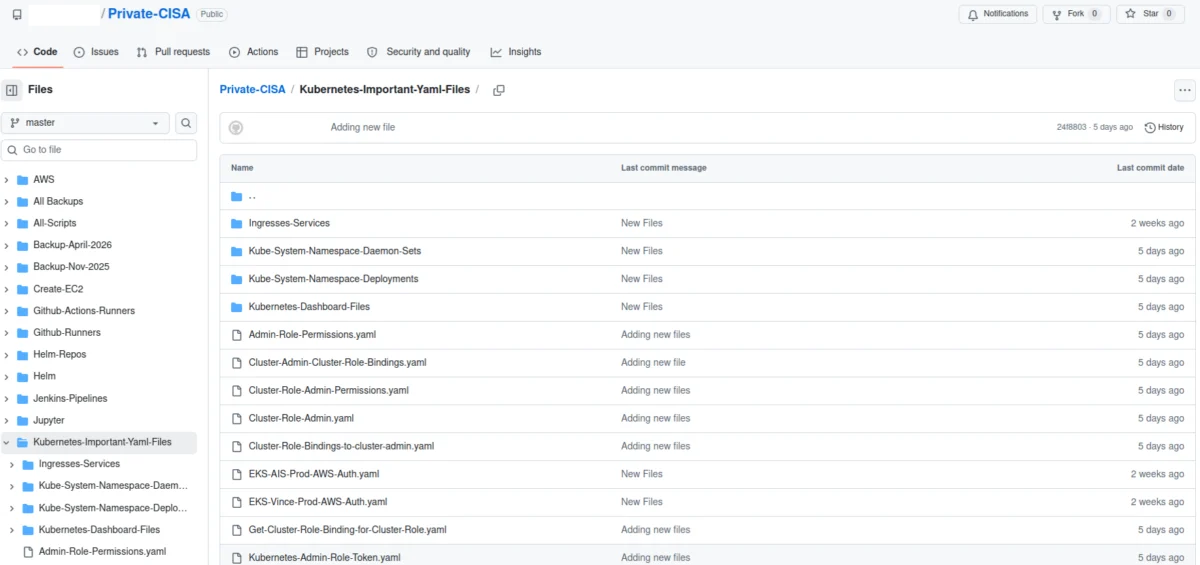
In a staggering lapse of operational security, a public GitHub repository maintained by a contractor for the Cybersecurity and Infrastructure Security Agency (CISA) has exposed highly privileged credentials for AWS GovCloud environments and numerous internal systems. The breach, which security researchers describe as one of the most egregious government data leaks in recent history, has cast a harsh spotlight on the cybersecurity practices of federal contractors and the internal oversight of the nation’s primary civilian cyber defense agency.
The repository, ironically titled "Private-CISA," served as a treasure trove for potential adversaries, containing everything from cloud access keys and authentication tokens to plaintext passwords for the agency’s secure development environments.
The Discovery: A Professional Red Flag
The breach was brought to light on May 15, when Guillaume Valadon, a researcher with the security firm GitGuardian, reached out to alert authorities. GitGuardian specializes in monitoring public code repositories for exposed "secrets"—digital keys that act as master passes to corporate or government infrastructure.
Valadon’s discovery was not the result of a sophisticated hack, but rather an automated scan that flagged the repository for its sheer lack of basic security hygiene. Upon analysis, Valadon found that the repository owner had not only ignored standard security warnings but had actively disabled GitHub’s native protections designed to prevent the accidental publishing of SSH keys and sensitive secrets.
"Passwords stored in plain text in a CSV, backups in Git, explicit commands to disable GitHub’s secrets detection feature," Valadon noted in a follow-up analysis. "I honestly believed that it was all fake before analyzing the content deeper. This is indeed the worst leak that I’ve witnessed in my career."
Chronology of the Exposure
The timeline of the exposure highlights a systemic failure to monitor the digital hygiene of government-linked assets.
- September 2018: The contractor’s GitHub account is created.
- November 13, 2025: The "Private-CISA" repository is initialized. Evidence suggests it was used as a synchronization "scratchpad" to bridge the gap between a work laptop and a home computer, allowing the contractor to work across different, unvetted environments.
- May 15, 2026: GitGuardian researchers identify the repository and attempt to contact the owner, receiving no response.
- Late May 2026: Following notifications from KrebsOnSecurity and security consultancy Seralys, the repository is finally taken offline.
- Post-Removal (48 hours): Despite the repository being deleted, researchers noted that the compromised AWS GovCloud keys remained active and valid for two full days, leaving a critical window of vulnerability open even after the initial exposure was addressed.
Supporting Data: The Anatomy of a Leak
The "Private-CISA" repository was far more than a simple storage folder; it was a blueprint for infiltrating federal infrastructure. Philippe Caturegli, founder of the security consultancy Seralys, conducted a technical assessment of the leaked data to determine the scope of the potential damage.
The repository contained several high-risk files, including:
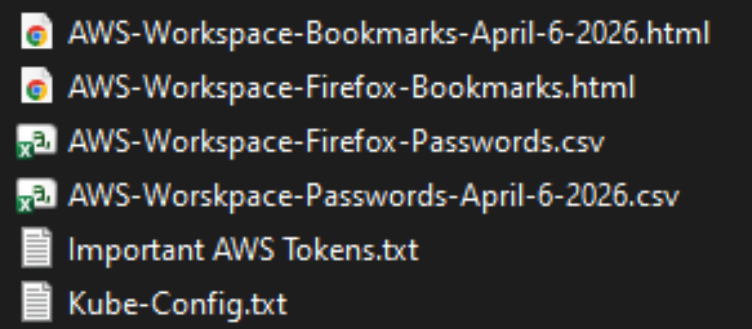
- "importantAWStokens": This file granted administrative access to three distinct Amazon AWS GovCloud servers, which host some of the most sensitive federal workloads.
- "AWS-Workspace-Firefox-Passwords.csv": A document containing plaintext usernames and passwords for dozens of internal CISA systems, including the "Landing Zone DevSecOps" (LZ-DSO) environment, the very heart of the agency’s secure software development pipeline.
- Artifactory Credentials: The exposure of credentials to the internal "artifactory"—the central repository where CISA stores the code packages used to build software—represents perhaps the most dangerous aspect of the leak.
Caturegli noted that if an attacker had accessed these credentials, they could have performed a "supply chain attack." By injecting a backdoor into a software package stored in the artifactory, an adversary could ensure that every subsequent software deployment across the agency would carry the malicious code, effectively granting the attacker a persistent, hidden foothold within the government’s digital ecosystem.
Furthermore, the audit revealed that the contractor relied on "easily-guessed" passwords. Many of the credentials followed a predictable pattern, appending the current year to the name of the platform, a practice that security experts have cautioned against for decades.
Official Responses and Agency Stance
In response to inquiries, a CISA spokesperson acknowledged the incident, confirming that the agency is conducting an investigation into the exposure.
"Currently, there is no indication that any sensitive data was compromised as a result of this incident," the spokesperson stated. "While we hold our team members to the highest standards of integrity and operational awareness, we are working to ensure additional safeguards are implemented to prevent future occurrences."
The contractor involved, identified as an employee of the Dulles, Virginia-based firm Nightwing, declined to provide a statement, referring all questions back to the federal agency.
The agency’s claim that there is "no indication" of compromise is standard in the wake of such disclosures, but cybersecurity experts argue that proving a negative is difficult. Without exhaustive forensic logs of every access request made to the AWS GovCloud accounts during the six months the repository was public, it is impossible to definitively rule out that a malicious actor—or a curious security researcher—did not discover the credentials before the public alert.
Implications: A Fragile Agency
The incident occurs against a backdrop of significant institutional instability at CISA. Following the start of the second Trump administration, the agency has undergone a massive reorganization. Reports indicate that CISA has lost nearly one-third of its workforce due to a combination of early retirements, mandatory buyouts, and resignations.
This "brain drain" has left the agency operating with a fraction of its former budget and personnel. Critics suggest that such a rapid depletion of institutional knowledge and staffing depth creates the exact environment in which poor security practices—like a contractor using a public GitHub repo to sync work files—can go unnoticed for months.
The Broader Security Context
The implications of this breach extend far beyond a single contractor. The incident highlights three critical flaws in modern government cybersecurity:
- The "Shadow IT" Problem: When federal employees or contractors find the official, secure pathways for data transfer too cumbersome, they often resort to personal tools like GitHub, Dropbox, or private cloud storage. This creates a "shadow IT" landscape that bypasses all security monitoring.
- Contractor Oversight: Agencies like CISA frequently outsource development and operational tasks to private firms. While these contractors are bound by strict security protocols, the enforcement of these rules—especially regarding personal developer accounts—remains notoriously difficult.
- The Persistence of Secrets: As noted by Caturegli, even when a repository is deleted, the keys exposed within them remain "live" until they are manually rotated or revoked. The fact that the AWS credentials remained active for 48 hours after the agency was notified suggests a breakdown in incident response procedures.
Conclusion: A Call for Hardened Protocols
The "Private-CISA" leak serves as a sobering reminder that even the most security-conscious organizations are vulnerable to human error. When individuals with administrative privileges treat public-facing platforms as convenient scratchpads, the protective layers built by cybersecurity agencies become irrelevant.
As the federal government continues to modernize its digital infrastructure, the need for automated, real-time monitoring of developer environments is more urgent than ever. Whether CISA will implement more stringent controls over contractor device usage and code repository management remains to be seen. However, this incident has made one thing clear: in the race to secure the nation’s digital borders, the most dangerous vulnerabilities are often the ones found in the agency’s own backyard.