The Future of Quality: Analyzing the Explosive Growth of the Global Software Testing Market
For years, software testers and quality assurance (QA) professionals have faced a persistent, existential inquiry: "What is the future of the software testing industry?" and "Is QA a viable, long-term career path?"
As digital transformation accelerates across every sector of the global economy, these questions have moved from matters of professional anxiety to pillars of corporate strategy. The data is clear: software testing is no longer a peripheral task performed at the end of a development cycle. It has become a foundational element of the product lifecycle, a critical gatekeeper for business integrity, and a high-growth sector attracting massive investment.
Main Facts: A Multi-Billion Dollar Industry
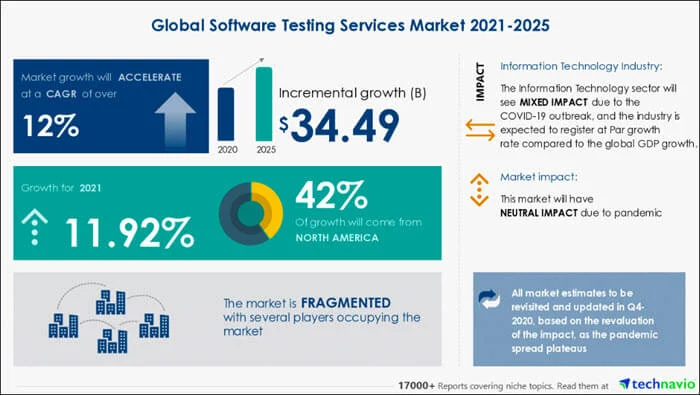
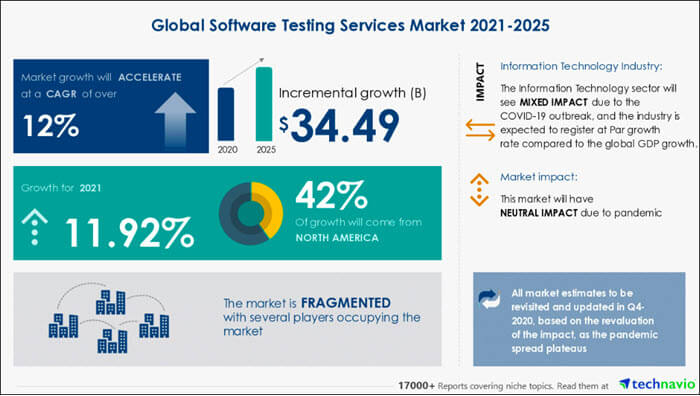
The global software testing services market is undergoing a seismic shift. Recent market intelligence reports indicate that the sector is not merely growing; it is becoming a central line item in enterprise budgets.
According to projections from PR Newswire, the software testing services market is forecasted to grow by a staggering $90 billion between 2021 and 2030, maintaining a robust Compound Annual Growth Rate (CAGR) of 12.39%. Complementing this, research from Global Market Insights confirms that the market surpassed the $40 billion valuation mark in 2020. This upward trajectory is driven by the increasing complexity of software architectures, the proliferation of mobile applications, and the non-negotiable demand for secure, high-performance digital user experiences.

Chronology of Transformation: From Manual to Intelligent Automation
The evolution of the QA industry can be viewed through a decade-long transition from manual, checklist-based testing to an integrated, AI-driven DevOps model.
- Pre-2015: Testing was largely siloed, often viewed as a "blocker" to deployment, and heavily reliant on manual regression.
- 2015–2019: The rise of Agile and DevOps methodologies forced QA to shift "left." Testing became continuous, and the demand for automation frameworks like Selenium and JUnit began to dominate the landscape.
- 2020–Present: The pandemic acted as a catalyst for digital-first operations. Organizations realized that uptime and security were directly tied to brand survival. Today, the focus has shifted toward "Intelligent Automation," where Artificial Intelligence (AI) and Machine Learning (ML) are deployed to optimize test strategies, predict failures before they occur, and manage massive datasets that human testers could never parse alone.
Supporting Data: Why QA is the Backbone of Modern Business
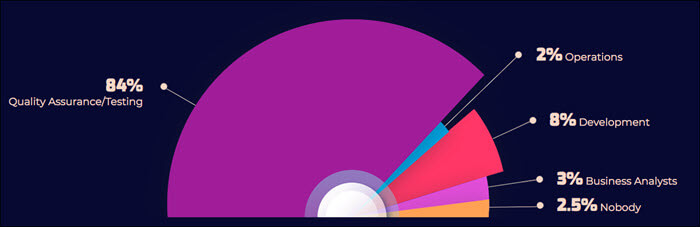
The professionalization of the QA role is supported by data from industry leaders. A survey conducted by Tricentis revealed that in over 80% of organizations, the responsibility for functional test automation now rests directly with testers and QA professionals. This shift signals a move toward a more technical, engineering-focused QA role.
Further validation comes from the World Quality Report by Micro Focus, which highlights that 90% of businesses are currently seeing growth in AI-driven testing practices. This is complemented by the fact that 69% of businesses report meeting their quality goals—a figure that is rising as companies formalize their testing budgets as an "indivisible part" of their software engineering expenditures.
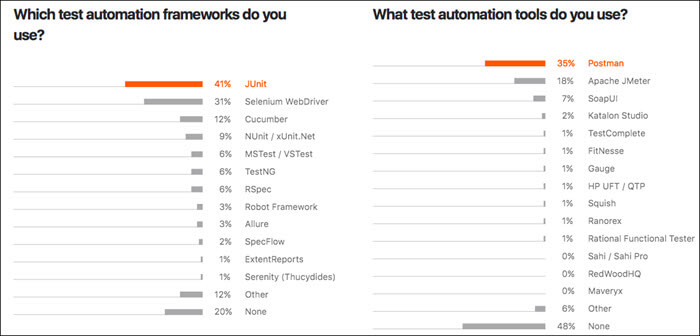
The technological landscape is also narrowing toward a standard set of tools. JetBrains’ research into the developer ecosystem shows that JUnit and Selenium WebDriver remain the most popular automation frameworks, while Java remains the dominant language for building test automation suites. For API and performance testing, Postman and Apache JMeter have solidified their positions as industry standards.
The Role of AI and Machine Learning
The integration of AI/ML is the most significant trend currently reshaping the field. It is no longer a buzzword; it is a utility. AI-powered testing tools allow organizations to:
- Optimize Test Suites: Automatically identifying which tests are redundant.
- Self-Healing Scripts: Modern frameworks can now detect UI changes and "heal" automation scripts, preventing costly test failures caused by minor design updates.
- Predictive Analytics: Analyzing historical data to identify which parts of an application are most prone to defects, allowing teams to prioritize their testing efforts where they are needed most.
Industry forecasts suggest that the AI market in software testing is expected to reach $200 billion by 2030. This growth is being fueled by the necessity of a "seamless end-user experience." As users become less tolerant of bugs and downtime, the pressure on QA teams to deliver flawless software is driving increased investment in automated, intelligent systems.
Professional Implications: The Demand for Skilled Talent
For the individual practitioner, the news is overwhelmingly positive. The demand for trained IT specialists is outpacing supply. Current statistics indicate that there are roughly 5.2 software testers per 100,000 people globally, a number that is currently insufficient to meet the needs of the ballooning tech industry.
The "ideal" tester profile has also changed. According to data from the QA Lead, while technical proficiency is crucial, soft skills remain the differentiator. 75% of surveyed professionals identified communication skills as the most important attribute, followed by scripting and automation proficiency (63%).
The path to career advancement is no longer limited to trial and error. 44% of today’s testers have completed formal certifications, and the industry is shifting toward a model where "lifelong learning"—via boot camps, specialized certifications, and peer-reviewed courses—is the norm.
Security: The New Frontier
Perhaps the most critical development in the last three years is the marriage of QA and cybersecurity. With cyber threats increasing by the day, large enterprises are shifting their budgets toward automated security testing.
Amzur research reports that 68% of large companies believe cybersecurity threats are a primary business risk. Consequently, global spending on cybersecurity, often integrated into the software testing phase, is expected to hit $133.7 billion by the end of 2022 and beyond. The "Shift Left" movement now includes "Shift Left Security," where vulnerabilities are identified during the coding and testing phase rather than post-release.
The Road Ahead: Trends to Watch
As we look toward the mid-2020s and beyond, the testing industry is likely to be defined by several key pillars:
- Codeless Testing: Allowing non-developers to create automation scripts, thereby democratizing the QA process.
- IoT-Driven Testing: As the Internet of Things grows, testing will need to move beyond screens and into the realm of hardware-software integration.
- Performance Engineering: Moving beyond "testing" to "engineering," where performance is baked into the architecture of the application from day one.
- Blockchain Testing: As decentralized applications become more common, the need for specialized QA to verify smart contracts and ledger integrity will explode.
Conclusion: A Future of Infinite Potential
The narrative that software testing is a dying field is definitively debunked. On the contrary, the discipline is evolving into a sophisticated, highly valued, and technically demanding profession.
Software testing is the ultimate safeguard of the digital economy. It identifies systemic errors, enhances performance, and—most importantly—builds the trust that consumers require to engage with modern technology. By adopting Agile models, embracing AI-driven automation, and prioritizing security, the QA industry is not just growing; it is setting the standard for how the world builds software.
For anyone considering a career in this space, the data suggests that there has never been a better time to start. The future is automated, it is intelligent, and it is undoubtedly reliant on the rigorous, analytical, and creative work of the professional software tester.