The Architect of Life: David Baker and the Dawn of the Protein Design Era
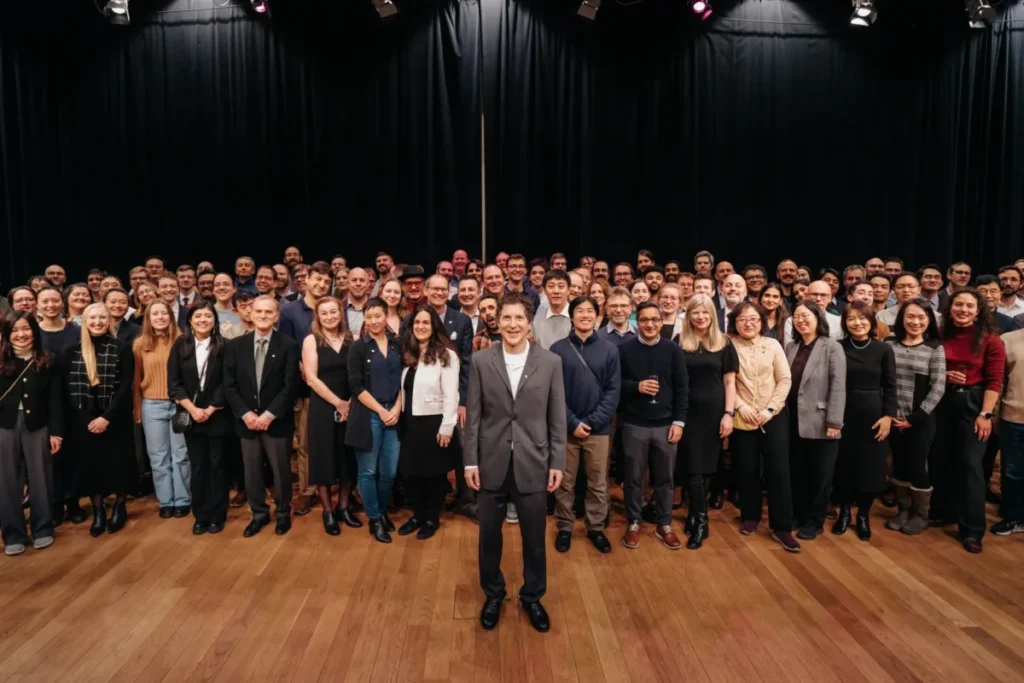
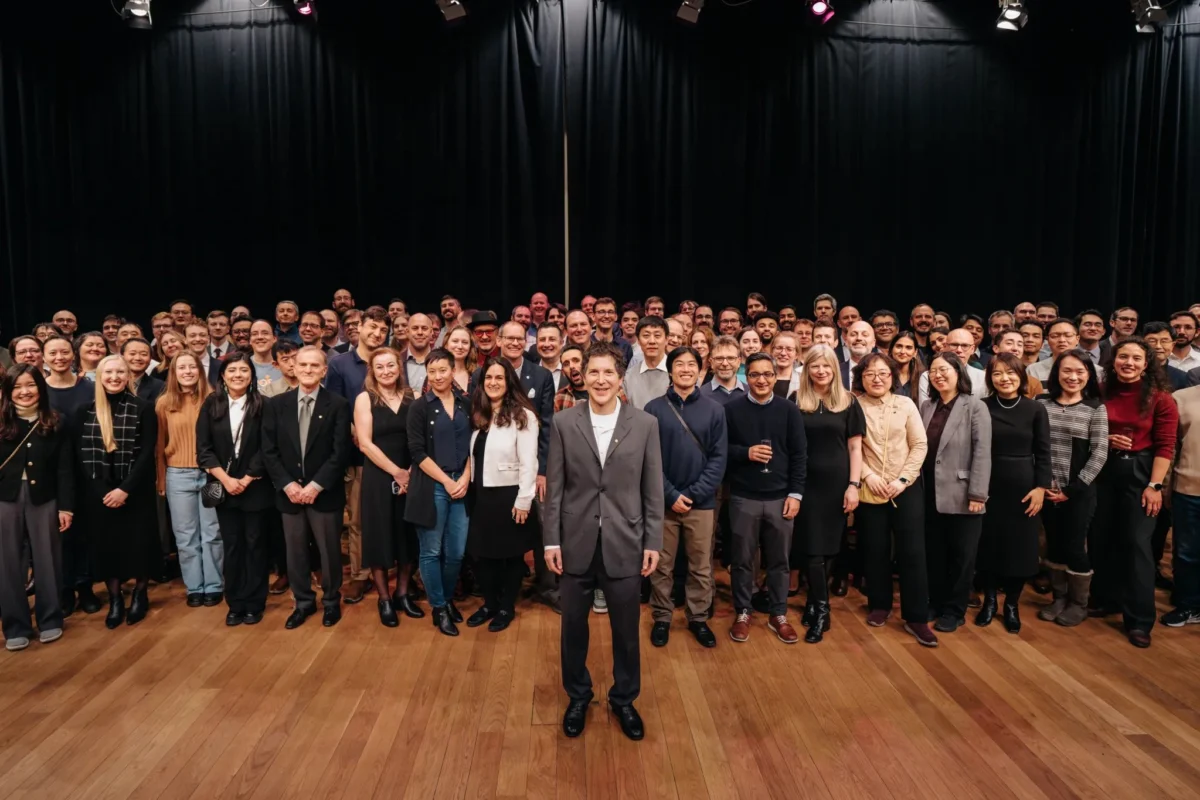
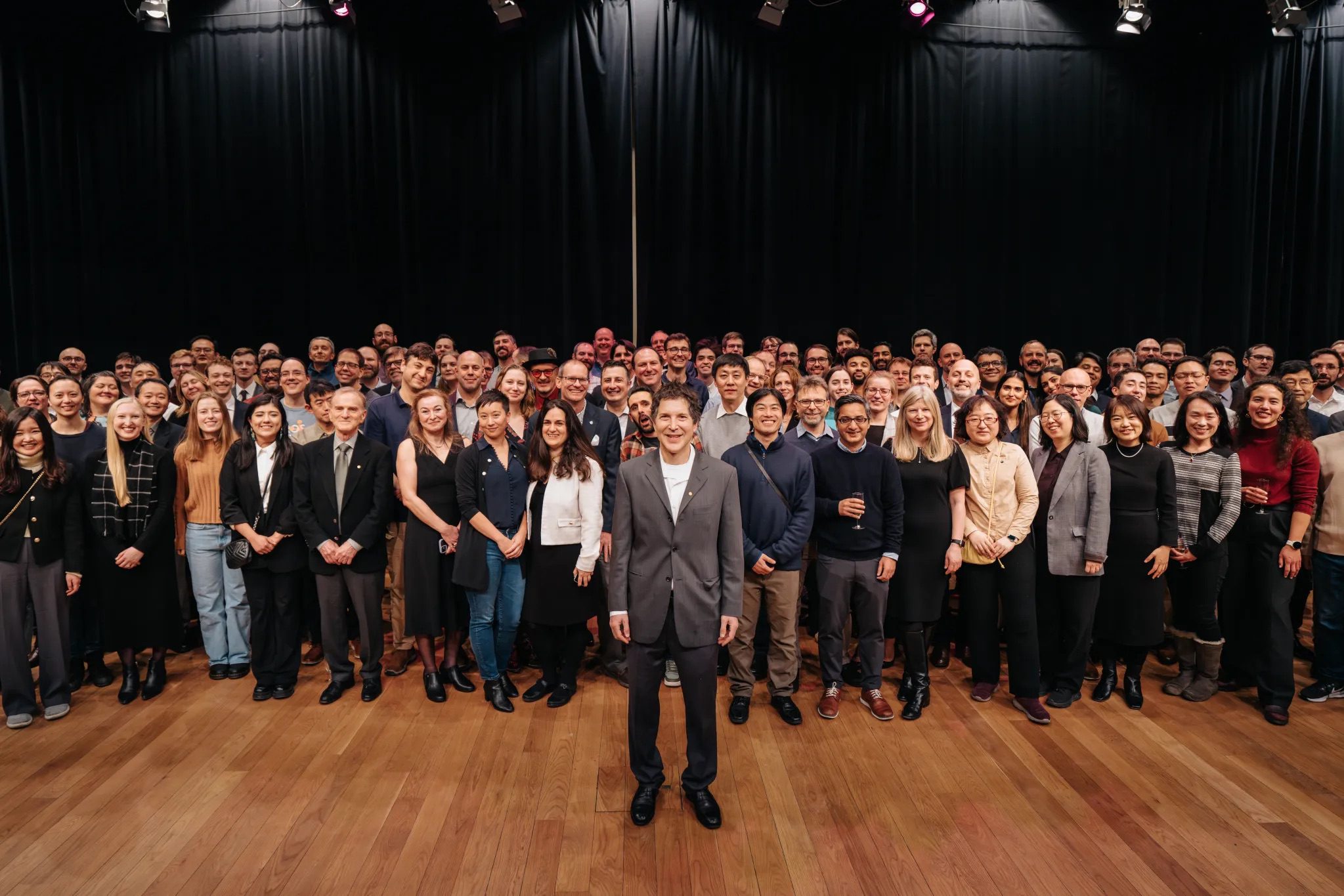
One year after the Nobel Committee stunned the scientific world by awarding the 2024 Nobel Prize in Chemistry to David Baker, PhD, the director of the University of Washington’s Institute for Protein Design (IPD) remains remarkably grounded. Sitting in his office—a space cluttered with colorful, intricate 3D-printed figurines of complex protein structures—Baker speaks not of the accolades, but of a concept he calls the "communal brain."
It is a fitting metaphor for the IPD, where more than 100 researchers are united by the singular, audacious ambition to design proteins from scratch—a field known as de novo design. This "communal brain" is the engine behind a technological revolution that promises to reshape pharmaceuticals, vaccines, and biosensors. By harnessing deep learning to achieve atomic precision, Baker’s team is doing what evolution took billions of years to perfect: building the molecular machinery of life on demand.
The Magnitude of the Challenge: Folding the Impossible
The complexity of the task cannot be overstated. A modest protein composed of 100 amino acids possesses an astronomical 20¹⁰⁰ possible sequence combinations. Out of this near-infinite search space, only a vanishingly small fraction will fold into a stable, functional structure. In the world of molecular biology, the margin for error is razor-thin; a single misplaced residue by even an angstrom can render a potential life-saving drug entirely inert.
For decades, the antibody drug market—a sector worth hundreds of billions of dollars—has sought a way to bypass the slow, costly process of experimental screening. Nathaniel Bennett, PhD, a former postdoctoral researcher in the Baker lab, describes the quest for AI-guided antibody design as the "holy grail" of modern medicine. Last November, that dream moved closer to reality when Bennett and his colleagues published a landmark Nature paper demonstrating that de novo antibodies could bind to user-specified epitopes with atomic precision. The model successfully constructed antibody loops—a region historically considered "undesignable" due to its extreme flexibility.
A Chronology of Computational Evolution
To understand the significance of the 2024 Nobel Prize, one must look back to the early days of structural biology. The field’s foundation was laid in 1988, when William DeGrado, PhD, demonstrated that sequences not found in nature could achieve stable 3D folds, challenging the dogma that proteins could only emerge through natural selection.
In the late 1990s, the focus shifted to computational prediction. A seminal 1997 study led by Steve Mayo, PhD, marked the first time an in silico predicted protein was experimentally validated. Baker, alongside then-postdoctoral researcher Brian Kuhlman, PhD, expanded this scope in 2003 with the development of the software suite "Rosetta." By calculating free energy, Rosetta allowed researchers to simulate protein structures atom-by-atom.
"Rosetta was impressive," says Sierin Lim, PhD, an associate professor at Nanyang Technological University. "In the early 2000s, it was the only program that could effectively model proteins." Baker’s decision to make Rosetta open-source catalyzed a global movement, leading to the "Rosetta Commons," an international consortium of over 100 laboratories. This culture of transparency—a stark contrast to the siloed research typical of the era—laid the groundwork for the breakthroughs that would follow.
The "Generative AI" era arrived with a roar in 2017, when Google researchers published "Attention Is All You Need." While the world marveled at LLMs like ChatGPT, structural biologists saw the potential to apply these transformers to the "molecular atlas" of the Protein Data Bank (PDB). In 2020, the field reached a turning point at the CASP14 competition. Baker, who had long dominated the event, received a humbling phone call from organizers: someone else had cracked the code. That "someone" was the team at Google DeepMind, led by Demis Hassabis and John Jumper, whose AlphaFold model solved the protein structure prediction problem with uncanny accuracy.
The Convergence of AI and Biology
The 2024 Nobel Prize in Chemistry was not just an individual honor for Baker; it was a collective recognition of the convergence of artificial intelligence and physical science. The Chemistry prize was shared with Hassabis and Jumper, while the Nobel Prize in Physics was awarded to Geoffrey Hinton and John Hopfield for their foundational work in neural networks. Together, these awards signaled that AI had transcended computer science to become a transformative force across all human knowledge.
For Baker’s team at the IPD, the focus shifted to diffusion models—the same architecture powering image generators like DALL-E. By applying these to atomic coordinates, the team created RFdiffusion, a model capable of generating entirely new protein backbones. "Prior to diffusion," says Mohammed AlQuraishi, PhD, of Columbia University, "the success rates were perhaps one in 10,000. Now, we are looking at single-digit percentages in the laboratory. It is a magnitude of improvement that is hard to overstate."
Real-World Applications: From Metabolic Disease to Sustainability
The IPD is a beehive of interdisciplinary activity. Researchers from disparate fields sit side-by-side, a design choice intended to facilitate the cross-pollination of ideas.
Consider the work of Xinru Wang, PhD, who recently developed de novo insulin receptor agonists. Unlike traditional insulin that simply manages blood sugar, these engineered proteins can extend glucose-lowering effects without the cancer-proliferation risks often associated with high-dose insulin therapy. Or take the work of Seth Woodbury and Woody Ahern, who are designing metallohydrolases—enzymes capable of cleaving some of the strongest bonds in nature, with the potential to degrade environmental pollutants.
"I can only think in a ten-angstrom sphere at a time," jokes postdoctoral researcher Florence Hardy, PhD, regarding her enzyme design work. Yet, that narrow focus, combined with the power of the IPD’s computational tools, is yielding results that were deemed impossible just a decade ago. Visiting researcher Kieran Didi, a machine learning scientist, notes the speed of the IPD environment: "I’m not going to spend months in a fantasy world of computational benchmarks. Within a week, I know if the model works. Someone will quickly put it to the reality test."
Official Responses and Industry Impact
The industry has taken notice of the IPD’s success. Xaira Therapeutics, an AI-focused biotech launched in 2024 with over $1 billion in funding, exemplifies this commercial interest. With Baker serving as a scientific advisor, and a board featuring luminaries such as Carolyn Bertozzi, PhD, and former FDA head Scott Gottlieb, MD, the company is betting on a "general discovery engine" approach.
However, Baker remains measured about the "hype" surrounding the field. "The reality is that we can now design proteins on a computer," he says. "The hype is that for therapeutics, there is a lot more to life than the basic activity of a protein binding or catalyzing a reaction. Whether these proteins will revolutionize medicine depends on how well we improve our understanding of the underlying biology."
The Culture of the "Communal Brain"
Perhaps the most lasting legacy of David Baker is not the software or the protein structures, but the culture he has fostered. He famously implemented a "no travel" rule for his team in the weeks following the Nobel announcement, choosing to remain present for his students rather than chase global fame.
"Science becomes obsolete quickly," Baker tells me. "The people you mentor are more important than any science you do."
This philosophy is echoed by his students. Ria Sonigra, an IPD graduate student, recalls cold-emailing Baker as a student in India; he responded almost immediately and connected her with a mentor to help with her application. "People outside think he can’t possibly pay attention to everyone, but he does," she says. "He knows every project and every expectation, even with a hundred trainees."
Conclusion: Overcoming Setbacks
When asked to donate an item to the Nobel Prize Museum, Baker chose a broken ski pole—a memento from the mountains he loves to traverse on weekends. It serves as a reminder that progress is rarely a straight line; it is a rugged, often frustrating path defined by failure and the constant need to adapt.
"I don’t think people get ideas on top of mountains," Baker says with a laugh. "If you are going to be a principal investigator, you have to really like mentoring. For me, it’s super fun!"
As the field of protein design enters its most ambitious phase yet, the "communal brain" at the University of Washington stands as a testament to the power of collaborative, open-source, and interdisciplinary science. By breaking down the barriers between biology, chemistry, and computer science, David Baker has not only designed a new class of proteins; he has designed a new way for scientists to think, create, and solve the most pressing challenges of the 21st century.