The Dawn of Agentic Science: Nvidia Unveils BioNeMo Toolkit to Revolutionize Biological Discovery
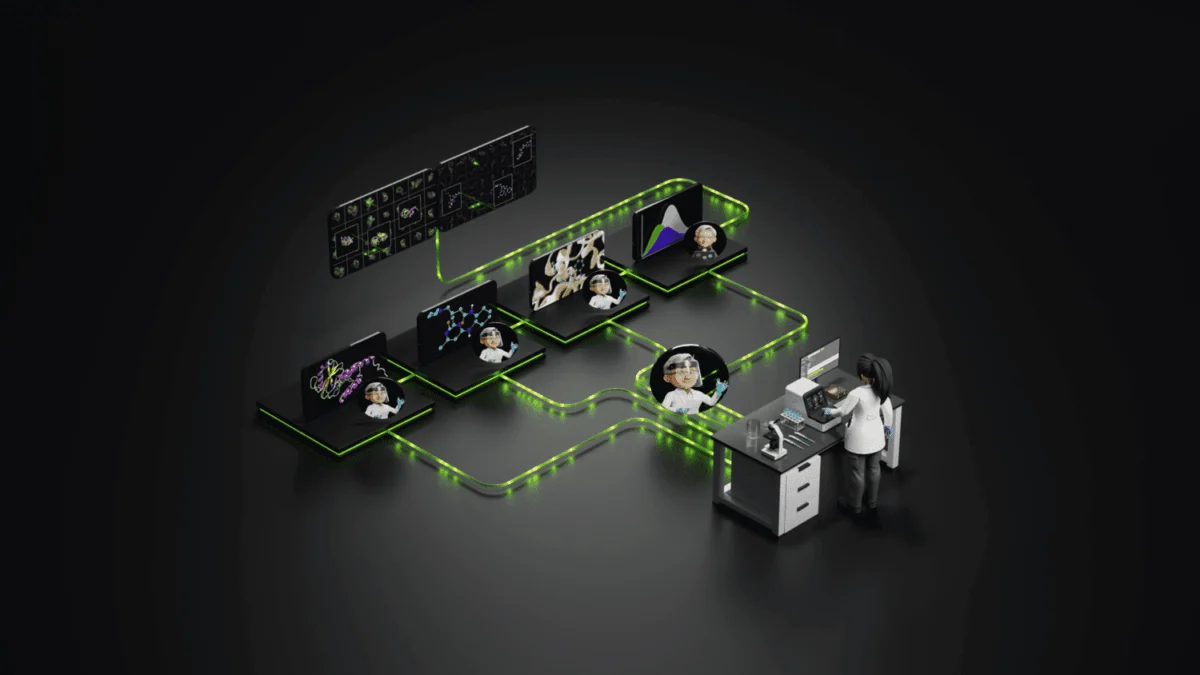
In a move that promises to redefine the landscape of life sciences, Nvidia has officially launched the Nvidia BioNeMo Agent Toolkit. This sophisticated software suite is designed to transform complex, multi-stage scientific workflows into autonomous, agent-executable tasks. By integrating generative AI, specialized scientific microservices, and large-scale computational power, Nvidia is positioning itself as the central architect of the next generation of drug discovery, genomics, and protein engineering.
Main Facts: A New Paradigm for Scientific Research
The BioNeMo Agent Toolkit is not merely an analytical tool; it is an orchestrator of scientific inquiry. It allows researchers to deploy AI agents capable of performing end-to-end tasks, including:
- Intelligent Model Selection: Automatically identifying the most effective AI models for specific biological queries.
- Input Preparation: Pre-processing vast datasets, from raw sequencing files to protein structures.
- Workflow Execution: Managing multi-step computational pipelines without constant human intervention.
- Output Inspection & Reasoning: Critically evaluating results and synthesizing them into actionable insights.
The toolkit is built upon the robust foundation of Nvidia’s existing technological ecosystem. It leverages Nvidia NIM microservices, the Nvidia Parabricks suite for genomic analysis, the Nvidia NeMo framework for model customization, and the Nvidia Nemotron series of large language models. This integration allows the toolkit to span a wide array of domains, including protein structure prediction, molecular docking, generative chemistry, and biomarker discovery.
The Chronology of Development: From Chips to Biology
Nvidia’s journey into the biological sciences has been years in the making, marked by a deliberate pivot from providing raw compute to offering specialized domain-specific platforms.
- The Foundation: Nvidia began by dominating the high-performance computing (HPC) space, providing the GPUs necessary for the initial boom in protein folding research, most notably powering systems that supported AlphaFold and its successors.
- The Launch of BioNeMo: Recognizing that researchers were spending more time on data engineering than on discovery, Nvidia launched the initial BioNeMo platform as a cloud-based service for generative biology.
- The Agentic Shift: As LLMs and agentic AI matured, Nvidia identified a bottleneck: scientists were forced to manually bridge the gap between their data, their models, and their laboratory tools. The BioNeMo Agent Toolkit represents the maturation of this vision, moving from "tools that process data" to "agents that perform science."
- Collaborative Scaling: Through 2023 and early 2024, Nvidia solidified partnerships with institutions like the University of Washington’s Institute for Protein Design (IPD) and the Arc Institute. These pilot programs served as the proving ground for the toolkit, demonstrating that AI agents could achieve performance gains that were previously considered impossible.
Supporting Data: Efficiency and Performance Metrics
The efficacy of the BioNeMo Agent Toolkit is best illustrated by its real-world performance metrics. In a high-profile collaboration with the University of Washington’s Institute for Protein Design, Nvidia engineers optimized the RosettaFold3 biomolecular complex prediction tool.
By integrating the tool into the BioNeMo agentic framework, the team achieved a two-fold increase in performance compared to the previous generation. This is not a marginal improvement; it represents a significant reduction in the time-to-insight for researchers working on complex protein-ligand interactions.
In the realm of virtual screening, the toolkit’s capabilities are equally compelling. Agents can ingest massive libraries of chemical compounds, perform docking simulations to identify binding affinity against specific biological targets, and simultaneously filter these candidates based on "developability" properties—such as solubility, stability, and toxicity. By automating this iterative "design-build-test" loop, the toolkit compresses drug discovery timelines from years to months.
Official Responses: Leaders Weigh In
The reaction from the scientific community underscores the magnitude of this release.
Jensen Huang, founder and CEO of Nvidia, characterized the launch as a historic pivot in how science is conducted. In an official press release, Huang stated, "For the first time, researchers can build AI agents that understand scientific knowledge, use scientific tools, and execute scientific workflows. This is a new way to do science—one that can dramatically accelerate discovery across biology, chemistry, genomics, and medicine."
Dr. David Baker, Nobel Laureate and director of the Institute for Protein Design at the University of Washington, highlighted the importance of accessibility. "Every tool we’ve built for protein design is only as powerful as the scientists who can efficiently access it," Dr. Baker remarked. "The next leap in science won’t come from a single discovery; it will come from the speed of iterative designs and agents that can repeatedly reason through the complexity of biology at a speed humans never could."
Implications: The Industrialization of Discovery
The implications of the BioNeMo Agent Toolkit extend far beyond the laboratory, touching upon the very economics of the pharmaceutical and biotechnology sectors.
1. The Compression of Drug Discovery Timelines
Traditional drug discovery is notoriously slow, expensive, and prone to failure. By enabling autonomous agents to iterate through millions of designs, the toolkit reduces the reliance on wet-lab experiments during the early, high-risk phases of research. This "in-silico-first" approach is expected to significantly lower the cost of entry for new therapeutic classes.
2. Democratizing Advanced Biological Research
By wrapping complex workflows in an agentic interface, Nvidia is essentially lowering the technical barrier for high-level bioinformatics. Scientists who are experts in biology but perhaps less versed in complex software engineering can now leverage the full power of state-of-the-art computational biology, effectively scaling the productivity of every individual researcher.
3. A Robust Ecosystem of Partners
Nvidia has secured early adoption across a diverse range of companies. AI-native firms like Boltz, Basecamp Research, Chai Discovery, PerturbAI, Dyno, and Proxima are already utilizing these tools to refine their therapeutic pipelines. Furthermore, industry titans such as Lilly and Natera are deploying these agentic workflows to optimize everything from clinical trial patient screening to long-term pharmacovigilance.
4. Enhancing Clinical Development
The toolkit’s impact on clinical development is equally profound. By connecting real-world evidence with reasoning models, the agents can assist in:
- Literature Synthesis: Instantly updating research teams on the latest clinical findings.
- Protocol Generation: Drafting study designs that are statistically optimized based on previous trial outcomes.
- Biomarker Discovery: Using medical imaging analysis to identify subtle, early-stage indicators of disease that might escape human observation.
Conclusion: The Road Ahead
As the BioNeMo Agent Toolkit moves into wider adoption, the scientific community is entering an era of "Agentic Science." The ability of AI to not only process data but to reason through complex biological hypotheses marks a fundamental transition in the scientific method.
Nvidia’s strategy is clear: by providing the "operating system" for the future of biology, they are ensuring that every breakthrough in drug design, genomic analysis, and medical imaging is powered by their infrastructure. While the technology is still in its nascent stages, the early results from the Institute for Protein Design and industry partners suggest that we are witnessing the start of a massive acceleration in the pace of human discovery.
The question for the next decade will not be whether AI can solve these biological challenges, but rather how quickly humans can adapt to a world where our machines are as capable of generating scientific hypotheses as they are of testing them. With the BioNeMo Agent Toolkit, that future has arrived.