The Evolution of Android: How Google is Transforming Mobile into an Intelligence System
By [Your Name/Journalist Desk]
Reporting from Google I/O 2026
At the heart of the tech industry’s current paradigm shift, Google has officially signaled the end of the traditional "mobile operating system" era. During the keynote presentations at Google I/O 2026, the company unveiled a roadmap that redefines Android not merely as a platform for launching applications, but as a foundational "intelligence system." This transition marks a departure from static UI interactions toward a future defined by agentic workflows, on-device machine learning, and hybrid cloud-edge processing.
For developers, this shift represents the most significant architectural overhaul in Android’s history. Jingyu Shi, Staff Developer Relations Engineer, emphasized that the goal is to weave the power of Google’s AI directly into the fabric of the OS, allowing apps to become active participants in a broader, intelligent ecosystem.
Main Facts: The New Architecture of Android
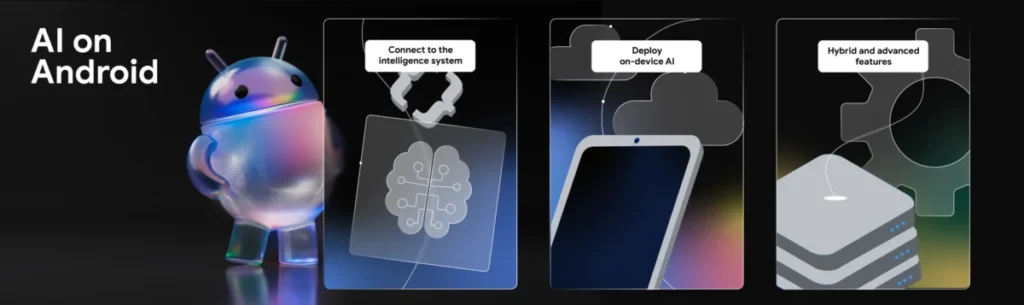
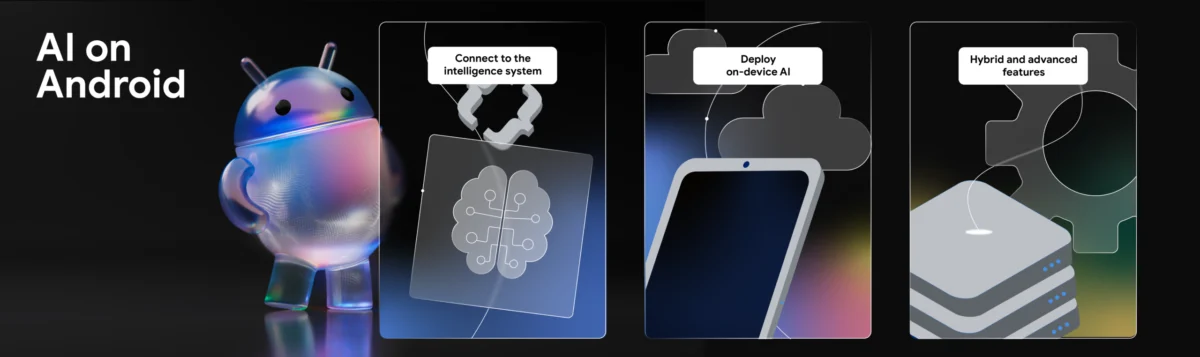
The transformation of Android is anchored by three primary pillars introduced at I/O: the integration of app functions into a broader intelligence system, the next generation of on-device processing via Gemini Nano 4, and the adoption of hybrid inference models.
AppFunctions: The API for Agentic Interaction
The most disruptive announcement is the introduction of AppFunctions (Android MCP). Previously, if a user wanted an AI assistant like Gemini to perform a task within an app, it often required brittle, screen-reading technology. AppFunctions changes this by providing a standardized API and Jetpack library that allows apps to expose their internal capabilities directly to the system.
In this new paradigm, Gemini can "navigate" an app on the user’s behalf, effectively turning the application into an extension of the system’s overall intelligence. By exposing functions through this new framework, developers grant the OS permission to execute specific actions—such as booking a flight, updating a calendar, or drafting a message—without the user needing to manually open the app and navigate through its UI.
Gemini Nano 4 and AIcore
On-device intelligence is receiving a massive boost with the preview of Gemini Nano 4. By leveraging the AIcore developer preview, developers can now prototype with the latest iteration of Google’s most efficient model. This is critical for privacy-conscious apps that need to perform complex natural language processing (NLP) without the latency or data privacy risks associated with cloud-based calls.
Hybrid Inference
Google is also championing a "best of both worlds" approach. By combining the speed of on-device Gemini Nano 4 with the massive computational capacity of the cloud, Google is enabling "hybrid inference." This allows apps to perform baseline tasks locally while offloading complex reasoning to the cloud, ensuring that the user experience remains seamless and responsive regardless of internet connectivity.
Chronology of the Transformation
The path to this intelligence-first OS did not happen overnight. The following timeline illustrates the rapid acceleration of Google’s AI integration strategy:
- Early 2024: Introduction of the initial Gemini Nano models, signaling the start of on-device LLM (Large Language Model) deployment.
- Late 2024 – Early 2025: Expansion of AIcore to provide a standardized runtime for developers to utilize local models without building their own infrastructure.
- April 2026: Launch of Gemma 4, Google’s open-weights model, setting a new benchmark for accessible, high-performance local AI.
- May 2026 (Google I/O): Official introduction of the "Intelligence System" framework, the debut of AppFunctions in experimental preview, and the announcement of the hybrid inference roadmap.
Supporting Data and Technical Implementation
The shift to an intelligence system is supported by a robust set of tools aimed at lowering the barrier to entry for developers.
The Role of LiteRT-LM
For niche applications that require specialized logic—such as medical diagnostic tools, hyper-specific engineering software, or unique gaming mechanics—Google has introduced LiteRT-LM. This tool allows developers to "bring your own" fine-tuned small language models to Android. This is a game-changer for developers who cannot rely on general-purpose models like Gemini and need a custom-trained model that operates with strict constraints and specific domain knowledge.
ML Kit GenAI APIs
To ensure that production-grade apps can utilize these models with high reliability, Google is augmenting its ML Kit GenAI APIs. These updates focus on:

- Reduced Latency: Optimizing the model execution path to ensure real-time responsiveness.
- Memory Management: Sophisticated resource allocation that prevents AI features from degrading the performance of the rest of the application.
- Standardized Interfaces: Simplifying the integration process so developers don’t have to manage the underlying complexities of hardware acceleration (NPU/GPU).
Official Responses and Developer Integration
The response from the developer community has been one of cautious excitement. Google has launched an Early Access Program for AppFunctions, inviting developers to be the first to integrate their applications into the new intelligence layer.
Jingyu Shi, in his official guidance, noted, "We are moving away from the paradigm where an app is an island. By participating in the intelligence system, your app becomes a utility that the system can summon at exactly the right moment."
Google’s developer documentation now features comprehensive guides on how to transition from traditional intents to AI-accessible functions. The company is emphasizing that this is not an overnight migration; it is a gradual evolution where developers can choose which features to expose to the intelligence system, maintaining granular control over their app’s security and user experience.
Implications for the Future of Apps
The implications of these updates are profound, affecting everything from UI/UX design to user acquisition.
1. The End of the "Traditional" App Interface
As agents become more capable, the traditional "dashboard" or "menu-heavy" UI may become secondary. If an AI can complete a task within an app via an API, the user may never need to engage with the developer’s custom design. Developers must now design for "intent" rather than "navigation." The challenge for UI designers will be to create interfaces that are still useful for manual tasks while ensuring the backend is robust enough for automated agentic interaction.
2. Privacy as a Competitive Advantage
By prioritizing on-device processing via Gemini Nano 4, Google is effectively making privacy a core feature of the Android ecosystem. Apps that process sensitive user data locally will likely see higher adoption rates among privacy-conscious consumers compared to apps that rely solely on cloud-based AI.
3. The Democratization of AI
With tools like LiteRT-LM and the expanded ML Kit, the barrier to building high-end AI features has dropped significantly. Small development teams now have access to the same foundational intelligence that previously required massive engineering budgets. This will likely lead to a "Cambrian explosion" of specialized, AI-native applications in the coming months.
4. New Revenue Models
The intelligence system opens the door to new business models. If an app provides an "AppFunction" that saves the user time or automates a complex workflow, developers may find new ways to monetize these capabilities through subscription tiers that unlock "advanced agentic tasks."
Conclusion: Preparing for the Next Wave
Google’s message at I/O 2026 is clear: the future of mobile is not in the hardware or the pixel density, but in the intelligent layer that sits between the user and their data.
For developers, the time to experiment is now. Whether it is by joining the Early Access Program for AppFunctions or exploring the potential of LiteRT-LM for custom use cases, the path forward is through the Android AI hub. As Google continues to refine these APIs and roll out wider support for Gemini Nano, the definition of an "app" will continue to blur, eventually merging into a seamless, helpful, and highly intelligent mobile experience.
The era of the "intelligence system" has arrived. The question for developers is no longer whether they should integrate AI, but how effectively they can harness these new tools to solve problems in ways that were impossible just a year ago.
For more information on these updates, developers are encouraged to watch the full "AI on Android at Google I/O 2026" playlist and consult the official documentation at developer.android.com/ai.