The Evolution of Remote Connectivity: Unpacking the TDG140 4G GSM Control System
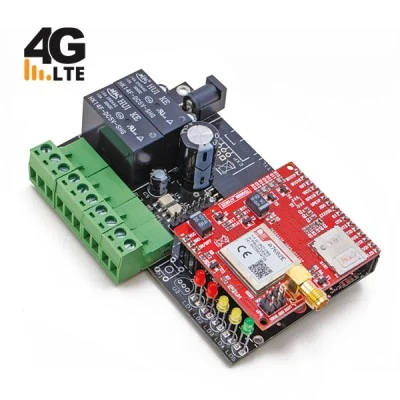
In an era defined by the Internet of Things (IoT) and the rapid sunsetting of legacy 2G/3G networks, the necessity for robust, reliable, and future-proof remote control infrastructure has never been higher. As industrial and domestic automation systems transition away from aging telecommunications standards, devices like the TDG140 4G—a two-way remote control system developed by Open Electronics—are stepping into the breach. By leveraging the SIMCom A7682E module, this unit offers a sophisticated bridge between digital commands and physical relay operations, ensuring that remote management remains accessible even in the most isolated environments.
Main Facts: The Architecture of the TDG140 4G
The TDG140 4G is designed as a versatile, two-way communication gateway. At its core, it functions as an intermediary that interprets cellular signals—specifically 4G LTE—and translates them into discrete physical actions.
Core Hardware Specifications
The device is powered by the SIMCom A7682E, a high-performance LTE Cat 1 module designed for global compatibility. This choice of hardware is significant, as it provides the bandwidth and latency requirements necessary for modern M2M (Machine-to-Machine) communication.
Key features include:
- Dual Relay Outputs: Users can toggle two independent relays, which can be configured for either monostable (momentary) or bistable (latching) operation. This makes the unit suitable for everything from resetting a hung server to opening an electronic gate.
- Dual Opto-Isolated Inputs: These inputs provide a safe, electrically isolated way to monitor external sensors, such as flood detectors, motion sensors, or door switches, without risking damage to the central controller from voltage spikes or ground loops.
- DTMF Capability: Unlike purely SMS-based systems, the TDG140 supports Dual-Tone Multi-Frequency (DTMF) signaling, allowing for control via direct voice-call inputs, which provides a tactile, real-time method for interaction.
- Expanded Alarm Management: The system supports a storage list of up to eight authorized phone numbers, ensuring that critical alerts—such as a triggered alarm input—are disseminated to a designated team of responders or homeowners.
Chronology: From 2G Obsolescence to 4G Integration
The history of remote control systems is one of constant adaptation to the shifting sands of global telecommunications.
The 2G/3G Sunset
For nearly two decades, GSM-based controllers relied on the ubiquity of 2G (EDGE/GPRS) networks. These networks were ideal for remote control due to their low power consumption and wide coverage. However, as mobile network operators began reallocating spectrum for 5G, the "2G sunset" became an inevitability. Many legacy controllers worldwide have recently become bricked or unreliable as 2G towers are decommissioned.
The Rise of the TDG140 4G
Recognizing this transition, engineers at Open Electronics identified the need for a drop-in replacement that maintained the simplicity of SMS/DTMF control while adopting the longevity of the 4G network. The development of the TDG140 4G represents the latest phase in this timeline, focusing on:

- 2023-2024 Design Phase: Transitioning from SIM800/900-series modules to the A7682E to ensure long-term availability.
- Compatibility Testing: Ensuring that the logic boards could handle the increased power demands of 4G modules while maintaining the same physical footprint as their predecessors.
- Market Launch: The introduction of the TDG140 4G serves as the official answer for users currently stranded by the deprecation of older telecommunications hardware.
Supporting Data: Why LTE Cat 1 Matters
The decision to utilize the A7682E module is not merely a marketing choice but a strategic technical decision. In the hierarchy of IoT connectivity, LTE Cat 1 occupies a "Goldilocks" zone.
Bandwidth vs. Power
Unlike 5G, which requires significant overhead, or NB-IoT, which is limited by latency and throughput, LTE Cat 1 provides a balance:
- Latency: The TDG140 achieves sub-100ms response times for SMS and DTMF commands, which is critical for industrial applications where delay can cause operational error.
- Coverage: Because it utilizes the 4G LTE backbone, the device benefits from the massive infrastructure investment made by carriers over the last decade, providing better indoor penetration than early 3G systems.
- Reliability: The A7682E module is built to withstand industrial temperature ranges, ensuring the device remains operational in outdoor cabinets or unconditioned workshops.
User Interface and Configuration
Data shows that the primary barrier to adopting industrial controllers is configuration complexity. The TDG140 bypasses this via two methods:
- SMS Configuration: The primary method of setting up the device, allowing users to define alarm thresholds and relay behavior using standard, human-readable text commands.
- Local PC Interface (FT782M): For more complex setups or initial provisioning, the optional FT782M interface allows for a direct USB connection to a PC, providing a graphical environment for diagnostic checks and firmware management.
Official Responses and Industry Outlook
Industry experts at Open Electronics have highlighted that the TDG140 was developed specifically to address the "hidden" cost of connectivity. When an older GSM controller fails, the cost of an emergency service call-out is high. By deploying a 4G-enabled device, facility managers mitigate the risk of forced hardware upgrades for at least the next decade.
"Our goal was to ensure that the simplicity of the original SMS-control paradigm was not lost in the transition to 4G," says a spokesperson for the development team. "Users shouldn’t need a degree in network engineering to restart a remote router or monitor a remote water pump. The TDG140 4G provides the reliability of a modern network with the familiarity of a classic relay controller."
Implications: The Future of Remote Management
The implications of the TDG140 4G extend across several sectors:
1. The Smart Home and Security Sector
For residential security, the ability to trigger a siren or activate a gate from a phone call is a timeless feature. With the TDG140, homeowners can integrate modern cellular security without needing to rely on unstable Wi-Fi or complex cloud subscriptions that might go offline during an internet outage.

2. Industrial Automation and Edge Computing
In the industrial sphere, the device acts as an "Out-of-Band" management tool. If a primary internet line goes down, the TDG140—operating on its own independent cellular connection—allows a technician to remotely power-cycle network equipment. This capability is essential for minimizing downtime in critical infrastructure.
3. Sustainability and Resource Management
Remote agricultural monitoring (such as managing irrigation valves) or monitoring levels in remote storage tanks requires robust, low-power devices. Because the TDG140 operates on a 4G network with minimal power draw, it can be powered by small solar arrays, enabling "off-grid" monitoring of resources in remote locations.
4. The Resilience of Simple Communication
There is a growing movement in the electronics community to preserve "simple" communication methods. While complex MQTT and web-based IoT platforms offer features, they are prone to server-side updates and security vulnerabilities. SMS and DTMF represent a "hardened" form of communication that is resistant to many common cyber-attacks, as the commands are point-to-point and not reliant on a global internet-facing dashboard.
Conclusion: A Bridge to the Future
The TDG140 4G is a testament to the fact that evolution in technology does not always mean increased complexity. By taking the robust, time-tested architecture of the relay-controlled GSM module and upgrading the "heart" of the system to the SIMCom A7682E, Open Electronics has provided a necessary lifeline for legacy systems.
As we move deeper into the 2020s, the importance of maintaining control over one’s environment—regardless of the status of the local Wi-Fi or fixed-line internet—will only grow. The TDG140 4G is more than just a piece of hardware; it is a reliable, future-proof solution for anyone needing to bridge the gap between their mobile phone and the physical world. For those currently operating on 2G equipment, the path forward is clear: migration to 4G-based controllers is not just an upgrade, but a requirement for operational continuity.
As the technology landscape continues to shift, devices like the TDG140 serve as a reminder that the most effective solutions are often those that prioritize reliability, simplicity, and direct, uninterrupted control.