The Fall of ‘Dort’: Global Investigation Leads to Arrest of Kimwolf Botnet Mastermind
In a significant victory for international law enforcement, a 23-year-old Ottawa man has been arrested in connection with the creation and operation of "Kimwolf," a formidable Internet-of-Things (IoT) botnet responsible for record-breaking distributed denial-of-service (DDoS) attacks. The arrest, conducted by the Ontario Provincial Police (OPP) acting on a U.S. extradition warrant, marks the culmination of a high-stakes, months-long investigation into one of the most disruptive cybercriminal threats of 2026.
Jacob Butler, who operated in underground forums under the alias "Dort," now faces a litany of criminal hacking charges in both Canada and the United States. His arrest is not merely the dismantling of a single piece of malware; it represents a tactical strike against the broader ecosystem of "DDoS-for-hire" services that have plagued global internet infrastructure over the past half-year.
A Chronology of Chaos: From Digital Shadows to Custody
The saga of Kimwolf is one of brazen escalation. While many botnet operators prefer the anonymity of the shadows, Butler’s digital footprint—and his subsequent descent into personal vendettas—ultimately proved to be his undoing.
The Rise of Kimwolf
Beginning in late 2025, Kimwolf emerged as a dominant force in the cybercriminal landscape. Unlike traditional botnets that target servers or personal computers, Kimwolf was specifically engineered to exploit "firewalled" IoT devices, such as high-definition web cameras and smart digital photo frames. By compromising these often-neglected devices, Butler effectively turned millions of domestic appliances into a potent, silent army of attack nodes.
The Turning Point: Harassment and Exposure
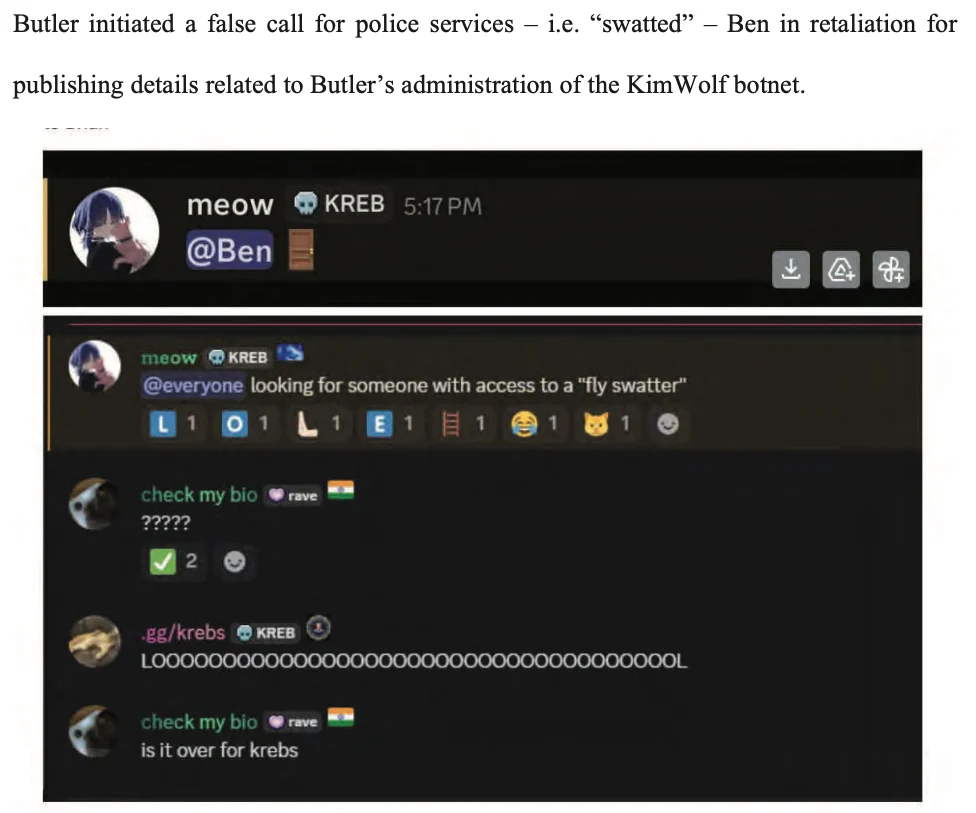
The trajectory of the investigation shifted in early 2026 when Butler’s activities transitioned from indiscriminate criminal enterprise to targeted harassment. After security researchers and investigative journalists began to peel back the layers of his infrastructure, Butler retaliated. He launched a series of aggressive DDoS attacks, doxing, and, most alarmingly, "swatting" campaigns—a dangerous practice of reporting false emergencies to local authorities to induce a heavily armed police response at a target’s residence.
In February 2026, investigative reporting by KrebsOnSecurity publicly identified "Dort" as Jacob Butler. The identification was made through meticulous analysis of email registrations, transaction logs on dark web forums, and patterns of behavior across Telegram and Discord servers. Despite being unmasked, Butler continued to operate, doubling down on his efforts to intimidate those who had exposed his identity.
The Global Crackdown
On March 19, 2026, the walls began to close in. In a coordinated international effort, U.S. and European authorities seized the technical infrastructure underpinning Kimwolf and three rival botnets: Aisuru, JackSkid, and Mossad. These four entities had been in a "digital arms race," competing for the same pool of vulnerable IoT devices. Following the seizure, the OPP executed a search warrant at Butler’s Ottawa residence, where they recovered multiple devices containing evidence of his illicit administration of the botnet.
Supporting Data: The Scale of the Destruction
The sheer scale of the Kimwolf botnet distinguishes it from the run-of-the-mill malware operations that frequently saturate the cybersecurity landscape. According to the U.S. Department of Justice, the Kimwolf network was involved in attacks that reached nearly 30 Terabits per second—a volume of traffic that represents a new, terrifying benchmark in DDoS history.
Technical Impact and Financial Toll
The impact of these attacks extended far beyond mere downtime for gaming services or small websites. The botnet’s activities directly interfered with Internet address ranges associated with the United States Department of Defense (DoD). Because of this, the Defense Criminal Investigative Service (DCIS) became heavily involved in the case, working alongside the FBI’s Anchorage field office to track the botnet’s origins.
The DOJ statement highlighted the following key statistics:
- Attack Volume: Peak attacks reached 30 Tbps.
- Command Volume: The botnet is alleged to have issued over 25,000 distinct attack commands.
- Economic Impact: Individual victims reported financial losses exceeding $1 million due to the sustained nature of the attacks and the resulting service outages.
The reliance on IoT devices made the botnet particularly resilient. Because these devices are frequently "firewalled" or considered low-priority by standard antivirus software, they remained enslaved for months, often without the owners realizing their smart appliances were contributing to a global attack network.
Official Responses and the Role of Private Industry
The success of the Kimwolf takedown was largely contingent on the synergy between federal investigators and the private cybersecurity sector.
The Role of Synthient
A pivotal player in this effort was the security startup Synthient. Its founder, Ben Brundage, became a primary target of Butler’s swatting campaigns after his company discovered and published information regarding a critical security vulnerability that Kimwolf was exploiting to propagate. By securing this vulnerability, Synthient effectively crippled the botnet’s ability to recruit new devices, forcing the attacker into a desperate, retaliatory position.
"Hopefully, this will end the harassment," Brundage stated following the news of the arrest. The Department of Justice formally thanked several technology companies for their cooperation, noting that without the real-time data provided by these private firms, the identification of Butler would have taken significantly longer.
Legal Proceedings
In Canada, Butler is currently in custody and faces multiple charges, including:
- Unauthorized use of a computer.
- Possession of a device to obtain unauthorized use of a computer system.
- Mischief in relation to computer data.
In the United States, he faces one count of aiding and abetting computer intrusion. The U.S. government is seeking his extradition to stand trial in Alaska. While the maximum penalty for such crimes could reach 10 years in federal prison, legal experts note that sentencing guidelines in the U.S. are nuanced, often allowing for reductions based on the defendant’s youth, lack of prior criminal record, and the level of cooperation provided to authorities.
Implications: The Future of IoT Security and Botnet Warfare
The arrest of Jacob Butler sends a clear message to the underground community: the "DDoS-for-hire" era is under heavy scrutiny. However, the implications of this case extend beyond a single individual’s legal troubles.
The "Botmaster" Paradox
The Kimwolf case serves as a masterclass in how not to maintain anonymity. Butler’s failure to separate his real-life identity from his digital alias, "Dort," highlights a common vulnerability among young, technically gifted but operationally naive cybercriminals. By leaving behind clear trails of IP addresses, financial transaction records, and chat logs, Butler essentially provided the prosecution with a roadmap to his own conviction.
A Call to Action for IoT Manufacturers
The core of the Kimwolf problem remains the insecurity of the "Internet of Things." As long as manufacturers continue to ship devices with default, unchangeable, or easily bypassed security settings, the potential for another "Kimwolf-style" botnet remains high. While the legal system has neutralized one actor, the infrastructure that allowed him to flourish—billions of insecure devices—remains active.
Regulatory and Global Pressure
Finally, the coordinated seizure of dozens of domains associated with DDoS-for-hire services in April, in conjunction with the Kimwolf arrest, signals a new, more aggressive phase in global cyber-policing. Law enforcement agencies are no longer just reacting to attacks; they are systematically dismantling the platforms that make such attacks profitable.
As Butler awaits his hearing on May 26, the cybersecurity community remains vigilant. The fall of Dort is a significant milestone, but it serves as a stark reminder of how fragile our digital infrastructure remains in the face of evolving, automated threats. The intersection of state-level investigative power and private-sector innovation has proven effective, yet the industry knows that in the world of botnets, the vacuum left by one actor is often quickly filled by another.