The Future of Innovation: Inside the 2024 Maker Faire Rome
In an era defined by the urgent need for planetary sustainability and the rapid advancement of artificial intelligence, the Maker Faire Rome (MFR) stands as the preeminent European stage for technological evolution. As it enters its eleventh year, the event has evolved from a simple gathering of hobbyists into a vital nexus where academia, industry, and grassroots ingenuity collide to solve the world’s most pressing challenges.
Organized by the Rome Chamber of Commerce and supported by the Italian Trade Agency, the event serves as a catalyst for the exchange of ideas that transcend traditional boundaries. Alessandro Ranellucci, the event’s content manager, encapsulates the spirit of the faire: “The Maker Faire promotes the exchange of ideas and the evolution of technologies; it presents prototypes that help change the world.”
The Vanguard of Sustainability and Environmental Stewardship
At the heart of the 2024 exposition is a profound commitment to environmental care. The depletion of natural resources has shifted the focus of "makers" toward practical, scalable solutions.
Agricultural Innovation from Volcanic Soils
Perhaps no project better illustrates this than the work of high school students in Bronte, Sicily. Known globally for its world-class pistachios, the region faces unique agricultural challenges due to its volcanic, rugged terrain near Mount Etna, which renders traditional tractors useless. The students have developed a drone-based "pollen blower" that automates fertilization. Mauricio Paraselete, a lead creator on the project, notes that their prototype has already achieved a 24% increase in pistachio production. The team is currently seeking investment to transition from a student-led prototype to a commercial market solution.
Energy Transition and AI-Driven Living
The energy sector is seeing a similar surge in innovation. Exhibitors are showcasing flexible solar panels designed for non-flat surfaces like boats and golf carts, as well as sensor-equipped panels that mimic the heliotropic movement of sunflowers to maximize solar intake.
Wind energy is also undergoing a renaissance; inventor Giorgio Palamara has introduced a design with curved blade tips that facilitate a "double rotation," increasing energy output by 20%. These advancements are complemented by projects like Biosphera Genesis, a self-sufficient living unit that utilizes artificial intelligence to manage energy consumption, marking a significant leap toward carbon-neutral living.
Chronology of Progress: From Prototype to Impact
The development cycle of these technologies reflects a broader trend in the 21st-century innovation pipeline. The journey typically begins with a grassroots "maker" spark, moves through an academic incubator, and finally reaches the MFR floor to attract private capital.
- Ideation Phase: Students and independent innovators identify local bottlenecks (e.g., Bronte’s harvest issues or urban waste management).
- Proof of Concept: Integration of open-source hardware, such as the ESP32 microcontroller or AI-driven predictive irrigation software.
- The Maker Faire Showcase: The critical stage where projects receive validation from industry experts and potential investors.
- Scalability & Industrialization: The transition where startups like Safecutter or Doctor Bike refine their prototypes for the global market.
Supporting Data: The Rise of the Startup Ecosystem
The 2024 edition of MFR underscores the dominance of startups as the primary drivers of modern innovation. Stefan Petersson, an investor with the Norwegian firm Xplorico, highlights a shift in the global landscape. "Startups are signing almost all innovations at the moment," Petersson states, noting that while the U.S. and China lead in AI-centric development, the European academic-business accelerator model is becoming a formidable competitor.
Collaborative Innovation: The Safecutter Project
The Safecutter project is a prime example of successful institutional collaboration. A joint venture between the Leibniz Institute for Plasma Science and Technology (INP) and Mr Beam Lasers GmbH, the project was funded by the Federal Ministry of Education and Research (BMBF). By addressing the toxicity and high costs associated with traditional laser cutting, the team has created a blueprint for democratizing industrial tools.
The system includes:

- Preventative Hazard Detection: Software that identifies dangerous materials before processing begins.
- Exhaust Gas Analysis: Real-time monitoring of air quality to ensure health safety.
- Integrated Safety Shutdown: An automated fail-safe mechanism that prevents accidents during operation.
Technology for Inclusion and Human Empowerment
A central pillar of this year’s fair is the democratization of technology to foster social inclusion. For makers, the objective is to ensure that technological progress does not leave the differently-abled behind.
Bridging the Accessibility Gap
- Officine Zero: This "multifactory" is transforming urban waste by recycling rental scooter wheels into modular components for wheelchairs. By utilizing open-source electronic boards, they have created a cost-effective solution that increases mobility for users in tight spaces like elevators.
- Brailly: A tactile, vibration-based cube designed by Katerina Koleva and Magda Zukowska to simplify the learning process for the visually impaired.
- Communication Aids: Rita Consonni and Luciano Fumagalli have developed a low-cost, solar-powered voice amplifier specifically designed to assist those with hearing impairments in rural settings.
The Arts and Archaeology
Technology is also breathing new life into history and culture. Fabio Viola, a video game designer, is using virtual environments to turn museums into therapeutic, interactive spaces. Meanwhile, researchers from Sapienza University have unveiled a synthetic reproduction of the mummy of Ramses II, constructed using sustainable materials like corn and kombucha skin, highlighting the intersection of advanced bio-materials and cultural heritage.
Official Perspectives: The Role of the European Commission
The event has sparked significant dialogue regarding the future of European industrial policy. While investors like Petersson praise the technical brilliance of European makers, there is a vocal call for the European Commission to shift its funding strategy.
Corinne Raclin, head of a major business incubator in Paris, argues that Europe must prioritize "more industrialization projects to reduce dependence on Asia." She emphasizes that artificial intelligence is no longer just a digital trend but a tool that allows for "better connection with reality in project development," ultimately leading to cleaner, more efficient manufacturing processes.
Implications for the Future
The implications of the 2024 Maker Faire Rome are far-reaching. By shifting the focus toward open-source sustainability, AI-enhanced robotics, and inclusive design, the MFR is effectively setting the agenda for the next decade of industrial evolution.
The "Little Leonardos" Effect
The nickname "little Leonardos" for the young makers at the fair is fitting. Like da Vinci, these inventors are polymaths who see no distinction between art, science, and engineering. Whether it is a DIY calculator like Angel Cabello’s GALDEANO—which utilizes an ESP32 microcontroller to solve symbolic math problems—or sophisticated disaster-prevention tools like the Lifeshell earthquake shelter, the common thread is a bias toward action.
Beyond the Fairground
The ultimate success of the MFR will not be measured by the number of attendees, but by the "exit velocity" of the projects presented. As startups continue to integrate into the global economy, the innovations seen in Rome—ranging from predictive irrigation apps to carbon fiber prosthetics—will move from the fairground into the fabric of daily life.
As we look toward the future, the Maker Faire serves as a reminder that the most significant breakthroughs do not always come from the largest corporations. They often emerge from a garage, a university lab, or a classroom, driven by the belief that with the right tools and a shared vision, any individual can contribute to the preservation and improvement of our world.
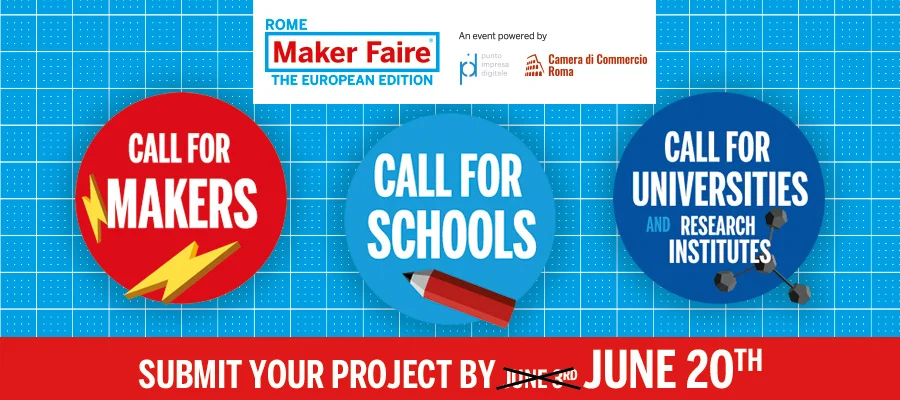
The call for participation for future makers remains open, signaling that the engine of European innovation is not just running; it is accelerating. Through these collaborative efforts, the divide between the dream of a sustainable future and the reality of our current limitations is being bridged, one prototype at a time.