The Future of Mobile Connectivity: A Comprehensive Review of the GL.iNet Mudi 7 (GL-E5800)
In the rapidly evolving landscape of mobile networking, the requirement for high-speed, secure, and reliable internet on the go has shifted from a luxury to a professional necessity. Enter the GL.iNet Mudi 7 (codenamed GL-E5800), a flagship travel router that promises to redefine how digital nomads, field engineers, and security-conscious travelers connect to the world. By integrating 5G NR cellular capabilities with the cutting-edge Wi-Fi 7 standard, GL.iNet has delivered a powerhouse device that bridges the gap between desktop-class performance and portable convenience.
Main Facts: A New Benchmark for Portable Networking
The Mudi 7 is not merely an incremental update; it is a architectural leap forward for the company’s product line. At its core, the device is designed to be the ultimate Swiss Army knife for connectivity.
Key Technical Specifications
- Cellular Performance: The Mudi 7 supports 5G NR, capable of reaching blistering downlink speeds of up to 4.67 Gbps.
- Wireless Throughput: With Wi-Fi 7 integration, the device offers a theoretical link rate of up to 5.76 Gbps, ensuring that local wireless traffic never bottlenecks the wide-area network connection.
- Wired Connectivity: It features a robust 2.5GbE (Gigabit Ethernet) port, catering to users who require low-latency, high-bandwidth wired connections for workstations or secondary network equipment.
- VPN Capabilities: Security is paramount in the GL.iNet ecosystem. The Mudi 7 manages an impressive 700 Mbps transfer rate using OpenVPN-DCO and 600 Mbps via the WireGuard protocol, making it a viable solution for users who demand high-speed encrypted tunnels.
- Power and Endurance: The device is anchored by a substantial 5380 mAh battery, engineered to sustain a full day of heavy usage. Charging and tethering are managed through dual USB-C ports.
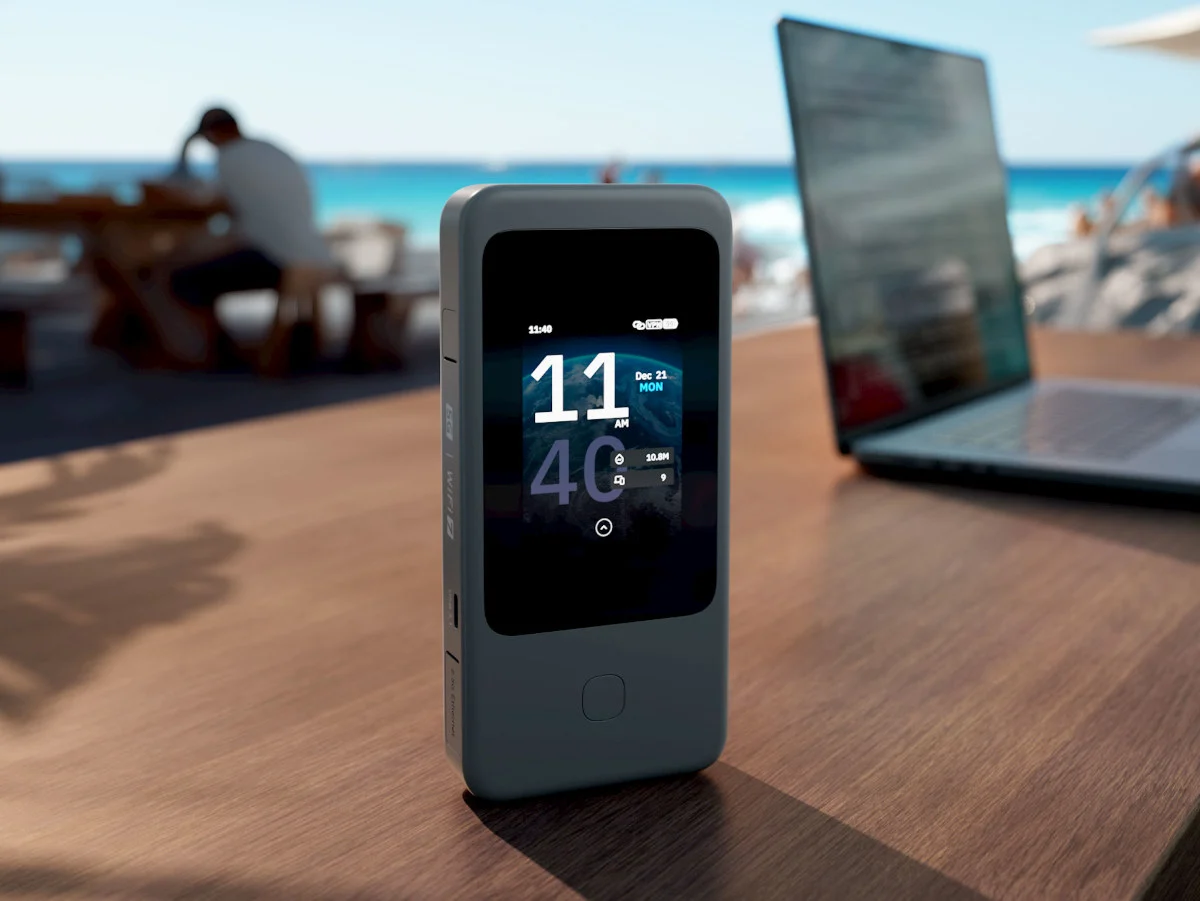
- Interface: A 2.8-inch integrated touchscreen display allows for real-time monitoring and rapid configuration changes without the need to access the web interface via a browser.
- Antenna Array: To maintain signal integrity, the device houses eight internal antennas, supplemented by two TS-9 connectors for users who require external high-gain antennas in fringe reception areas.
Chronology: From Concept to Global Market
The evolution of the Mudi series tracks the rapid advancement of mobile network standards.

- 2019: The Origin. GL.iNet launched the original Mudi, a portable 4G LTE router that gained a cult following for its focus on Tor and VPN integration.
- 2024: The Mudi V2 (GL-E750V2). This iteration refined the design and modernized the 4G LTE internals, maintaining the product’s reputation for reliability.
- January 2026: CES Debut. The Mudi 7 was officially unveiled at the Consumer Electronics Show in Las Vegas, where it garnered significant attention for being one of the first truly portable Wi-Fi 7-capable routers.
- April 2026: Market Entry. The device officially entered the retail channel via the GL.iNet store, followed shortly by a broader rollout on platforms like Amazon and AliExpress.
- Mid-2026: Industry Reception. Post-launch, the device has been subject to rigorous testing by tech publications and influencers, establishing its reputation as a high-performance, albeit premium-priced, networking tool.
Supporting Data: Understanding the Performance Gap
When analyzing the Mudi 7, it is critical to compare its utility against the broader networking market. Built on a fork of OpenWrt 22.03 and utilizing Linux 5.15, the Mudi 7 leverages the mature, highly customizable nature of OpenWrt while optimizing for the latest hardware advancements.
The Power of the Software Stack
The transition to Admin Panel v4.0 provides a user experience that is both intuitive and deeply functional. For power users, the ability to dive into the underlying Linux architecture remains, but for the average professional, the web interface and the new touchscreen offer a streamlined path to managing complex tasks like SIM card switching, VPN toggle states, and load balancing.
The Hardware-Price Dichotomy
The price point of $420 positions the Mudi 7 firmly in the "prosumer" category. When placed side-by-side with the Mudi V2—which retails for approximately $155—the value proposition becomes a matter of specific requirements. While the V2 is perfectly adequate for basic web browsing and email, the Mudi 7 is engineered for high-bandwidth tasks such as 4K video streaming, real-time cloud collaboration, and multi-user environments where bandwidth contention is high.

Official Responses and Industry Critique
The reception from the tech community has been largely positive, with praise directed toward the build quality and the sheer throughput capabilities of the Wi-Fi 7 radio. However, transparency in product reviews has highlighted specific shortcomings that potential buyers should consider.
The MLO (Multi-Link Operation) Controversy
The most significant point of contention raised by reviewers, including those at NAScompares and Jabber Tech, is the absence of MLO (Multi-Link Operation) support. MLO is a flagship feature of the Wi-Fi 7 standard that allows a device to connect to multiple bands simultaneously to improve reliability and throughput.
In response to these critiques, industry experts suggest that the current chipset limitations and the thermal constraints of a battery-powered device may have necessitated the omission of MLO at this stage. While GL.iNet has not issued a formal "recall" or "update" promise regarding MLO, the community remains hopeful that future firmware iterations might unlock further potential, though physical hardware limitations may prove insurmountable.

Implications: Who is the Mudi 7 For?
The Mudi 7 represents a specialized tool in an era where public Wi-Fi is increasingly viewed as a security liability. By providing a portable, high-speed, and encrypted gateway, the device allows users to maintain a "home office" level of security anywhere in the world.
The "Over-Engineered" Argument
Critics argue that the device is "overspec’ed" for the average consumer. With 5G speeds reaching levels that often exceed the actual requirements of standard productivity software, many users may find that the Mudi 7 is more than they need. However, for those who work with large datasets, high-definition video assets, or require persistent, low-latency VPN connections for secure remote access to corporate infrastructure, the Mudi 7 is not merely "nice to have"—it is a critical piece of infrastructure.
The Future of Portable Networking
The success of the Mudi 7 signals a shift toward "connectivity-first" travel. As cellular networks continue to deploy 5G-Advanced and satellite internet options become more portable, the role of the travel router is evolving from a simple gateway into an intelligent traffic management system. The inclusion of the 2.5GbE port specifically suggests that GL.iNet is looking toward a future where the distinction between "wired" and "wireless" is increasingly blurred.

Conclusion
The GL.iNet Mudi 7 is a sophisticated piece of hardware that pushes the boundaries of what is possible in a portable form factor. While the price tag is undeniably steep and the lack of MLO support serves as a reminder that we are still in the early days of Wi-Fi 7 adoption, the device remains unmatched in its category. For professionals who cannot afford to be disconnected, or who require a secure, high-performance network environment regardless of their geographic location, the Mudi 7 is currently the gold standard.
As the industry moves forward, it is likely that we will see these features trickle down into more affordable tiers. But for now, the Mudi 7 stands alone at the summit, offering a glimpse into a future where the constraints of physical infrastructure are a thing of the past.
For those interested in exploring the Mudi 7 further, comprehensive documentation is available on the official GL.iNet website. Readers are encouraged to evaluate their specific bandwidth and security needs before investing in high-end cellular networking equipment.