The Future of Quality: Analyzing the Explosive Growth of the Global Software Testing Market
For years, professionals in the technology sector have grappled with two recurring questions: "What is the long-term trajectory of the software testing industry?" and "Is quality assurance (QA) a viable, future-proof career path?"
As digital transformation accelerates across every industry, from finance to healthcare, the answer has become resoundingly clear. Software testing has evolved from a back-office support function into a central pillar of product development. With the integration of AI, machine learning, and continuous delivery models, the role of the QA engineer is more critical—and more lucrative—than ever before.
The State of the Industry: Explosive Market Growth
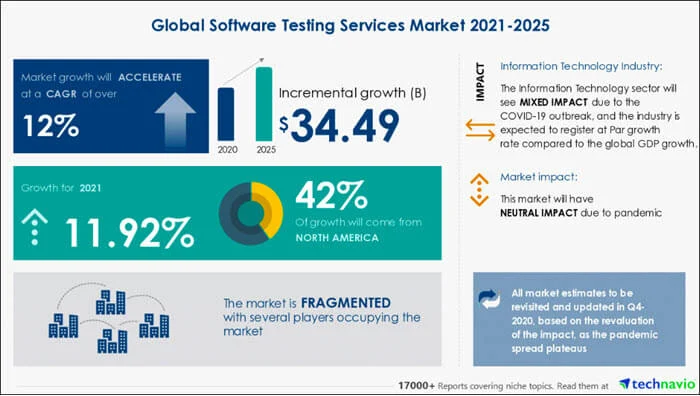
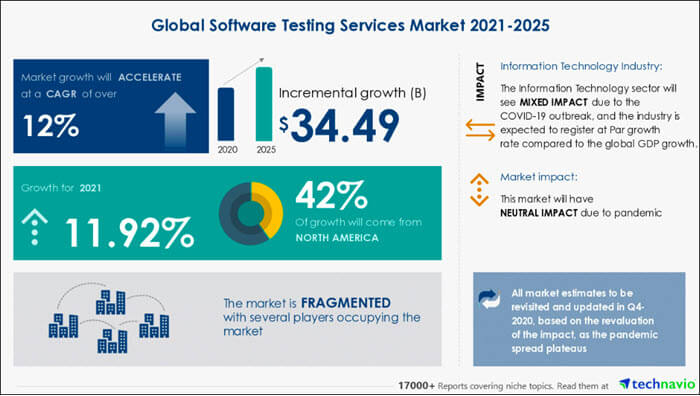
The global software testing market is currently undergoing a period of unprecedented expansion. Recent forecasts from industry leaders indicate that the sector is not merely growing; it is fundamentally reshaping how organizations deliver value to their customers.
According to data reported by PR Newswire, the software testing services market is projected to see a staggering growth of $90 billion between 2021 and 2030, maintaining a robust compound annual growth rate (CAGR) of 12.39%. This bullish outlook is corroborated by Global Market Insights, which reported that the industry crossed the $40 billion threshold in 2020. Their projections suggest a steady CAGR of 7% through 2030, underscoring that software quality is no longer optional—it is a business imperative.

This growth is driven by the increasing complexity of applications, the proliferation of mobile devices, and the urgent need for cybersecurity in an age of frequent data breaches. As organizations shift toward agile development and DevOps, the "testing" phase can no longer be a bottleneck; it must be an integrated, automated, and continuous part of the software engineering lifecycle.
Chronology of the Shift: From Manual to Intelligent Automation
The evolution of software testing can be traced through several distinct phases, each defined by the tools and methodologies that dominated the era.
- The Manual Era: Historically, testing was a labor-intensive, manual process. QA teams relied heavily on human intervention to verify functional requirements, which often delayed release cycles.
- The Automation Adoption (2010–2018): As the demand for faster releases grew, organizations pivoted toward test automation. Frameworks like Selenium and JUnit became industry standards, allowing teams to run repetitive test suites with greater speed and reliability.
- The Intelligence Wave (2019–Present): We are currently in the era of "Intelligent Automation." By leveraging Artificial Intelligence (AI) and Machine Learning (ML), modern testing teams are now optimizing their strategies. Instead of simply executing scripts, AI-driven tools can predict failure points, optimize test coverage, and self-heal in response to minor UI changes.
Supporting Data: What the Metrics Tell Us
Current industry surveys provide a clear picture of how organizations are adapting to these technological shifts. A report by Tricentis on the state of open-source testing revealed that in over 80% of organizations, functional test automation is performed directly by testers or dedicated QA professionals, signaling a professionalization of the role.
The Forte Group notes that while only 12% of QA practitioners claim to be "fully automated," a significant 35% are halfway there. This indicates that the industry is in a state of mass migration, moving away from legacy manual testing toward sophisticated, automated ecosystems.
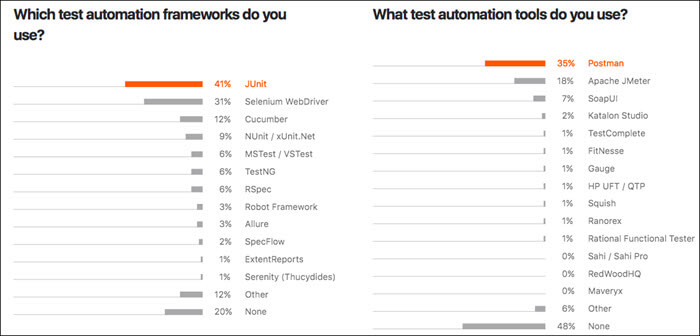
Furthermore, JetBrains research highlights that Java remains the dominant language for test automation, while tools like Selenium WebDriver, Postman, and Apache JMeter maintain their status as the industry’s "gold standard." These tools serve as the backbone for companies attempting to meet the modern demand for seamless, bug-free end-user experiences.
Official Perspectives and Industry Insights
The consensus among industry experts is that software testing has become an "indivisible part" of the software engineering budget. The World Quality Report by Micro Focus corroborates this, finding that 90% of businesses are currently experiencing growth in their AI initiatives.
Critically, 69% of businesses report meeting their quality goals, but the remaining 33% face significant challenges in scaling. This gap represents a massive opportunity for specialized software testing firms. Companies are no longer asking if they should invest in testing, but how they can scale it effectively to maintain a competitive edge.
The rise of DevOps has also changed the conversation. Testing is no longer an "end-of-lifecycle" event. Under the DevOps model, testing is continuous, occurring at every stage of the development pipeline. This shift has elevated the status of the QA professional from a "bug hunter" to a "quality consultant" who advises on architecture, security, and performance long before a single line of code is deployed.
Implications for Career Development
For those considering a career in this field, the data offers a clear mandate: Skill up or get left behind.
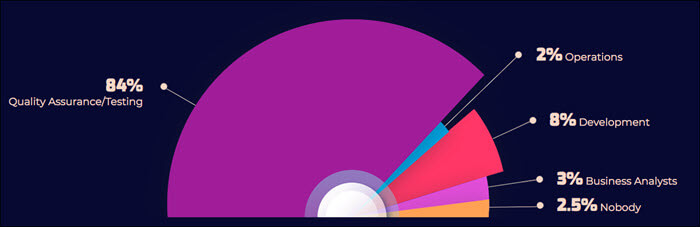
According to QA Lead, there is an average of 5.2 software testers per 100,000 people globally—a statistic that suggests a persistent shortage of skilled talent relative to the high demand. The profile of a successful tester has evolved significantly. While foundational knowledge remains vital, the modern job market demands a hybrid skill set:
- Communication Skills: 75% of industry respondents identify this as a top requirement. Testers must act as the bridge between developers, product managers, and stakeholders.
- Scripting and Automation: 63% of respondents emphasize the necessity of coding skills. The days of "no-code" testing are limited; the future belongs to engineers who can build and maintain complex automation frameworks.
- Security Awareness: With cyber threats rising, cybersecurity testing is the fastest-growing niche. Organizations are increasingly using Robotic Process Automation (RPA) and AI to secure their infrastructures, creating a high-demand sub-sector for testers with security credentials.
Emerging Frontiers: AI, IoT, and Beyond
Looking toward the future, the scope of software testing is expanding beyond traditional web and mobile applications.
- Codeless Automation: This trend allows business analysts and non-technical stakeholders to participate in testing, democratizing quality assurance.
- IoT-Driven Testing: As the Internet of Things (IoT) expands into smart homes and cities, testing the connectivity and security of these devices is becoming a major growth area.
- Performance Engineering: It is no longer enough for an app to "work"; it must work under extreme load. Performance engineering is becoming a specialized field that integrates with infrastructure monitoring.
- Blockchain Testing: As decentralized finance and blockchain applications gain traction, testing for security, consensus mechanisms, and smart contract integrity is emerging as a critical, high-pay discipline.
Conclusion: A Future Built on Quality
The evidence is irrefutable: the software testing industry is undergoing a structural transformation. It is moving away from the peripheral, reactive role it once held and becoming a core strategic function that safeguards the performance, security, and reputation of the modern enterprise.
For professionals entering the field, the path forward involves embracing the "Agile-plus-AI" model. By focusing on automation, security testing, and continuous delivery, QA professionals can ensure they remain at the center of the technology ecosystem. The market for quality is booming, and as technology continues to permeate every facet of human life, the role of the tester—the final gatekeeper of the digital world—will only become more essential.
Whether you are a developer looking to move into quality or a student eyeing a career in tech, the software testing domain offers a robust, high-growth, and intellectually stimulating environment that is built to last.