Innovation at Scale: AWS Summit NYC and the New Frontier of AI-Native Development
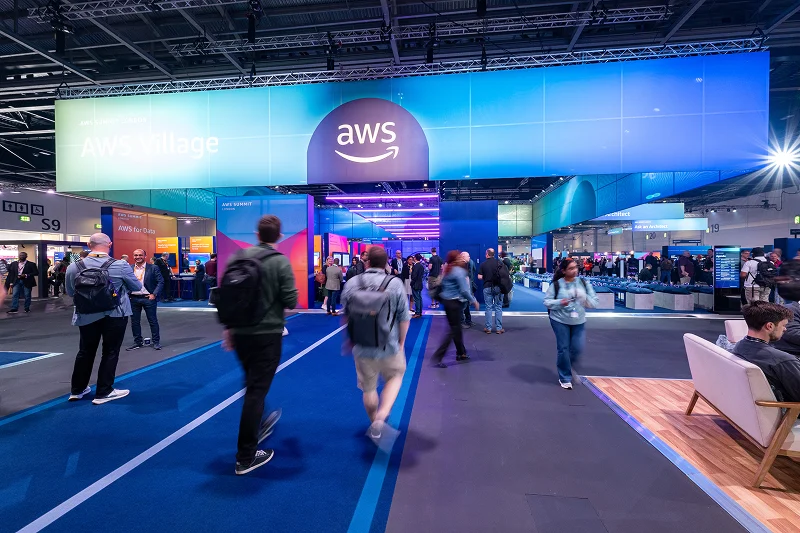
The tech world turned its attention to the Javits Center in New York City this week as the annual AWS Summit commenced, bringing together a vast ecosystem of developers, enterprise customers, and AWS leadership. While the physical halls were buzzing with live demos and technical workshops, the announcements emanating from the event signal a significant shift in how organizations are expected to operate in an AI-first economy.
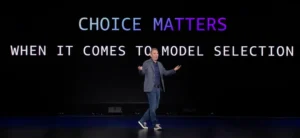
The keynote, headlined by Dr. Swami Sivasubramanian, VP of Agentic AI, and Chet Kapoor, VP of Security Services and Observability, underscored a pivotal transition: moving from simple generative AI experimentation to the implementation of agentic workflows. As AWS continues to iterate on its developer tools and infrastructure, the industry is witnessing a maturation of cloud-native development that promises to redefine productivity benchmarks.
Main Facts: The Agentic Evolution
The core theme of this year’s summit is the transition toward "AI-native development." AWS is positioning itself as the infrastructure layer for this transition, emphasizing that the future of software engineering lies in agents—autonomous or semi-autonomous systems capable of executing complex workflows with minimal human oversight.
The centerpiece of this announcement is the release of the AWS FinOps Agent, now available in public preview. This tool is designed to bridge the gap between financial governance and technical execution. By automating cost-analysis, surface-level optimization, and even incident response via Jira and Slack integrations, AWS is providing a template for how internal operations can be managed by AI.
Simultaneously, AWS released a comprehensive study on how internal "frontier teams"—elite engineering units within Amazon—have successfully integrated AI into their development lifecycles. The data suggests that we are not merely looking at incremental improvements in coding speed, but a structural shift in how software is architected, tested, and shipped.
Chronology of the Summit
The week began with a flurry of technical disclosures that set the tone for the remaining days of the conference.
- June 14th: Preliminary documentation and blog posts detailing the "Frontier Teams" methodology were published, providing the theoretical framework for the summit’s keynote.
- June 17th: The official keynote event took place at the Javits Center. Dr. Swami Sivasubramanian and Chet Kapoor showcased the latest capabilities in AI infrastructure and security, demonstrating how these tools integrate into existing AWS environments.
- Ongoing: Throughout the week, developer-focused breakout sessions have been exploring the practical implementation of these new tools, focusing on moving from the "pilot phase" to "production-grade" agentic systems.
- Future Outlook: The conversation is set to extend beyond this week, with upcoming sessions in the AWS Builder Center intended to help participants synthesize these new tools into their own corporate roadmaps.
Supporting Data: The 4.5x Productivity Multiplier
The most compelling aspect of this week’s news is the empirical evidence provided by Amazon’s own internal engineering teams. The study, which analyzed the output of hundreds of teams, paints a picture of a transformative shift in productivity.
The Bedrock Inference Engine Benchmark
Perhaps the most striking case study is the rebuilding of the Amazon Bedrock inference engine. Originally scoped for a team of 30 developers over a timeline of 12 to 18 months, the project was completed in just 76 days by a team of six. This represents a staggering reduction in both headcount and time-to-market.
Key Performance Metrics
- Normalized Deployment Velocity: Across various pilot groups within Amazon Stores, teams saw a median productivity increase of 4.5x.
- High-Performers: In several instances, engineering teams reported productivity gains exceeding 10x, suggesting that the "AI-native" methodology scales effectively as teams become more proficient.
- Operational Efficiency: The "Perfect Order Experience" team reduced its feature release cycle from two weeks to a single afternoon. Meanwhile, the WW Grocery team slashed the time required for design document creation from five days to mere hours.
Official Guidance: The Five Pillars of a Frontier Team
Dr. Sivasubramanian’s research distills these successes into five actionable practices for engineering leaders. These guidelines are intended to help organizations transition from "AI-assisted" to "AI-native" status:
- Invest in Agent Context: Before writing code, teams must invest in the infrastructure of the agents themselves. This includes creating steering files, strictly defined coding standards, and structured repositories. Without this foundational work, agents lack the context necessary to produce high-quality output.
- Embrace the Initial Slowdown: The transition to AI-native workflows requires a restructuring of established processes. Teams should expect an initial dip in velocity as they move from manual coding to agent orchestration. AWS emphasizes that "pushing through" this period is critical.
- Parallel Execution: To maximize efficiency, teams must maintain a steady, well-scoped backlog of tasks. This allows agents to operate in parallel, significantly reducing the bottleneck of human review.
- Intent-Based Specification: Before a single line of code is generated, the intent must be explicitly defined through structured specifications. The quality of the output is directly proportional to the clarity of the input.
- Shift-Left Testing: Testing must be moved to the earliest stages of the development cycle. By enabling agents to self-correct during the design and coding phase, organizations can prevent errors from ever reaching the production pipeline.
Implications: The Future of Cloud Operations
The introduction of the AWS FinOps Agent represents a broader trend: the automation of non-coding, operational tasks. For years, "FinOps" has been a labor-intensive discipline involving cross-departmental spreadsheets and manual cost-anomaly investigations.

By automating the identification of idle resources, the recommendation of Savings Plans, and the generation of Jira tickets, AWS is effectively moving the needle toward "self-healing" cloud environments. The implications for the workforce are profound. As agents take on the repetitive, analytical heavy lifting, the role of the developer and the operations engineer is shifting toward high-level strategy, architecture oversight, and intent design.
However, as noted by the AWS team, this is only the beginning. While the current focus is on development velocity and financial management, future updates are expected to tackle the more complex challenges of release management, security operations, and the management of end-of-life (EOL) software upgrades.
A Call to Action for Builders
For those who were unable to attend the summit in person, the resources available through the AWS Builder Center serve as the primary hub for continuing this education. Whether through the livestream recordings of the keynote or the deep-dive documentation on the "frontier teams" methodology, AWS is encouraging developers to stop treating AI as a novelty and start treating it as the primary interface for software construction.
As we look toward the remainder of the year, the industry will be watching to see if these productivity gains are replicable outside of the Amazon ecosystem. If the data from this week holds true, the bar for software engineering velocity has been permanently raised. The question for organizations is no longer whether they should adopt agentic AI, but how quickly they can restructure their teams to support the new "frontier" of development.
For more information on upcoming AWS events, developer sessions, and community building, visit the official AWS Builder Center.