The Future of Spatial Computing: A Deep Dive into Android XR SDK Developer Preview 4
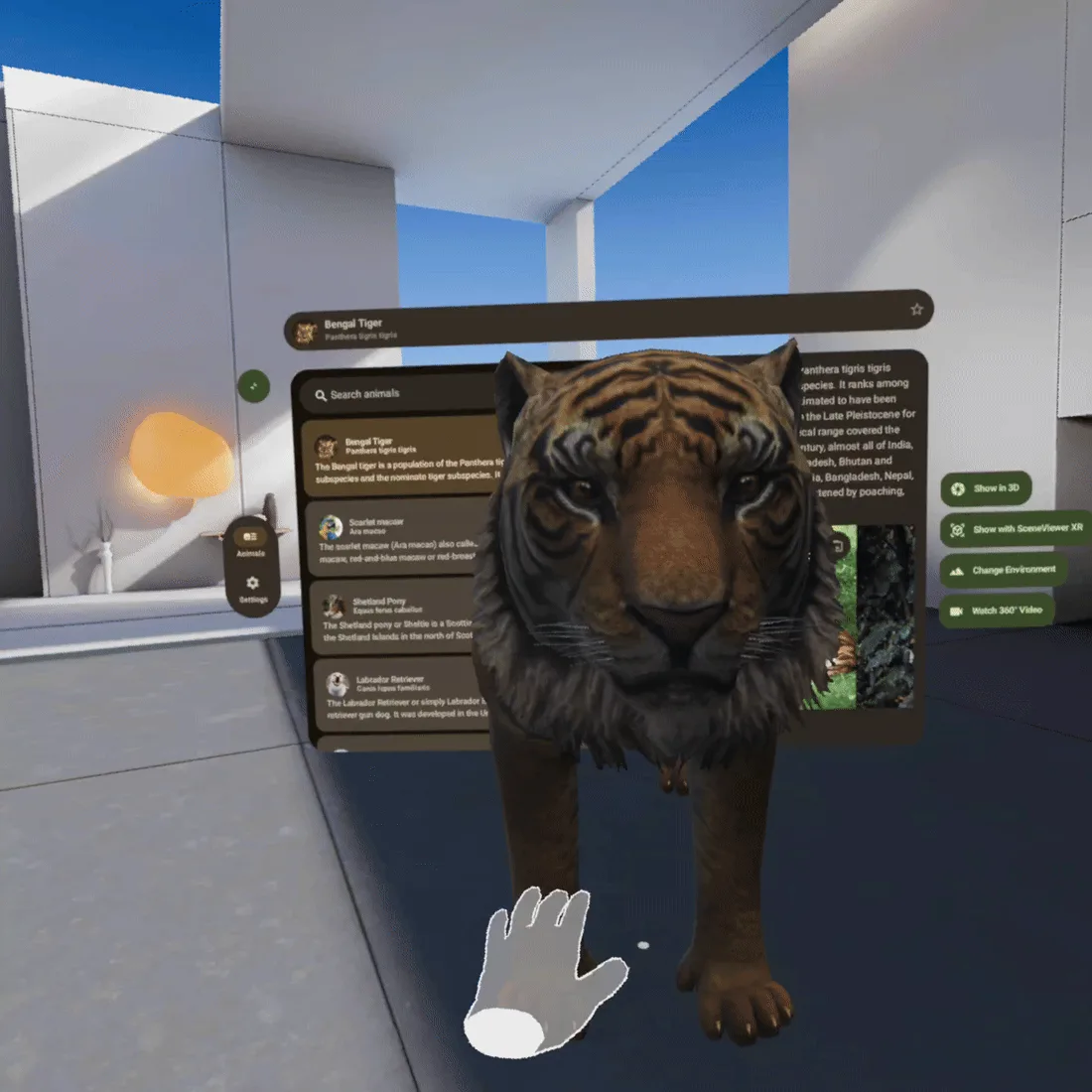
The landscape of spatial computing is undergoing a seismic shift as Google accelerates its vision for a unified, cross-platform ecosystem. With the release of Developer Preview 4 (DP4) of the Android XR SDK, the tech giant has signaled that the future of augmented and immersive reality is not just about isolated headsets, but a seamless convergence of wearable technology. This latest update introduces critical refinements to the developer toolchain, a clearer taxonomy for device form factors, and an ambitious roadmap for the upcoming Beta phase of the Android XR ecosystem.
Main Facts: Unifying the XR Ecosystem
The central focus of DP4 is the stabilization and unification of development workflows. As developers transition from experimental builds to professional-grade spatial applications, Google has taken steps to simplify the terminology used to categorize hardware. Moving forward, "AI glasses" will be referred to as "audio glasses," while "display AI glasses" have been streamlined to "display glasses." This change is intended to make documentation more intuitive and align the developer vocabulary with the actual functionality of the devices.

Key to this release is the preparation of core libraries—XR Runtime, Jetpack SceneCore, and ARCore for Jetpack XR—for their official move to Beta status. This transition represents a major milestone, promising developers greater API stability and a more reliable environment for building production-ready applications. To support this, Google has purged legacy dependencies like Guava and RxJava3, opting instead for a modern, Kotlin-first architectural foundation that aligns with the broader Android development ecosystem.
Chronology: The Path to Immersive Computing
The journey to Android XR DP4 has been characterized by iterative, rapid deployment of specialized tooling:

- Early Conceptualization: Initial Android XR efforts focused on defining the bridge between mobile applications and spatial environments.
- The Rise of Jetpack XR: Google introduced Jetpack SceneCore and other libraries to standardize how developers interact with 3D space, physics, and spatial inputs.
- Expansion of Perceptions: Recent previews added robust support for depth mapping, eye and hand tracking, and spatial anchors via ARCore, moving away from simple 2D overlays into true spatial understanding.
- Developer Preview 4 (The Current Milestone): This release focuses on developer productivity, testing automation, and the integration of high-precision geospatial capabilities.
- The Beta Horizon: With DP4, the ecosystem is now firmly positioned for the upcoming Beta release, which will invite a wider swath of developers to deploy apps on consumer-facing hardware.
Supporting Data: Enhancing the Toolchain
DP4 introduces a suite of tools designed to reduce boilerplate and improve the fidelity of augmented experiences.
Streamlining Projected Experiences
The Jetpack Projected library has received a significant upgrade with the Device Availability API. By mapping device wear-state and connectivity signals to standard Android Lifecycle.State values, developers can now write logic that reacts dynamically to whether a user is wearing their glasses. Complementing this is the ProjectedTestRule API, which automates the initialization of projected environments. This allows developers to write reliable, clean unit tests without the overhead of manual environment setup, a crucial requirement for scaling app development.

UI Innovation with Jetpack Compose Glimmer
For developers working on display glasses, the Jetpack Compose Glimmer library is a game-changer. The inclusion of Google Sans Flex ensures that text remains legible on optical see-through displays, where lighting and contrast conditions can vary significantly. By integrating this specialized font, Google is solving one of the most persistent issues in AR development: text rendering that is readable in both indoor and outdoor environments.
Advanced 3D Capabilities in SceneCore
The power of Jetpack SceneCore has been amplified with full glTF model support and custom mesh generation. Developers can now programmatically fine-tune 3D models, access specific nodes within a hierarchy, and manipulate materials and textures at runtime. The introduction of Custom Meshes as an experimental feature is particularly noteworthy, allowing developers to generate complex geometry on the fly—a necessity for procedural content generation in spatial games and productivity tools.

ARCore and the Geospatial API
Perhaps the most ambitious addition is the preview of the Geospatial API for wired XR glasses. By leveraging the Visual Positioning System (VPS), developers can anchor content to real-world coordinates across 87 countries. When paired with the Gemini Live API, this creates a "contextually aware" layer where digital objects can interact with the physical environment, guided by AI that understands the user’s surroundings in real-time.
Official Responses and Strategic Initiatives
In tandem with the SDK release, Google has launched the Android XR Developer Catalyst Program. This initiative is a clear signal that Google is taking a hardware-first approach to software development. By providing early access to upcoming devices—such as display and audio glasses and XREAL’s Project Aura—Google is ensuring that the ecosystem is populated with high-quality, "day-one" applications when these devices reach the mass market.

Furthermore, Google is addressing the needs of professional developers who rely on established game engines. The introduction of the Android XR Engine Hub and official support for Unreal Engine and Godot signals a departure from a "Google-only" toolset. By allowing developers to run experiences directly from their preferred engine, Google is lowering the barrier to entry for AAA game studios and enterprise visualization firms.
Implications: The Future of Spatial Development
The implications of these updates are profound for the mobile development industry.

- Convergence of Mobile and Spatial: By utilizing familiar Android development patterns (Lifecycle, Jetpack Compose, Kotlin), Google is effectively inviting millions of existing Android developers into the XR space. There is no longer a need to learn entirely new, proprietary languages; if you can build a mobile app, you are now only a few steps away from building a spatial experience.
- The Rise of Contextual Computing: The integration of the Gemini Live API with ARCore Geospatial data points toward a future where "Search" is no longer a text box on a screen, but a persistent, helpful layer of information overlaid on the world. This represents the next evolution of the "Assistant" paradigm.
- Standardization as a Catalyst: By formalizing the naming conventions and standardizing APIs across different form factors (from headsets to light glasses), Google is working to prevent the fragmentation that plagued early tablet and foldable phone markets. Developers can now write a single codebase that scales across different levels of device immersion.
- Hardware-Software Synergy: The Catalyst Program is a strategic hedge. By ensuring that software is ready before the hardware hits shelves, Google is trying to avoid the "empty app store" trap that has stalled previous XR platforms.
As the industry looks toward the end of 2026, the message from the Android XR team is clear: the period of theoretical exploration is over. With DP4, the architecture is locked, the testing tools are in place, and the focus is now squarely on the quality and variety of experiences. For developers, the message is equally urgent: the transition from "mobile-first" to "spatial-first" is no longer a future goal—it is a present-day reality. Those who begin integrating these SDKs today will be the ones defining the user interface of the next decade.