The Great Pivot: Transitioning from Lean Efficiency to Intelligent Supply Chain Resilience
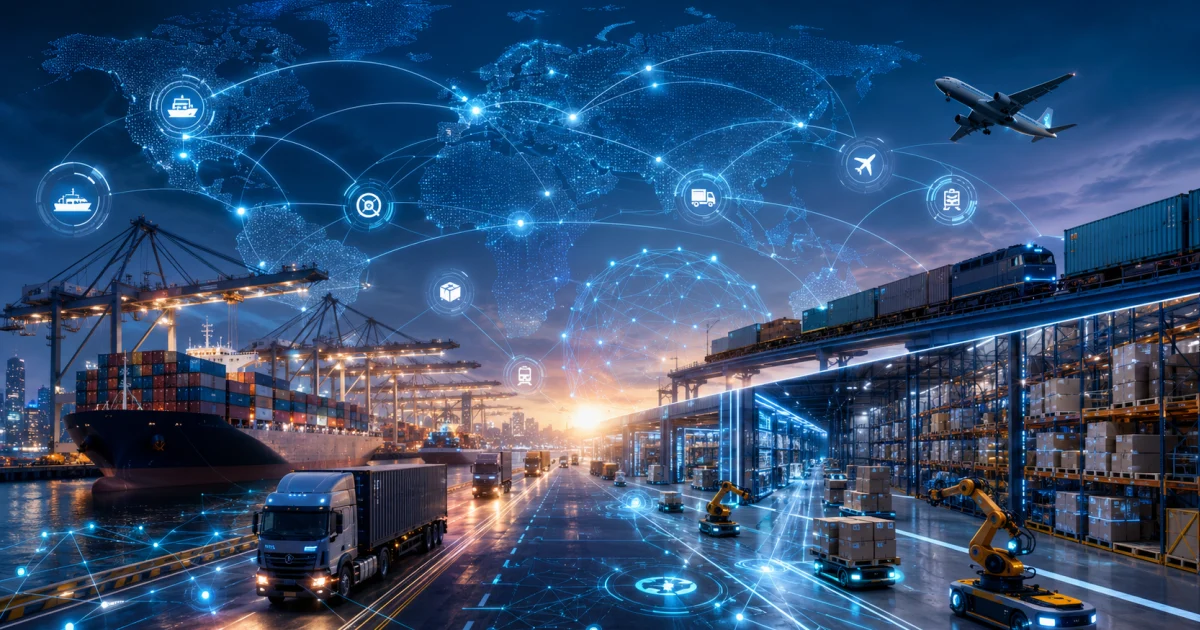
For over three decades, the global supply chain was governed by a singular, rigid mantra: efficiency above all else. Under the influence of "just-in-time" (JIT) manufacturing and the relentless pursuit of cost-minimization, corporations stripped away inventory buffers, relied on single-source suppliers, and optimized for speed. This model thrived in a world of predictable growth and geopolitical stability.
However, the dawn of the 2020s brought an abrupt end to that era. A global pandemic, the grounding of the Ever Given in the Suez Canal, a paralyzing semiconductor shortage, and the escalation of climate-induced disasters collectively exposed a harsh, systemic reality: efficiency without visibility is nothing more than fragility. Today, the global business landscape is engaged in a high-stakes race to digitize the supply chain—a shift from blind optimization toward intelligent, data-driven resilience.
The Core Transformation: Replacing Blind Spots with Real-Time Intelligence
The Visibility Gap
The fundamental challenge facing modern supply chains is not a lack of data, but a lack of accessible data. While most organizations maintain a clear view of their immediate operations—internal warehouses and direct (Tier 1) suppliers—the visibility degrades exponentially beyond that point. Tier 2 and Tier 3 suppliers, often the originators of critical components, remain largely opaque.
These "blind spots" are precisely where systemic risk hides. A small specialty chemical plant or a singular component manufacturer in a remote region can trigger a global production halt if it falters. Digital transformation is now focused on dismantling this opacity through network-based data sharing and AI-driven monitoring that detects tremors in the supply chain long before they escalate into crises.
IoT and the End of "Guesswork" Logistics
The integration of the Internet of Things (IoT) has fundamentally altered the physical movement of goods. Modern shipments are no longer "dark" between departure and arrival; they are instrumented with GPS, temperature, humidity, and vibration sensors. For industries such as pharmaceuticals, high-value electronics, and food services, this level of granularity is no longer a luxury—it is a compliance necessity.
At the warehouse level, RFID and computer vision are replacing the archaic practice of periodic cycle counts. By providing a continuous, real-time inventory position, these technologies are finally bridging the expensive, long-standing gap between what a digital system claims is in stock and what is physically present on the warehouse shelf.
Chronology of a Paradigm Shift
To understand the current urgency, one must look at the timeline of the "Fragility Crisis":
- 1990–2019: The Efficiency Era. The dominance of lean manufacturing and globalized, low-cost sourcing. Supply chains are treated as cost centers to be squeezed.
- 2020–2021: The Breaking Point. The COVID-19 pandemic reveals the catastrophic risk of single-source dependency. Just-in-time becomes "just-in-case" as lead times skyrocket.
- 2022–2023: The Resilience Pivot. Geopolitical instability and extreme weather events force boards of directors to treat supply chain risk as a primary boardroom agenda item.
- 2024–Present: The Intelligent Era. The mainstream adoption of AI-driven control towers, digital twins, and predictive risk modeling. Supply chain performance is now viewed as a competitive weapon for top-line growth.
Supporting Data: The AI Advantage in Demand Sensing
While logistics visibility addresses the where, demand sensing addresses the how much. Traditional forecasting models—relying on historical sales data and quarterly spreadsheets—are increasingly obsolete in a volatile market.
AI-driven demand platforms represent a quantum leap in predictive accuracy. By ingesting massive, disparate datasets—including real-time point-of-sale data, social media sentiment, web traffic, hyper-local weather forecasts, and macroeconomic indicators—these systems update demand signals continuously.
Key Performance Impacts:
- Reduction in Inventory Costs: By aligning stock levels with real-time demand, companies are reducing "dead stock" and capital tied up in excess inventory.
- Mitigation of Stockouts: Proactive identification of demand spikes prevents lost revenue and protects customer brand loyalty.
- Service Level Optimization: Faster responses to shifting market dynamics ensure that product availability remains high, even in unstable environments.
Strategic Risk Management: Moving from Reactive to Proactive
Perhaps the most significant failure of the pre-digital era was the "Static Risk Register." Most companies maintained business continuity plans as dusty, theoretical documents. In the digital age, risk management has become a dynamic, live operational tool.
Digital platforms now monitor supplier financial stability, regional geopolitical tensions, and climate trends, mapping these signals directly to a company’s specific supply chain exposure. If a supplier faces financial distress or a port experiences sudden congestion, the system alerts decision-makers with enough lead time to reroute shipments or activate secondary suppliers. This transition from "crisis management" to "risk intelligence" is the hallmark of the modern, digitized organization.
Control Towers: The Command Center of the Modern Enterprise
The "Supply Chain Control Tower" has emerged as the architectural solution to the problem of disconnected data. Acting as an integrated orchestration platform, it aggregates data from across the entire network—logistics providers, suppliers, production systems, and demand channels.
Using AI to detect exceptions, these towers allow for "scenario modeling." When a disruption occurs—a missed delivery or an unexpected demand surge—the control tower does not simply report the error; it models the downstream consequences and presents a suite of recommended actions. Decisions that once required days of cross-departmental meetings are now being resolved in hours or minutes, significantly increasing the agility of the entire firm.
Sustainability and the Regulatory Landscape
Sustainability is no longer a corporate social responsibility (CSR) side project; it is a core operational requirement. Scope 3 emissions—the carbon generated throughout the supply chain—represent the largest portion of most companies’ total climate footprint.
Digitization is the only viable path to achieving net-zero goals. Through digital product passports—which track a product’s provenance, carbon intensity, and material composition throughout its lifecycle—companies can provide the transparency that regulators and consumers now demand. As jurisdictions worldwide begin mandating strict carbon reporting, the infrastructure built for operational visibility is doubling as a foundational tool for regulatory compliance.
The Human Element: The Cultural Shift
The transformation of the supply chain is not merely a technological challenge; it is a human one. For decades, supply chain professionals were trained to be "firefighters"—experts at expediting shipments and managing crises manually.
The digital shift demands a new breed of professional: one who is skilled in analytics, scenario planning, and probabilistic forecasting. This requires a profound cultural shift. Organizations must invest in retraining their workforces to move away from reactive decision-making and toward data-driven, strategic planning. The success of a digital transformation is ultimately measured by the ability of its people to work in harmony with AI-derived insights.
Implications: Building Durable Competitive Advantage
The ultimate destination of this journey is not a trade-off between efficiency and resilience, but an integration of the two. Modern digital tools allow firms to hold less inventory while achieving higher service levels by anticipating disruptions before they manifest.
The Bottom Line:
- Efficiency and Resilience are compatible: Through visibility, companies can optimize inventory without sacrificing the ability to respond to shocks.
- Supply Chain as a Growth Driver: High-performing, agile supply chains are now helping companies capture market share during disruptions when less-prepared competitors are struggling to fulfill orders.
- The End of "Flying Blind": The era of the fragmented, reactive supply chain is closing. Organizations that invest in comprehensive digital visibility today are securing their position as the market leaders of tomorrow.
As the industry moves forward, the supply chain will no longer be relegated to the back office. It is evolving into the nervous system of the modern enterprise—a critical, data-rich environment where the ability to see clearly, predict accurately, and act decisively determines the long-term viability of the firm.
Edited by Erik Linask.