The Human Cost of Automation: Navigating the "AI-Slop" Crisis in Open Source
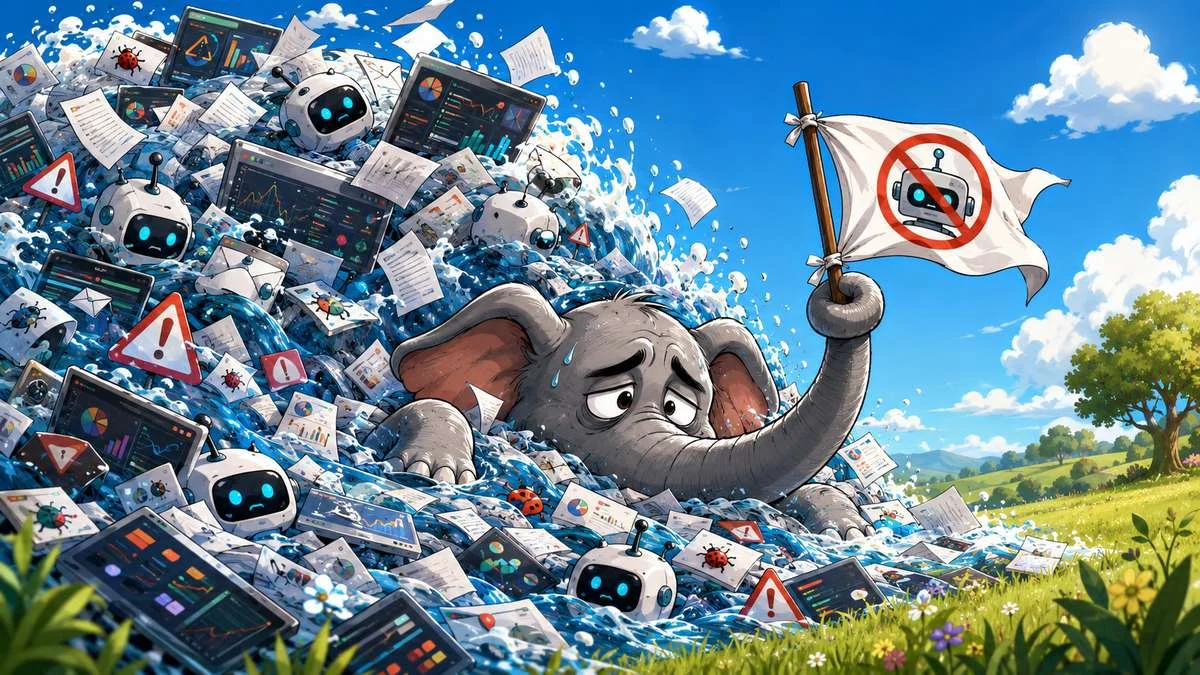
Open source software is, at its core, a human endeavor. It is built by individuals who donate their time, expertise, and fragments of their lives to create tools that are freely accessible, unencumbered by restrictive licensing, and vital to the global digital infrastructure. Yet, as projects evolve from humble "passion projects" to the foundational building blocks of the modern internet, the burden of sustainability grows heavier.
In the current era of generative AI, this sustainability model is facing an unprecedented stress test. While AI was once feared as a "killer" of open source—the logic being that if software could be generated instantly, the need for communal development would vanish—the reality has proven more complex. Instead of replacing developers, AI has lowered the barrier to entry, enabling anyone to flood repositories with patches, security reports, and code reviews. This influx of machine-generated content, often termed "AI-slop," has pushed many maintainers to the brink of burnout.
The Chronology of an Automated Onslaught
The shift began subtly, with the integration of AI-assisted coding tools like GitHub Copilot and LLM-based assistants. Initially, these tools were viewed as productivity boosters. However, by 2025, the trend shifted toward volume over quality.
- Early 2025: Proliferation of automated "vibe coding" begins. Users, emboldened by LLMs, begin submitting pull requests and security vulnerability reports at a scale previously unseen by human maintainers.
- Late 2025: The first wave of major projects reports an unsustainable volume of low-quality, AI-generated noise. The administrative overhead of triaging these submissions begins to cannibalize time meant for actual development.
- Early 2026: Projects like the RPCS3 PlayStation 3 emulator issue public pleas, asking contributors to cease the deluge of low-effort, AI-generated submissions.
- June 2026: The crisis reaches a boiling point. Daniel Stenberg, the lead maintainer of the
curlproject, highlights the issue at FOSDEM 2026, famously noting that "AI gives us the worst and the best, simultaneously." Shortly after,curlsuspends its bug bounty program and implements a temporary moratorium on vulnerability reports to protect the sanity of its maintainers.
The Mechanics of "AI-Slop" and Its Impact
"AI-slop" refers to the high-volume, low-utility content generated by large language models that is submitted to projects without adequate human review or understanding. For a single maintainer managing a project in their spare time, a sudden influx of this content is not merely an annoyance; it is an existential threat.
The most dangerous manifestation of this is the "false positive" vulnerability report. When an AI hallucinates a security flaw, a human maintainer must still perform the rigorous work of reproducing, analyzing, and verifying the claim. Even when the result is a confirmation that the code is safe, the labor expended to prove it is very real. When that labor is forced upon a maintainer by an automated, unthinking process, it is, by definition, abusive.
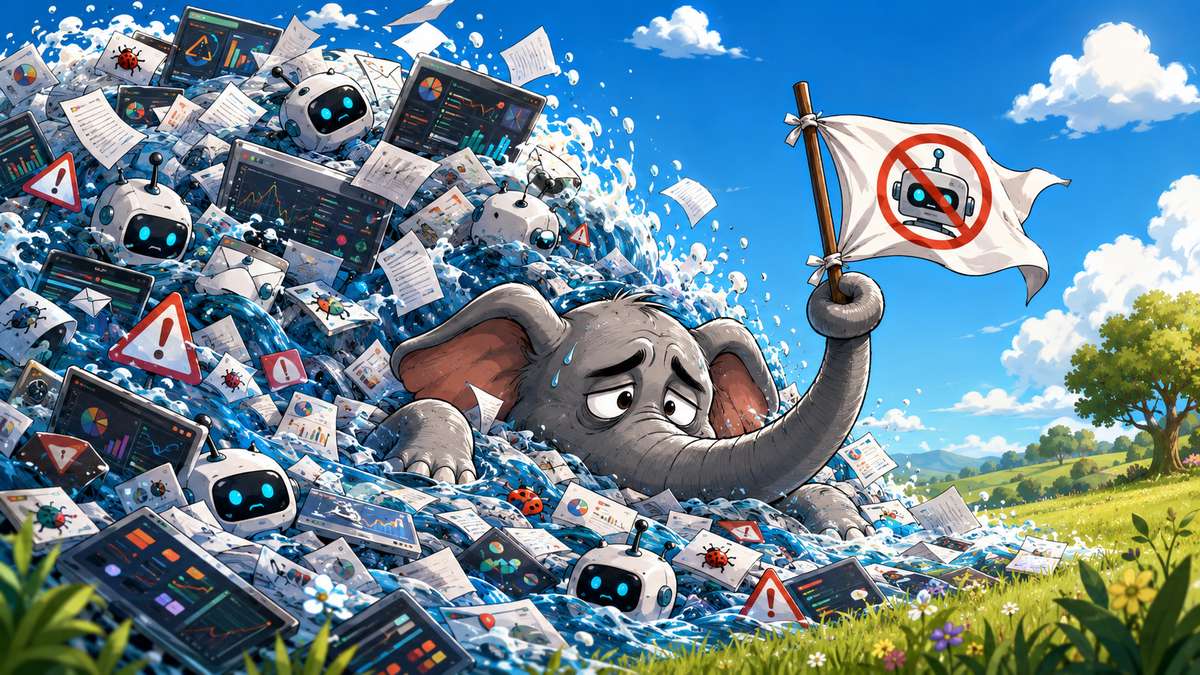
As Daniel Stenberg explained in his FOSDEM presentation, the curl project eventually had to implement a "Summer of Bliss"—a month-long period where no vulnerability reports would be processed. This was not a move of apathy, but of necessity. The project’s resources were being drained by the cognitive load of debunking machine-generated inaccuracies.
Supporting Data: The Rise of AI Policies
The reaction from the open source community has been swift and systematic. A growing repository of "Open Source AI Contribution Policies" has emerged, serving as a blueprint for projects trying to establish boundaries.
The consensus across these documents is clear: AI is a tool, not a contributor. Most major projects—including Apache Airflow, CPython, the Linux Kernel, LLVM, and Kubernetes—have formalized their stance. While these policies vary in strictness, they share a common thread: The human-in-the-loop requirement.
Commonly Accepted AI Practices:
- Assisted Documentation: Using AI to summarize complex discussions or draft release notes, provided a human verifies the output.
- Code Formatting: Using AI to suggest style improvements that conform to existing project guidelines.
- Drafting Initial Tests: Using LLMs to generate boilerplate test cases, provided they are rigorously audited by a developer.
Strictly Banned Practices:
- Blind Submissions: Submitting code, patches, or security reports that have not been manually verified for accuracy and relevance.
- Automated Triage: Using AI to automate the processing of issues without human oversight.
- Low-Effort "Vibe Coding": Submitting changes based on a "feeling" or an AI prompt without understanding the underlying architectural implications of the project.
Official Responses and the PostgreSQL Anomaly
The contrast between projects like curl or Django—which have clear, public-facing policies—and projects like PostgreSQL is striking. As of June 2026, the PostgreSQL core project has not adopted a formalized AI policy.
This lack of guidance is significant. While PostgreSQL’s high barrier to entry and reliance on traditional mailing lists serve as a natural filter against low-effort AI spam, the broader ecosystem of extensions and third-party tools is less insulated. Smaller projects within the PostgreSQL orbit are currently struggling to manage their own contributions without a centralized lead from the core community.

Industry observers argue that the lack of leadership here is a missed opportunity. Providing a standardized "Responsible AI Usage" framework would save hundreds of hours for maintainers of smaller, resource-strapped plugins and extensions. When leadership fails to provide a standard, every individual maintainer is forced to spend time reinventing the policy wheel, further contributing to the very burnout that AI policies are meant to prevent.
Implications for the Future of Open Source
The "AI-slop" crisis is fundamentally a crisis of respect. It highlights a widening gap between those who view open source as a public good to be nurtured and those who view it as a testing ground for automated outputs.
1. The Cost of Administrative Burnout
If the current trend of AI-generated abuse continues, we face a future where the most critical software projects are forced to close their doors to public contribution entirely. We are already seeing the early stages of this, with projects creating "bliss" periods or requiring exhaustive vetting processes for new contributors.
2. The Evolution of "Human-in-the-Loop"
The future of open source will likely be defined by a shift toward more rigorous gatekeeping. This does not mean the end of AI; it means the end of unaccountable AI. Future contribution guidelines will likely require metadata or signatures proving that a human has reviewed the generated content.
3. A Call to Action for Community Leaders
The upcoming PGConf.EU in October and various developer meetups represent a critical inflection point. These forums must move beyond discussing "AI hype" and toward defining concrete, enforceable standards of conduct. The goal should not be to ban technology, but to establish a social contract: if you use AI to assist your contribution, you must assume 100% of the responsibility for the outcome.

Conclusion: A Matter of Respect
The rise of generative AI has provided us with a powerful mirror. It has shown us that our existing social structures in open source were fragile, held together by the quiet, invisible labor of maintainers.
"AI usage in open source is all about respect," is a sentiment that should be adopted as a guiding principle. To respect the maintainer is to respect the time they have invested. It is to recognize that behind every "Submit" button on a pull request is a human being who must process that information.
As we look toward the remainder of 2026 and beyond, the open source community must leverage its async communication channels and in-person conferences to turn this crisis into a turning point. We must be more reasonable, more deliberate, and above all, more respectful of the human labor that keeps the digital world running. The era of the "vibe coder" must give way to an era of responsible stewardship, or the very foundation of our software landscape risks crumbling under the weight of its own automated noise.