The Revival of Analog: Jan Derogee Transforms a Commodore Datasette into a Portable Boombox
Introduction: A Symphony of Nostalgia and Ingenuity
In an era dominated by digital streaming and ephemeral data, the tactile charm of analog media continues to exert a powerful pull. For many, the simple act of slotting a cassette tape into a player evokes a potent sense of nostalgia, recalling mix tapes crafted with care and hours spent curating personal soundtracks. It is this enduring allure that underpins the remarkable project undertaken by Jan Derogee, an innovator who has masterfully repurposed a relic of early home computing – the Commodore 1530 Datasette – into a fully functional, portable audio device. Dubbed the "1530 Boombox," Derogee’s creation is more than just a clever hack; it is a testament to the enduring spirit of DIY culture, a celebration of vintage technology, and a practical solution for enjoying cherished analog recordings in a unique, conversation-starting package.
This ambitious endeavor stands apart from mere emulation or superficial redesigns. Instead, Derogee has delved into the very heart of the Datasette, transforming its data storage mechanism into a platform for sonic delight. The project not only breathes new life into a piece of computing history but also highlights the ingenuity required to adapt antiquated hardware for modern, albeit retro-inspired, uses. His meticulous approach, particularly the critical distinction between different manufacturing iterations of the Datasette, offers fascinating insights into the engineering and cost-saving measures prevalent in the early days of personal computing, and how these historical details can profoundly impact contemporary modification efforts.
The Genesis of a Retro Revival: Main Facts and Project Overview
Jan Derogee’s 1530 Boombox project emerges from a vibrant global community of retro-tech enthusiasts and makers who refuse to let classic hardware fade into obsolescence. His vision was clear: to create a portable audio player capable of bringing beloved mix tapes back to life, all housed within the iconic shell of a Commodore 1530 Datasette. This isn’t just about aesthetics; it’s about functional repurposing, leveraging the existing tape transport mechanism for its original, albeit unintended, purpose as an audio playback device.
The 1530 Datasette: An Unlikely Canvas
The Commodore 1530 Datasette, often affectionately referred to as the "Datassette," was a ubiquitous peripheral for Commodore’s 8-bit computers, most notably the Commodore 64. Released in 1977, it served as the primary storage device for programs and data, using standard audio cassette tapes. Its operation was notoriously slow and often unreliable, a common frustration for early computer users who had to endure lengthy loading times accompanied by screeching modem-like noises. Despite its operational quirks, the Datasette became an iconic symbol of the C64 era, instantly recognizable by its chunky, utilitarian design.
Derogee’s choice of the Datasette as the foundation for his boombox is particularly poignant. It takes a device once associated with the frustrating slowness of digital data retrieval and re-imagines it as a vessel for the warm, immediate sound of analog music. The juxtaposition is both ironic and deeply satisfying for anyone familiar with the Datasette’s original function.
Jan Derogee’s Vision: Preserving Mixtapes, Creating a Unique Device
Derogee’s motivation for this project was rooted in a personal desire to enjoy his collection of old mix tapes. In a world where music is increasingly streamed or downloaded, the physical artifact of a mix tape holds a special, sentimental value. These tapes represent curated moments, personal expressions, and a tangible connection to the past. Creating a unique, portable player for them not only solves a practical problem but also elevates the act of listening to a ritual, much like the resurgence of vinyl records.
His vision extended beyond mere functionality. He aimed for a seamless integration of modern audio components within the vintage casing, ensuring that the final product felt like a natural evolution rather than a crude modification. This required careful planning, precise execution, and a deep understanding of both retro hardware and contemporary maker techniques.
Technical Ingenuity: The Heart of the Boombox
The core of Derogee’s hack involves several key technical innovations:
- Case Splitting and Internal Redesign: The Datasette’s original two-part case is ingeniously split, creating space for new components.
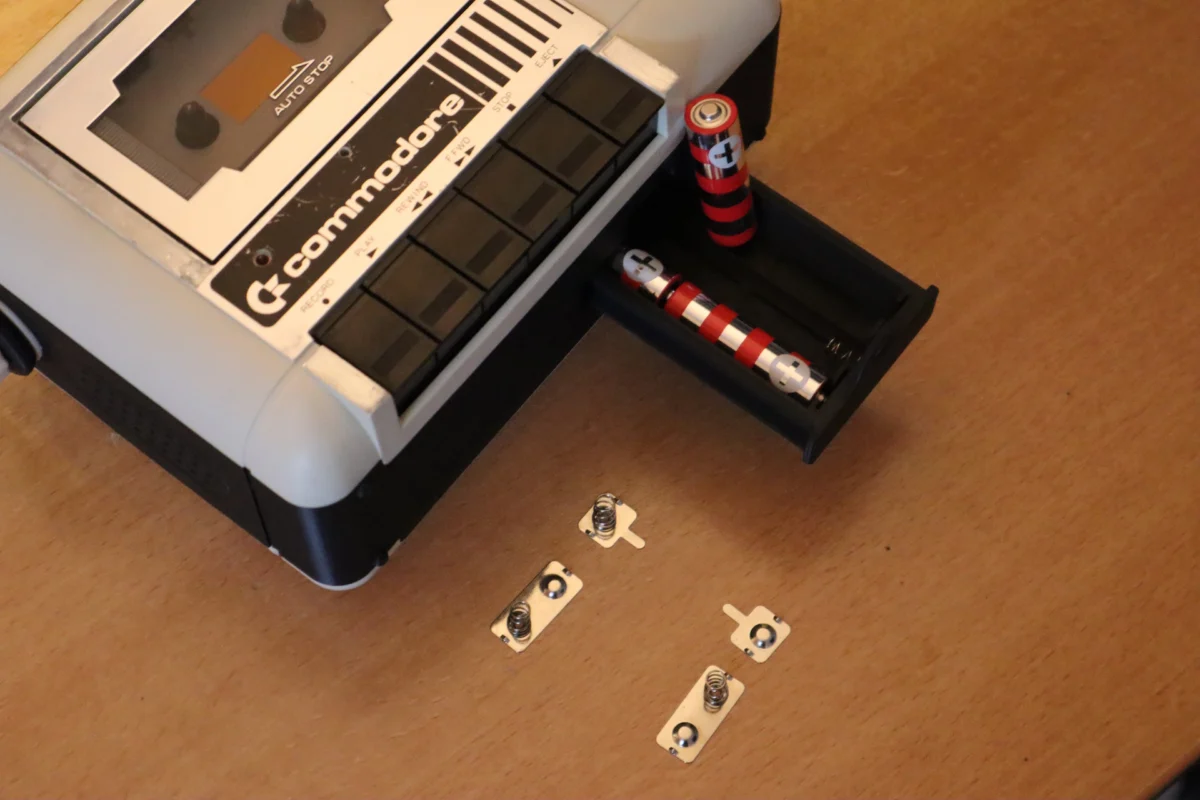
- 3D-Printed Spacer: A custom-designed 3D-printed insert acts as a structural backbone, holding new components securely while maintaining the original device’s aesthetic. This spacer accommodates speakers, audio amplifiers, and a bay for AA batteries.
- Leveraging Original Mechanics: Crucially, the original tape transport mechanism is retained and repurposed for audio playback. This means the buttons (Play, Rewind, Fast Forward) still function as intended, albeit for music rather than data.
The project is a harmonious blend of old and new, demonstrating how cutting-edge fabrication methods like 3D printing can be used to revitalize and transform vintage electronics. The result is a device that is both a functional audio player and a captivating piece of industrial art.
A Detailed Chronology of the Transformation
The journey from a data storage peripheral to a portable audio player was not instantaneous but a methodical process, marked by critical discoveries and careful engineering. Derogee’s approach highlights the iterative nature of hardware hacking, where initial ideas evolve through experimentation and problem-solving.
Phase 1: Conception and Sourcing – The Critical Datasette Selection
The project began, as many do, with an idea and the hunt for the right raw material. Derogee’s initial concept involved simply taking a Datasette and fitting audio components inside. However, a crucial insight emerged early in the sourcing phase that would fundamentally shape the project’s feasibility and elegance: the distinction between different manufacturing origins of the 1530 Datasette.
During his research and acquisition of Datasette units, Jan Derogee discovered a significant variance in their internal construction based on their country of origin. Specifically, he identified a critical difference between units manufactured in Japan and those later produced in Taiwan. This wasn’t merely a geographical distinction; it represented a design philosophy divergence directly linked to Commodore’s infamous drive for cost-cutting.
- Made-in-Japan Models: These earlier iterations of the Datasette proved to be the ideal candidates. Their design featured two distinct sets of screws: one dedicated solely to securing the delicate tape mechanism in its precise alignment, and another set for holding the two halves of the external casing together. This separation of functions meant that the tape transport could remain undisturbed and fully functional even when the outer case was disassembled for modification.
- Made-in-Taiwan Models: These units, a later development, were a direct result of Commodore’s efforts to streamline production and reduce costs. In these versions, a single set of screws was made to perform double duty, securing both the tape mechanism and the case halves. While this undoubtedly saved on manufacturing costs and perhaps assembly time, it presented a significant hurdle for Derogee. Disassembling the case would inevitably compromise the alignment and stability of the tape mechanism, making it difficult to maintain reliable audio playback without extensive re-calibration.
This discovery was pivotal. It meant that successfully executing the "split-case" design, which allows for the insertion of internal components without disrupting the delicate tape transport, was largely dependent on acquiring a Made-in-Japan model. This detail underscores how seemingly minor historical manufacturing decisions can have profound implications for future modification projects, turning what might have been a simple hack into a more complex challenge if the wrong base unit were chosen.
Phase 2: Design and Fabrication – Integrating Modernity into Vintage Form
With the correct Datasette model secured, the next phase involved meticulous design and fabrication to integrate the new audio components. This was where modern technologies like 3D printing played an indispensable role.
- Iterative 3D Design: Derogee meticulously measured the internal dimensions of the Datasette casing and designed a custom 3D-printed spacer. This spacer served multiple critical functions: providing structural integrity to the now-split case, creating compartments for the new electronics, and ensuring a snug fit for the speakers and battery bay. The design process likely involved several iterations, fine-tuning dimensions and component placement to maximize space and optimize performance within the constrained volume.
- Component Selection: Key components included miniature stereo audio amplifiers, small but capable speakers (chosen for their sound quality and compact size), and a power management circuit for the AA batteries. The choice of AA batteries was pragmatic, offering a readily available and easily replaceable power source, aligning with the portable nature of a boombox. Considerations for wiring, power efficiency, and audio signal integrity were paramount during this stage.
- Challenges of Integration: Fitting all these components into the Datasette’s relatively small form factor presented significant challenges. Derogee had to contend with issues like electromagnetic interference, speaker placement for optimal sound dispersion, and ensuring robust connections that could withstand portable use. The goal was not just to make it work, but to make it work well, delivering clear audio without unwanted noise or distortion.
Phase 3: Assembly and Refinement – Bringing the Boombox to Life
The final phase involved the careful assembly of all components and subsequent testing and refinement. This is where the vision transitioned from design to a tangible, working device.
- Precision Assembly: With the 3D-printed spacer in place, the speakers were mounted, the amplifiers wired, and the battery bay integrated. The Datasette’s original tape transport mechanism was carefully re-seated and connected, ensuring it aligned perfectly with the playback head and capstan for optimal tape movement.
- Testing and Troubleshooting: Once assembled, extensive testing would have been crucial. This included checking audio quality, battery life, the responsiveness of the original Datasette buttons, and overall structural integrity. Any rattles, hums, or playback issues would necessitate troubleshooting and adjustments, a common part of any hardware project.
- The Reversibility Aspect: A notable feature of Derogee’s design is its reversibility. This means that, should the owner desire, the Datasette can be returned to its original state, capable of connecting to a Commodore 64 for data loading. This design choice speaks to a respect for the original hardware and offers flexibility to enthusiasts who might wish to preserve the Datasette’s historical function. While few would likely revert it given the superior modern data loading methods for the C64 (such as emulated tapedecks or SD card interfaces), the option highlights a commitment to thoughtful modification.
Through these meticulously planned and executed phases, Jan Derogee transformed a humble data storage device into a charming and fully functional portable audio player, bridging decades of technological evolution with a seamless blend of ingenuity and passion.
Supporting Data: The Broader Context of Retro-Tech Hacking and Nostalgia
Jan Derogee’s 1530 Boombox is not an isolated phenomenon but rather a shining example within a thriving ecosystem of retro-tech enthusiasts and the broader cultural trend of analog revival. Understanding this context illuminates the deeper significance of his project.
The Enduring Appeal of Analog Audio
In an age dominated by high-fidelity digital audio, lossless codecs, and instant streaming, the resurgence of analog formats like vinyl records and cassette tapes might seem counterintuitive. Yet, this revival is a well-documented cultural phenomenon, driven by several factors:
- The Tangible Experience: Unlike digital files, analog media offers a physical, tactile experience. Holding a cassette, inserting it into a player, and pressing "play" engages multiple senses and creates a more deliberate, ritualistic interaction with music.
- Warmth and Character: Many audiophiles argue that analog audio possesses a unique "warmth" or sonic character that digital formats, despite their technical precision, often lack. This subjective quality contributes to a more engaging and immersive listening experience.
- Nostalgia and Authenticity: For those who grew up with cassettes, the format is steeped in nostalgia. It represents a simpler time, a connection to youth, and an authentic way of experiencing music. New generations are also discovering the charm of these "vintage" formats, appreciating their distinct aesthetic and sound.
- Mixtape Culture: The mix tape, a meticulously curated collection of songs recorded onto a cassette, was a powerful form of personal expression and communication. It allowed individuals to share their musical tastes, convey emotions, and create bespoke soundtracks for friends, lovers, or personal reflection. Derogee’s project directly taps into this rich cultural heritage, providing a dedicated and stylish platform for these cherished artifacts.
The Commodore Legacy and Modding Community
Commodore International, though long defunct, left an indelible mark on the history of personal computing. The Commodore 64, in particular, remains the best-selling single personal computer model of all time, fostering a passionate and enduring community.
- A Foundation for Innovation: The C64’s open architecture and widespread adoption created a fertile ground for innovation, both in software and hardware. Even decades later, its robust design and the availability of components continue to inspire a vibrant community of modders, hackers, and restorers.
- Hardware Archaeology and Repurposing: The retro-computing community is deeply engaged in "hardware archaeology," meticulously studying, repairing, and often repurposing vintage components. This can range from simple repairs to complex modifications like Derogee’s. Other notable Datasette projects include:
- TrueTape64: A project to connect a Commodore Datasette to a modern PC, allowing users to experience the "authentic" data loading process or even transfer data to and from original tapes. This showcases a desire to understand and interact with the technology on its original terms.
- Emulated Tapedecks: For those less inclined towards physical hardware, software emulators and modern hardware interfaces (like SD2IEC) allow C64 users to load vast libraries of software almost instantly, bypassing the Datasette’s slowness. Derogee’s project offers a counter-narrative, celebrating the physical interaction over digital convenience.
- The Maker Ethos: The retro-modding scene is a prime example of the broader "maker" movement, which emphasizes hands-on creation, learning by doing, and the sharing of knowledge. Projects like the 1530 Boombox serve as inspiration and instructional guides for others.
3D Printing: A Modern Enabler for Retro Projects
The advent and increasing accessibility of 3D printing technology have revolutionized the field of hardware modification and custom electronics. Derogee’s project is a perfect illustration of its transformative power:
- Custom Enclosures and Adapters: 3D printing allows hobbyists to design and fabricate custom parts that precisely fit their needs, something that was previously the domain of industrial manufacturing. In Derogee’s case, the 3D-printed spacer is crucial for integrating disparate components into the Datasette’s existing shell.
- Rapid Prototyping: The ability to quickly print and test design iterations significantly accelerates the development process. This allows for experimentation and refinement without the need for expensive tooling or lengthy manufacturing lead times.
- Democratizing Hardware Innovation: By making custom part creation accessible, 3D printing empowers individuals to undertake complex hardware projects that would have been impossible or prohibitively expensive just a few decades ago. It fosters a culture of innovation and personalization, enabling creators to realize unique visions like the 1530 Boombox.
Cost-Cutting in Vintage Electronics: A Historical Footprint
Derogee’s critical observation regarding the Made-in-Japan versus Made-in-Taiwan Datasettes offers a fascinating glimpse into the historical manufacturing practices of the electronics industry.
- The Drive for Efficiency: Commodore, like many electronics manufacturers, was constantly seeking ways to reduce production costs and improve profit margins. This often involved redesigning products for simpler assembly, using fewer components, or streamlining internal structures.
- Impact on Design Philosophy: The decision to combine the functions of two sets of screws into one in the Taiwanese Datasettes was a classic example of "design for manufacturing" optimization. While seemingly minor, such changes could significantly impact assembly time and material costs over hundreds of thousands of units.
- Unintended Consequences for Modders: For contemporary modders like Derogee, these historical cost-cutting measures present unique challenges. A design optimized for mass production efficiency might inadvertently make the device less amenable to modification or repair decades later. Derogee’s workaround – specifically seeking out the older, more "modular" Japanese units – highlights the detective work and historical knowledge often required in retro-tech projects. It transforms a historical footnote into a critical design constraint for modern innovation.
The 1530 Boombox, therefore, is more than just a gadget; it’s a synthesis of cultural trends, technological advancements, and a deep appreciation for the history of computing. It celebrates the analog, empowers the maker, and recontextualizes the legacy of iconic hardware.
Official Responses and Community Reception
Given that Commodore International ceased operations in 1994, there are no "official responses" from the original manufacturer regarding Jan Derogee’s innovative use of their defunct product. However, the project has garnered significant attention and praise from the retro-computing community and tech media outlets, effectively serving as its own form of "official" validation within the maker sphere.
Jan Derogee’s Own Account
Jan Derogee himself has documented his project thoroughly on his personal website, janderogee.com, providing detailed insights into his process, challenges, and the rationale behind his design choices. His candid sharing of the critical discovery regarding the Made-in-Japan vs. Made-in-Taiwan Datasettes is particularly valuable, offering a practical lesson for anyone attempting similar modifications. Derogee’s motivation, as stated, was largely personal – a desire to listen to his own precious mix tapes. This personal connection resonates deeply with many enthusiasts who approach retro-tech as a hobby driven by passion and nostalgia rather than commercial gain. His satisfaction in creating a unique, functional device from a piece of computing history is palpable in his presentation of the project. He embodies the true spirit of the hacker: identifying a need, creatively repurposing existing components, and sharing the knowledge gained.
Community Buzz and Media Coverage
The 1530 Boombox project quickly captured the imagination of the retro-computing and maker communities, receiving widespread acclaim on platforms dedicated to hardware hacking and vintage electronics.
- Hackaday and Tech Blogs: The project was prominently featured on Hackaday, a leading platform for hardware hacks and engineering projects, which helped disseminate Derogee’s work to a broad international audience. Such coverage often highlights the ingenuity, problem-solving skills, and aesthetic appeal of the modification, drawing in readers who appreciate both the technical challenge and the nostalgic charm. Other tech blogs and forums dedicated to retro computing likely echoed this sentiment, praising the project’s cleverness and execution.
- Online Forums and Social Media: Discussions on platforms like Reddit’s r/retrobattlestations, r/hardwarehacking, and various Commodore-centric forums would have buzzed with excitement. Enthusiasts would have lauded Derogee’s creativity, the clean integration of components, and the functional success of the boombox. Common reactions would include:
- Admiration for Ingenuity: Many would express awe at how Derogee managed to repurpose such an unlikely device so effectively.
- Nostalgia Overload: The project would undoubtedly trigger fond memories of the Datasette’s original role, albeit with a humorous acknowledgment of its shortcomings.
- Inspiration for Others: The detailed documentation and successful outcome would inspire other makers to consider similar projects with other vintage hardware. Questions about specific components, 3D print files, and alternative approaches would be common.
- Discussions on Reversibility: The fact that the mod is reversible would be a point of appreciation for purists who value the option to restore original functionality.
- The "PeriFractic" and Commodore "Revival" Context: The original article humorously opens with a reference to "PeriFractic’s revived company" and later mentions a hypothetical "Commodore unveils Linux-powered flip phone." These playful allusions tap into a broader sentiment within the retro community: a blend of wishful thinking for modern iterations of beloved brands and a wry acknowledgement of how companies might attempt to capitalize on nostalgia. Derogee’s project, in contrast, is an authentic, grassroots effort that doesn’t rely on corporate branding but on genuine love for the hardware and the maker spirit. It stands as a more genuine "revival" of the Commodore spirit than any hypothetical, corporate-driven product. The community often appreciates such authentic projects over commercial attempts to cash in on nostalgia.
The overwhelmingly positive reception underscores the project’s resonance with a community that values innovation, historical preservation, and the sheer joy of creating something unique and functional from the relics of the past. It solidifies Derogee’s 1530 Boombox as a benchmark in the retro-modding landscape.
Implications: Beyond a Boombox
Jan Derogee’s 1530 Boombox transcends its immediate function as a portable cassette player, carrying broader implications for technology, culture, and the maker movement. It serves as a powerful symbol and a practical example in several key areas.
The Philosophy of Repurposing: Sustainability and Creative Upcycling
In an age of increasing environmental awareness and concerns about electronic waste, the 1530 Boombox offers a compelling argument for repurposing and creative upcycling.
- Challenging Planned Obsolescence: Modern electronics are often designed with a limited lifespan, encouraging frequent upgrades. Derogee’s project directly challenges this paradigm by giving new, extended life to a device that would otherwise be destined for a landfill or languish in an attic. It demonstrates that "obsolete" technology can still hold significant value and utility.
- Sustainability in Practice: By reusing an existing casing and mechanism, the project reduces the demand for new raw materials and manufacturing processes. It promotes a more sustainable approach to consumption, encouraging individuals to see potential in discarded items rather than simply replacing them.
- The Art of Upcycling: Beyond its functional aspects, the boombox is a work of art that highlights the aesthetic and creative potential of upcycling. It transforms a utilitarian object into something novel and desirable, sparking conversations about design, history, and environmental responsibility.
Inspiring the Next Generation of Makers
Projects like the 1530 Boombox are invaluable for their inspirational and educational value, particularly for those new to electronics, design, and programming.
- Encouraging Hands-on Learning: Derogee’s detailed documentation and the clear explanation of his process (especially the Datasette variations) provide a roadmap for others. It demystifies hardware hacking, making complex ideas accessible and encouraging hands-on experimentation.
- Fostering Problem-Solving Skills: The challenges Derogee faced, such as identifying the optimal Datasette model or integrating components within tight constraints, are real-world problems that demand creative solutions. Showcasing these challenges and their resolutions teaches valuable problem-solving methodologies.
- Bridging Disciplines: The project seamlessly blends electronics, mechanical design (via 3D printing), and cultural history. It demonstrates how interdisciplinary approaches can lead to innovative outcomes, inspiring individuals with diverse interests to collaborate and learn across different fields.
Preserving Digital and Analog History
The Datasette boombox contributes to the broader effort of preserving and engaging with technological history.
- Connecting with Material Culture: It allows users to physically interact with a piece of computing history in a new way. This tactile connection helps preserve the "material culture" of early personal computing, offering a more tangible understanding than purely digital emulation.
- Understanding Past Technologies: By repurposing the Datasette, Derogee implicitly educates about its original function, its design quirks (like the cost-cutting measures), and its place in the evolution of data storage. It’s a living artifact that tells a story.
- The Mix Tape as a Cultural Artifact: The project specifically champions the mix tape, a significant cultural artifact of the late 20th century. By providing a stylish and functional player, it ensures these personal archives can continue to be enjoyed and appreciated, preserving their unique sentimental and historical value.
Future Possibilities and Variations
The success of the 1530 Boombox opens doors for future explorations and variations, both for Derogee and for the wider maker community.
- Further Enhancements: One could imagine integrating Bluetooth connectivity, a rechargeable battery system, or even a small display for track information. The modular nature of 3D printing allows for continuous iteration and improvement.
- Repurposing Other Vintage Tech: Derogee’s project could inspire similar hacks for other iconic but obsolete pieces of technology. Could an old floppy disk drive become a digital music player? Or a vintage modem repurposed as a smart home device? The possibilities are limited only by imagination and engineering skill.
- The Evolving Retro-Modding Scene: As technology advances, the tools available to retro-modders (like more sophisticated 3D printers, miniature electronics, and open-source software platforms) continue to improve. This ensures that the retro-modding scene will remain vibrant and continue to push the boundaries of what’s possible with vintage hardware.
In essence, Jan Derogee’s 1530 Boombox is far more than a simple gadget. It is a thoughtful commentary on our relationship with technology, a celebration of human ingenuity, and a tangible link between the past and the future of creative innovation.
Conclusion
Jan Derogee’s transformation of the Commodore 1530 Datasette into a portable boombox is a brilliant synthesis of nostalgia, engineering prowess, and artistic vision. It stands as a powerful example of how creative repurposing can breathe new life into forgotten technology, challenging notions of obsolescence and celebrating the enduring appeal of analog media. From the meticulous selection of a Made-in-Japan Datasette to the precision of 3D-printed components, every aspect of the 1530 Boombox speaks to a deep respect for the original hardware combined with an innovative spirit.
This project resonates deeply within the retro-computing community and beyond, inspiring makers, preserving cultural artifacts like the mixtape, and offering a tangible connection to the material history of computing. It reminds us that even in a hyper-digital age, there is profound value in the tactile, the personal, and the creatively repurposed. As we navigate an increasingly disposable tech landscape, Derogee’s 1530 Boombox serves as a charming and practical beacon, illuminating the path towards more sustainable, imaginative, and deeply satisfying interactions with our technological heritage. It is not just a player for old tapes; it is a testament to the timeless spirit of innovation that continues to thrive at the intersection of past and future.