The Rise of the Maker-Friendly Console: Valve Unveils "Inkterface" for the Steam Machine
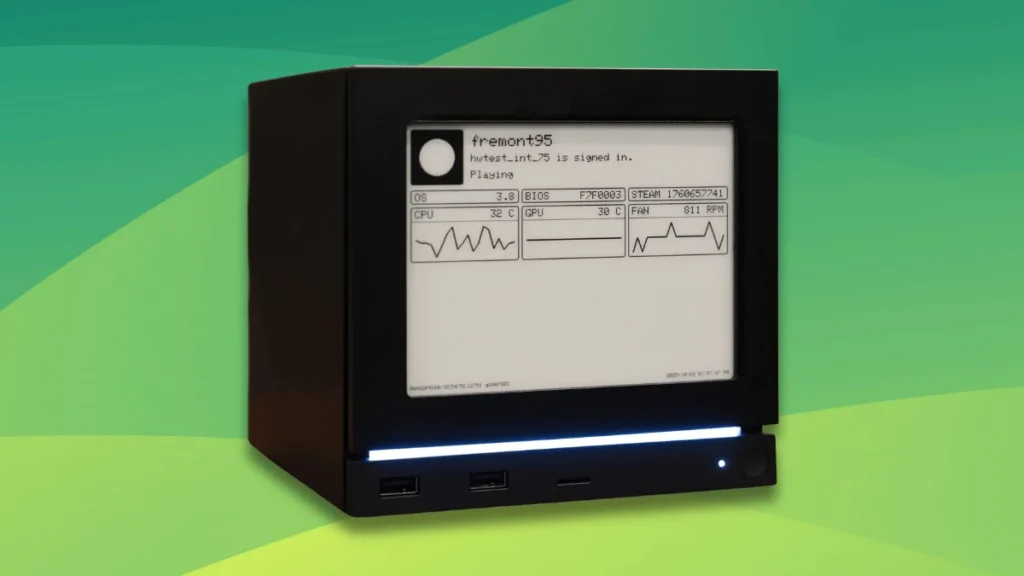
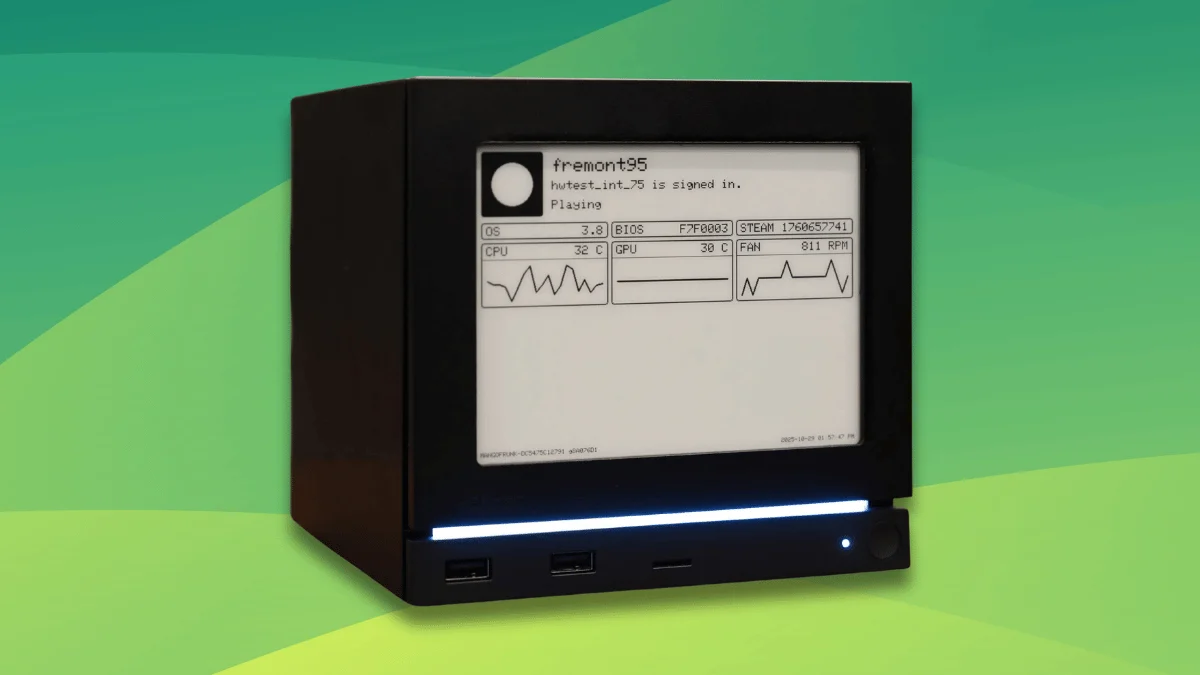
In a bold move that reaffirms its commitment to hardware transparency and user customization, Valve has released the "Inkterface"—an innovative, DIY-focused e-ink faceplate designed specifically for the modular Steam Machine. Released under the permissive MIT License, this project invites enthusiasts to transform the aesthetic and functional utility of their gaming hardware, bridging the gap between high-performance computing and the open-source hardware (OSH) community.
Designed by NaKyle Wright under the auspices of Valve’s SteamHardware group, the Inkterface is more than just a decorative mod; it is a sophisticated, Bluetooth-connected peripheral that turns the Steam Machine’s front panel into a dynamic information hub. By providing full access to CAD files, circuit diagrams, and assembly documentation, Valve is effectively crowdsourcing the evolution of its own hardware.
The Core Concept: Modular Hardware Evolution
The Steam Machine was engineered from the ground up with a modular ethos, featuring a swappable front panel that serves as a canvas for aesthetic expression. Until now, these panels were largely static components. The Inkterface project changes that paradigm entirely.
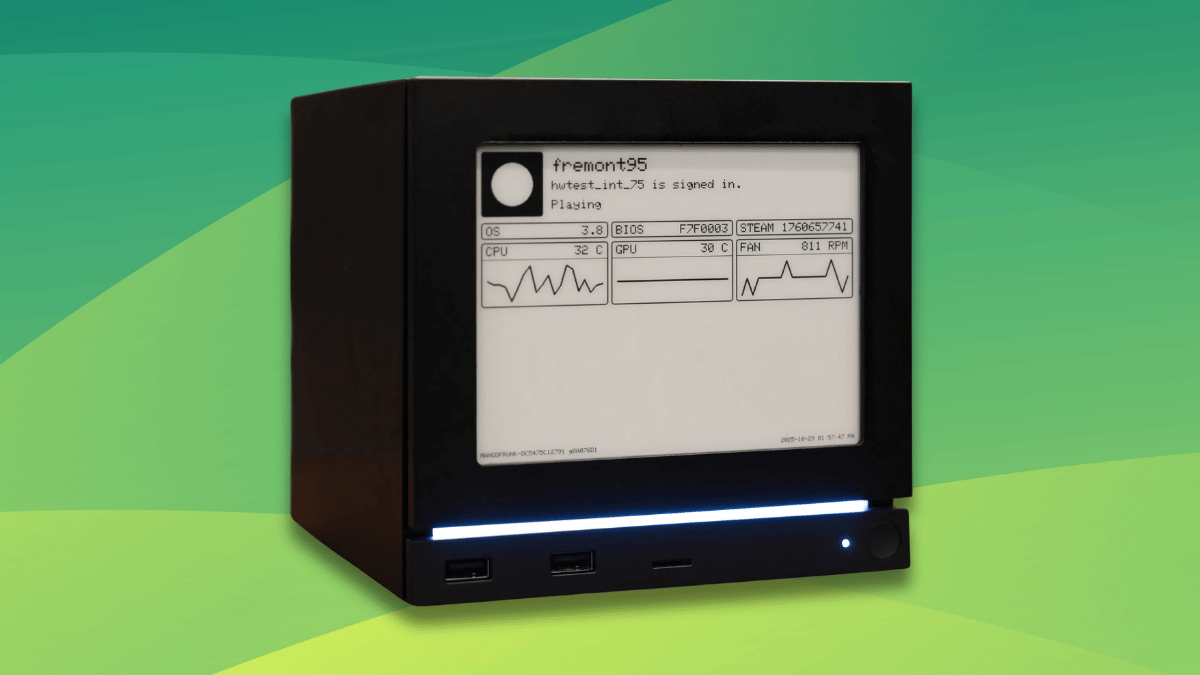
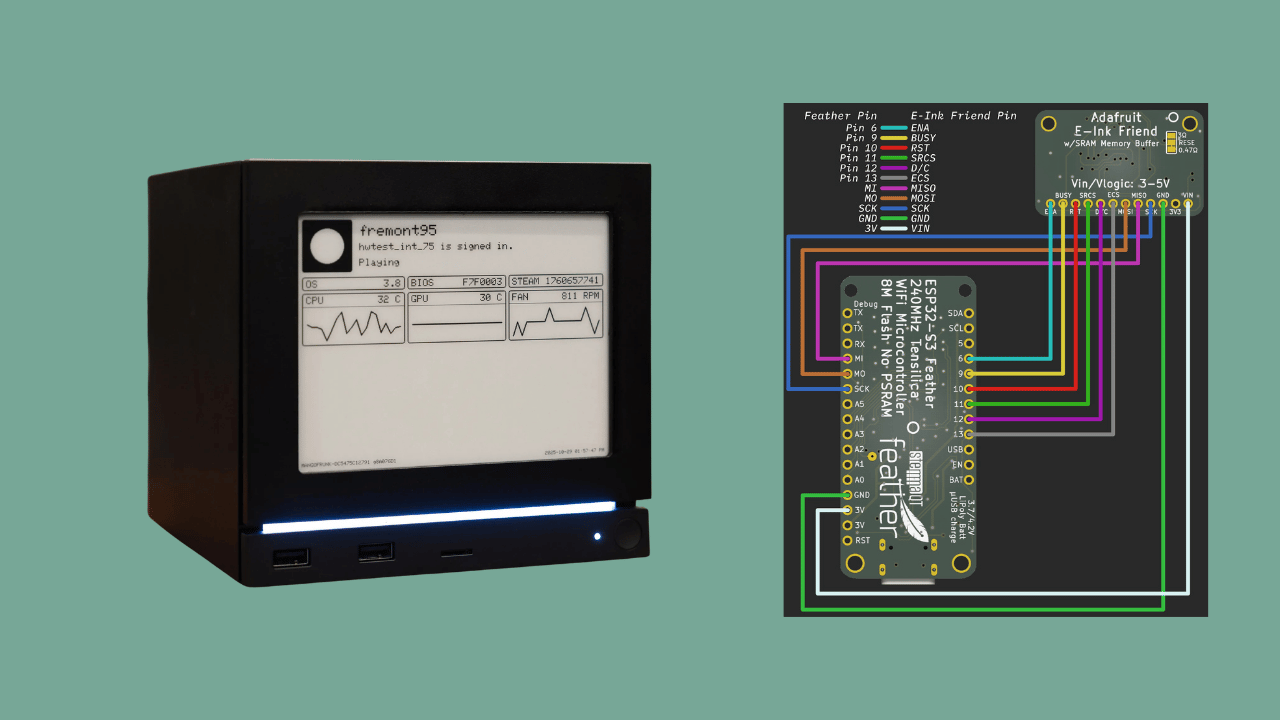
At its core, the Inkterface is a 5.83-inch monochrome e-ink display integrated into a 3D-printed chassis that snaps onto the Steam Machine using the device’s native magnetic mounting system. Because it utilizes e-ink technology, the display remains highly legible in various lighting conditions while consuming negligible power, making it an ideal choice for a console-integrated monitor.
A Chronology of Innovation: From Concept to Reality
The development of the Inkterface has been a transparent, community-driven journey. While the public release occurred recently, the project’s roots can be traced back to October 2025.
- October 2025: NaKyle Wright begins the initial prototyping phase, focusing on integrating low-power microcontrollers with the Steam Machine’s internal chassis dimensions.
- Late 2025 – Early 2026: The project gains traction within internal hardware circles. During this period, third-party accessory manufacturer JSAUX begins teasing their own modular faceplate ecosystem, signaling a broader industry shift toward modular gaming peripherals.
- Mid-2026: Valve formalizes the Inkterface project under its GitLab repository, moving from a hobbyist experiment to a supported open-source hardware initiative.
- July 2026: The project reaches its public release milestone, complete with comprehensive documentation, a full Bill of Materials (BOM), and assembly tutorials.
This timeline reflects a growing trend in the gaming industry: moving away from "black box" electronics and toward systems that encourage user repair and modification.

Technical Specifications and Build Requirements
The project is designed to be accessible to anyone with basic soldering skills and access to a 3D printer. The documentation provided on GitLab is exhaustive, ensuring that even intermediate makers can successfully assemble the device.
The Bill of Materials (BOM)
To construct an Inkterface, builders require a specific set of off-the-shelf components, reinforcing the project’s adherence to standard, non-proprietary parts:
- Controller: An Adafruit ESP32 Feather, chosen for its robust Bluetooth Low Energy (BLE) capabilities and ease of programming.
- Display: A 5.83-inch monochrome e-ink panel, offering a crisp, high-contrast visual output.
- Interface: An "eInk Breakout Friend" to facilitate communication between the controller and the display.
- Structural Elements: Various screws, magnets for the magnetic chassis attachment, and the 3D-printed faceplate housing.
Assembly Documentation
Valve and Wright have gone to great lengths to ensure the barrier to entry remains low. The repository hosts:
- STEP and STL files: Allowing users to print their own housings or customize the physical aesthetic further.
- Wiring Guides: A pin-by-pin schematic that eliminates guesswork during the assembly phase.
- Multimedia Walkthroughs: A high-definition video guide and a professional-grade PDF manual that document the assembly process from start to finish.
Software Integration: The Intelligent Faceplate
Hardware is only as useful as the software that drives it. The Inkterface is supported by a companion service that handles the synchronization between the Steam Machine and the e-ink display.
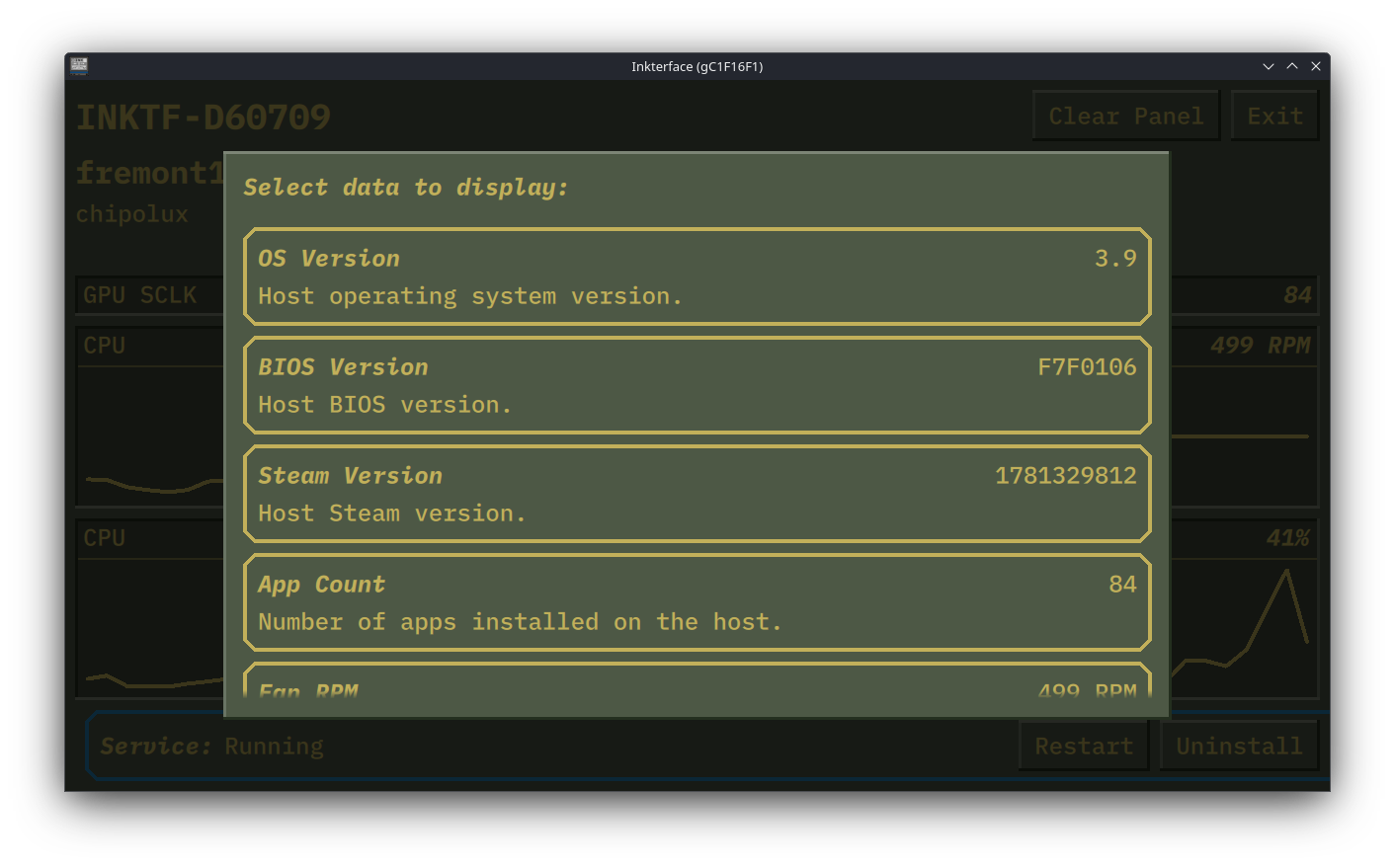
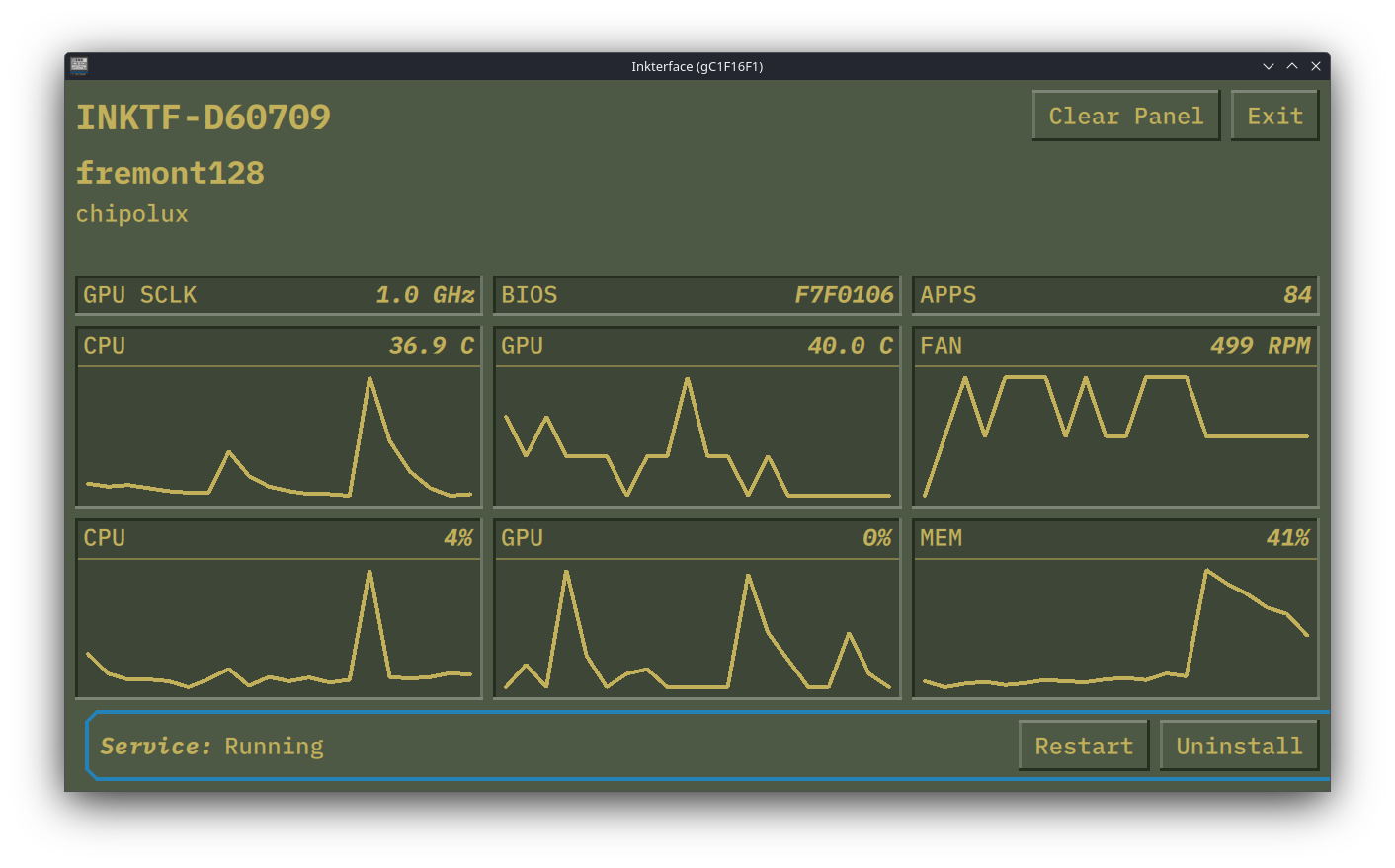
Once the physical installation is complete and the system is paired via Bluetooth, the companion app acts as the bridge. Although the software is currently in its final development stages, its functionality is clear: it will allow users to select real-time data visualizations to be displayed on the panel.
Out of the box, the project includes several system statistics collectors. These allow users to monitor metrics such as CPU and GPU utilization, frame rates, temperatures, and network activity—all at a glance without needing an on-screen overlay. Because the underlying code is open-source, the functionality is not capped by Valve; developers are encouraged to write their own collectors to track whatever telemetry they deem important, be it social notifications, weather updates, or even custom pixel art.
Implications for Open Source Hardware (OSH)
The Inkterface project is a significant victory for the open-source community. By releasing these designs under the MIT License, Valve is doing more than just giving away a mod; they are legitimizing the concept of user-upgradable consumer electronics.
Empowering Third-Party Vendors
The release of these design files creates an immediate opportunity for accessory manufacturers. Companies like JSAUX, which have already expressed interest in the Steam Machine’s modularity, can now build upon Valve’s work to create "Pro" versions of these faceplates. We could soon see mass-produced versions featuring high-resolution LCDs, LED dot matrices, or even tactile controls, all built upon the open standards established by the Inkterface project.
Strengthening the "Right to Repair"
This initiative aligns perfectly with the global push for the Right to Repair. When a manufacturer provides the CAD files and circuit schematics for their hardware, they are inherently making the device easier to repair and extend. If a component of the Inkterface fails, the user is not forced to send the entire console back for a costly repair; they can simply reprint a housing or replace a $20 microcontroller.
Official Responses and Industry Reception
While Valve has maintained a characteristically quiet but supportive stance, the reception from the developer and maker community has been overwhelmingly positive.
Industry analysts suggest that this strategy is a masterstroke for brand loyalty. By fostering a community of "builders," Valve ensures that the Steam Machine remains relevant long after its initial purchase. When users invest time and creativity into customizing their machines, they are significantly more likely to remain within the ecosystem.
Furthermore, the integration of AI-assisted tools in the broader tech landscape—such as the recent interest in AI-controlled KVM switches and automated system monitoring—suggests that the Inkterface is arriving at the perfect time. As hardware becomes more complex, having a dedicated, low-power display to monitor system health becomes increasingly valuable for power users.

Conclusion: The Future of Modularity
The Inkterface is more than just a screen; it is a symbol of a shift in how we interact with our gaming hardware. By embracing the DIY ethos, Valve has transformed the Steam Machine from a static console into a living, breathing project.
As we look toward 2026, the potential for this platform is immense. With the design files now public, the only limit to what the Steam Machine can become is the collective imagination of the maker community. Whether you are a system metrics enthusiast looking for the perfect dashboard or a modder wanting to add a personal touch to your desk setup, the Inkterface provides a professional-grade path to customization.
The era of the "black box" console is fading. In its place, we are seeing the rise of hardware that invites us to look under the hood, pick up a soldering iron, and make the machine our own. With the Inkterface, Valve hasn’t just released an accessory; they’ve started a movement.
For those looking to begin their own build, the full documentation, CAD files, and software repositories can be accessed through the SteamHardware GitLab repository.