The Silent Backbone: A Comprehensive Guide to Mastering Database Testing
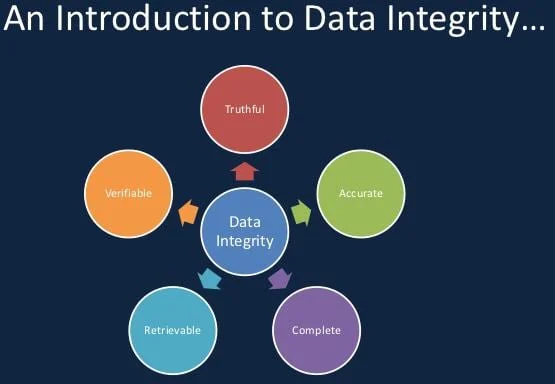
In the modern digital ecosystem, the complexity of software applications has reached unprecedented heights. From sophisticated mobile applications and enterprise-grade cloud platforms to the intricate backend systems powering global finance and healthcare, the "front-end" user interface is merely the tip of the iceberg. Beneath these polished screens lies the true engine of any application: the database. As these backend architectures grow increasingly intricate, the necessity for robust, secure, and precise database testing has moved from a niche requirement to a critical imperative for software quality assurance.
The Evolution of Data Reliability
Historically, database management was a straightforward affair. However, the advent of Big Data, distributed architectures, and high-frequency transaction environments—such as those found in banking, logistics, and real-time analytics—has fundamentally changed the landscape. Traditional relational databases are now frequently supplemented or replaced by NoSQL and hybrid cloud solutions, each requiring a tailored approach to verification.
Database testing is not merely about checking if data is stored correctly; it is about ensuring that the entire ecosystem of data—its structure, integrity, business logic, and security—functions flawlessly under pressure. Whether an application is controlling a spacecraft or managing a retail inventory, the database serves as the "source of truth." If that source is compromised or inconsistent, the entire system risks failure.

Chronology of a Database Testing Lifecycle
Effective database testing follows a structured, methodical lifecycle that aligns with the broader software development process.
Phase 1: Environment Preparation
Testing begins with establishing a mirrored environment. This involves setting up the test database, ensuring data parity with production (while scrubbing sensitive PII), and configuring the necessary connectivity to the Application Under Test (AUT).
Phase 2: Execution and Validation
Once the environment is prepped, testers execute specific SQL queries to manipulate and retrieve data. This phase involves verifying that the database schema, stored procedures, and triggers align with the technical specifications.

Phase 3: Result Analysis and Reporting
Findings are meticulously documented. If a transaction fails to adhere to ACID (Atomicity, Consistency, Isolation, Durability) properties, it is flagged, analyzed for the root cause, and reported back to the development team for remediation.
Supporting Data: The Pillars of Validation
To ensure a database is robust, testers must focus on four fundamental pillars: Data Mapping, ACID properties, Data Integrity, and Business Rule Conformity.
1. Data Mapping
Data mapping is the critical bridge between the user interface and the storage engine. Every field on a front-end screen must map accurately to its corresponding column in the database. Testers must verify that when a user inputs data, it is correctly captured, formatted, and stored without truncation or corruption.

2. ACID Properties: The Gold Standard
Every database transaction must adhere to the ACID acronym:
- Atomicity: Transactions are "all or nothing." If one part of a process fails, the entire transaction is aborted.
- Consistency: A transaction must take the database from one valid state to another, maintaining all predefined rules.
- Isolation: Concurrent transactions must not interfere with one another.
- Durability: Once a transaction is committed, it remains so, even in the event of a system crash or power failure.
3. Data Integrity
Integrity ensures that the data remains accurate and consistent across the entire application. In a CRUD (Create, Read, Update, Delete) cycle, if a record is updated on a user profile page, that change must propagate instantly to every other module that references that record. Failure to maintain this leads to "data silos" and contradictory information within the same system.
4. Business Rule Conformity
Modern databases are no longer passive storage containers; they contain complex logic via triggers, stored procedures, and relational constraints. Validating these is essentially "White-Box" testing, where the tester must understand the internal code to ensure the business logic implemented within the database engine executes as intended.

Technical Implications: Tools and Methodologies
The technical execution of database testing requires a blend of manual query writing and automation.
The Role of SQL Proficiency
While automation tools are popular, they cannot replace a fundamental understanding of SQL. A proficient tester must be able to write complex SELECT, INSERT, UPDATE, and DELETE queries to verify states independently of the GUI.
- Data Definition Language (DDL): Used for managing table structures (CREATE, ALTER, DROP).
- Data Manipulation Language (DML): Used for data interaction (INSERT, UPDATE, DELETE).
- Data Control Language (DCL): Used for managing security and user permissions (GRANT, REVOKE).
The "How-To" Strategy
Testers often employ three primary strategies for validation:

- Manual Query Generation: The most rigorous method. The tester writes their own queries based on requirements, ensuring the validation is unbiased and thorough.
- Developer-Assisted Queries: Useful for complex scenarios. However, this carries the risk that if the developer’s logic is flawed, the test itself will be inherently invalid.
- Automation Tools: Tools like Toad, Oracle SQL Developer, or specialized automated testing suites (such as QuerySurge) allow for large-scale data reconciliation, which is essential for Big Data applications where manual checking is impossible.
Expert Insights: Addressing the Bottleneck Myth
A common misconception in the industry is that database testing creates project bottlenecks and inflates costs. However, this view is increasingly viewed as short-sighted. The cost of identifying a data corruption issue in production is exponentially higher than identifying it during the testing phase.
Security: The Hidden Dimension
Beyond functionality, database testing is the primary line of defense against security vulnerabilities. SQL Injection (SQLi) remains one of the most dangerous threats to web applications. Testing must involve "negative testing"—attempting to bypass authentication or extract data using malicious syntax. If a database is not properly hardened during the testing phase, the entire application becomes a liability.
Recommendations for Testers
- Understand the Schema: Never test in a vacuum. You must have a deep understanding of how tables relate to one another, especially regarding foreign keys and index performance.
- Prioritize Edge Cases: Don’t just test the "happy path." Test what happens when a transaction is interrupted, when the database is at maximum load, or when unique constraints are intentionally violated.
- Cross-Platform Competency: As organizations migrate to cloud-native databases (like Amazon RDS, Google Cloud SQL, or Azure Cosmos DB), testers must familiarize themselves with the specific limitations and features of these platforms compared to traditional on-premise RDBMS like MySQL or PostgreSQL.
Conclusion
As software continues to eat the world, the quality of our databases will define the success of our technology. Database testing is a demanding discipline that requires a unique blend of analytical rigor, SQL expertise, and a deep understanding of business logic. While it may appear as a complex hurdle during the development lifecycle, it is the only way to guarantee that the data powering our modern lives remains accurate, secure, and resilient. For the modern QA professional, mastering the database is no longer an option—it is the hallmark of a truly skilled practitioner.