The Silent Revolution: How Smart Level Sensors are Reshaping Industrial Operations
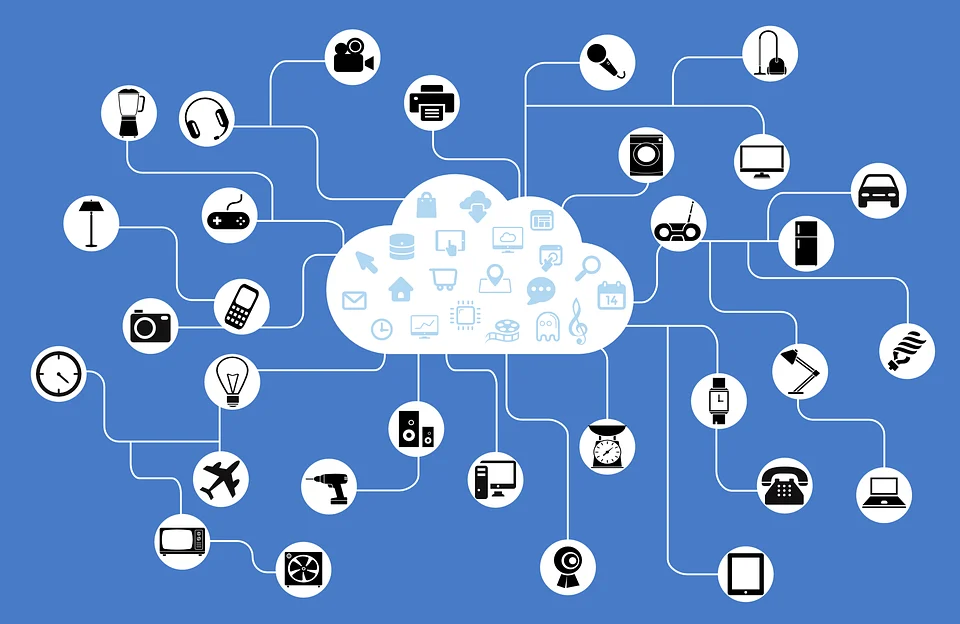
In the modern industrial landscape, data is the new currency. From the sprawling refinery complexes of the Gulf Coast to municipal water grids in drought-stricken regions, the pressure to optimize resource management has never been higher. At the heart of this transformation is a deceptively simple device: the industrial level sensor. Once a passive tool for manual inventory checks, the level sensor has evolved into the cornerstone of the Industrial Internet of Things (IIoT), acting as the "eyes" of automated, predictive, and highly efficient industrial ecosystems.
The Evolution of Inventory Management: A Chronology of Change
For the better part of the 20th century, liquid and bulk material monitoring was a labor-intensive, reactive, and often hazardous task.
- The Manual Era (1950s–1990s): Inventory management was defined by "boots on the ground." Technicians were required to physically climb silos, gauge tanks with weighted tapes, or inspect manual sight glasses. This approach was plagued by "human error" and, more importantly, a significant lag time between an inventory drop and the subsequent order for replenishment.
- The Wired Transition (2000s): As industrial automation matured, wired level sensors—such as ultrasonic or hydrostatic pressure transmitters—began to proliferate. While they provided continuous data, they were notoriously expensive to install, requiring miles of conduit and cable, which made them impractical for remote or large-scale sites.
- The IIoT Paradigm (2015–Present): The convergence of low-power wide-area networks (LPWAN) and advanced cloud analytics changed the game. Sensors became wireless, battery-operated, and smart. Today, we are in the era of "Autonomous Monitoring," where sensors don’t just report levels; they communicate with ERP systems to trigger automated procurement and predictive maintenance alerts.
Anatomy of a Smart Monitoring System
Smart level monitoring represents the fusion of three distinct technological layers:
- Sensing Hardware: Utilizing advanced technologies like non-contact radar or ultrasonic pulse-echo, these devices provide precision measurements without coming into contact with potentially corrosive or volatile materials.
- Wireless Transmission: Using protocols like LoRaWAN, NB-IoT, or LTE-M, sensors transmit data over vast distances with minimal energy consumption. This allows a single battery-powered sensor to remain operational in remote areas for years without maintenance.
- Cloud-Based Analytics: The raw data is synthesized into actionable intelligence via centralized dashboards. Machine learning algorithms process this data to detect trends—such as a slow leak in a chemical drum or a sudden change in viscosity—that a human eye would never catch.
Industry Adoption: Supporting Data and Use Cases
The transition from reactive to proactive monitoring is driving significant ROI across four key sectors.
1. Municipal Water and Wastewater
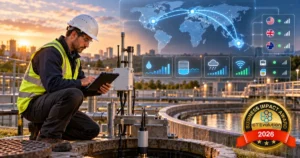
Water utilities face the unique challenge of managing geographically dispersed assets. According to recent industry reports, cities utilizing IIoT-based level sensors for wastewater basins have seen a 30% reduction in overflow incidents. By monitoring stormwater levels in real-time, municipalities can preemptively manage drainage systems during extreme weather, preventing both environmental contamination and infrastructure damage.
2. Oil, Gas, and Chemical Processing
In the energy sector, safety is paramount. The integration of radar-based level sensors in remote pipelines and storage tanks has significantly reduced the need for manual site visits. By keeping personnel away from hazardous zones, firms are seeing a marked decline in workplace injury statistics while simultaneously improving leak detection speed by nearly 400% compared to traditional, periodic manual inspections.
3. Precision Agriculture
Water scarcity and fertilizer costs are forcing farmers to embrace "Smart Agriculture." By deploying sensors in irrigation reservoirs and fertilizer tanks, agricultural operations are optimizing their supply chains. Data shows that farms using automated level monitoring consume 15–20% less water, as irrigation pumps are triggered by exact, real-time demand rather than outdated, arbitrary schedules.
4. Manufacturing and Logistics
In high-volume manufacturing, the "Just-in-Time" delivery model is vulnerable to inventory shortages. Smart level sensors in raw material silos provide an automated alert to suppliers when inventory drops below a specific threshold. This seamless integration between the factory floor and the supply chain eliminates the "bullwhip effect," ensuring that production never halts due to material stockouts.
Technical Deep-Dive: Radar vs. Ultrasonic
As industries modernize, the selection of the sensor technology is becoming a critical strategic decision.
- Radar Level Sensors: The gold standard for accuracy. Because radar waves are unaffected by temperature, pressure, or gas vapors, they provide millimeter-level precision. They are the preferred choice for volatile organic compounds (VOCs) and high-pressure chemical tanks where safety and precision are non-negotiable.
- Ultrasonic Sensors: These remain a cost-effective solution for non-pressurized, standard liquid applications. Because they are non-contact, they remain popular in food and beverage processing, where hygiene standards prevent the use of mechanical or invasive probes.
The Shift to Predictive Maintenance
Perhaps the most significant implication of smart level monitoring is the transition from "scheduled maintenance" to "predictive maintenance."
In a traditional plant, a pump might be serviced every six months, regardless of whether it shows signs of wear. With IIoT-connected level sensors, the system can monitor the rate of consumption. If a tank level drops at a rate that is inconsistent with standard pump performance, the system flags a potential pump failure or a pipe obstruction before the equipment actually breaks down. This foresight saves companies thousands of dollars in emergency repair fees and prevents the costly downtime associated with unscheduled outages.
Official Industry Perspectives: The Road Ahead
Industry experts at major global tech forums emphasize that we are merely scratching the surface of what is possible.
"We are moving toward a world where industrial assets are self-aware," says one lead systems integrator in the IIoT space. "The current focus is on ‘visibility,’ but the next decade will be defined by ‘autonomy.’ We will soon see systems that not only report a low level but independently initiate the purchase order, schedule the delivery, and verify the replenishment—all without human input."
However, this transition is not without its hurdles. Cybersecurity remains the elephant in the room. As industrial networks become increasingly connected to the cloud, they become potential targets for bad actors. Consequently, manufacturers are now prioritizing "security by design," implementing end-to-end encryption and multi-factor authentication for all sensor-to-cloud communications.
Implications for Global Sustainability
The push for smart monitoring is also intrinsically linked to global sustainability goals. Industrial waste—whether it be the over-ordering of chemicals, the overflow of wastewater, or the inefficient transport of fuel—is a major contributor to industrial carbon footprints. By optimizing logistics and reducing the need for constant truck rolls for manual site checks, IIoT level monitoring is helping industries reduce their Scope 3 emissions significantly.
Conclusion: The New Industrial Standard
The era of the "manual gauge" is effectively over. In its place, a sophisticated, data-driven architecture has emerged, one that prioritizes safety, precision, and operational agility. For industrial facilities, the choice is no longer between manual and automated; it is a choice between stagnation and growth.
As the cost of sensors continues to plummet and the reliability of wireless connectivity expands to the most remote corners of the globe, the adoption of smart level monitoring will transition from an "early adopter" advantage to a standard requirement for industrial operations. Companies that prioritize this digital shift today are building the infrastructure for a more resilient, efficient, and sustainable future. The data is waiting—it is time for industry to start listening.