The Silent Spread: Emerging Nairoviruses Pose New Risks to Public Health
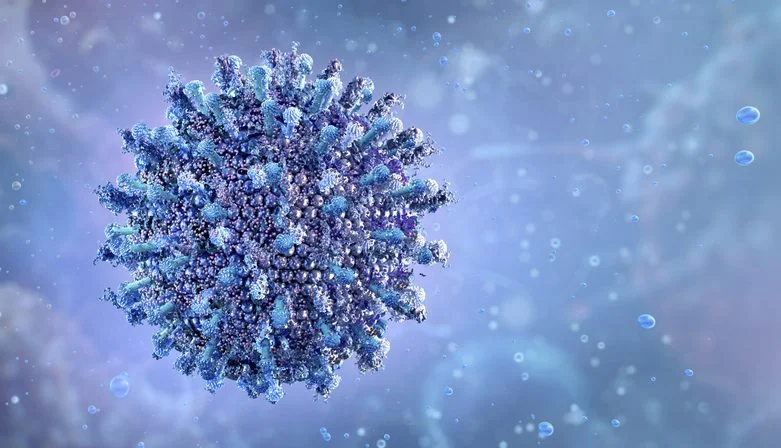
As summer temperatures rise, public health warnings typically focus on the familiar trio of tick-borne ailments: Lyme disease, Rocky Mountain spotted fever, and anaplasmosis. However, entomologists and virologists are increasingly sounding the alarm over a more enigmatic threat: a diverse group of pathogens known as nairoviruses. Once relegated to specific geographic niches in Africa, Asia, and Europe, these negative-sense RNA viruses are demonstrating an unsettling ability to expand their reach, with recent findings confirming their presence in the western United States.
Among this family is the notorious Crimean-Congo hemorrhagic fever virus (CCHFV), a pathogen that carries a staggering mortality rate of nearly 30%. While CCHFV has long been a global concern, it is now joined by a constellation of emerging relatives that are challenging our current understanding of vector-borne disease transmission and immune evasion.
The Landscape of Emerging Nairoviruses
Nairoviruses are part of the Nairoviridae family, a group of viruses typically transmitted by ixodid (hard) ticks. These ticks act as reservoirs and vectors, circulating the pathogens among wildlife, livestock, and, increasingly, humans.
In recent years, the clinical footprint of these viruses has grown. In China and Japan, several novel nairoviruses have been documented in human patients, including the Songling virus (SGLV), Tacheng tick virus 1 (TTV1), and the Yezo virus (YEZV). Perhaps most concerning was an outbreak of the Beiji virus (BJNV) in northeastern China, which affected more than 100 individuals.
Perhaps the most significant development for North American public health is the identification of the Pacific Coast Tick nairovirus (PCTNV). Researchers discovered this pathogen within Dermacentor occidentalis—the Pacific Coast tick—a species already infamous for its role in transmitting Rocky Mountain spotted fever. The discovery, particularly in Mendocino, California, highlights that the geographic range of these viruses is not static and may be far more pervasive than previously suspected.
Mechanisms of Evasion: How Nairoviruses Hack the Immune System
The primary challenge in managing nairoviruses lies in their sophisticated ability to "cloak" themselves from the host immune system. A groundbreaking study recently published in ACS Infectious Diseases, titled "Insights into the Structure and Function of the OTU Protease Virulence Factors from Emerging Human Nairoviruses," offers a molecular explanation for this stealth.
The OTU Protease Strategy
All orthonairoviruses encode a specialized enzyme known as the ovarian tumor (OTU) protease. In a healthy human cell, the immune system uses "tags"—specifically small proteins called ubiquitin and ISG15—to flag viral invaders. These tags serve as molecular alarm bells, triggering a cascade of immune responses that aim to neutralize the pathogen.
The nairovirus OTU protease acts as a molecular "eraser." By stripping these ubiquitin and ISG15 tags from host proteins, the virus effectively silences the alarm, allowing it to replicate unchecked within the host. As the study notes, these OTUs exhibit varying levels of deubiquitinating (DUB) and deISGylating activities, which establish them as the primary virulence factors for the entire family.
The PCTNV Standout
When researchers compared the OTU proteases from four emerging nairoviruses (SGLV, TTV1, YEZV, and PCTNV), the Pacific Coast Tick nairovirus stood out as particularly potent. Its enzyme displayed a superior ability to strip both ubiquitin and ISG15 from human proteins compared to its counterparts. This biochemical proficiency suggests that PCTNV may be unusually adept at bypassing human immune defenses, a trait that warrants heightened surveillance in regions where D. occidentalis is prevalent.
Chronology of Discovery and Research
The trajectory of nairovirus awareness has shifted from rare regional observations to a global focus on emerging threats.
- Pre-2010s: Focus remained primarily on the well-documented CCHFV, largely concentrated in the Middle East, Central Asia, and parts of Europe and Africa.
- 2019–2021: A series of outbreaks in China, including the BJNV event involving over 100 patients, signaled that these viruses were shifting from rare zoonotic spillover events to more consistent public health issues.
- 2023–2024: Heightened surveillance in North America led to the characterization of PCTNV in California. This was a "sentinel" discovery, identifying that the machinery of infection was present in domestic tick populations.
- 2026: The publication of structural data in ACS Infectious Diseases provided the first high-resolution look at the OTU proteases of these emerging viruses. By resolving these structures, scientists have now built a computational framework to predict which nairoviruses possess the most dangerous immune-evasion potential.
Implications for Public Health and Diagnostics
The findings from the ACS Infectious Diseases study are not merely academic; they provide a blueprint for future diagnostic and therapeutic development. By understanding the structural architecture of OTU proteases, public health officials can better predict the virulence of new strains as they are discovered.
Predictive Modeling
The study’s use of computational models marks a shift from reactive to proactive monitoring. By analyzing the "fit" and "activity" of an OTU protease, researchers can categorize new viruses based on their risk profile. This allows for the prioritization of resources toward the most dangerous strains before they cause widespread human illness.
Clinical Vigilance
Corresponding author Scott D. Pegan, PhD, of the University of California, Riverside, emphasizes that the burden of safety is increasingly falling on individual awareness and clinical precision. "This study reinforces the need to be vigilant about not just tick bites, but the type of ticks that an individual has been bitten by, as they may carry diseases beyond what we have been used to looking for," Pegan noted.
For clinicians, this means that patients presenting with "flu-like" symptoms or unexplained fevers following a tick bite should be evaluated for a broader range of pathogens. In areas like the Pacific Coast, where D. occidentalis is common, the diagnostic panel for tick-borne illness may eventually need to expand beyond the traditional Rickettsial and Borrelia screens.
Official Responses and Future Directions
The scientific community is currently pushing for expanded genomic surveillance of tick populations. Because nairoviruses are RNA viruses, they are subject to rapid mutation, which can alter their host range and virulence.
Public health agencies, including the CDC and state-level departments of health, are being encouraged to:
- Integrate Surveillance: Include nairovirus screening in routine tick-drag surveillance programs.
- Public Education: Update public outreach materials to reflect that "tick-borne" now encompasses a wider range of symptoms, including the hemorrhagic complications associated with the nairovirus family.
- Cross-Disciplinary Collaboration: Foster partnerships between entomologists, molecular biologists, and infectious disease specialists to bridge the gap between tick-vector mapping and the molecular potential of the viruses they carry.
As we look toward the future, the research conducted at UC Riverside provides a crucial tool in the diagnostic arsenal. By decoding how these viruses "hide," we are finally beginning to see them more clearly. While the threat of emerging nairoviruses is real and rising, the combination of structural biology and improved ecological surveillance offers the best path toward containment and protection of the public.
For now, the advice remains clear: while the diversity of tick-borne threats grows, the fundamental prevention strategies—wearing protective clothing, using EPA-approved repellents, and performing thorough tick checks—remain the most effective defense against an invisible, evolving enemy.