The X11 Renaissance: Inside "yserver," the Rust-Based Display Server Built by AI
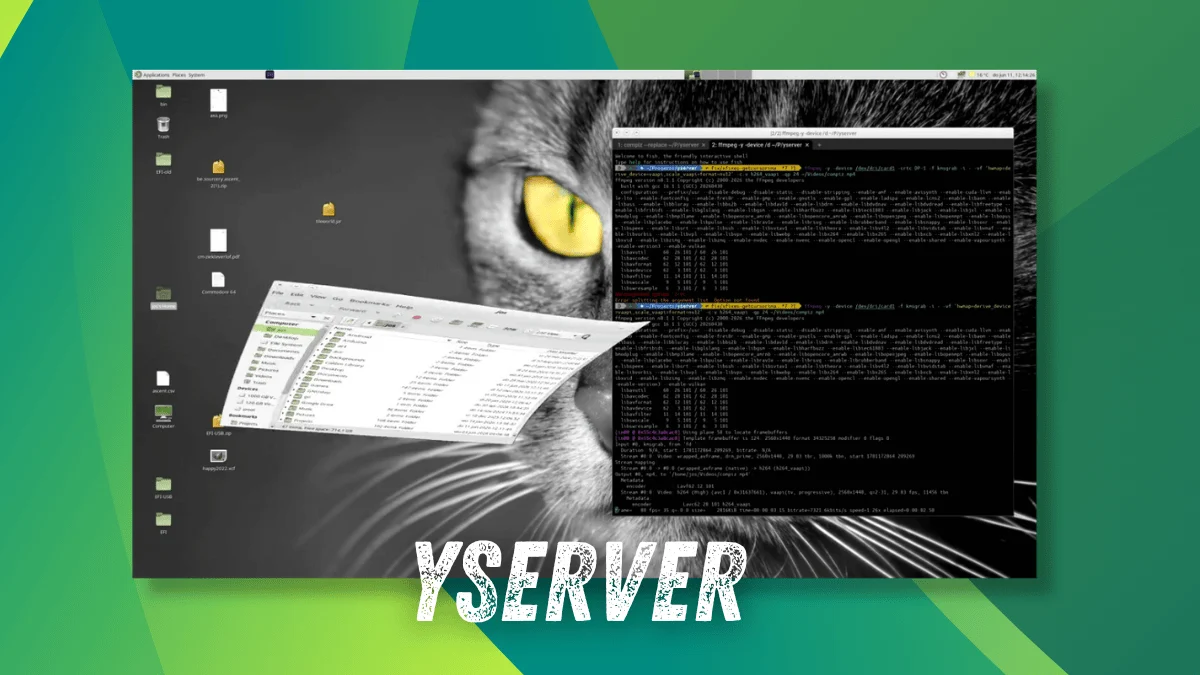
The landscape of Linux desktop computing is currently undergoing its most significant transition in two decades. As major distributions like Ubuntu, Fedora, and openSUSE pivot toward Wayland as the default display protocol, the legacy of the X Window System (X11) has begun to fade into the annals of computing history. Yet, just as the industry prepares to shutter the final doors on X11, an unexpected project has emerged from the depths of GitHub that challenges the "Wayland-or-nothing" narrative.
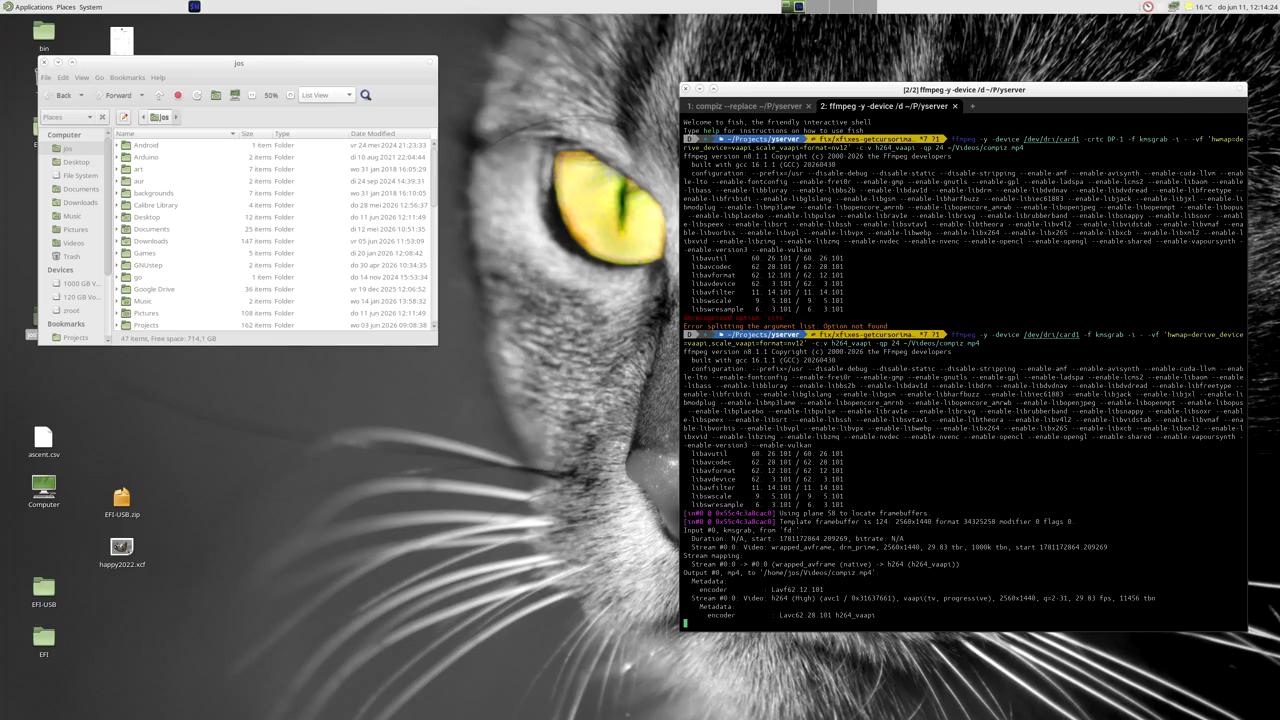
Developer Jos Dehaes has unveiled yserver, an MIT-licensed X11 display server written entirely in Rust. More than just a technical curiosity, yserver represents a new breed of "vibe-coded" software, built with the heavy assistance of AI coding agents like Anthropic’s Claude Code. It is a bold, albeit experimental, attempt to distill the X11 protocol into its essential, modern components, stripping away decades of technical debt.
Main Facts: What is yserver?
At its core, yserver is not a clone of the venerable X.Org server. Instead, it is a targeted, practical implementation of the X11 protocol designed for the modern Linux kernel ecosystem.
The philosophy behind yserver is one of radical simplification. Over its 40-year lifespan, X.Org accumulated a staggering amount of bloat—code designed to support hardware and display configurations that have long since vanished from the consumer market. Dehaes has opted for a "clean slate" approach, discarding legacy burdens such as:
- The DDX (Device Dependent X) driver ABI: Removing the complex abstraction layers that previously mediated between the server and the hardware.
- Legacy Visuals: Dropping support for non-TrueColor visuals that haven’t been relevant since the CRT era.
- Multi-screen and Endian-swapping complexity: Streamlining the core to focus on contemporary hardware realities.
By utilizing libseat for seat management, yserver achieves a rootless operation, a significant departure from the security-heavy, privileged nature of traditional X servers. Furthermore, its single-threaded architecture provides a level of deterministic, predictable protocol behavior that multi-threaded servers often struggle to achieve. By interacting directly with the Linux kernel’s DRM/KMS (Direct Rendering Manager/Kernel Mode Setting) and Vulkan APIs, yserver bypasses traditional middleware, creating a shorter, more efficient path between the application and the GPU.
A Chronology of the Project
The emergence of yserver did not happen in a vacuum, but rather at the intersection of declining X11 support and the rise of autonomous AI coding assistants.
- Early 2026: Recognizing the impending "X11 apocalypse" as major desktop environments (DEs) officially deprecated the protocol, Jos Dehaes began investigating the viability of a minimalist X11 server.
- Mid-2026: The project shifted into high gear with the integration of Claude Code. Dehaes leveraged AI agents to manage the heavy lifting of protocol implementation, resulting in a rapid development cycle that produced a functional prototype in mere months.
- June 2026: The repository went public. The inclusion of
CLAUDE.mdandAGENTS.mdin the source tree signaled to the world that this was not merely a human-authored project, but one deeply intertwined with LLM-assisted development. - Post-Launch: The community response was immediate. Within days of its public debut, developers began reporting successful tests on diverse hardware architectures, including AMD Ryzen/Radeon, Intel Kaby Lake, NVIDIA proprietary driver environments, and even the Snapdragon X1 and Apple M1/M2 chips running via Asahi Linux.
Supporting Data: Testing and Compatibility
Despite being in its infancy, yserver has demonstrated a surprising degree of maturity in its compatibility layer. The project is not currently attempting to support every obscure X11 extension; rather, it focuses on the subset required to run functional desktop environments.
Current Desktop Environment (DE) Compatibility:
- MATE: Successfully boots and maintains a functional session.
- Xfce: Tested and verified, providing a lightweight, retro-computing experience.
- Cinnamon: Demonstrates that the server can handle modern, compositor-heavy environments.
Window Manager (WM) Support:
The project has successfully run sessions using:
- FVWM3: A classic, highly configurable window manager.
- e16 (Enlightenment): Proving that even the most stylistically unique WMs can interface with the new server.
- Window Maker: A testament to the project’s adherence to the core X11 protocols.
Hardware Coverage:
The breadth of hardware support is largely due to the use of DRM/KMS and Vulkan, which provide a unified interface for modern GPU drivers. The ability to run on Asahi Linux (Apple Silicon) suggests that the underlying architecture is portable and modern-aware, rather than reliant on legacy vendor-specific blobs.
Official Responses and the "Vibe-Coding" Debate
The project has sparked a polarizing debate within the Linux development community regarding the use of AI in low-level systems programming.

Critics have labeled the project "clanker-ware," suggesting that code generated by AI agents like Claude may lack the deep, nuanced understanding required for a display server, potentially introducing subtle security vulnerabilities or maintenance nightmares. The project documentation itself is refreshingly honest about these shortcomings: it acknowledges that the security model is currently incomplete, with the primary design document noting that clients can, at present, read other clients’ windows and intercept global input.
However, proponents argue that "vibe-coding"—the practice of using AI to rapidly iterate on complex architectural ideas—is the only way to keep legacy protocols alive in a resource-constrained environment. By using AI to handle the boilerplate of the X11 protocol, Dehaes has managed to build in months what would have taken a team of developers years of painstaking manual labor.
Implications for the Linux Desktop
The existence of yserver raises a fundamental question: Who is this for?
With KDE Plasma 6.8 slated to drop X11 support and distributions like Fedora and Ubuntu moving toward a Wayland-only future, yserver is not positioned as a mainstream replacement. Instead, it serves three critical functions:
1. Legacy Preservation
There are millions of lines of code written for X11 that will not be ported to Wayland in the foreseeable future. Institutional software, scientific research tools, and specific niche workflows remain tethered to the X11 protocol. yserver provides a potential bridge for these users to continue operating on modern kernels without needing to maintain an aging, bloated X.Org installation.
2. The Laboratory for Simplification
By stripping away the "cruft" of X.Org, yserver serves as a masterclass in modernizing legacy tech. It forces us to ask what is truly necessary for a display server. If a lean, Rust-based implementation can support modern desktop environments with a fraction of the code, it invites a re-evaluation of why display servers became so complex in the first place.
3. The Future of AI-Assisted Engineering
The CLAUDE.md and AGENTS.md files are not just metadata; they are a manifesto. They represent a new era where a single developer can act as a project manager, guiding an AI agent through the creation of complex infrastructure. If yserver proves successful, it could trigger a wave of similar projects, where AI is used to maintain or refactor legacy software that would otherwise be abandoned due to human resource constraints.
Conclusion: A Placeholder with Potential
It is important to emphasize that yserver is, by its own admission, in a very early stage. The name itself is a placeholder, and the security implications of its current state are significant. It is not ready for a daily-driver production environment, and it is certainly not going to reverse the industry’s momentum toward Wayland.
However, yserver stands as a fascinating experiment in software evolution. It proves that X11, while technically obsolete in the eyes of many, still possesses enough utility that developers are willing to harness the latest in AI technology to ensure its survival. Whether yserver becomes a niche tool for enthusiasts or a foundational piece of the Linux legacy, it serves as a powerful reminder that in the open-source world, no technology is ever truly "dead" as long as there is someone willing to write the code—or prompt the agent—to keep it running.