Unlocking the Epigenomic Code: A New Frontier in Acute Myeloid Leukemia Treatment
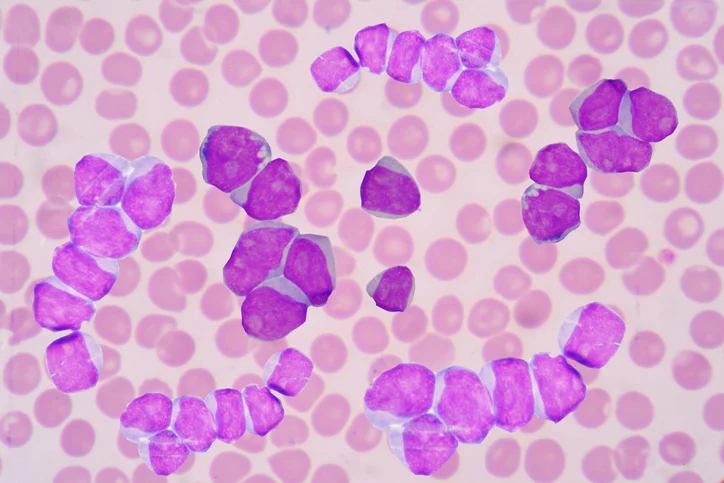
Acute myeloid leukemia (AML) has long been defined by its lethality. With a survival rate hovering around a sobering 29 percent, this fast-growing malignancy of the blood and bone marrow presents a formidable clinical challenge. For decades, the medical community has relied on a genetic roadmap to navigate this complex disease, classifying AML primarily through the lens of somatic mutations. Yet, this genomic-centric approach has frequently hit a wall: patients with identical mutation profiles often exhibit drastically different disease trajectories and therapeutic responses.
A landmark study published in Nature titled "Chromatin landscape and epigenetic heterogeneity of acute myeloid leukemia" has finally provided the missing piece of this clinical puzzle. By performing the most extensive chromatin-profiling effort ever undertaken for a single cancer, an international research consortium has unveiled that the true architecture of AML is not merely written in the DNA sequence, but in the epigenome—the complex regulatory layer that dictates how genes are expressed.
The Main Facts: Defining the 16 Epigenomic Subgroups
The research team, led by Dr. Seishi Ogawa and Dr. Yotaro Ochi of Kyoto University, in collaboration with Dr. Sören Lehmann of the Karolinska Institute, conducted a massive multi-omic analysis of 1,563 AML patient samples. By integrating ATAC-seq (which measures chromatin accessibility), RNA-seq, DNA methylation, ChIP-seq, and whole-genome sequencing, the researchers identified 16 distinct epigenomic subgroups.
These subgroups are defined not by the presence or absence of a specific gene mutation, but by their unique "chromatin accessibility landscape." This landscape acts as the regulatory wiring of the cancer cell. The study demonstrates that these 16 states are remarkably stable, a finding corroborated by single-cell ATAC-seq data across more than 280,000 individual leukemic cells. This stability suggests that the epigenetic state is a foundational, inherent feature of the leukemia’s identity, rather than a transient or stochastic phenomenon.
The Chronology: From Genomic Models to Epigenomic Insight
The history of AML classification has evolved in three distinct phases:
- The Morphological Era: Until the late 20th century, classification was primarily based on the appearance of leukemic cells under a microscope. This lacked the granularity needed for targeted medicine.
- The Genomic Era: With the advent of next-generation sequencing, the field pivoted to identifying "driver mutations" (e.g., FLT3, NPM1, DNMT3A). While this revolutionized risk stratification, it failed to account for the "phenotypic gap"—the discrepancy between genotype and clinical outcome.
- The Epigenomic Era (Current): The Kyoto-Karolinska study represents the inauguration of this new chapter. By mapping the regulatory architecture of the cancer, the team moved beyond the "what" (the mutations) to the "how" (the gene expression networks).
The study was born out of a realization that current classification systems—such as those dictated by the World Health Organization (WHO) or the International Consensus Classification (ICC)—frequently fail to capture the biological reality of the patient. The researchers performed rigorous decision-tree analyses on known driver mutations and found that, in the majority of cases, these mutations could not adequately predict the clinical behavior of the leukemic cells. The epigenome, however, provided a near-perfect map for prognostic classification.
Supporting Data: The Multi-Omic Evidence
The strength of the findings lies in the staggering scale of the data and the diversity of the analytic methods employed:
- 1,563 Patient Samples: This cohort size provides statistical power rarely seen in clinical epigenomics.
- 280,000 Single Cells: By utilizing single-cell multiomics, the team ensured that the 16 subgroups were not merely an artifact of bulk sequencing but reflected the actual biological state of individual cells within a patient’s tumor.
- The eCHROMA Atlas: The researchers established this resource to allow the broader scientific community to interrogate the regulatory networks of AML.
- Validation: The findings were validated across both Japanese and Swedish cohorts, suggesting that these 16 subgroups are not geographically or ethnically restricted, but are universal features of AML pathophysiology.
The data reveals that each subgroup possesses a specific "super-enhancer" architecture. Super-enhancers are large clusters of transcriptional enhancers that drive the high-level expression of genes defining cell identity. By identifying which super-enhancers are active, the researchers could predict which transcription factor networks were driving the cancer, effectively "rewiring" the cell to thrive in a malignant state.
Official Perspectives and Expert Implications
The implications of this study are profound, particularly regarding drug resistance and sensitivity. The researchers noted that the epigenomic subgroups often defied traditional expectations.

"Evidence suggests that genetic alterations do not fully explain AML pathophysiology and heterogeneity," the authors noted in their paper. This shift in understanding opens the door to "epigenetic-guided therapy."
For instance, the study identified three specific subgroups that displayed a robust sensitivity to MEK inhibitors. Crucially, these patients did not harbor the standard RAS-pathway mutations that clinicians typically look for when prescribing such drugs. This suggests that the epigenetic state—the "chromatin accessibility"—was creating a MEK-dependent state even in the absence of a genomic trigger.
Furthermore, a subgroup characterized by RUNX1 mutations and an "early B-cell precursor" chromatin profile showed high sensitivity to ABL inhibitors. This discovery could allow physicians to rescue patients who would have been considered "non-responders" under existing treatment protocols.
Implications for Clinical Practice
The transition from a research tool to a clinical bedside reality is often the longest bridge to cross. However, the study authors have already laid the groundwork for this transition.
A Path to Clinical Adoption
The research team developed a 30-gene expression signature. This is a crucial, practical innovation. Rather than requiring the complex and expensive chromatin-profiling infrastructure used in the initial study, oncologists can utilize this 30-gene panel with standard sequencing workflows already available in most major cancer centers. This signature acts as a "proxy" to identify which of the 16 chromatin-based subgroups a patient falls into.
Future Treatment Strategies
The ability to stratify patients into these 16 categories offers a blueprint for:
- Precision Prognostics: A more accurate assessment of risk, allowing for the escalation or de-escalation of therapy (e.g., deciding whether a patient requires a bone marrow transplant).
- Targeted Combinations: By identifying the regulatory wiring of a tumor, doctors may soon be able to pair targeted therapies that "force" the cancer into a more vulnerable epigenetic state.
- Reducing Toxicity: By avoiding therapies that are unlikely to work based on the epigenomic subgroup, clinicians can spare patients from the debilitating side effects of ineffective chemotherapy.
Conclusion: A New Paradigm for Oncology
The publication of the eCHROMA AML atlas is a watershed moment in hematologic oncology. It confirms what many in the field have long suspected: the genetic sequence is only the script; the epigenome is the director that decides which lines are spoken and how the performance unfolds.
As the research team looks to the future, the goal is clear: lower-cost diagnostic assays and clinical trials that move beyond the "one-size-fits-all" approach to AML. By recognizing that AML is not a single disease, but a collection of 16 distinct epigenetic identities, the medical community is now better equipped than ever to rewrite the prognosis for thousands of patients. The path forward is no longer just about attacking a mutation, but about unlocking the regulatory secrets of the cell to silence the cancer at its source.