Unmasking "The Gentlemen": How a Russian Marketing Executive Became a Ransomware Kingpin
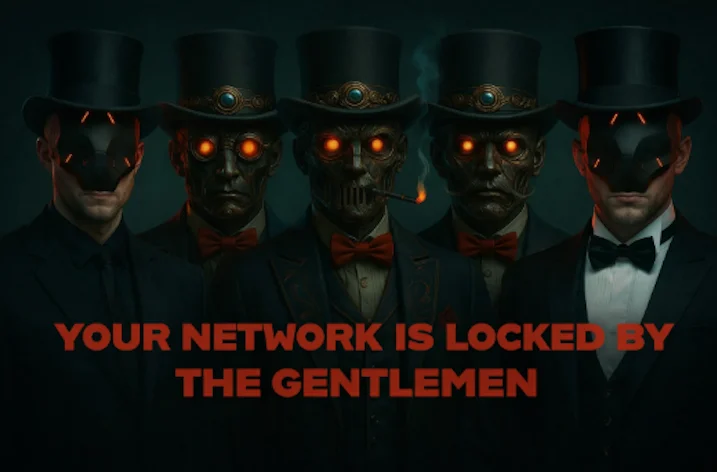
In the shadowy ecosystem of global cybercrime, few entities have ascended as rapidly—or as aggressively—as the ransomware collective known as "The Gentlemen." Emerging in mid-2025, the group has quickly vaulted into the upper echelons of the criminal underworld, currently ranking as the second most active ransomware gang globally by victim count. By leveraging a disruptive "Ransomware-as-a-Service" (RaaS) model and an unprecedented affiliate incentive structure, The Gentlemen have successfully poached elite talent from established cartels.
However, the group’s meteoric rise has been shadowed by a trail of digital breadcrumbs, leading security researchers to a startling conclusion: the mastermind behind the operation is not a faceless phantom, but a 36-year-old marketing executive residing in Izhevsk, Russia.
The Business Model of a Digital Extortionist
The Gentlemen’s dominance is no accident. While the industry standard for RaaS operations typically dictates an 80/20 revenue split—with the developer taking 20% of all ransoms paid by victims—The Gentlemen have flipped the script. By offering affiliates a staggering 90% cut, the group has incentivized a rapid influx of experienced operators.
According to Check Point Software, which has been tracking the group’s exploits since its inception, this aggressive fiscal strategy has acted as a catalyst for growth. Since mid-2025, the group has claimed at least 332 confirmed victims, with more than 240 incidents recorded in 2026 alone.
The group’s technical methodology is equally focused. The Gentlemen primarily target internet-facing infrastructure—specifically VPNs and firewalls—to gain initial access. Once the perimeter is breached, they exhibit a terrifying level of efficiency, often encrypting entire corporate networks within a matter of hours. A recent report from the threat intelligence firm PRODAFT suggests that this speed is bolstered by the use of artificial intelligence. The group’s administrator has reportedly integrated AI tools to streamline the development of ransomware, refine malware tooling, and automate aspects of post-exploitation activity.
A Chronology of a Digital Identity
The trail leading to the group’s administrator begins with the handle "Zeta88," the moniker used to manage the group’s backend infrastructure, payment processing, and RaaS panel. Intelligence provided by firms including Intel 471, Constella Intelligence, and Flashpoint suggests that Zeta88 is the same individual previously known by the alias "Hastalamuerte."
2019–2020: The Formative Years
The digital footprint of the persona "Hastalamuerte" first appeared on various Russian and English-language cybercrime forums, including Exploit, Breachforums, and Nulled. During this period, the user was far from the sophisticated administrator seen today. Records from a hacker training program on Telegram, known as @pntst, show the individual struggling with basic penetration testing tools. This early period captures a novice hacker attempting to earn a reputation within the community, often using the handle "SantaMuerte" or "Alexandr 4apaev."
2022: The Pivot to Zeta88
In August 2022, the user "Zeta88" registered on the English-language forum Breached. Security researchers identified that this account originated from an IP address in Izhevsk, the capital of Russia’s Udmurt Republic—the same geographic region linked to Hastalamuerte’s earlier registrations.
2025–2026: The Rise of The Gentlemen
By January 2025, the Hastalamuerte persona had solidified its presence on Breachforums. Following a breach of the group’s own backend infrastructure, researchers were able to link the administrative functions—specifically the 10% administrative tax on ransom payments—directly to the Hastalamuerte/Zeta88 identity.
Connecting the Dots: The Real-Life Identity
The investigation into the man behind the mask relied on a convergence of open-source intelligence (OSINT) and leaked database analysis. The breadcrumbs lead directly to Alexander Andreevich Yapaev.
The link was forged through a series of interconnected identifiers:
- The Telegram Connection: The username @hastalamuerte18, used on crime forums, was traced to a unique Telegram ID (30907522).
- The Phone Number: This Telegram ID was linked to a Russian mobile number: +79127650004.
- The Government Records: Databases containing leaked Russian government records identify this phone number as belonging to Alexander Andreevich Yapaev, a 36-year-old resident of Izhevsk.
- Professional Parallels: Constella Intelligence identified that Yapaev frequently used the email address
[email protected]. This email is explicitly linked to a LinkedIn profile for Alexander Yapaev, who serves as the head of B2B marketing at Uralenergo Udmurtia, a prominent supplier of electrotechnical and lighting products in Russia.
The persona "4apaev" (a common Russian phonetic shorthand for "Chapaev") appears across multiple platforms, including the Russian social media site Pikabu, further cementing the link between the corporate professional and the cybercriminal.
Official Responses and Corporate Silence
Despite the extensive documentation of his double life, Alexander Yapaev has remained silent. Multiple requests for comment sent to his professional and personal contact channels have gone unanswered.
Security researchers at PRODAFT, who released a comprehensive analysis of "The Phantom Mantis" operation (the internal name for the group’s activities), have expressed "high confidence" in the attribution to Yapaev. Their report corroborates the findings of other intelligence firms, noting that the administrator handles initial access provisioning—often through brute-forcing Fortinet SSL-VPN credentials—directly for his affiliates.
Implications: Why Do They Make It So Easy?
The revelation that a mid-level corporate executive is operating a global ransomware empire raises a perennial question in the cybersecurity community: Why do so many Russian hackers seemingly abandon operational security?
The answer is a complex mix of local geopolitics and human psychology. In Russia, the "Dark Covenant" remains a powerful force. As long as cybercriminals refrain from attacking domestic targets and do not travel to countries with extradition treaties, they operate with a degree of tacit immunity. This "controlled impunity" creates a sense of safety that encourages hackers to become lax with their digital hygiene.
Furthermore, the "Hastalamuerte" case follows a common trajectory: a low-skilled individual evolves over time. When Yapaev began his journey in 2019, the stakes were lower, and the potential consequences were obscured by the relative anonymity of the dark web. By the time he transitioned from a student of hacking tools to a kingpin of industry-wide extortion, the habits of a lifetime—reusing emails, phone numbers, and handles—were already deeply entrenched.
The Cost of Amateurism
The Gentlemen’s success is a testament to the fact that you do not need to be a state-sponsored actor to cause global disruption. However, the group’s vulnerability—the exposure of their administrator—serves as a reminder that the "cyber-crime as a profession" model is fundamentally fragile. As long as operators like Yapaev maintain a digital footprint that links their criminal activity to their real-world persona, they remain subject to the scrutiny of the global security research community.
For now, The Gentlemen continue to operate, fueled by their 90/10 split and their AI-driven tooling. But the veil has been lifted. The case of Alexander Yapaev stands as a stark warning to those who believe they can balance a corporate career with the high-stakes, illegal world of international ransomware: in the digital age, the distance between a marketing desk in Izhevsk and the global stage of criminal infamy is shorter than ever.