The Future of Spatial Computing: Google Accelerates Android XR Ecosystem with Major SDK and Engine Updates
Date: June 15, 2026
The frontier of spatial computing is shifting rapidly from speculative concept to tangible reality. As the lines between the digital and physical worlds blur, Google has taken a definitive step forward in consolidating the fragmented Extended Reality (XR) landscape. With the Samsung Galaxy XR already in the hands of consumers and the Augmented World Expo (AWE) currently underway, Google has unveiled a comprehensive suite of tools, SDK updates, and engine integrations designed to solidify Android XR as the industry standard for both immersive and augmented experiences.
Main Facts: A New Era for Android XR
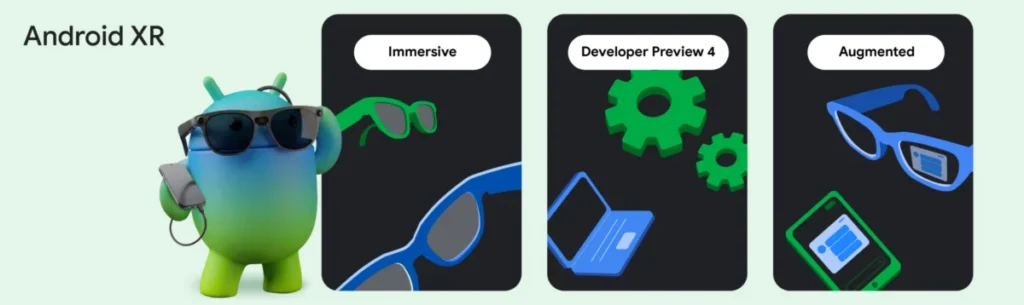
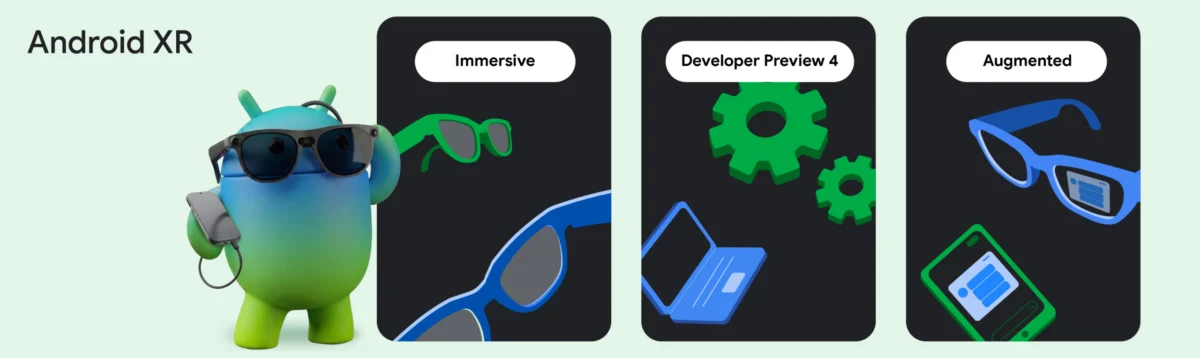
The core of Google’s latest announcement centers on Developer Preview 4 of the Android XR SDK. This release is not merely a set of patches; it is a foundational upgrade designed to streamline the developer workflow from the laptop to the headset. By prioritizing a "build-once, deploy-many" philosophy, Google aims to capture the interest of both mobile app developers and dedicated VR/AR studios.
Key updates include:
- Expanded Engine Support: Google is moving beyond Unity, providing official support for Unreal Engine and Godot. This democratization of engine choice allows studios to leverage their existing assets and expertise.
- Android XR Engine Hub: A new desktop-based tool for Windows that allows developers to iterate in real-time by piping their viewport directly into the XR environment.
- Jetpack Projected Library: A bridge for mobile developers to extend their existing applications into "intelligent eyewear" interfaces without needing to build a standalone XR app from scratch.
- Geospatial API for Wired Glasses: A revolutionary feature that leverages Google’s Visual Positioning System (VPS) to anchor digital content to specific, real-world coordinates with high precision.
Chronology: The Road to Android XR Maturity
The journey to the current state of Android XR has been marked by a deliberate, measured expansion.
- Early 2025: Initial discussions and internal testing phases for the Android XR platform began as Google sought to counter the closed-ecosystem approach of competitors like Apple and Meta.
- Google I/O 2026: Google provided the first major public preview of the updated SDK, signaling a shift toward developer-centric tools.
- June 2026: The official launch of the Samsung Galaxy XR marked the first commercial hardware milestone for the platform.
- AWE 2026 (Current): Google is utilizing the Augmented World Expo to finalize the rollout of the Android XR developer ecosystem, introducing the Catalyst Program and finalized engine integrations to a global audience of XR professionals.
Supporting Data and Technical Architecture
The technical architecture underpinning these updates is robust, focusing on minimizing friction for developers. A critical component is the Jetpack Compose Glimmer framework. Recognizing that optical see-through displays present unique challenges for text legibility and user interaction, Google has optimized Glimmer to render UI elements that remain readable against varying environmental backgrounds.
Furthermore, the integration of the Device Availability API represents a significant leap in context-aware computing. The system allows applications to query the Android Lifecycle states of wearable hardware. If a user removes their glasses, the app can automatically suspend rendering or transition to a low-power "glanceable" state, optimizing battery life—a perennial pain point for XR hardware.
For those without access to the latest hardware, the Android Studio XR Emulator has been upgraded to provide a high-fidelity simulation of the spatial environment. This allows developers to prototype complex interactions, such as gesture-based navigation and object anchoring, entirely within a standard IDE environment.
Official Perspectives: Empowering the Developer Community
Stevan Silva, Group Product Manager, and Vinny DaSilva, Developer Relations Engineer, emphasized that the goal of the Android XR initiative is to lower the barrier to entry. "Building for audio and display glasses shouldn’t mean starting from scratch," noted the duo in their official blog post. "We want developers to leverage the skills they already possess."
Early adopters have already validated this strategy. NAVER Papago, for instance, has demonstrated how a mobile translation service can be transformed into a seamless augmented reality experience, allowing users to see translations overlaid on the real world through intelligent eyewear. This use case highlights the "Projected" approach—transforming a flat mobile experience into a spatial one.

The Android XR Developer Catalyst Program serves as the company’s commitment to long-term growth. By offering pre-release hardware, access to exclusive support forums, and direct guidance on Google Play store optimization, Google is effectively subsidizing the initial risk for startups and independent developers, ensuring that the platform launches with a healthy catalog of high-quality applications.
Implications: The Shift Toward Spatial Computing
The implications of this ecosystem push are profound, both for developers and the broader tech industry.
1. The Death of the "Walled Garden"
By supporting Unreal Engine and Godot, Google is positioning Android XR as the open alternative to proprietary ecosystems. This strategy is designed to attract developers who are wary of being locked into a single hardware vendor’s proprietary SDK. If the platform succeeds, it could set a new precedent where hardware diversity is supported by a unified software layer.
2. The Rise of "Context-Aware" Apps
The integration of the Geospatial API and the Device Availability API suggests a future where applications are not just "open" or "closed," but "aware." An app that understands its physical location within centimeters and knows whether it is being viewed on a phone, a tablet, or AR glasses will fundamentally change how users interact with digital information. We are moving toward a reality where your digital environment adjusts itself to your physical surroundings.
3. Economic Opportunities for Developers
For the developer community, the Catalyst Program is a clear signal of intent. Google is not just providing software; they are investing in the commercial viability of the ecosystem. By providing launch guidance and direct access to hardware, Google is attempting to ensure that the "app gap"—the lack of quality software that plagued early VR headsets—does not affect the Android XR platform.
4. Hardware and Software Synergy
The collaboration with Samsung for the Galaxy XR is a testament to the importance of vertical integration. Unlike early Android fragmentation, the XR roadmap appears to prioritize a tight coupling between the Android OS and the hardware sensors of the glasses. This synergy is essential for maintaining the low-latency experiences required to prevent motion sickness and ensure user immersion.
Conclusion: A Call to Action
The tools are now in place. With the release of Developer Preview 4 and the availability of the Engine Hub, the barriers to entry for high-end spatial development have been significantly lowered. For developers, the message is clear: the transition to spatial computing is no longer a question of "if," but "when."
As the industry converges at AWE 2026, the sentiment is one of cautious optimism. The technology has finally matured to a point where the hardware is reliable and the software is intuitive. Whether you are building localized immersive games or practical, real-time translation tools for smart glasses, the Android XR platform provides the infrastructure to scale.
As Google continues to refine its SDK and expand its hardware partnerships, the next twelve months will likely define the winners and losers of the spatial computing era. For those ready to build, the opportunity is significant—not just to create an app, but to define the next interaction paradigm of the digital age. Developers are encouraged to download the latest SDK, explore the XR Emulator, and apply to the Catalyst Program to join this growing movement.