Scaling Resilience: Amazon Cognito Launches Multi-Region Replication and Enhanced Encryption Controls
In an era where digital service continuity is synonymous with brand reliability, the ability to withstand regional infrastructure outages is no longer a luxury—it is a baseline requirement. For developers and architects managing global web and mobile applications, the challenge of maintaining synchronized user authentication across diverse geographic boundaries has long been a significant hurdle. Today, Amazon Web Services (AWS) is addressing these complexities directly with the introduction of two transformative features for Amazon Cognito: native multi-Region replication and enhanced support for customer managed keys (CMKs).
These updates are designed to alleviate the operational burden on engineering teams, providing a robust, automated framework for high-availability authentication that supports both human users and the rapidly expanding ecosystem of machine-to-machine (M2M) communications.
The Core Challenge: Authentication as a Single Point of Failure
Modern software architectures, characterized by microservices, agentic AI, and automated service accounts, rely heavily on consistent identity management. Historically, when developers sought to build highly available applications on Amazon Cognito, they were often forced to architect custom, manual replication solutions.
The limitations of these legacy, DIY approaches were numerous. Teams frequently grappled with:

- Security Vulnerabilities: Manual export and import processes for user data often created gaps, risking sensitive data exposure.
- Operational Friction: The necessity of manually synchronizing configurations between Regions often led to data drift and inconsistencies.
- User Disruption: Regional failovers often resulted in forced password resets, re-authentication requirements, and degraded experiences during the transition.
- Token Incompatibility: Machine-to-machine communications were particularly fragile; tokens issued in one Region were frequently rejected in another, requiring complex, time-consuming reconfigurations of OAuth-protected resources.
By integrating these capabilities directly into the Amazon Cognito service, AWS is effectively moving the heavy lifting of disaster recovery from the developer to the platform, ensuring that session integrity remains intact even during significant regional events.
Chronology and Implementation: A Step-by-Step Evolution
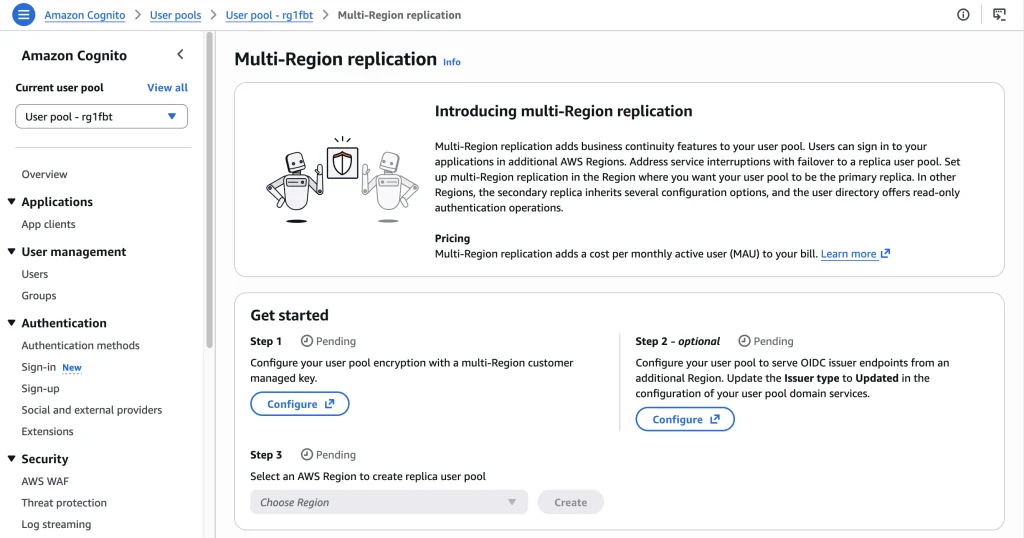
The implementation of multi-Region replication is designed to be streamlined, though it requires meticulous planning regarding encryption and downstream resource synchronization. The process follows a logical, three-phase progression.

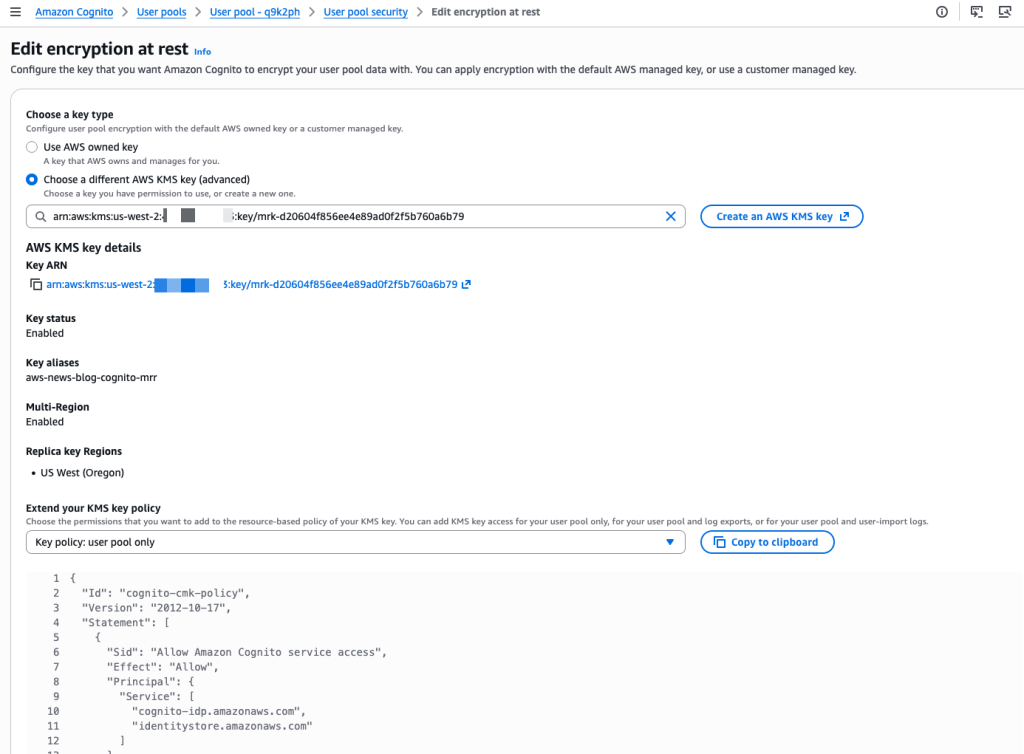
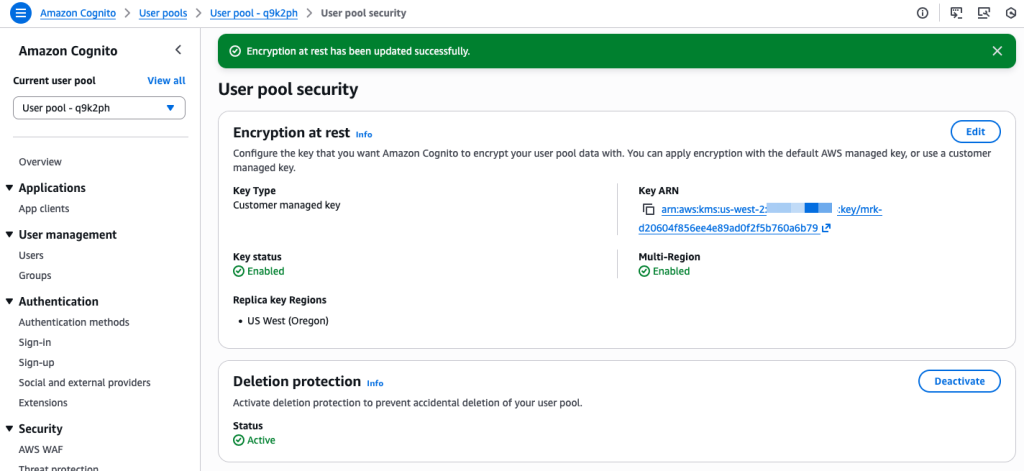
Phase 1: Encryption Strategy and Key Management
Before replication can occur, administrators must ensure data protection consistency. This involves utilizing AWS Key Management Service (AWS KMS) to establish a multi-Region customer managed key. By opting for CMKs, organizations gain granular control over their encryption strategy, satisfying compliance requirements in regulated sectors such as finance and healthcare. The user must update the KMS key policy to explicitly grant Amazon Cognito the necessary permissions to perform cryptographic operations across the chosen Regions.
Phase 2: OIDC Configuration and Endpoint Synchronization
The second phase involves configuring the OpenID Connect (OIDC) issuer type. This is a critical step that requires developers to update their client applications to recognize new regional endpoints. Because these changes impact how applications communicate with the authentication server, they necessitate a coordinated deployment of server-side logic and, in the case of mobile applications, a submission of updates to the App Store and Google Play. Neglecting this step risks routing failures and authentication disruptions.
Phase 3: Activating the Replica
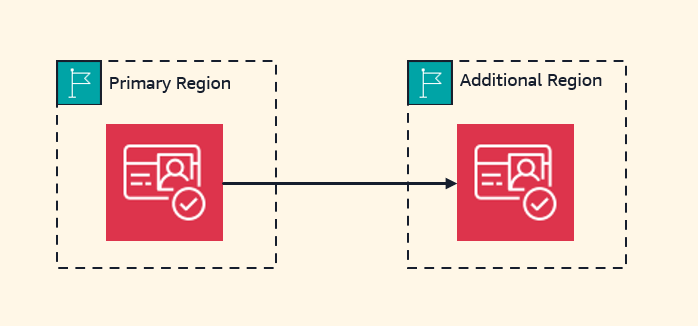
Once the encryption keys are verified and the OIDC endpoints are updated, the final step involves selecting the target secondary Region. The replication process is unidirectional—flowing from the primary to the secondary Region. Once the initial synchronization is complete, the secondary Region enters a read-only state. Administrators then manually "Activate" the replica, signaling that it is ready to handle authentication traffic should the primary Region become unavailable.
Supporting Data: Resilience and Operational Impact
The architectural shift provided by these updates allows for a "warm standby" model that is significantly more efficient than previous methods.
Key Technical Advantages:
- One-Way Synchronization: By maintaining a read-only copy of user profiles, credentials, and pool configurations in a secondary Region, Cognito ensures that data remains consistent without the complexity of bidirectional conflict resolution.
- Authentication Continuity: During a failover event, existing sessions remain valid. The secondary Region is configured to recognize access tokens issued by the primary Region, meaning end users experience zero friction—they do not need to sign in again, nor do they need to reset credentials.
- Broad Compatibility: The replication supports a wide array of authentication methods, including federated sign-in (Google, Apple, Amazon, Facebook), SAML/OIDC integrations, and complex API authorization flows.
The "Task List" for Developers
While Amazon Cognito handles the heavy lifting of user data replication, the article emphasizes that developers must still manage environmental parity. Specifically, the following resources must be replicated manually to the target Region:
- Lambda Triggers: Any custom authentication logic or pre-sign-up triggers must be deployed in the secondary Region.
- Notification Services: SMS and email notification templates and service configurations.
- Security Configurations: AWS WAF policies and log streaming configurations (e.g., CloudWatch or Kinesis) must be mirrored to ensure that the security posture remains identical during a failover.
Official Perspective: Enabling Business Continuity
In discussions regarding these updates, AWS developer advocates have emphasized that the primary goal is "business continuity without the complexity." For organizations operating in the cloud, a regional outage can result in thousands of dollars in lost productivity and diminished customer trust.

"The goal is to move away from complex, home-grown replication scripts," a spokesperson noted. "By automating the synchronization of user identity, we are empowering developers to meet their Recovery Time Objectives (RTO) and Recovery Point Objectives (RPO) with confidence."
For industries governed by strict compliance mandates—such as those operating under GDPR, HIPAA, or SOC2—the addition of customer managed keys represents a significant milestone. It provides the "encryption sovereignty" necessary to satisfy internal and external audits, ensuring that the customer retains ownership of the root of trust, even while utilizing a managed, multi-Region service.

Implications: The Future of High-Availability Authentication
The implications of these updates for the broader AWS ecosystem are substantial. By making high-availability authentication accessible as a standard configuration rather than a bespoke engineering project, AWS is lowering the barrier to entry for enterprise-grade resilience.
Strategic Considerations
- Cost Management: The service is available for the Essentials and Plus tiers, with pricing models that reflect both monthly active users (for standard auth) and a percentage-based charge for M2M token issuance. This transparent pricing allows businesses to calculate the cost-benefit ratio of implementing multi-Region redundancy precisely.
- Failover Design: The responsibility of initiating a failover remains with the customer. This is a deliberate design choice that avoids "flapping" (unnecessary switching between regions). Organizations are encouraged to implement health checks—monitoring latency and error rates—to trigger DNS updates only when absolutely necessary.
- Testing and Validation: A crucial recommendation for teams adopting this architecture is the implementation of "chaos testing." By redirecting a small, controlled percentage of traffic to the secondary Region during off-peak hours, teams can validate that their authentication chain—including Lambda triggers and WAF rules—is perfectly aligned with the primary Region.
Expanding the Global Footprint
The geographic availability of these features is comprehensive, spanning major global hubs including US, Asia Pacific, Canada, Europe, and South America. Furthermore, the support for customer managed keys is even more expansive, including regions such as Africa (Cape Town) and Israel (Tel Aviv), signaling a commitment to global compliance standards.

Conclusion: A New Standard for Identity
The introduction of multi-Region replication and CMK support for Amazon Cognito is a clear signal that identity management is evolving to meet the demands of a high-uptime, high-security global economy. By eliminating the manual, error-prone processes that previously defined multi-Region authentication, AWS has provided a path for developers to build applications that are as resilient as they are scalable.
For the modern developer, the focus can now shift from "How do I ensure my users can still sign in if a region goes down?" to "How do I best leverage this resilience to build a better user experience?" As organizations continue to migrate mission-critical workloads to the cloud, tools that simplify complex operational requirements—while maintaining rigorous security standards—will remain the bedrock of successful digital transformation.

To begin your transition toward a more resilient authentication architecture, consult the official AWS documentation and explore the setup options available within the Amazon Cognito console.