The Dawn of Agentic AI: AWS Unveils Next-Generation Bedrock Capabilities at NYC Summit
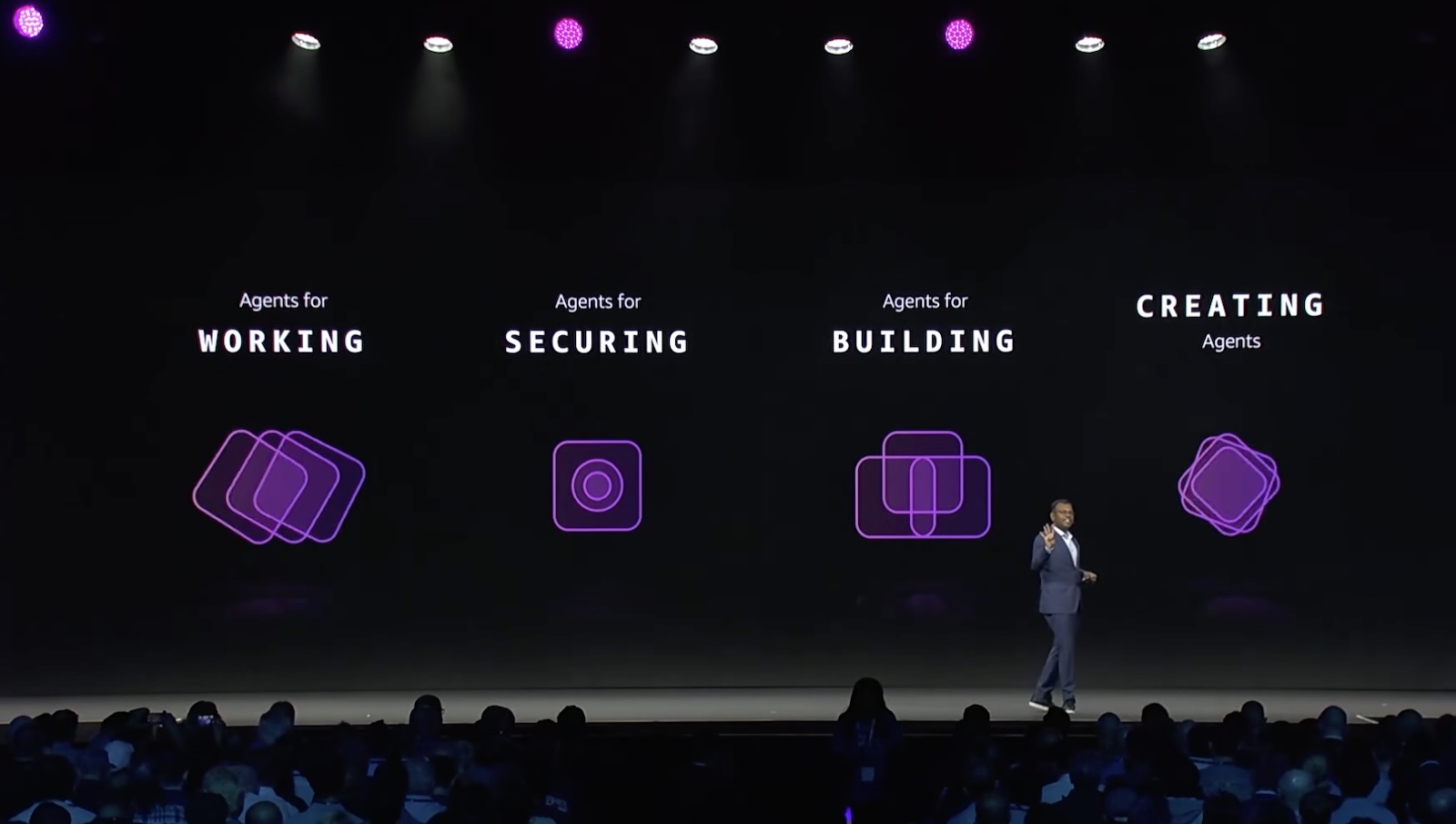
NEW YORK CITY — The landscape of enterprise artificial intelligence shifted significantly this week as Amazon Web Services (AWS) took center stage at the AWS Summit in New York City. Before a packed audience, Swami Sivasubramanian, AWS Vice President of Agentic AI, outlined a transformative vision for the future of machine learning. The keynote served as a launching pad for a series of aggressive updates to the company’s AI portfolio, most notably within the Amazon Bedrock ecosystem, signaling a strategic pivot toward "Agentic AI"—systems capable of autonomous decision-making, complex reasoning, and continuous iterative improvement.
The Core Announcement: Amazon Bedrock AgentCore
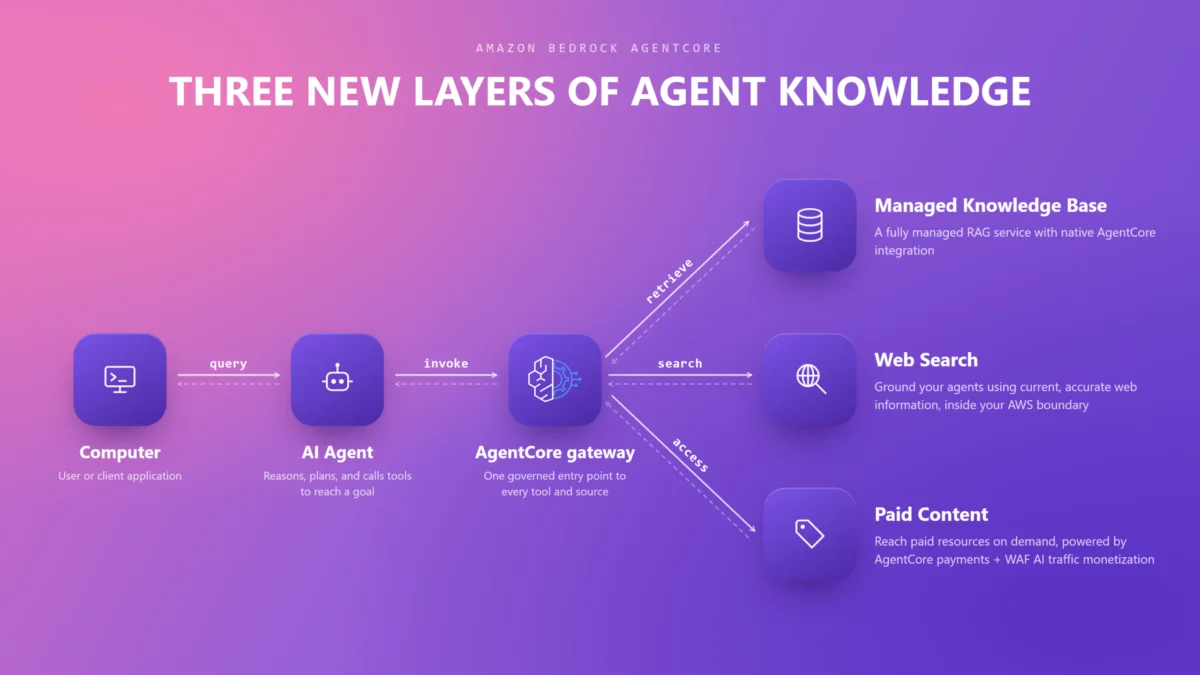
The centerpiece of the summit was the unveiling of significant new capabilities for Amazon Bedrock AgentCore. As organizations move beyond simple chatbots toward sophisticated, autonomous digital agents, the need for robust infrastructure has become the primary bottleneck in enterprise AI adoption.
AWS’s latest update is designed to address three fundamental hurdles: data integration, production stability, and governance at scale.
Expanding the Knowledge Horizon
The new "Knowledge Layers" feature allows AI agents to tap into a more diverse range of data sources. Previously, agents were often siloed within specific enterprise databases. The new update enables connectivity to organizational internal data, live web information, and paid third-party knowledge repositories. By broadening the context window, AWS is enabling agents to provide responses that are not only theoretically sound but contextually aware of real-time market shifts and internal corporate mandates.
Production Resilience
Perhaps most critical for enterprise CTOs is the new diagnostic suite for agents. AWS is introducing automated "troubleshooting loops" that help teams identify, isolate, and remediate errors within production environments. As agents take on higher-stakes tasks—such as automated supply chain procurement or customer dispute resolution—the ability to monitor and rectify "hallucinations" or logical drift in real-time is no longer a luxury; it is a prerequisite for deployment.
Governance that Scales
As the capability of agents grows, so does the risk profile. AWS has introduced a new governance framework that scales automatically with agent complexity. This includes granular access controls, automated audit logging, and policy enforcement mechanisms that ensure agents operate within predefined legal and ethical boundaries, regardless of how complex their decision-making processes become.
A Chronology of the Shift Toward Agentic AI
To understand the significance of the New York announcements, one must look at the rapid acceleration of AWS’s roadmap over the past eighteen months.
- Early 2025: The Foundation Phase. AWS focused heavily on making foundational models (FMs) accessible through Amazon Bedrock, emphasizing ease of use and model variety. The goal was democratization.
- Late 2025: The Integration Phase. The focus shifted to RAG (Retrieval-Augmented Generation), enabling developers to connect models to their own data sources.
- Mid-2026: The Agentic Pivot. The current era is defined by autonomy. The transition from "Generative AI" (which creates content) to "Agentic AI" (which executes tasks) represents the most significant shift in cloud architecture since the introduction of serverless computing.
The New York Summit serves as the official "coming out party" for this agentic focus, signaling that AWS believes the market is ready to hand over execution-level tasks to autonomous systems.
Supporting Data and Market Implications
The urgency behind these updates is driven by shifting enterprise requirements. According to recent industry surveys, while 80% of Fortune 500 companies have experimented with Generative AI, less than 20% have successfully deployed agents into production at scale.
The primary blockers identified by AWS customers include:
- Data Fragmentation: 65% of surveyed enterprises cite data silos as the primary reason for agent inaccuracy.
- Maintenance Overhead: Organizations report that maintaining a single autonomous agent can require as much engineering time as maintaining a traditional microservice.
- Governance Anxiety: Legal and compliance departments remain the primary gatekeepers, often delaying deployments by six to nine months.
The new features in Bedrock AgentCore are explicitly designed to lower these barriers. By providing "out-of-the-box" governance and automated maintenance, AWS aims to slash the time-to-production for AI agents by an estimated 40% over the next fiscal year.
Official Responses and Strategic Outlook
"We are moving past the era of the ‘chatty’ AI," Swami Sivasubramanian remarked during his keynote. "The future belongs to agents that can reason, plan, and act on behalf of the user. But for that to happen, we have to move away from fragile, static implementations and toward dynamic, governed, and self-improving systems."

AWS’s strategy is clearly designed to capture the "middle layer" of the AI stack. While companies like OpenAI and Anthropic compete on raw model intelligence, AWS is positioning itself as the "operating system" for these models. By focusing on the infrastructure—the plumbing, if you will—AWS ensures that regardless of which LLM becomes the market leader, the enterprise deployment, governance, and data integration will happen within the AWS ecosystem.
Industry analysts have responded positively to the announcement. "AWS is playing the long game," said Sarah Jenkins, a lead analyst for enterprise cloud architecture. "They aren’t just selling a model; they are selling a governance and operational framework. For a CIO, that is a much easier sell to a board of directors than a raw API."
Implications for the Industry
The shift toward Agentic AI has profound implications for both developers and the workforce.
For Developers: From Coding to Orchestration
The role of the developer is evolving. Instead of writing code for every possible branch of a logic tree, developers are becoming "AI orchestrators." They are defining the goals, boundaries, and knowledge bases for agents, while the agents themselves handle the execution of the logic. This requires a new skill set—prompt engineering, vector database management, and agent observability.
For the Enterprise: The Efficiency Multiplier
If the promise of Bedrock AgentCore holds true, companies could see a massive increase in operational efficiency. Agents capable of handling procurement, customer support, and IT incident management simultaneously could free up thousands of human hours. However, this also raises questions about labor displacement and the need for significant upskilling within the workforce.
The Security Frontier
The new security tools mentioned at the summit—though detailed in subsequent technical sessions—aim to address the "black box" problem. As agents begin to interact with third-party systems and external APIs, they create a broader attack surface. AWS’s focus on automated security monitoring is a necessary defensive measure against the potential for "prompt injection" attacks and other adversarial tactics that could compromise enterprise data.
Conclusion: The Path Forward
The AWS Summit in New York City has underscored a critical reality: the "proof of concept" phase of AI is ending. We are entering the era of industrial-grade AI agents. With the enhancements to Amazon Bedrock AgentCore, AWS has provided the tools necessary to bridge the gap between experimental AI and reliable, scalable, and secure enterprise automation.
As organizations begin to implement these new capabilities, the focus will likely shift from "what can the model do?" to "how well can we govern and maintain the agent?" For AWS, the success of this strategy will be measured not by the number of models hosted, but by the number of autonomous agents successfully running in production environments across the global economy.
The stage is set. The agents are ready. The question now is how quickly the enterprise can adapt to this new, automated reality.