Revolutionizing ATMP Manufacturing: The Rise of Continuous Bioprocessing
The manufacturing of Advanced Therapy Medicinal Products (ATMPs)—including gene therapies and cell-based treatments—has long been hampered by the limitations of traditional batch processing. As the sector matures, the industry is increasingly looking toward continuous bioprocessing as a viable pathway to scalability. A new platform, spearheaded by the U.K.’s Cell and Gene Therapy (CGT) Catapult, marks a significant milestone in this transition, promising to enhance yields, reduce bottlenecks, and ultimately expand patient access to life-saving treatments.
Main Facts: A Paradigm Shift in Gene Therapy Production
The CGT Catapult, an independent innovation center dedicated to accelerating the commercialization of cell and gene therapies, has unveiled a continuous bioprocessing platform specifically tailored for ATMPs. By transitioning from the conventional "stop-and-start" batch model to a continuous flow, the platform addresses one of the most critical challenges in biotechnology: the inability to produce complex therapies at a scale sufficient to meet growing clinical demand.
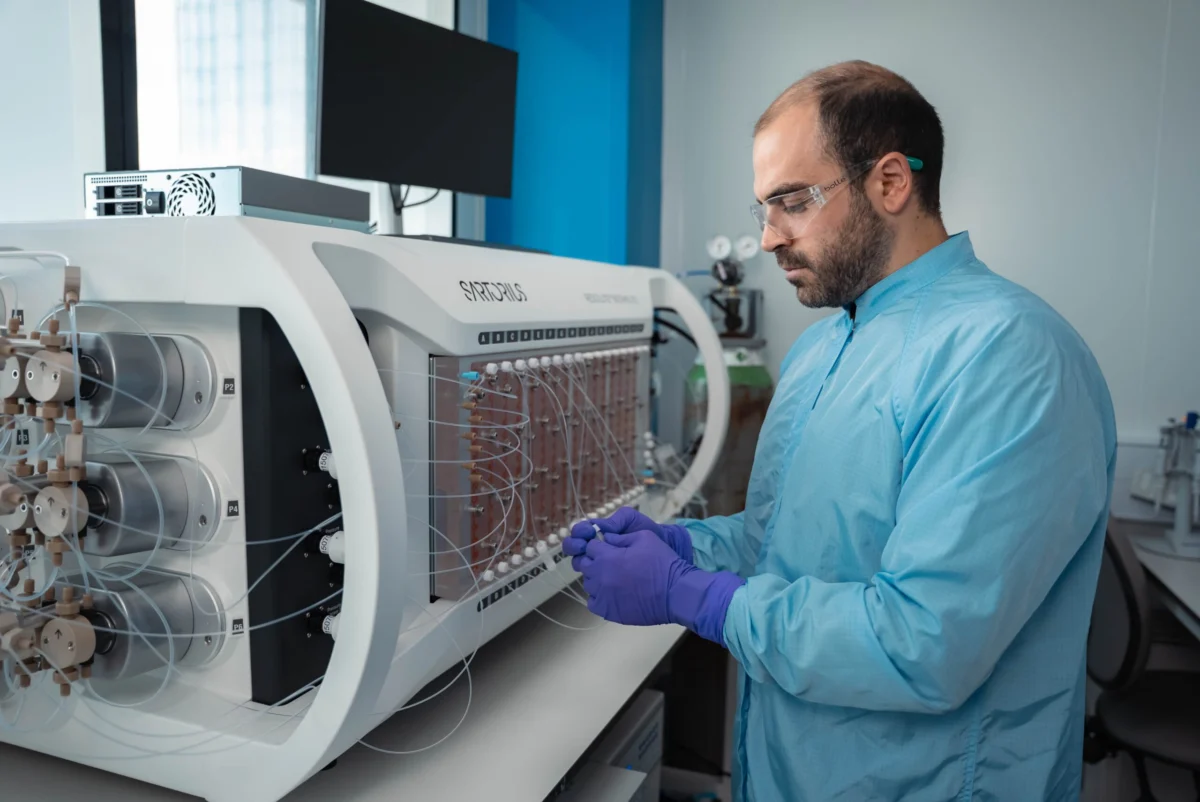
The platform utilizes a sophisticated integration of upstream and downstream technologies. At the heart of the upstream process is perfusion technology, which allows for the continuous removal of waste and the replenishment of nutrients, effectively maintaining the cell culture in an optimal state for longer durations. This is coupled with a downstream process involving continuous clarification and multi-column chromatography. While multi-column chromatography is considered the "bread and butter" of monoclonal antibody (mAb) production, its adaptation for the sensitive and structurally complex nature of gene therapies represents a significant technical achievement.
Chronology: From Concept to Clinical Readiness
The development of this platform did not happen in a vacuum; it is the culmination of years of iterative research and engineering aimed at bridging the gap between small-scale laboratory discovery and industrial-scale manufacturing.
- Early Development Phase: The CGT Catapult identified that the "batch-only" mentality was creating a ceiling for the industry. Researchers began modeling how continuous systems, successfully employed in traditional biologics, could be adapted for the fragile viral vectors and genetic materials used in ATMPs.
- Modeling and Simulation: Recognizing the high costs associated with physical laboratory experimentation, the team heavily relied on digital modeling and in-silico simulations to establish operational parameters. This phase allowed scientists to predict how continuous flow would impact product quality and yield before committing to physical manufacturing runs.
- March 2024 – Bioprocessing Summit Europe: The progress of the platform reached a public inflection point at the Bioprocessing Summit Europe. During the conference, Bilal Ozdoganoglu, an associate senior scientist at the CGT Catapult, presented the technical findings regarding the downstream capture and polishing steps, detailing how the platform overcomes the inherent challenges of adapting systems designed for simpler molecules to the complex landscape of gene therapy.
- Current State: The platform is currently being positioned as a "tool in the toolbox" for developers. The CGT Catapult is now actively transitioning from proof-of-concept into the collaboration phase, seeking to refine the technology through partnerships with industry stakeholders.
Supporting Data: Efficiency and Performance Metrics
The primary motivation behind the CGT Catapult’s initiative is the optimization of productivity. In traditional batch processing, significant time is lost during "turnaround" periods—cleaning, sterilization, and preparation between batches. Continuous bioprocessing theoretically eliminates these dead zones, leading to higher equipment utilization rates.
According to data presented by Ozdoganoglu, the performance of the continuous system is not merely equivalent to batch processing; in several key metrics, it has shown superior results. Recovery rates and overall system efficiency were reported as slightly better than, or at the very least comparable to, established batch methods.
However, the transition was not without technical hurdles. Adapting a system originally designed for the robust nature of monoclonal antibodies to the delicate requirements of gene therapies required significant re-engineering. The "polishing" step—the final purification stage—was particularly challenging. By leveraging digital twins and predictive analytics, the research team successfully defined the parameters required to maintain product integrity throughout the continuous flow, ensuring that the final output meets the rigorous regulatory standards required for clinical-grade therapeutics.
Official Responses: Insights from the CGT Catapult
Bilal Ozdoganoglu emphasizes that the goal is not to render batch processing obsolete. Instead, the initiative seeks to provide manufacturers with the flexibility to choose the most efficient method for their specific product profile.
"We’re not going to get rid of batch processing," Ozdoganoglu noted during his address at the Bioprocessing Summit Europe. "It is another tool for people to use when developing and manufacturing gene therapies and other ATMPs that could tackle some existing bottlenecks."
Ozdoganoglu’s commentary reflects a pragmatic approach to bioprocessing innovation. He acknowledges that the manufacturing sector is inherently conservative due to the stringent regulatory requirements surrounding patient safety. By demonstrating that the platform can achieve parity with batch manufacturing while offering the benefits of continuous flow, the CGT Catapult is lowering the barrier to entry for firms that might otherwise fear the risks associated with moving away from traditional, validated processes.
Implications: The Path Toward Scalability and Accessibility
The implications of this technology extend far beyond the laboratory. The current manufacturing limitations of ATMPs often result in prohibitively high costs and restricted availability. If the CGT Catapult’s platform succeeds in reaching full industrial integration, the industry could see a fundamental shift in how gene therapies are delivered.
1. Economies of Scale
Continuous manufacturing allows for a smaller footprint compared to massive, multi-tank batch facilities. By streamlining the production flow, companies can produce higher volumes of therapeutic product within the same physical space. This is a critical factor in achieving economies of scale that can drive down the per-dose cost of gene therapies.
2. Broadening Patient Access
Perhaps the most significant implication is the potential for larger patient groups to be treated. Many current gene therapies are limited to "orphan" indications—rare diseases with small patient populations. A more efficient, continuous manufacturing process could enable the production of therapies for more common conditions, where the required doses are significantly higher than what current batch facilities can provide.
3. Fostering an Ecosystem of Innovation
The CGT Catapult’s call for collaborators is an essential component of the platform’s future. By inviting vendors, automation suppliers, and Contract Development and Manufacturing Organizations (CDMOs) to the table, the Catapult is fostering a collaborative ecosystem. This is vital for the standardization of the technology. For continuous bioprocessing to become a standard industry practice, the equipment, software, and regulatory framework must be unified.
Future Outlook: The Road Ahead
The road to widespread adoption of continuous bioprocessing in the ATMP sector will require more than just technical success; it requires a concerted effort to align regulatory approval pathways with the new manufacturing reality. As the CGT Catapult moves forward, the focus will likely shift toward:
- Validation Studies: Working with regulatory bodies to ensure that continuous manufacturing meets the quality and safety standards for commercial production.
- Automation Integration: Partnering with automation suppliers to create "smart" facilities where the continuous flow is managed by AI-driven systems that can detect and correct deviations in real-time.
- CDMO Partnerships: Engaging with CDMOs to integrate this technology into their service offerings, allowing smaller biotech companies—which often lack the resources to build their own manufacturing infrastructure—to leverage the benefits of continuous bioprocessing.
In conclusion, the CGT Catapult’s platform represents a sophisticated answer to the "manufacturing bottleneck" that has long plagued the gene therapy industry. By blending the precision of digital modeling with the mechanical efficiency of continuous flow, the initiative provides a roadmap for the future of medicine. As stakeholders across the industry begin to explore and implement these tools, the promise of affordable, accessible gene therapy for a wider range of patients moves closer to reality. The transition will be measured and deliberate, but the momentum toward a more efficient manufacturing future is undeniable.