The Evolution of Kubernetes Observability: Transitioning from Kubernetes Dashboard to Headlamp
By Will Case (Headlamp) | June 1, 2026
For nearly a decade, the Kubernetes Dashboard served as the primary gateway for millions of developers, students, and operators entering the cloud-native ecosystem. It transformed the daunting complexity of the Kubernetes API into a visual, intuitive interface, demystifying the orchestration of containers. However, as the Kubernetes ecosystem has matured, so too have the requirements of those managing it. With the official announcement that the Kubernetes Dashboard project has been archived, the industry now faces a pivotal transition.
For many, this shift marks more than a software update; it is an evolution of how we interact with cluster infrastructure. Headlamp, an open-source project designed to carry forward the torch of visual cluster management, has emerged as the logical successor. This article examines the legacy of the original Dashboard, the technical nuances of the migration, and the future of application-centric Kubernetes management.
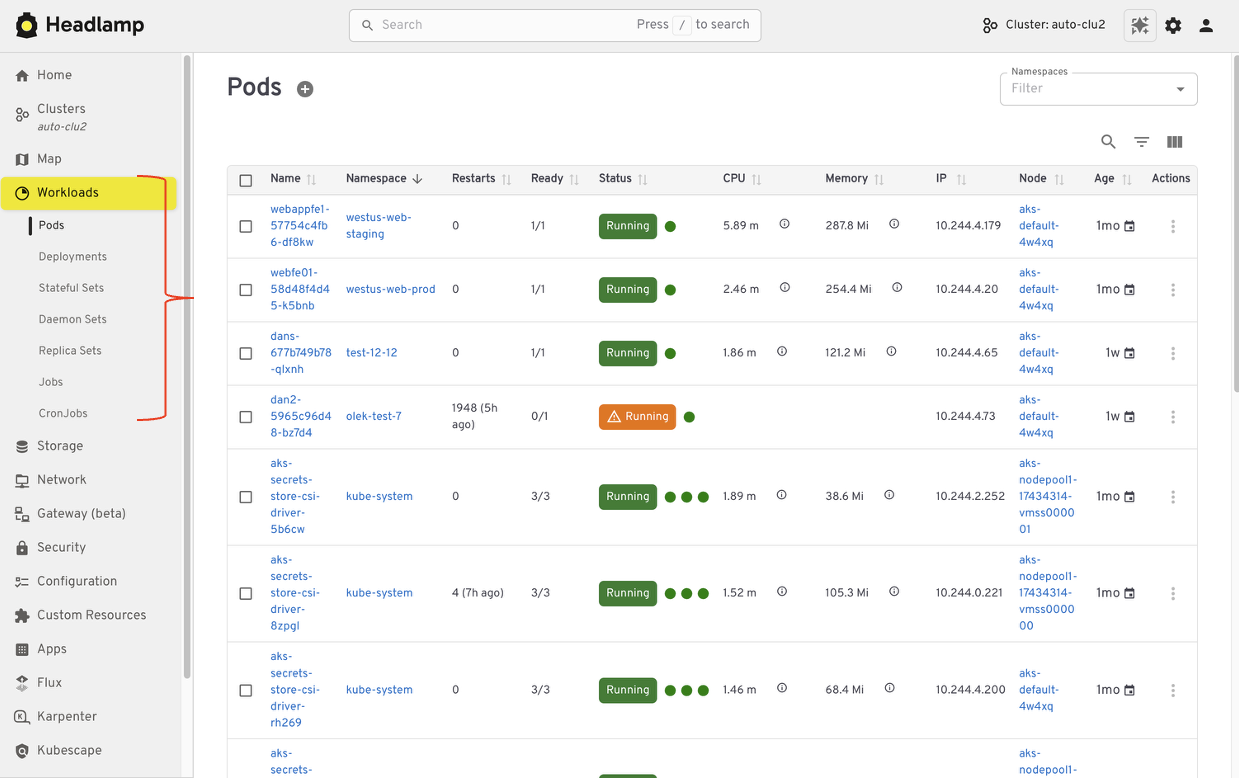
The Legacy of Kubernetes Dashboard
The original Kubernetes Dashboard was revolutionary for its time. It provided a "first window" into the cluster—a way to visualize deployments, pods, and services without requiring deep mastery of the kubectl command line. For years, it was the standard on-ramp for newcomers and a reliable safety net for operators.
A Foundation for Growth
The decision to archive the project does not diminish its impact. Rather, it acknowledges that the Kubernetes landscape has outgrown the scope of a single-cluster visualizer. The original Dashboard was built for a world where a user might manage one or two clusters manually. Today, infrastructure is often distributed across hybrid-cloud environments, multi-region setups, and complex GitOps pipelines. While the Dashboard provided the "what" (seeing the resources), the modern era requires the "how" (understanding the relationships and contexts of those resources).
Mapping Workflows: Continuity as a Core Philosophy
A common concern during any tooling transition is the "productivity dip"—the time lost relearning basic tasks. Headlamp was built with a strict focus on continuity. If you have spent years navigating the Kubernetes Dashboard, you will find the transition to Headlamp remarkably frictionless.
Viewing and Interacting with Resources
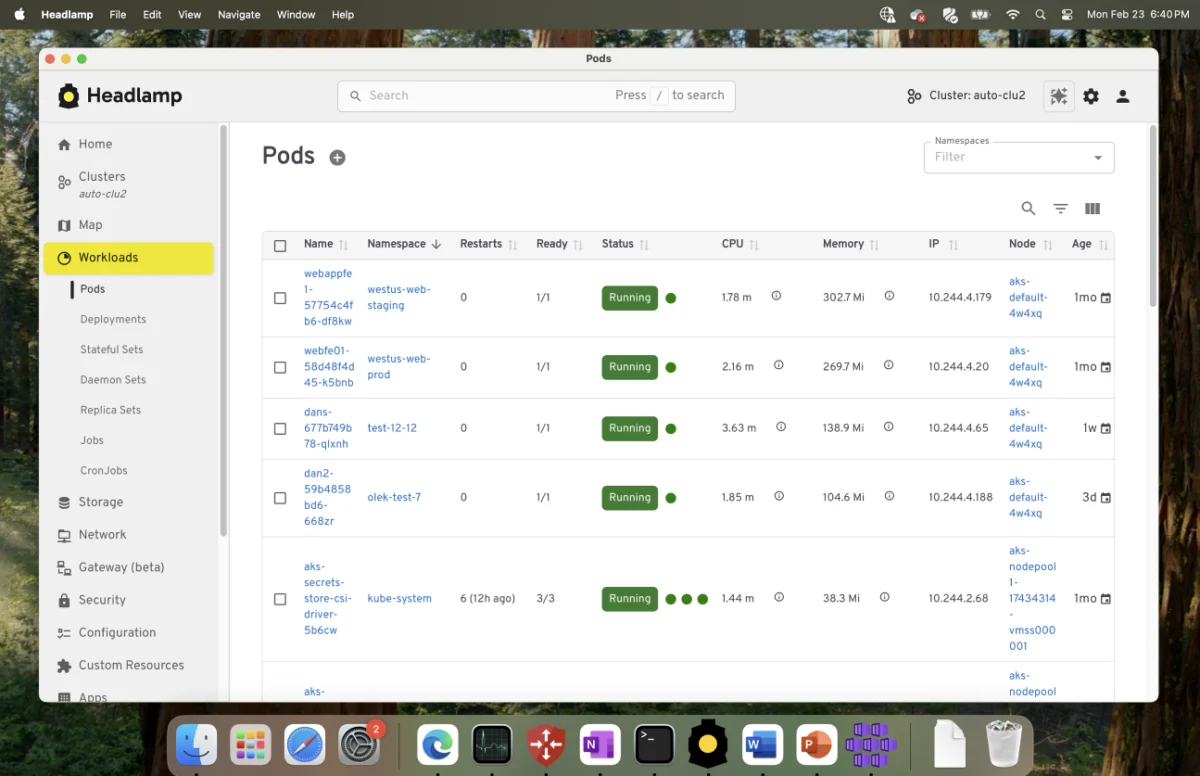
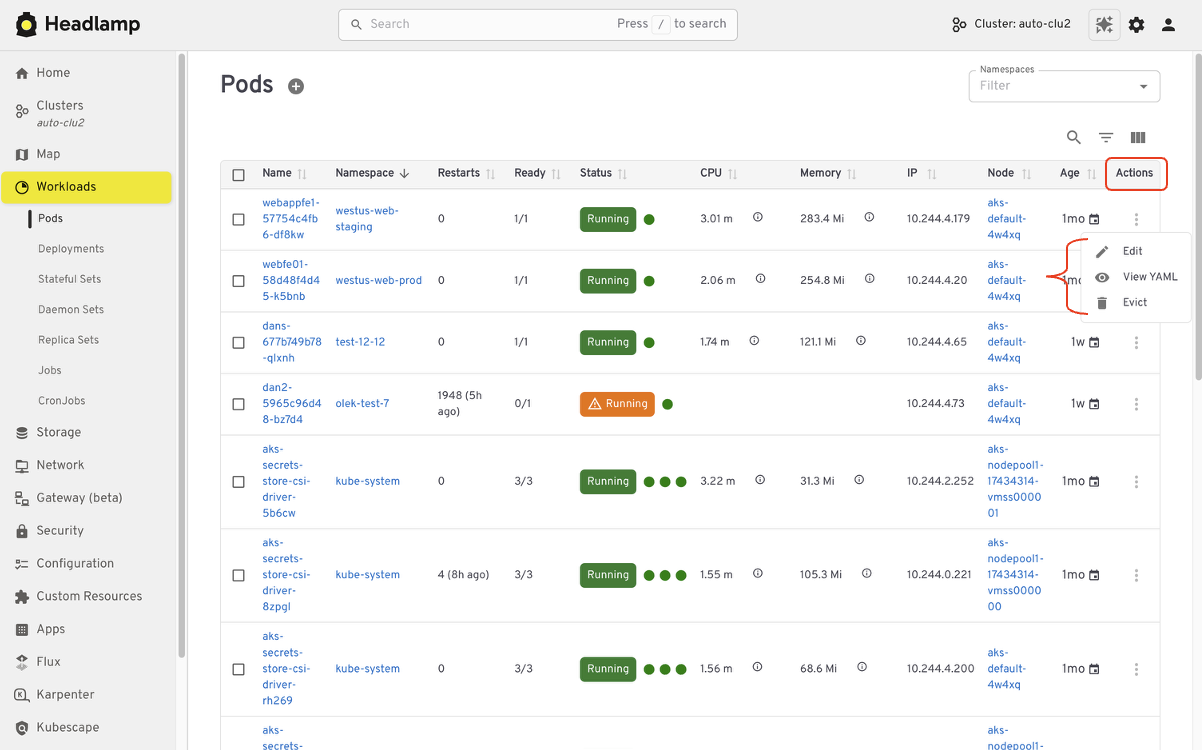
At its core, Headlamp preserves the fundamental workflows of the original Dashboard. Users can browse namespaces, inspect pods, and view logs with the same organizational structure they are accustomed to.
- RBAC Alignment: Headlamp respects standard Kubernetes Role-Based Access Control (RBAC). Your existing service accounts and kubeconfig permissions remain the primary drivers of what you can see and edit.
- Edit Capabilities: Just as in the original tool, Headlamp allows users to edit YAML manifests, scale deployments, and delete resources directly from the browser.
The primary difference lies in the UI/UX refinement. Navigation is faster, the interface is more responsive, and the transition between clusters is significantly smoother, reducing the "context switching" tax that often plagues DevOps teams.
Beyond the Original: The Case for Modernization
While the original Dashboard was an excellent entry point, Headlamp is designed for the scale of modern engineering teams. The shift involves several key technical advancements that move beyond simple resource listing.
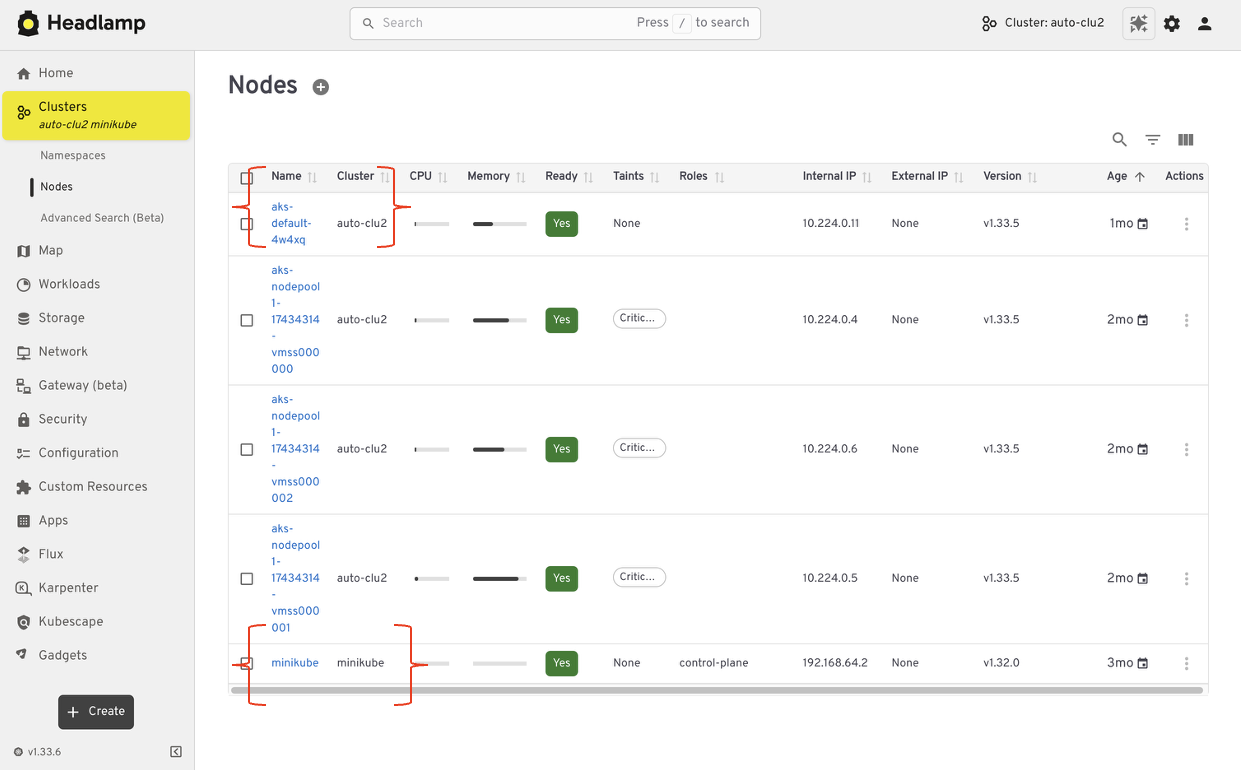
The Multi-Cluster Revolution
The original Dashboard was constrained by a single-cluster architecture. In contrast, Headlamp is designed from the ground up for multi-cluster environments. Engineers can aggregate multiple clusters into a single dashboard view. Whether you are managing development, staging, or production across different cloud providers, Headlamp allows for a unified operational view. This centralization eliminates the need to constantly re-authenticate or jump between disparate browser tabs.
From Resources to Projects
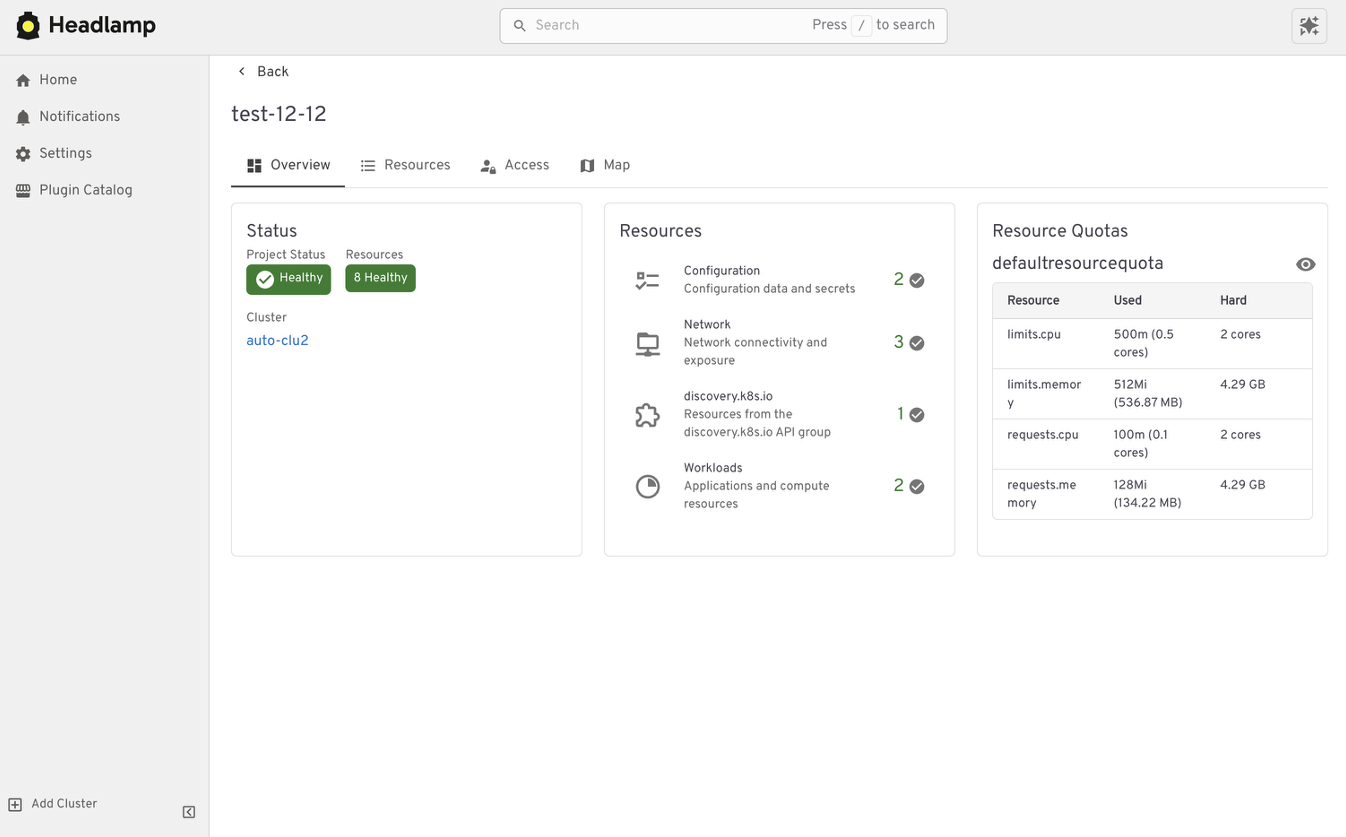
Perhaps the most significant departure from the legacy Dashboard is the introduction of Projects. In standard Kubernetes, resources are often scattered across various namespaces, making it difficult to visualize an entire application’s health.
- Contextual Grouping: Projects allow users to group related workloads, services, and configurations into a logical application context.
- Native Compatibility: Importantly, this feature does not require a proprietary agent or custom resource definition (CRD) that breaks standard Kubernetes compliance. It simply overlays a visual organizational layer on existing labels and namespaces.
Extensibility: The Plugin Ecosystem
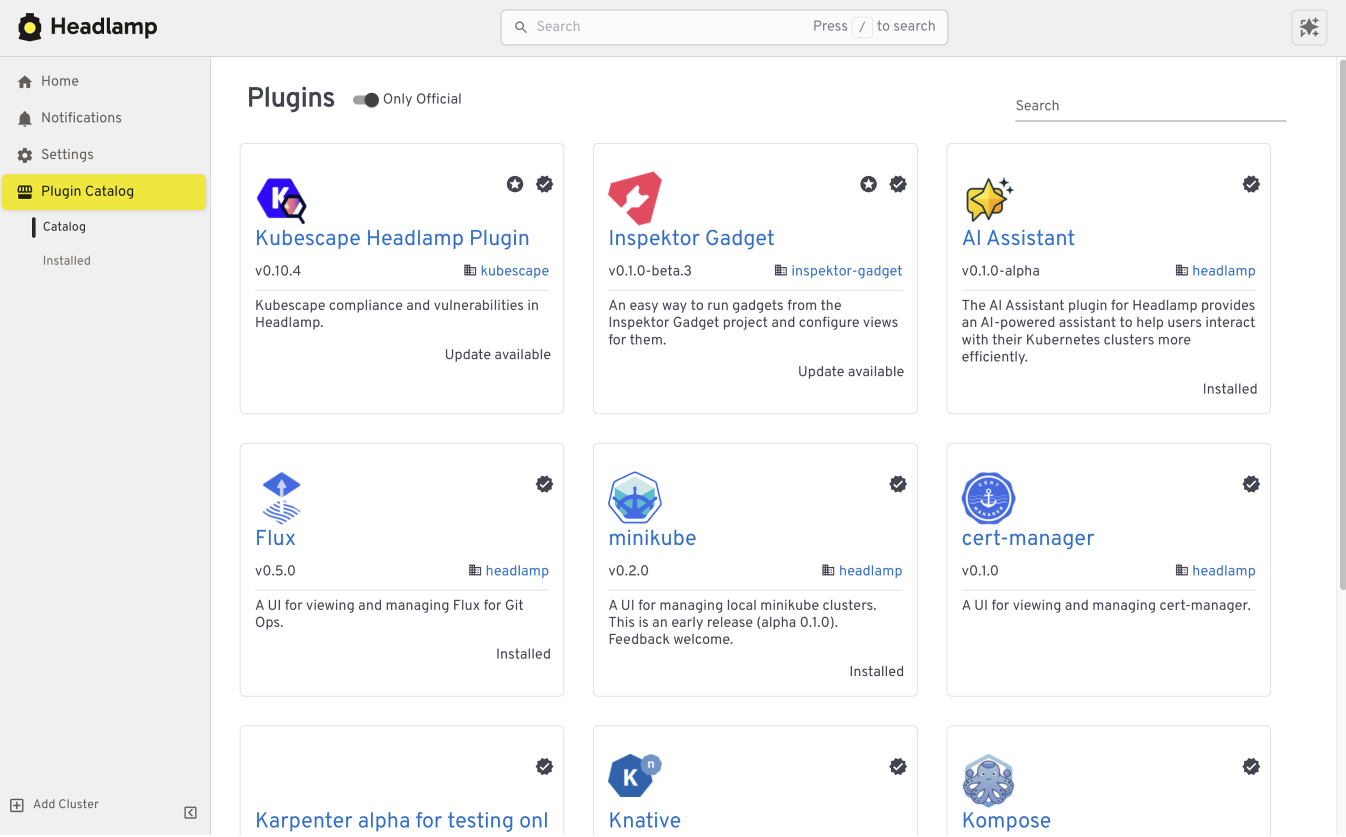
Perhaps the most powerful differentiator for Headlamp is its plugin-based architecture. While the original Dashboard was relatively static, Headlamp acts as an extensible platform.
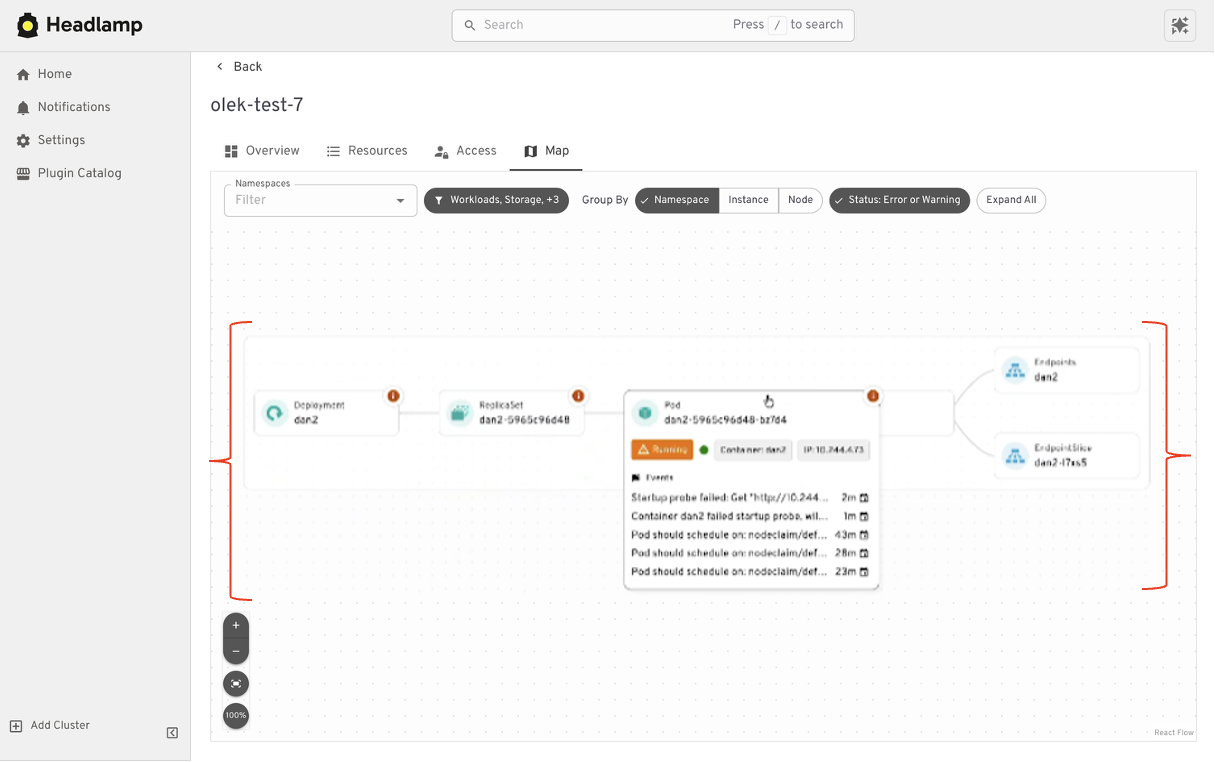
- Flux and GitOps: With the Flux plugin, users can visualize the state of their GitOps pipelines directly within the cluster view. You can see not just the current state of a pod, but the repository configuration that defines it.
- AI-Assisted Troubleshooting: The integration of AI assistants into the UI allows for real-time diagnostics. If a pod is failing to start, the assistant can parse the events and logs to provide context-aware suggestions, significantly reducing the "mean time to repair" (MTTR).
- Custom Tooling: Platform teams can build their own plugins, enabling organizations to embed internal company tools directly into the UI, ensuring that all developers are using a unified interface regardless of the underlying cluster complexity.
Deployment Flexibility: In-Cluster vs. Desktop
The original Dashboard was almost exclusively an in-cluster web application. Headlamp acknowledges that modern developers have varying needs, offering two distinct deployment models:
- In-Cluster Deployment: Ideal for shared environments or production monitoring. It provides a centrally managed UI, allowing teams to collaborate on cluster management with consistent, enforced RBAC policies.
- Desktop Application: This is a game-changer for local development. By running Headlamp as a native desktop application, engineers can connect to their local clusters (such as minikube or kind) or remote clusters via their existing local
kubeconfig. It requires no installation inside the target cluster, making it the perfect tool for developers who need to quickly inspect a cluster without modifying its configuration.
Preparing for the Migration
Transitioning to a new tool requires more than just a software update; it requires an operational strategy. As you prepare to move from the archived Kubernetes Dashboard to Headlamp, consider the following steps:
1. Audit Current Access Models
Verify that your existing authentication methods (OIDC, Service Accounts, or static tokens) are well-documented. Because Headlamp relies on the same Kubernetes API standards, if your current access model is secure and functional, it will transition seamlessly.
2. Identify High-Value Workflows
Take a moment to catalog the specific actions your team performs most often. Are you primarily doing "read-only" status checks? Are you scaling deployments? Or are you troubleshooting complex ingress issues? Mapping these to Headlamp’s features early will ensure your team remains productive from Day 1.
3. Leverage the Community
Headlamp is an open-source project with an active community. If you find that a specific feature from the old Dashboard is missing or functions differently, the community-driven plugin ecosystem is likely the solution. If a plugin does not exist, the extensibility of Headlamp makes it easier to build than ever before.
Implications for the Cloud-Native Future
The archiving of the Kubernetes Dashboard marks the end of an era, but it signals the beginning of a more mature phase for Kubernetes management. We are moving away from tools that simply "list" resources toward platforms that "understand" applications.
By choosing a tool like Headlamp, teams are not just finding a replacement for a legacy interface; they are investing in a platform that grows with their architecture. Whether your organization is running a single cluster or a global, multi-cloud footprint, the requirement for a clear, intuitive, and extensible interface has never been higher.
As we look toward the future of Kubernetes, the focus will remain on reducing friction. By providing a consistent interface that bridges the gap between raw API complexity and high-level application management, Headlamp ensures that the next generation of Kubernetes users will have the same confidence and clarity that the original Dashboard provided, with the power to scale to the demands of 2026 and beyond.
For further documentation and to begin your migration, please visit headlamp.dev. Stay tuned for our upcoming detailed, step-by-step technical migration guide.