Visualizing the Lifecycle: A New Era for Cluster API Management with Headlamp
By Chayan Das (Independent)
Thursday, June 25, 2026
The complexity of modern cloud-native infrastructure is often hidden behind layers of abstraction. For platform engineers, the Cluster API (CAPI) project—a Kubernetes sub-project designed to bring declarative, Kubernetes-style APIs to cluster lifecycle management—has been a transformative force. Yet, despite its power, managing CAPI resources has historically required a deep reliance on the command line, specifically kubectl, and an exhaustive understanding of complex ownership hierarchies.
Today, that paradigm shifts. We are excited to announce the launch of the Headlamp Cluster API plugin, an open-source extension for Headlamp, the extensible Kubernetes UI. This new tool promises to bridge the gap between declarative power and operational clarity, providing a visual interface for managing the entire lifecycle of Kubernetes clusters directly from a browser.
The Core Challenge: Deciphering the Hierarchy
For years, platform teams have wrestled with the "black box" of Cluster API management. Because CAPI uses standard Kubernetes objects to manage clusters, the resulting resource relationships—spanning MachineDeployments, MachineSets, KubeadmControlPlanes, and infrastructure providers—can become dizzyingly complex.
To debug a single node failure or a stalled upgrade, an engineer typically has to traverse several layers of YAML, often manually reconciling ownerReferences to understand why a specific machine is failing to provision. This "terminal-first" approach is not only time-consuming but prone to human error, particularly during high-stakes incident response.
The Headlamp Cluster API plugin was conceived to solve this by providing a unified, visual source of truth. By surfacing the underlying state of CAPI resources, it allows operators to move beyond raw YAML and interact with their infrastructure through a structured, intuitive dashboard.

Chronology of Development: From Concept to Alpha
The journey toward this plugin began as part of the CNCF LFX Mentorship program, a project-driven initiative aimed at fostering contributions to the cloud-native ecosystem.
- Early 2026 (The Scoping Phase): The initial focus was identifying the primary "pain points" for CAPI users. Through interviews with platform engineers and community feedback, we identified that the lack of visual hierarchy and the difficulty in inspecting bootstrap configurations were the most critical hurdles.
- March 2026 (Design & Prototyping): We shifted to designing a UI that felt native to Headlamp. The core philosophy was to ensure that the plugin didn’t feel like an "add-on" but rather a core component of the cluster management experience.
- April – May 2026 (Iterative Development): The team focused on implementing core features, such as the Cluster Dashboard and the Map View. This period involved deep collaboration with the Headlamp maintainers, ensuring that the plugin adhered to the project’s standards for extensibility and performance.
- June 2026 (Alpha Release): After rigorous testing and feedback loops, the plugin reached its Alpha milestone, offering a comprehensive suite of tools for real-world cluster management.
Supporting Data: Feature Set and Capabilities
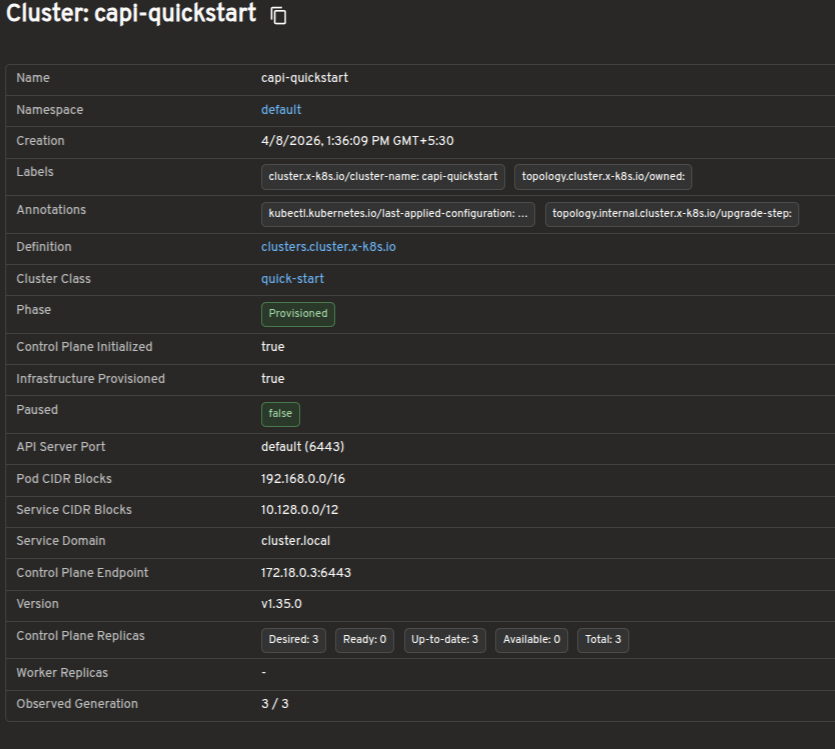
The plugin is designed to be a "Swiss Army Knife" for CAPI operations. The following features address the specific needs of platform teams managing large-scale, multi-cluster environments.
Feature Summary Table
| Feature | Operational Impact |
|---|---|
| Cluster Overview | Immediate health status for control planes and worker replicas. |
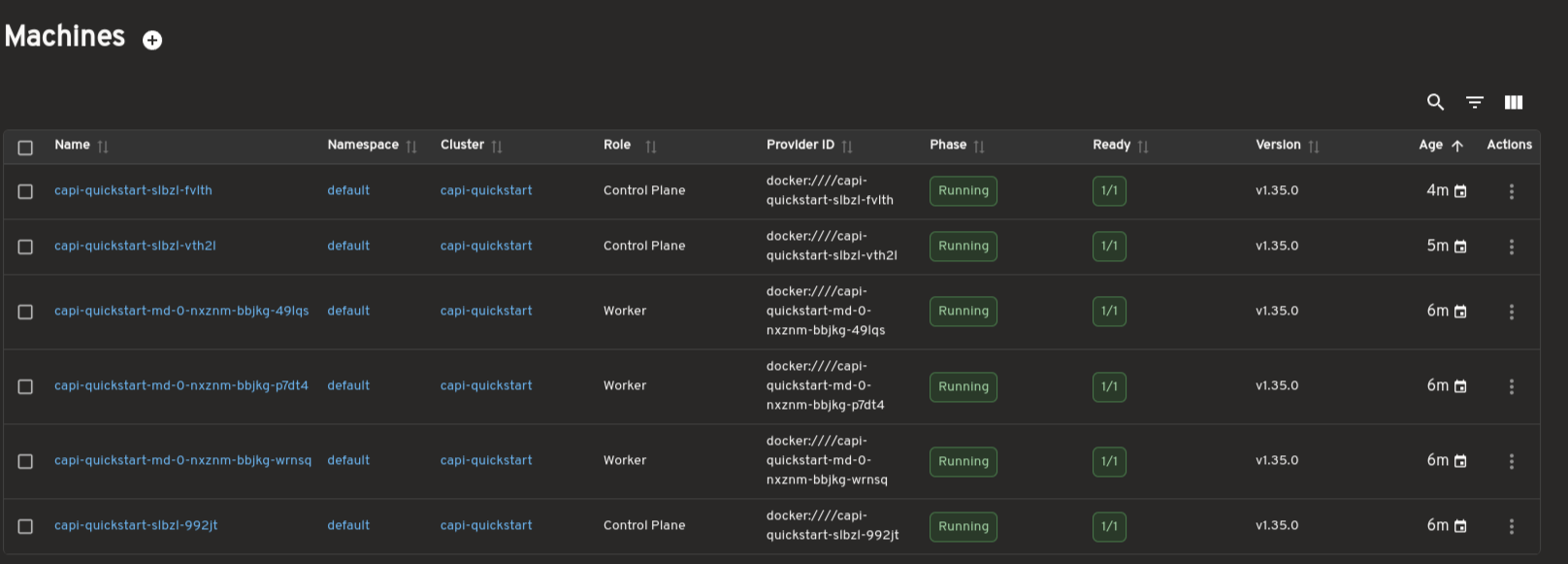
| Machine Visibility | Deep inspection of MachineDeployments, Sets, and Pools. |
| Cluster Dashboard | Centralized view of health, conditions, and remediation guidance. |
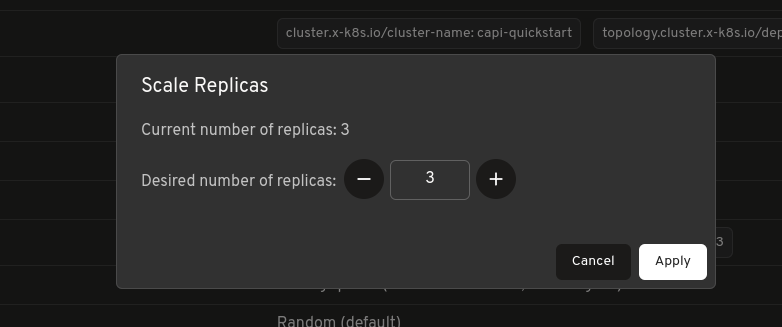
| Scaling | Direct replica adjustment without manual CLI intervention. |
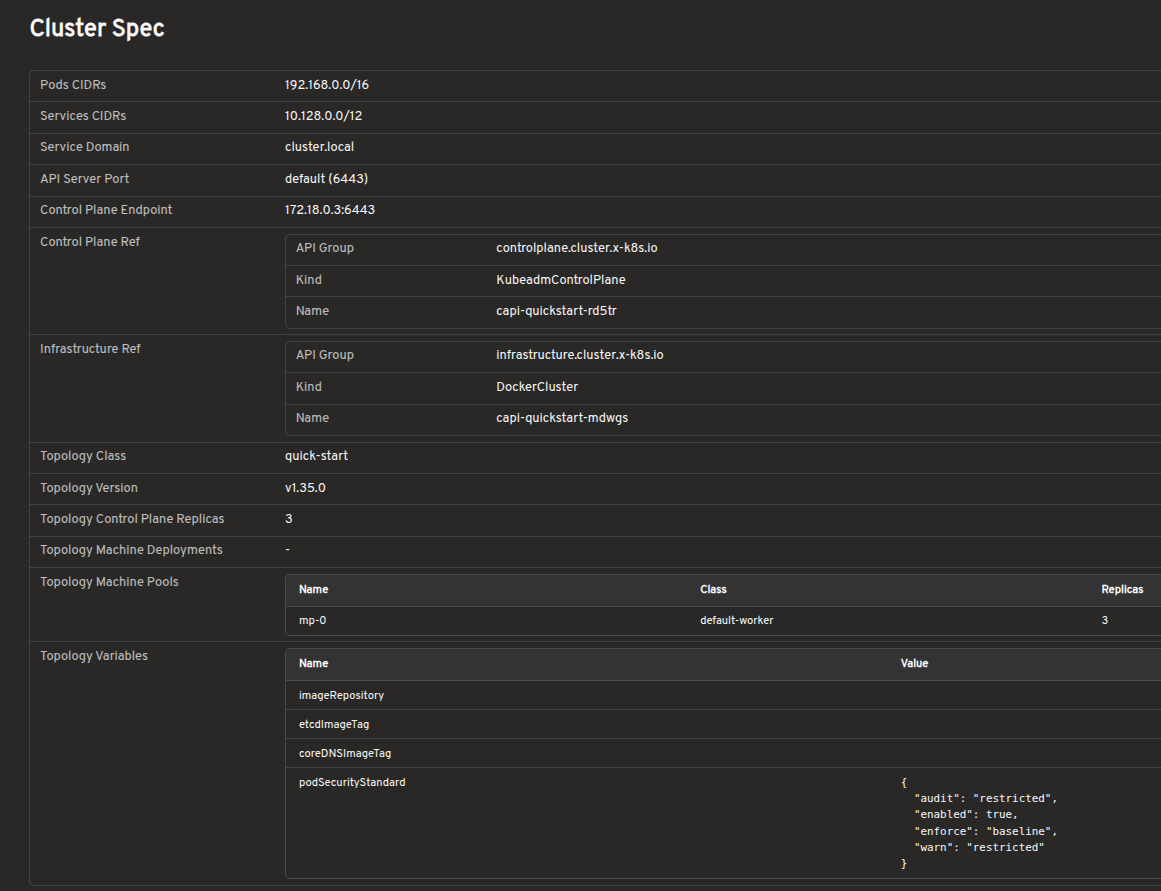
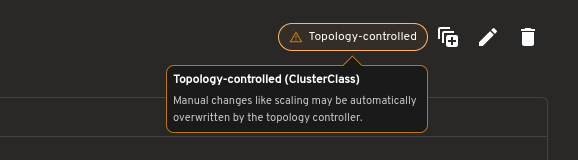
| Topology Awareness | Auto-detection of ClusterClass-managed resources. |
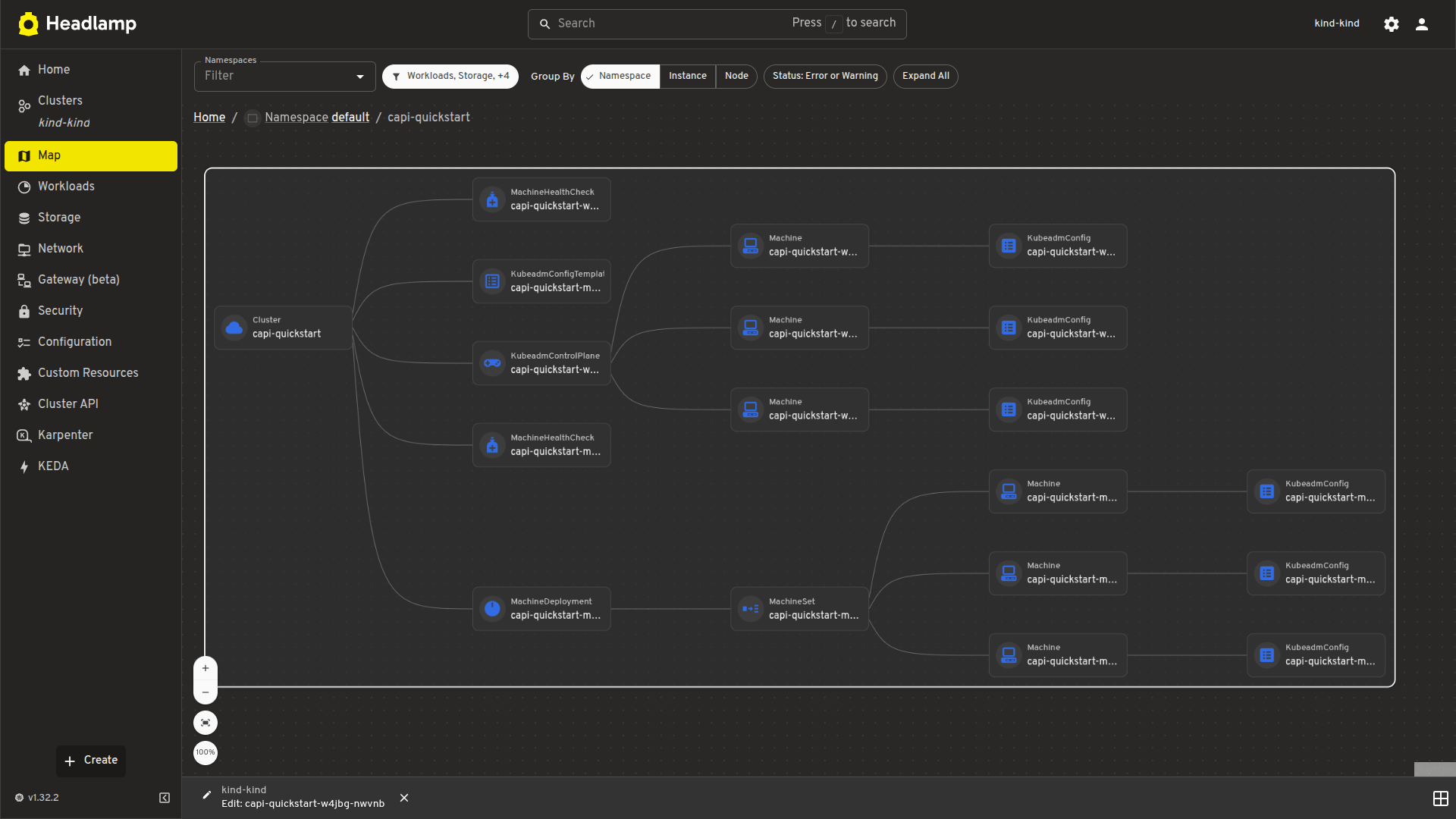
| Map View | Visual hierarchy mapping for rapid architectural understanding. |
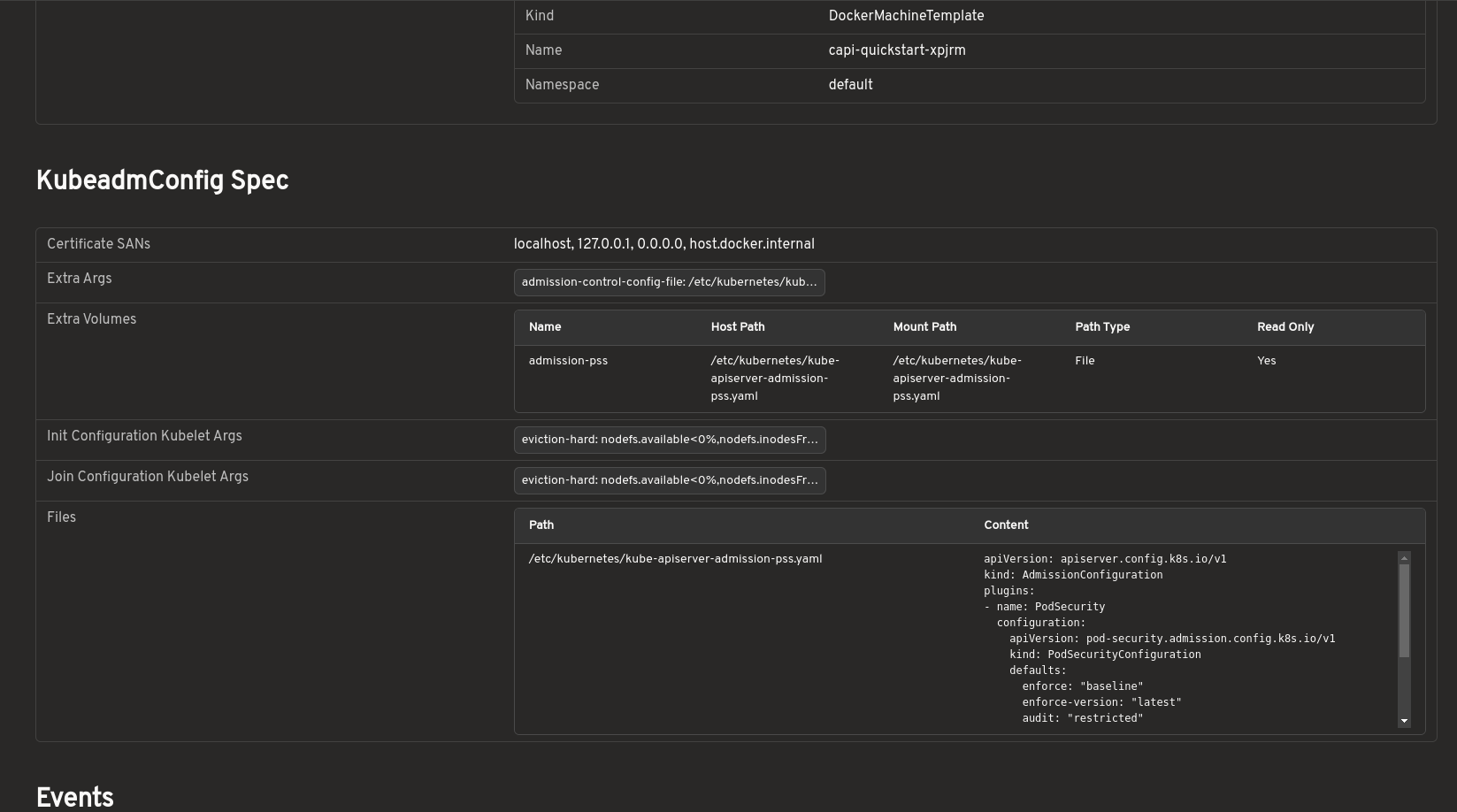
| Bootstrap Inspection | Readable KubeadmConfig views (files, args, join settings). |
| Prometheus Integration | Real-time performance metrics inline with resource details. |
The Dashboard Experience
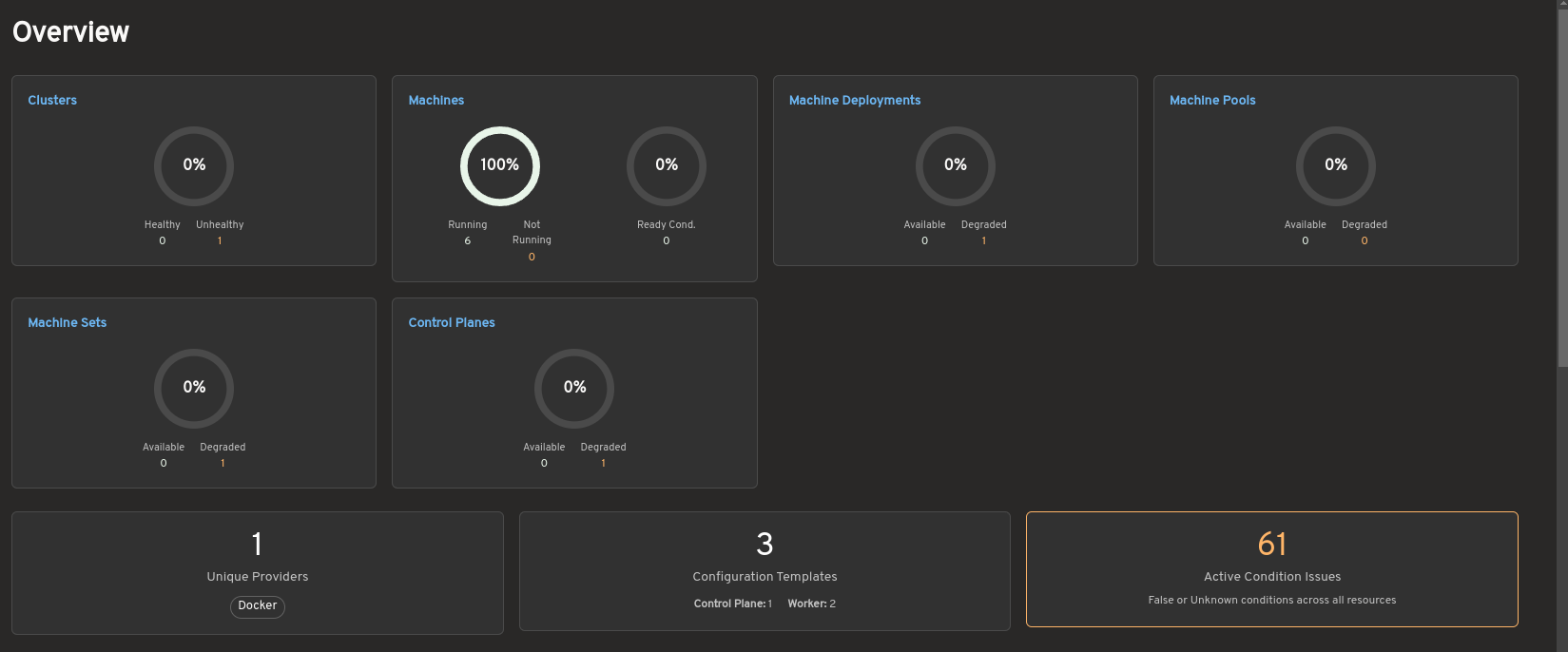
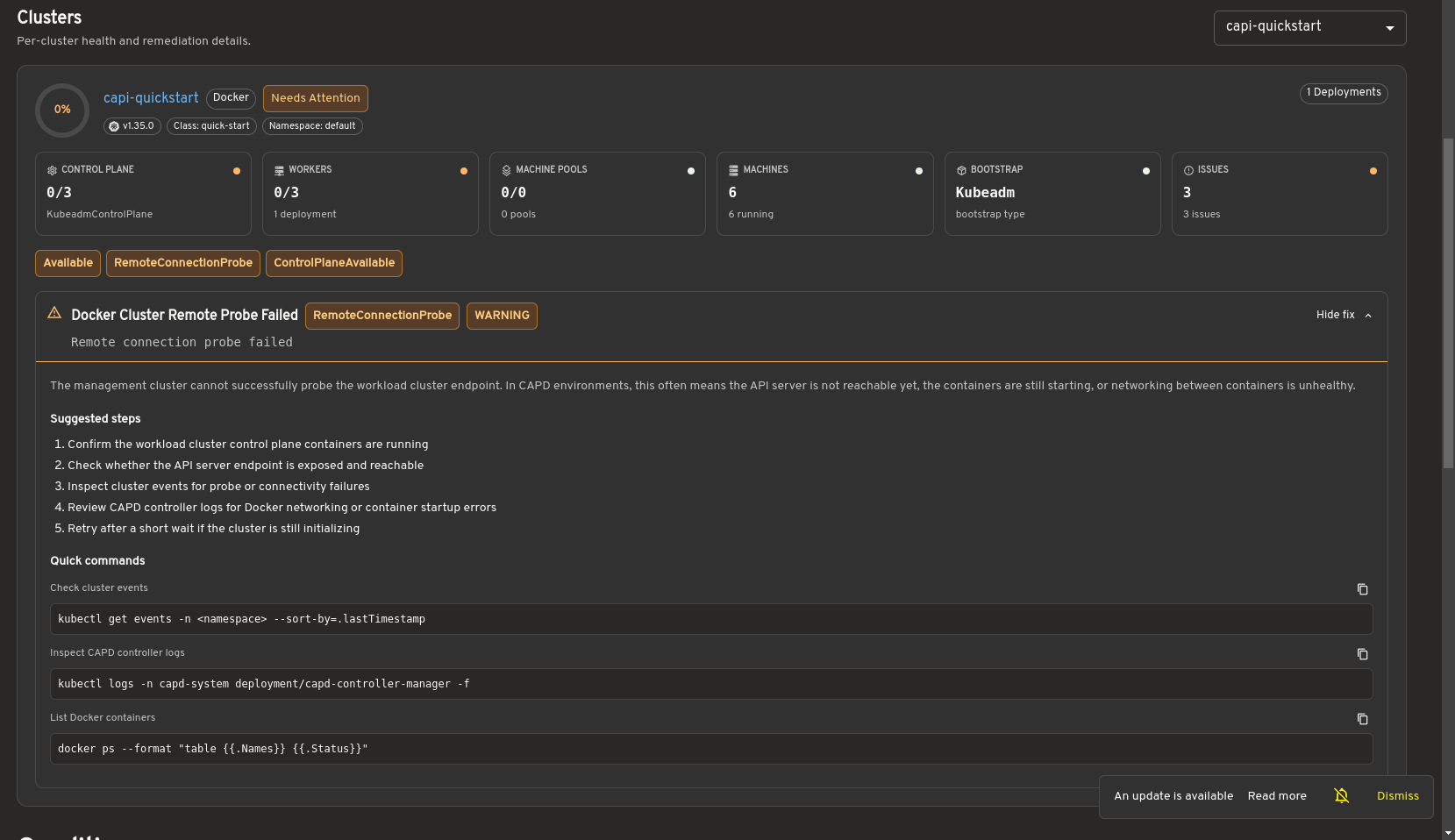
The heart of the plugin is the Cluster API Dashboard. This provides an aggregated view of resource health across the entire management cluster. Rather than hunting through namespaces, an operator can see at a glance which clusters have degraded control planes or pending upgrades. When a component fails, the dashboard provides specific remediation guidance—offering a "next-step" path for engineers who might be less familiar with the specifics of the failing provider.
Visualizing Relationships
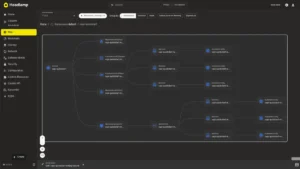
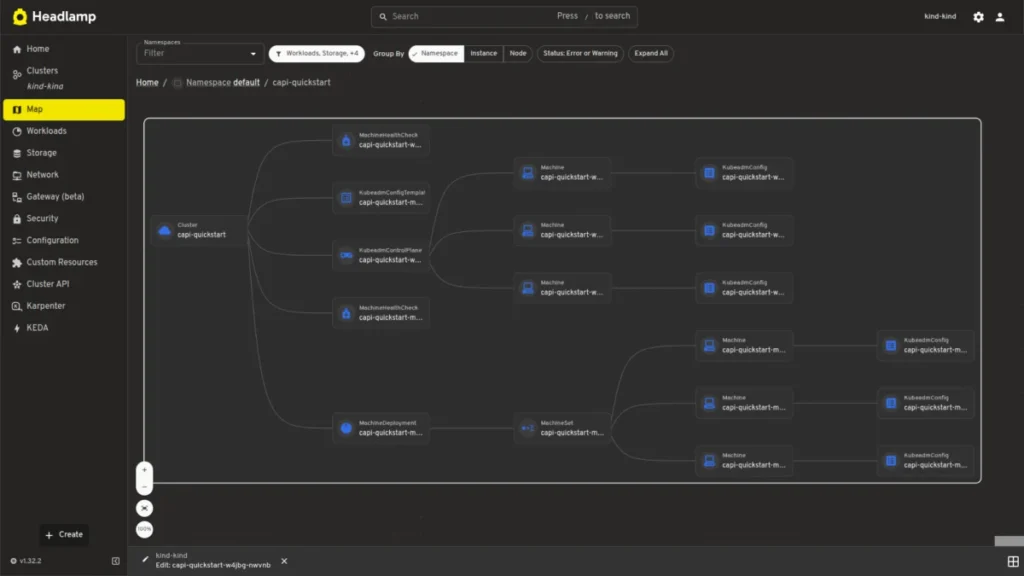
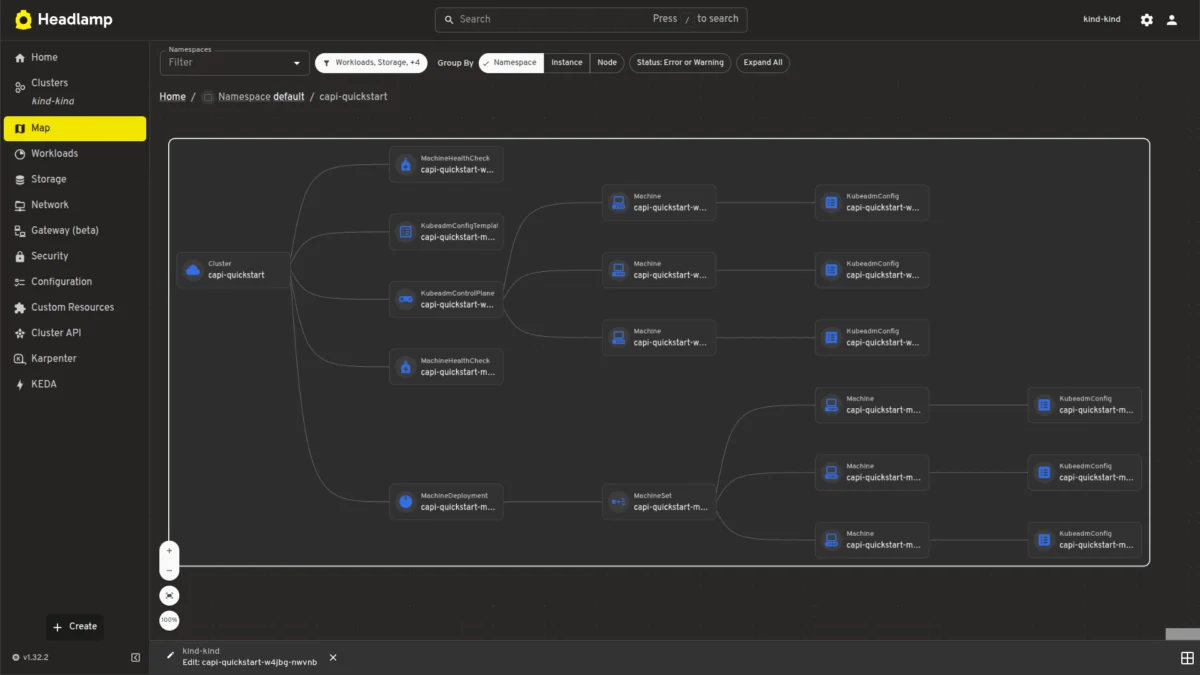
Perhaps the most significant addition is the Map View. In a standard CLI output, tracing the relationship between a MachineDeployment and its parent Cluster is abstract. The plugin’s map view provides a graphical representation of the hierarchy, allowing users to see how changes at the top level propagate down to the individual machine level. This is invaluable for visual learners and for explaining cluster architecture during cross-team reviews.
Official Perspective: The Mentorship Impact
Developing this tool under the auspices of the CNCF LFX Mentorship program was a defining aspect of its success. Mentorship, in the context of the Headlamp project, was not merely about writing code; it was about participating in the culture of open-source maintenance.
"The mentorship provided an opportunity to work closely with the Headlamp community while building features to improve the Cluster API management experience," notes the project team. "The focus was not only on implementing features but also on understanding real-world usability challenges around Cluster API operations."
Key takeaways from the mentorship included:
- Collaborative Design: Engaging in design discussions with veteran maintainers to ensure that the plugin architecture was sustainable and scalable.
- Community-Driven Feedback: Iterating on the UI based on real-world use cases, which prioritized functionality like "Scale from UI" over more aesthetic, less functional updates.
- Lifecycle Management: Learning the rigorous requirements of handling release cycles, documentation, and managing community feedback for a public-facing plugin.
Implications for the Cloud-Native Ecosystem
The introduction of this plugin has several major implications for the broader Kubernetes community.
1. Democratizing Cluster Lifecycle Management
By removing the barrier of complex CLI commands, the Headlamp Cluster API plugin makes cluster management accessible to a wider range of users. Developers and junior engineers who may be intimidated by the raw kubectl experience can now safely explore and monitor infrastructure without the fear of breaking configurations.
2. Accelerating Debugging Cycles
In production environments, every second of downtime is critical. The integration of Prometheus metrics directly into the CAPI resource views creates a "single pane of glass" for troubleshooting. Being able to see a node’s CPU spikes directly alongside its Machine object status allows for faster correlation between infrastructure state and performance metrics.
3. Strengthening the Cluster API Ecosystem
The success of Cluster API depends on the ecosystem of tools that support it. By providing a standard, extensible UI, Headlamp is effectively lowering the barrier to entry for adopting CAPI. As more organizations adopt declarative infrastructure, tools that simplify the human-to-API interaction become essential.
4. Future-Proofing with Dynamic Versioning
The plugin supports both v1beta1 and v1beta2 versions of the Cluster API, ensuring that it remains relevant as the project evolves. This forward-looking design is critical for enterprises that need to manage heterogeneous clusters with varying API versions.
The Path Forward: What Comes Next?
While the current Alpha release is feature-rich, it is only the beginning. The roadmap for the remainder of 2026 includes:
- Enhanced Remediation Workflows: Moving beyond guidance to automated or semi-automated repair actions triggered directly from the dashboard.
- Custom Resource Definitions (CRD) Support: Deepening the integration to support custom infrastructure providers with minimal configuration.
- Security & RBAC Enhancements: Refined controls for who can perform scaling or configuration changes within the UI.
We invite the community to join us in shaping this tool. Whether you are a seasoned platform engineer or just starting your Kubernetes journey, your feedback is invaluable.
To get started, please visit the Headlamp Plugins repository to view the documentation and installation instructions. As this is an Alpha release, we encourage users to share their experiences, report bugs, and suggest features that would make their day-to-day operations smoother.
The future of infrastructure is not just declarative—it is visible, accessible, and manageable. With the Cluster API plugin for Headlamp, we are taking a significant step toward that vision.