The Evolution of Silicon: AWS Unveils Graviton5-Powered EC2 M9g Instances
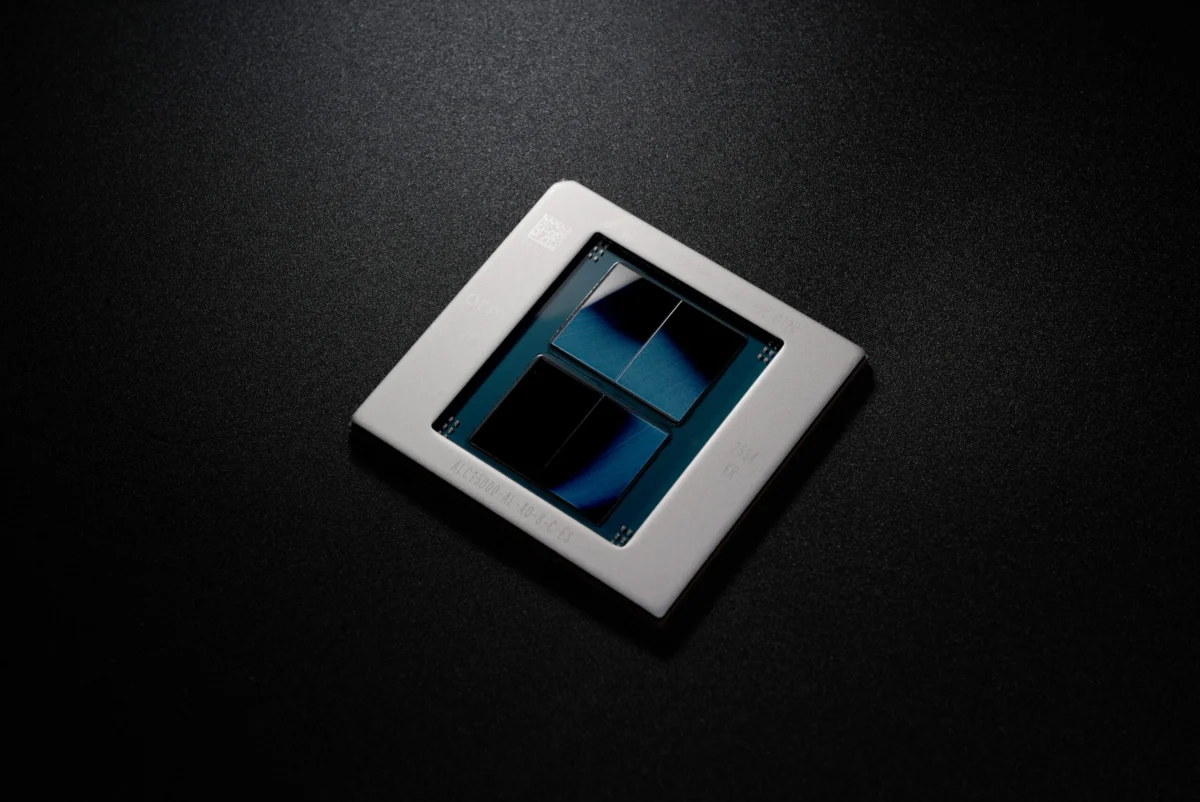
In a significant leap for cloud infrastructure, Amazon Web Services (AWS) has officially announced the general availability of the EC2 M9g and M9gd instances, the first to be powered by the fifth-generation Graviton5 processor. This launch marks a milestone in an eight-year journey of custom silicon innovation, promising to redefine performance standards for general-purpose cloud workloads while setting a new benchmark for energy efficiency and formally verified security.
As the industry shifts toward the era of "agentic AI"—where autonomous systems orchestrate multi-step tasks and real-time reasoning—the demand for robust, CPU-intensive compute has never been higher. With the introduction of the M9g series, AWS is positioning its custom silicon as the backbone for the next generation of data-driven applications.
A Legacy of Iteration: The Chronology of Graviton
To understand the significance of the M9g launch, one must look at the trajectory of AWS’s silicon strategy. Since the debut of the original Graviton processor, AWS has consistently delivered improvements in price-performance and compute density.
- 2018: AWS introduces the first Graviton processor, signaling a move toward custom, Arm-based silicon tailored for specific cloud workloads.
- 2019-2022: The rapid succession of Graviton2, 3, and 4 established the platform as a viable alternative to traditional x86 architectures, particularly for containerized microservices and database operations.
- December 2025: During re:Invent 2025, AWS previews the Graviton5-powered M9g instances, inviting early adopters to stress-test the new hardware.
- June 2026: The official general availability of M9g and M9gd instances brings the most powerful, energy-efficient processor in AWS history to the global market.
Throughout this timeline, the primary objective has remained constant: to decouple compute performance from traditional power constraints, allowing customers to do more with less energy.
Performance Metrics: The Graviton5 Advantage
The Graviton5 is not merely an incremental update; it is a fundamental re-engineering of the AWS compute stack. Boasting 192 cores, a 5x larger L3 cache, and a 33% reduction in inter-core latency, the processor is optimized for modern, memory-hungry applications.
Quantitative Gains
Early testing by industry leaders demonstrates the tangible impact of the M9g migration. ClickHouse, the popular analytics platform, reported a 36% performance boost compared to the previous-generation M8g instances, achieved with zero code modifications. Similarly, observability leader Honeycomb recorded a 36% improvement in throughput per core during a rigorous six-month A/B test. For database-intensive applications, HubSpot observed a 60% reduction in query duration, highlighting the processor’s prowess in handling high-volume transactional workloads.

Compared to its predecessor, Graviton4, the new instances offer:
- Up to 25% higher compute performance.
- Up to 35% faster performance for web applications and ML inference.
- Up to 30% speed improvements for database operations.
Furthermore, the integration of PCIe Gen6 and DDR5-8800 memory makes this the fastest memory-subsystem implementation in the cloud, ensuring that the processor is rarely throttled by data bottlenecks.
The Agentic AI Shift
As Artificial Intelligence moves beyond simple Q&A interfaces toward autonomous agents that can execute code, use external tools, and orchestrate complex workflows, the nature of compute demand is changing. Agentic AI is heavily reliant on CPU-bound tasks, such as logic processing, code generation, and environmental orchestration.
Meta, one of the world’s largest users of Graviton, has committed to deploying the new processors at scale, utilizing tens of millions of cores to support its agentic AI initiatives. The core density, combined with superior cache performance and memory bandwidth, allows Graviton5 to handle the concurrent environments necessary to keep accelerators—such as GPUs—fed with data, effectively reducing the "wait time" in AI training and inference pipelines.
Security: The Nitro Isolation Engine
A standout feature of the M9g series is the introduction of the Nitro Isolation Engine. While the AWS Nitro System has long been the gold standard for cloud security, the new engine raises the bar by introducing formal verification.
Formal verification is a mathematical technique used to prove that a system’s behavior matches its design specifications. By applying this to the hypervisor, AWS has created a mathematically proven barrier between virtual machines, the underlying hardware, and the AWS operator layer. This ensures that the isolation of memory, CPU registers, and I/O devices is not just a policy, but a mathematical certainty. For enterprises in highly regulated sectors—such as finance, healthcare, and government—this provides a new layer of trust in the integrity of multi-tenant cloud environments.

Infrastructure Flexibility: M9g vs. M9gd
The launch includes two variants to cater to different storage requirements:
- M9g: Designed for general-purpose workloads like application servers, microservices, and containerized Java applications.
- M9gd: Equipped with high-speed, low-latency local NVMe SSD storage. This is ideal for scenarios requiring temporary "scratch" space, such as data logging, media processing, or batch jobs that generate high I/O throughput.
Both instance types benefit from Instance Bandwidth Configuration (IBC), allowing customers to dynamically rebalance network and EBS bandwidth by up to 25%. This granularity provides developers with the ability to tune infrastructure for specific bottlenecks, such as optimizing a database for high write speeds versus a web server for high-concurrency network throughput.
Implications for the Cloud Ecosystem
The general availability of Graviton5 underscores a broader industry trend: the transition to purpose-built, vertically integrated hardware. By designing its own processors, AWS is no longer beholden to the standard roadmaps of merchant silicon providers. This allows for tighter integration between the Nitro System and the processor architecture, resulting in superior energy efficiency.
For the customer, the implications are three-fold:
- Cost Efficiency: With the Graviton Savings Dashboard and the inherent efficiency of the processor, companies can lower their total cost of ownership (TCO) while increasing raw performance.
- Sustainability: As organizations face mounting pressure to meet environmental, social, and governance (ESG) goals, the energy efficiency of Graviton5 provides a direct path to reducing the carbon footprint of compute-intensive operations.
- Automation: The availability of AI-powered migration tools, such as AWS Transform, simplifies the transition for legacy Java applications from x86 architectures to Graviton, lowering the barrier to entry for firms looking to modernize their tech stacks.
Conclusion
The launch of the M9g and M9gd instances is a testament to the maturation of Arm-based computing in the cloud. After eight years of development, AWS has successfully moved from offering "an alternative" to providing the definitive standard for modern compute.
As we look toward the remainder of 2026 and beyond, the combination of the Nitro Isolation Engine’s formal verification, the massive throughput capabilities of the Graviton5, and the industry’s pivot toward agentic AI suggests that the M9g series will become the default choice for the next generation of cloud-native applications. Whether for a lean startup scaling its first microservice or a tech giant orchestrating large-scale AI agents, Graviton5 provides the performance, security, and efficiency necessary to power the digital future.