From Simple Measurement to Industrial Intelligence: The Evolution of Displacement Sensors
For decades, displacement sensors were relegated to the background of engineering—unassuming, specialized tools tasked with the singular job of measuring the distance between two points. Whether nestled within the intricate gears of a laboratory apparatus or bolted to the frame of a factory press, these devices performed their functions in silence, rarely garnering attention beyond the maintenance crews who calibrated them.
However, in the current landscape of the Fourth Industrial Revolution, that perception is undergoing a radical shift. In an era defined by hyper-connectivity, autonomous automation, and the drive for smart infrastructure, the displacement sensor has undergone a metamorphosis. It is no longer a peripheral measurement tool; it has become a central nervous system component of the modern digital enterprise. By feeding high-fidelity, real-time data into complex algorithmic frameworks, these sensors are now the bedrock of predictive maintenance, safety-critical operations, and the high-precision virtual world of digital twins.
The Evolution of Measurement: A Chronology of Integration
The journey of the displacement sensor reflects the broader trajectory of industrial technology.
1. The Era of Analog Isolation (Pre-2000s)
In the mid-to-late 20th century, displacement sensing was predominantly analog. Engineers utilized linear variable differential transformers (LVDTs) or basic potentiometers to ensure machinery remained within static tolerances. The data generated was local, often read via panel-mounted gauges, and served only to confirm that a machine was either "within limits" or "out of alignment." The feedback loop was entirely human-dependent.
2. The Digital Transition (2000–2015)
With the advent of high-speed microprocessors, displacement sensors began to adopt digital communication protocols. Technologies such as laser triangulation, capacitive sensing, and ultrasonic detection became more sophisticated. This allowed for higher precision and the ability to interface with Programmable Logic Controllers (PLCs). During this phase, sensors began to act as early warning systems, triggering automatic shutdowns when movement thresholds were breached.
3. The IoT and Smart Integration (2015–Present)
The integration of the Internet of Things (IoT) changed the paradigm entirely. Displacement sensors are now connected nodes in a massive, cloud-integrated network. They no longer just measure; they communicate. Data is now streamed to edge gateways and cloud-based analytics platforms, where it is cross-referenced with environmental data, production cycles, and historical performance metrics to predict the future state of physical assets.
The Technical Backbone: How Modern Sensors Work
At their core, displacement sensors translate linear or angular displacement into a measurable signal, typically voltage, current, or a digital data packet. The selection of the sensor technology depends heavily on the operational environment:
- Laser Triangulation: Best for non-contact measurement in high-precision manufacturing, where surface integrity cannot be compromised.
- Capacitive Sensors: Ideal for detecting minute changes in distance to conductive targets in cleanroom environments.
- Inductive Sensors: The workhorses of the automotive and heavy machinery sectors, capable of operating in the presence of oils, dust, and extreme temperature fluctuations.
- Ultrasonic Sensors: Frequently deployed in liquid level monitoring and large-scale structural gauging where distance-to-target varies significantly.
The transformation lies in the processing of these signals. Modern systems now utilize "Smart Sensors" equipped with on-board processing, allowing them to filter out noise, perform self-calibration, and transmit metadata regarding the sensor’s own health, effectively turning the sensor into a self-diagnosing entity.
Structural Health Monitoring: Protecting Critical Infrastructure
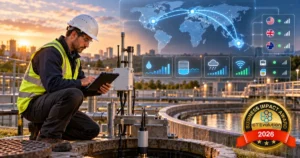
Perhaps the most significant societal impact of advanced displacement sensing is in the domain of structural health monitoring (SHM). Modern bridges, skyscrapers, and tunnels are no longer static objects; they are dynamic systems subjected to the unpredictable forces of nature and human use.
In modern "smart bridge" projects, arrays of high-precision displacement sensors are installed at expansion joints, support bearings, and cable anchorages. These sensors capture data on:
- Thermal Expansion: How the steel or concrete breathes throughout the day.
- Dynamic Loading: The subtle deflection caused by heavy traffic or wind gusts.
- Seismic Shifts: Micro-movements that can precede structural failure.
By feeding this data into a centralized command center, civil engineers can transition from schedule-based inspection—which is both costly and prone to human error—to condition-based maintenance. If a bridge shows a 2% variance in expected displacement after a heavy storm, the system triggers an automatic alert, allowing for immediate, targeted investigation. This data-driven approach has already saved municipalities millions in unnecessary repairs while simultaneously extending the operational lifespan of critical infrastructure.
Digital Twins: The Bridge Between Worlds
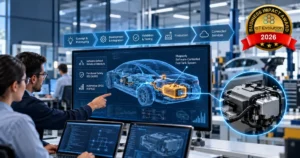
The concept of a "Digital Twin"—a virtual, real-time mirror of a physical asset—has become the gold standard for Industry 4.0. Without the displacement sensor, a digital twin is merely a static 3D model; with it, the twin becomes a living, breathing diagnostic tool.
In a modern manufacturing plant, displacement sensors provide the "pulse" of the production line. By monitoring the exact position of robotic arms or the feed rates of milling machines, these sensors ensure that the digital twin remains perfectly synchronized with its physical counterpart.
Benefits of the Digital Twin Integration:
- Virtual Commissioning: Engineers can simulate changes to production line speed or orientation in the virtual model before implementing them on the physical floor, drastically reducing setup time.
- Anomaly Detection: By comparing the physical movement detected by sensors against the "ideal" movement programmed in the digital twin, the system can instantly identify mechanical wear or sub-optimal performance.
- Predictive Scenario Modeling: Companies can run "what-if" simulations, such as how an increase in machine load will affect long-term structural integrity, using the real-time displacement data as the baseline.
The Shift to Predictive Maintenance
The economic implications of moving from reactive to predictive maintenance are staggering. Traditional "preventative" maintenance often involves replacing parts on a fixed schedule, which leads to the waste of functional components and unnecessary downtime.
Displacement sensors provide the granular data necessary to identify the "signature" of impending failure. For instance, in a large-scale turbine, a microscopic shift in the position of the rotor—detectable only by high-precision displacement sensors—can indicate bearing wear or shaft misalignment long before a failure occurs. By intervening at the moment of deviation rather than at a predetermined calendar date, operators can optimize their maintenance budget, reduce carbon footprints by minimizing spare part consumption, and ensure maximum uptime for the facility.
Industrial Challenges and the Path Forward
Despite the clear benefits, the deployment of advanced sensor arrays is not without complexity. The "Industrialization of Data" brings several challenges:
- Environmental Resilience: Sensors deployed in extreme environments (e.g., steel mills or offshore wind farms) must be hardened against heat, moisture, and electromagnetic interference.
- Data Overload: The sheer volume of data generated by thousands of sensors can overwhelm standard networks. The industry is responding with "Edge Computing," where data is filtered and analyzed at the sensor level, sending only relevant insights to the cloud.
- Cybersecurity: As sensors become connected nodes on a network, they introduce potential vulnerabilities. Securing the data stream from the sensor to the central server is now a top priority for IT and OT (Operational Technology) departments.
Future Horizons: Toward Autonomous Systems
As we look toward the next decade, the role of displacement sensors will evolve from monitoring to acting. We are approaching the age of the "Autonomous Factory," where systems will not only report on their own condition but will also take corrective actions to maintain optimal performance.
In future smart cities, buildings equipped with advanced displacement arrays will autonomously adjust their structural bracing in response to high winds or tremors. In manufacturing, robotic systems will self-adjust their alignment in real time to compensate for tool wear, ensuring that every product manufactured is within microscopic tolerance levels without human intervention.
Conclusion: The Indispensable Link
The displacement sensor has undergone one of the most quiet yet profound evolutions in modern industrial history. By moving from the fringes of measurement to the core of data-driven intelligence, these devices have become the vital links that connect the physical world to the digital realm.
Whether it is ensuring the structural integrity of our bridges, optimizing the efficiency of our manufacturing plants, or enabling the next generation of digital twins, the modern displacement sensor is a cornerstone of innovation. As organizations continue to prioritize automation and sustainability, the demand for high-fidelity, actionable data will only intensify. In this new era, the humble displacement sensor is not just a tool—it is the indispensable foundation upon which the future of industrial intelligence is being built. By turning the simple act of measuring distance into a comprehensive understanding of physical behavior, these sensors are helping us build a safer, more efficient, and more responsive world.