Engineering the Future of Audio: Spotify’s Reinforcement Learning Revolution with TensorFlow

In the highly competitive world of digital music streaming, the difference between a satisfied listener and a churned subscriber often comes down to the quality of the next song recommendation. Spotify, the world’s leading audio streaming platform, has long relied on sophisticated machine learning to curate personalized experiences. However, as user intent becomes more nuanced and listening sessions grow more complex, the company has turned to a more advanced frontier: Reinforcement Learning (RL).
In a recent technical disclosure, a team of Spotify engineers—Surya Kanoria, Joseph Cauteruccio, Federico Tomasi, Kamil Ciosek, Matteo Rinaldi, and Zhenwen Dai—detailed how they successfully implemented an RL-based recommendation framework. By leveraging the TensorFlow ecosystem and specifically the TF-Agents library, the team has bridged the gap between theoretical AI models and the practical, high-stakes reality of real-time music streaming.
The Sequential Nature of Music Consumption
At its core, music recommendation is not a static classification problem; it is a sequential decision-making process. When a user opens Spotify, they are not just looking for a single track; they are looking for a flow, a mood, or a sonic narrative that evolves over the course of an hour.

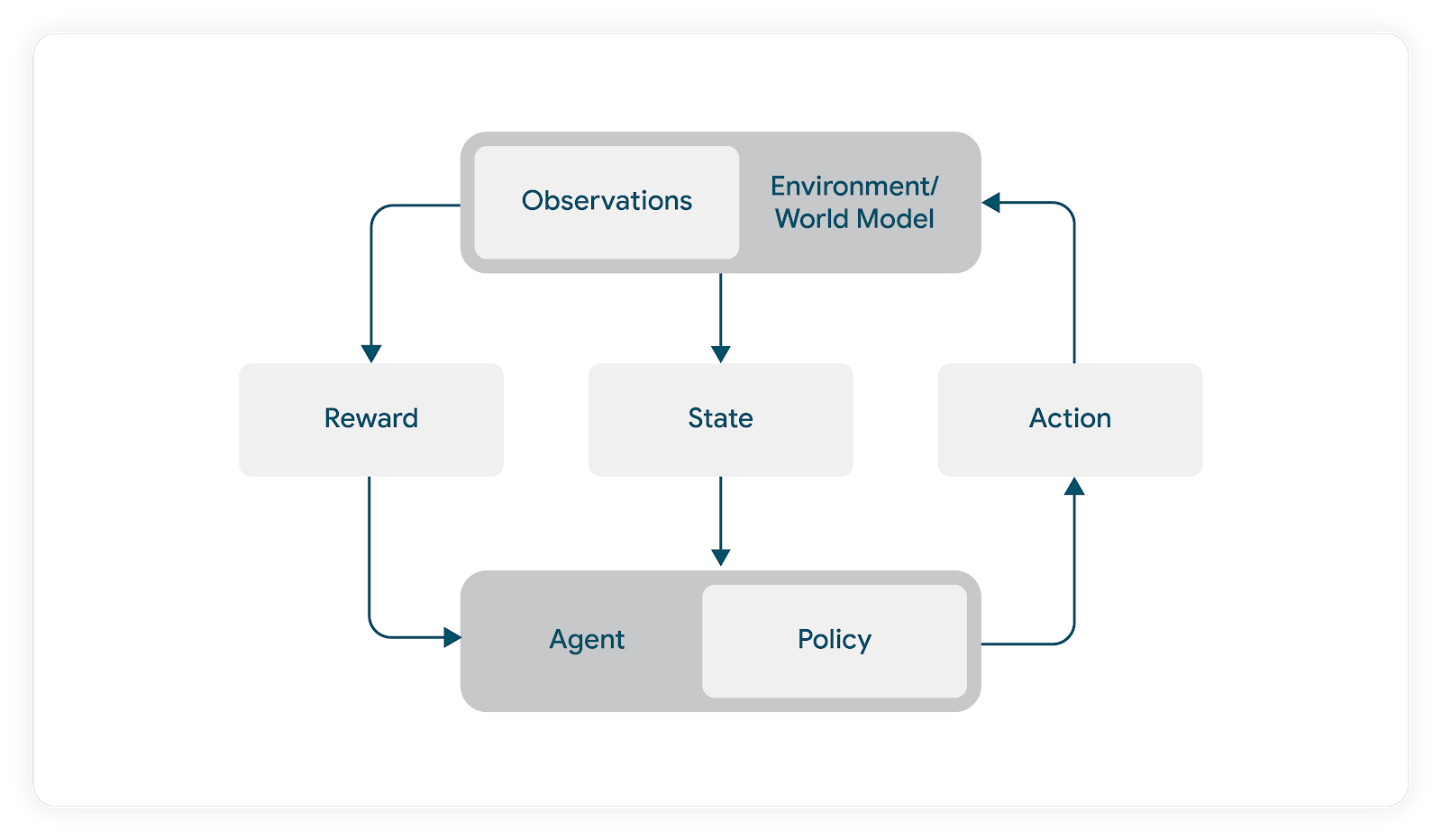
"Many of our music recommendation problems involve providing users with ordered sets of items that satisfy users’ listening preferences and intent at that point in time," the team noted. Traditional recommendation systems often view each interaction in isolation. Spotify’s shift toward RL acknowledges that each song a user skips or repeats changes the context for the subsequent recommendation. By treating the listening session as an "agent-environment" loop, Spotify can optimize for long-term satisfaction rather than short-term clicks.
Chronology of Development: From Concept to Deployment
The journey toward implementing RL at scale was defined by a methodical, multi-phase engineering approach:
1. Library Selection and Infrastructure
Early in the project, the team identified the need for a robust, production-ready RL framework. Spotify already utilized the broader TensorFlow ecosystem (TFX, TensorFlow Serving) for its existing machine learning stack. Consequently, they adopted TF-Agents as their primary library. This decision was strategic: by using a tool native to their production environment, they significantly reduced the friction between experimental code and live deployment.

2. The Simulation Challenge
Training an RL agent directly on real-world users is risky—a "learning" agent might inadvertently serve poor recommendations, leading to user frustration. To mitigate this, the team built a sophisticated offline simulator. This allowed them to train agents in a sandbox where "simulated users" provided feedback based on a pre-trained Keras-based user model.
3. Architecture and Abstraction
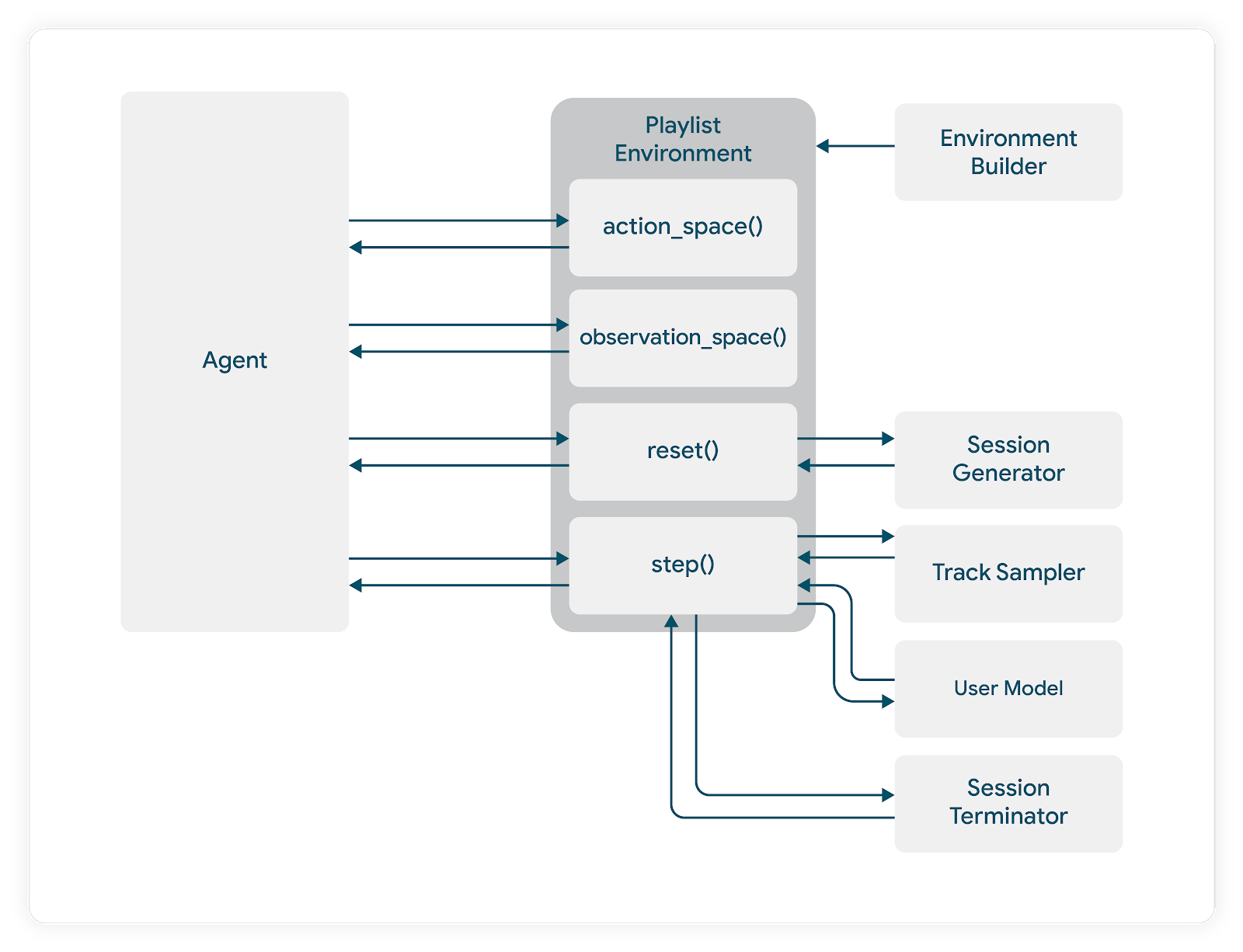
The team developed a modular environment architecture based on TF-Agents primitives. They created specific abstractions for _user_model, _track_sampler, and _episode_sampler. By separating the logic for "how a user reacts" from "how the agent suggests a song," they created a flexible system capable of simulating diverse listening scenarios, from high-tempo workout mixes to chilled-out study playlists.
4. Innovation: The Action-Head DQN (AH-DQN)
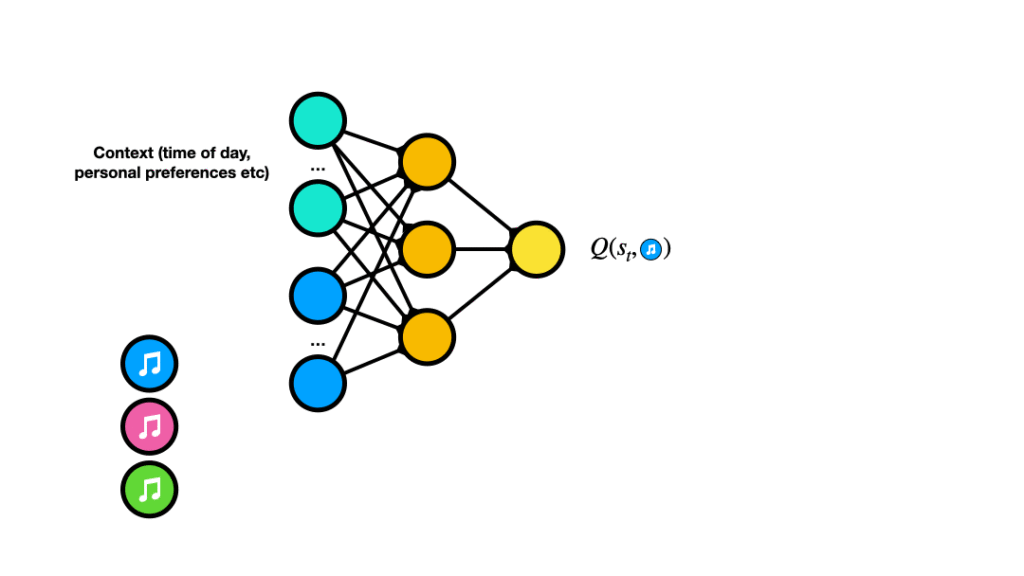
Standard RL algorithms often struggle with the combinatorial complexity of recommending entire playlists. Spotify engineered a custom solution called the "Action-Head DQN." Unlike traditional models that might suggest a single item, the AH-DQN iterates through potential tracks, calculating Q-values for each, and iteratively building a slate of recommendations until the playlist is complete.
Supporting Data: Validating the "Sim-to-Real" Gap
One of the most critical questions in model-based RL is the "sim-to-real" gap—the degree to which a model trained in a simulation performs when exposed to the chaotic variables of the real world.
The Spotify team conducted rigorous validation to ensure that their offline metrics were meaningful. By comparing various policies—ranging from simple heuristics to advanced RL models—they measured their performance in the simulation against the actual rewards observed in live A/B tests. The results were compelling: the data showed a strong, positive correlation between simulated performance and online results. This finding was a major milestone, proving that the offline environment was a reliable proxy for user behavior.
The team’s research, later presented at KDD 2023, demonstrated that their RL-driven approach could consistently outperform legacy recommendation heuristics. This validation allowed Spotify to confidently roll out RL models into broader production pipelines, moving beyond experimental "black boxes" into reliable, performance-driven audio experiences.

Official Perspectives and Technical Philosophies
The Spotify team emphasizes that the success of this project was as much about architecture as it was about the algorithms themselves. By adhering to a strict modular design, they ensured that their system could handle the "ever-changing" nature of the content pool.
"The flexibility of the TF-Agents library, coupled with the broader advantages of TensorFlow and its ecosystem, allowed us to cleanly design a robust and extendable offline Spotify simulator," the authors stated in their technical report.
The team also expressed gratitude toward the open-source community, specifically the TensorFlow Agents team, whose collaborative support enabled the creation of the underlying infrastructure. This highlights a growing trend in the tech industry: major platforms are increasingly relying on open-source frameworks to solve proprietary, large-scale problems, rather than building entirely custom, siloed stacks.

Implications for the Future of Recommendation Systems
The implementation of RL at Spotify has profound implications for the future of digital media:
1. Personalized "Flow"
As these RL models mature, the "passive" listening experience will become increasingly "active." Rather than simply finding songs a user might like, the algorithm will begin to understand the arc of a user’s day, subtly adjusting the tone and tempo of music to match the user’s trajectory, from morning focus to evening relaxation.
2. Handling Complex Constraints
The AH-DQN approach solves a major limitation in recommendation systems: the ability to handle large, dynamic action spaces. In traditional systems, adding a new song to the catalog might require massive re-training. With an RL-based agent that selects items based on state-space analysis, the system becomes more adaptive to new releases and changing trends without needing a full model rebuild.
3. Ethical Training
The shift toward model-based RL—using simulations to "pre-train" agents—is a significant step forward for AI safety. By allowing agents to make their "mistakes" in a virtual environment rather than on actual users, companies can refine their algorithms to a high degree of precision, ensuring that the final, live-deployed version is already optimized for user satisfaction.
4. A New Standard for Engineering
Spotify’s success serves as a blueprint for other companies struggling to integrate RL into complex, user-facing products. The emphasis on "offline-first" development and the use of modular, scalable architecture provides a roadmap for engineers in fields as diverse as e-commerce, advertising, and personalized content delivery.
As we look toward the future, the work done by the Spotify team stands as a testament to the power of combining deep reinforcement learning with robust, scalable software engineering. By turning the chaotic, subjective experience of music listening into a structured, sequential optimization problem, Spotify is not just suggesting the next song—they are curating the soundtrack of the modern digital life.