Shadow Infrastructure: The Dutch Crackdown on Pro-Russian Cyber Operations


In a decisive strike against the clandestine digital networks supporting Russian state-sponsored aggression, Dutch authorities have dismantled a key hosting operation suspected of facilitating cyberattacks and disinformation campaigns across the European Union. The Financial Intelligence and Investigation Service (FIOD) confirmed the arrests of two men—a 57-year-old resident of Amsterdam and a 39-year-old from The Hague—accused of violating international sanctions by providing critical infrastructure to entities involved in hybrid warfare.
The operation, which involved the seizure of more than 800 servers, marks a significant escalation in the European response to "bulletproof" hosting services that have served as the backbone for Russian intelligence agencies. The arrests center on the nexus between two companies: MIRhosting and the enigmatic WorkTitans BV, both of which have been implicated in providing the technical staging grounds for massive Distributed Denial-of-Service (DDoS) attacks and malicious influence operations targeting Western democratic processes.
The Anatomy of the Network: A Chronology of Evasion
The collapse of this infrastructure is the culmination of a multi-year investigation that began to gain momentum in the wake of Russia’s 2022 invasion of Ukraine.
2022–2024: The Rise of Stark Industries Solutions
Just two weeks before the full-scale invasion of Ukraine, an entity known as Stark Industries Solutions emerged, quickly establishing itself as a preferred provider for Russian-backed hacking collectives. By early 2024, security researchers, including investigations by KrebsOnSecurity, identified Stark as a "heavy hitter" in the cyber-mercenary space. It offered robust proxy and anonymity services, allowing state-linked actors to mask their origins while bombarding European targets with digital traffic.
2025: Sanctions and Shell Games
In May 2025, the European Union imposed sweeping sanctions on Moldovan brothers Ivan and Yuri Neculiti, the figures behind the hosting provider PQHosting, which had acted as a primary gateway for Stark Industries. Recognizing the tightening net, the network underwent a rapid reconfiguration. Before the sanctions were officially finalized, assets linked to Stark were transferred to a new entity: the[.]hosting, a brand under the control of the Dutch firm WorkTitans BV.
This pivot allowed the infrastructure to remain online, utilizing the connectivity provided by MIRhosting—a Netherlands-based firm operated by Andrey Nesterenko. By shifting the digital footprint into the heart of the European Union, the operators attempted to leverage the legal protections of a Dutch jurisdiction to shield their activities from the very sanctions designed to cripple them.
2026: The FIOD Raid
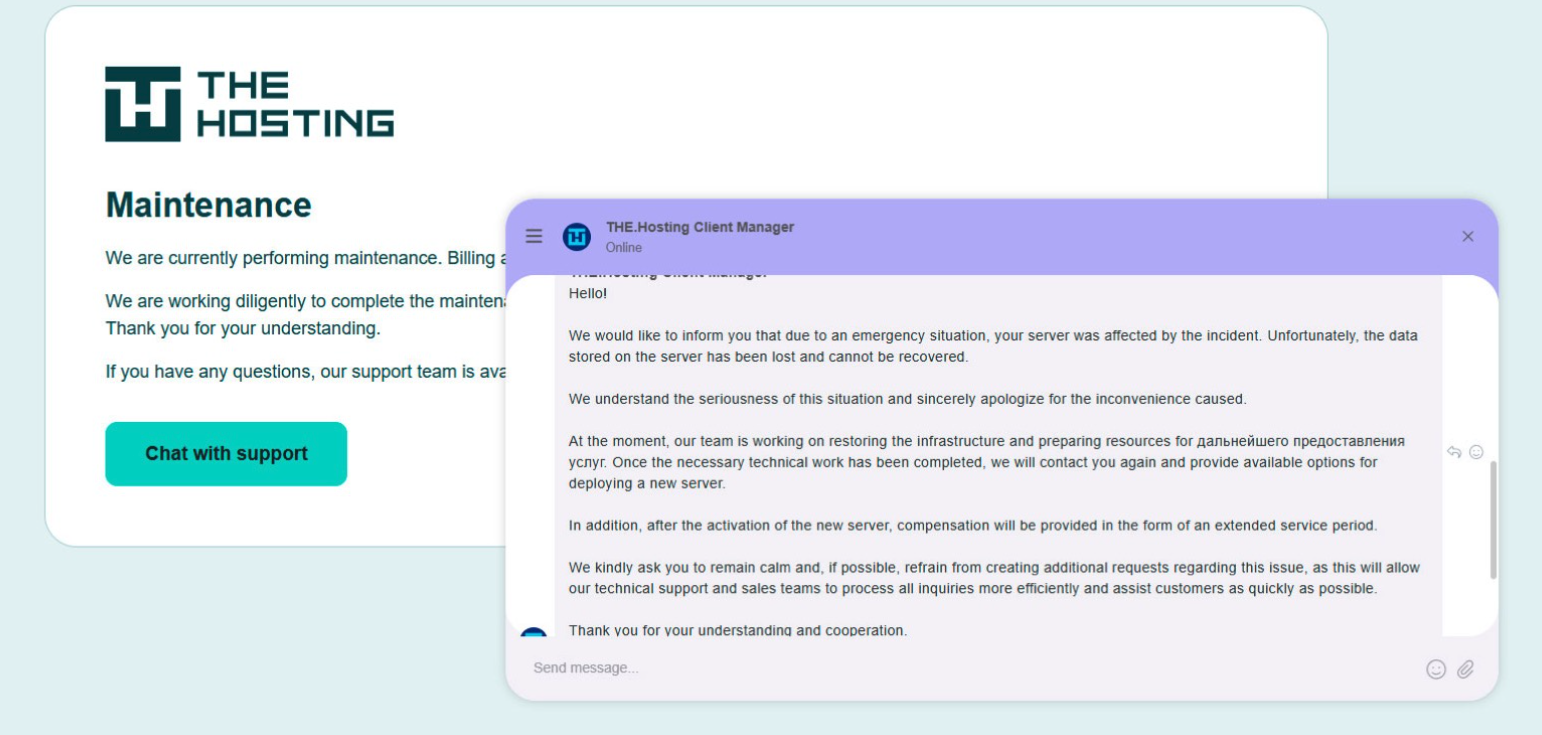
The charade ended on May 18, 2026, when FIOD investigators executed warrants across the Netherlands. The raids targeted three business locations in Enschede and Almere, alongside two data centers in Dronten and Schiphol-Rijk. The seizure of 800 servers effectively shuttered the[.]hosting, leaving thousands of clients with an automated notification: their data was lost, and recovery was impossible.
The Players: From Piano Prodigy to Shadow Operator
The investigation into the suspects reveals a complex web of professional backgrounds and overlapping corporate interests.
Andrey Nesterenko, the 39-year-old founder of MIRhosting, presents a stark contrast to the typical profile of a cybercriminal. A former piano prodigy from Nizhny Novgorod, Nesterenko built a career in the hosting industry that spans two decades. His company, Innovation IT Solutions Corp., notably hosted stopgeorgia[.]ru in 2008—a site that served as a hub for hacktivists during the Russian-Georgian conflict. This event is widely cited by military historians as the first instance where a cyber offensive was synchronized with kinetic military action.
The second suspect, 57-year-old Youssef Zinad, maintained a significantly lower profile. Despite his attempts to scrub his digital footprint—deleting his LinkedIn profile and avoiding direct contact with journalists—investigators found evidence linking him to the inner workings of MIRhosting. While Nesterenko attempted to characterize Zinad’s role as that of an external consultant, internal documentation, including email aliases and official registrations, suggests a much deeper, integrated involvement in the management of the Dutch infrastructure.
Supporting Data: The Digital Fingerprints of Disruption
The evidence against the suspects is not merely circumstantial. Reports from the Dutch daily de Volkskrant indicate that WorkTitans and MIRhosting were the most active networks identified in a series of pro-Russian attacks against Danish government institutions in November 2025.
The timing of these attacks—coinciding with Denmark’s municipal elections—highlights the dual-use nature of the infrastructure. These servers were not merely hosting websites; they were active participants in hybrid warfare, designed to destabilize the democratic institutions of EU member states. Analysis of network traffic during this period revealed a distinct pattern of malicious activity originating from IP blocks controlled by the suspects, providing the "smoking gun" that eventually prompted the Dutch financial crime agency to move.
Official Responses and Denials
Following the arrests, the atmosphere remains tense as the accused attempt to mitigate the fallout. MIRhosting issued a formal statement on LinkedIn, claiming that its internal investigation revealed no evidence of its infrastructure being used to influence the Danish elections.
"No anomalies or spikes were observed in our network traffic during the period mentioned in the publication," the company stated, emphasizing that they had received no prior abuse reports or official complaints. Nesterenko, speaking through his legal representatives, maintained his innocence, claiming that the transfer of assets to WorkTitans was a standard business transaction, not a maneuver to evade sanctions. He characterized the closure of his Dutch operations as a "harmful act" that unfairly punishes legitimate clients who had no involvement in state-sponsored cyber espionage.

However, these denials clash with the findings of investigators and the persistent trail of evidence showing that these servers were the primary staging grounds for high-profile DDoS campaigns.
Implications for Global Cybersecurity
The arrest of Nesterenko and Zinad signals a shift in how Western nations handle the intersection of private hosting and state-sponsored cybercrime. For years, "bulletproof" hosters operated in a gray area, exploiting jurisdictional gaps to provide anonymity to those who would see the West destabilized.
1. The End of the "Safe Haven"
The Dutch authorities have demonstrated that operating within the EU provides no immunity if those services are used to facilitate international crimes. The use of financial intelligence agencies (like the FIOD) to pursue IT infrastructure owners is a growing trend. By treating hosting as a "financial resource" subject to sanctions law, rather than just a technical service, governments are finding new ways to hold individuals accountable.
2. Collateral Damage and Data Sovereignty
The total loss of 800 servers underscores the fragility of digital reliance. Businesses and individuals using these hosting providers for legitimate purposes have seen their data vaporized overnight. This serves as a cautionary tale for the industry: the vetting of upstream providers is no longer just a business concern; it is a critical security imperative.
3. The Future of Hybrid Warfare
As the dust settles, the intelligence community will likely focus on the downstream effects of this takedown. By cutting off the "Iron Hammer" of the cloud—as Stark Industries was once called—the EU has forced Russian intelligence to rebuild its infrastructure from scratch. While this does not end the threat, it significantly raises the cost of entry for those seeking to disrupt European stability.
As the legal proceedings in the Netherlands continue, the case of MIRhosting and WorkTitans will likely serve as a blueprint for future prosecutions. It is a reminder that in the modern era of hybrid warfare, the most dangerous weapon is not always a missile, but the server rack hidden in a quiet industrial park, managed by individuals who thought they were beyond the reach of the law.