The Integration Imperative: Solving the "Interface Crisis" in End-to-End Continuous Bioprocessing
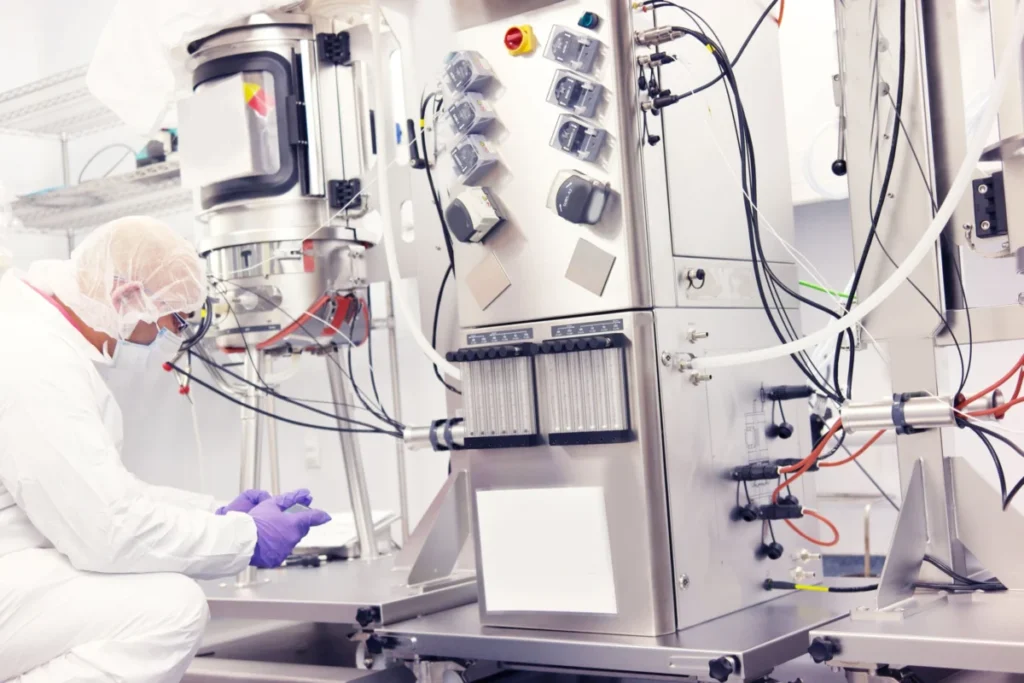
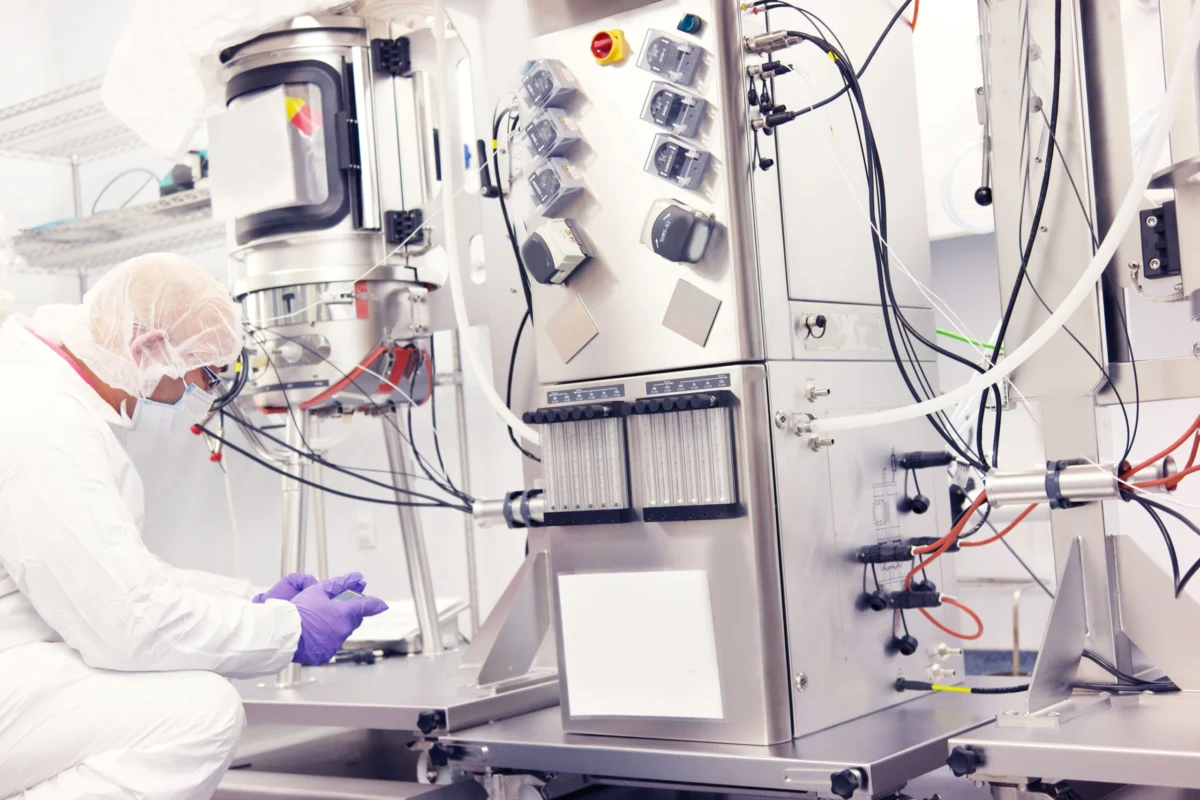
For decades, the biopharmaceutical industry has been tantalized by the promise of continuous manufacturing. The vision is compelling: a streamlined, closed-loop production line that produces therapeutic proteins or monoclonal antibodies in a steady, uninterrupted flow, drastically reducing facility footprints, lowering capital expenditure, and enhancing product consistency.
However, as manufacturers transition from traditional batch-fed "vat" processes to hybrid or fully continuous models, they are encountering a stubborn architectural hurdle. The industry has become adept at optimizing individual unit operations—improving the efficiency of perfusion bioreactors or the throughput of chromatography columns—but it has largely neglected the "seams" between these units. This systemic oversight has resulted in an imbalance that threatens the viability of true end-to-end continuous processing.
The Interface Mismatch: Why Continuity Remains Elusive
The primary barrier to achieving a seamless, end-to-end continuous manufacturing train is not the lack of advanced unit operations, but the failure to harmonize them. As Moo Sun Hong, PhD, an assistant professor at Seoul National University, notes, the industry has successfully innovated in isolation.
"The primary barrier to end-to-end continuous bioprocessing is often not the lack of continuous unit operations themselves," says Hong. "The larger challenge is integrating technologies such as perfusion culture, multicolumn chromatography, continuous viral inactivation, and continuous filtration into a coordinated manufacturing train."
The disconnect stems from fundamental differences in process dynamics. Upstream perfusion culture, by its nature, produces a relatively steady, constant harvest stream. In contrast, many downstream purification technologies operate on a cyclic basis. This discrepancy in "rhythm" creates flow-rate and residence-time mismatches. When these two disparate systems meet, the immediate engineering response is often the insertion of surge tanks or hold steps—the very components that continuous processing is designed to eliminate.
Chronology of a Paradigm Shift
The journey toward continuous biomanufacturing has been characterized by three distinct phases:
- The Batch Era (Pre-2010): The industry relied almost exclusively on large-scale stainless-steel fed-batch bioreactors. While reliable, these processes were defined by long cycle times, high risks of batch failure, and the need for massive "clean-in-place" and "steam-in-place" infrastructure.
- The Hybrid Transition (2010–2020): Manufacturers began experimenting with continuous unit operations—most notably perfusion bioreactors and periodic counter-current chromatography. However, these were often implemented as "islands of continuity" within a larger batch framework.
- The Systems Integration Era (2020–Present): The current focus has shifted from the unit to the system. Researchers are now analyzing the interfaces between these units, attempting to move toward a "near steady-state" operation where the entire process flows from cell culture to final drug substance without intermediate holding tanks.
Supporting Data: Risks and Rewards
Recent research, including a comprehensive review co-authored by Dr. Hong, has rigorously compared batch and continuous manufacturing across ten critical performance metrics. The findings present a nuanced reality for bioprocess engineers.
While continuous processing offers significant advantages—primarily through process intensification—it introduces a new, complex profile of vulnerabilities. The study identifies two major technical challenges:
- Measurement Latency: In a continuous system, any delay in analytical feedback can lead to the propagation of errors throughout the entire train.
- Residence Time Distribution (RTD) Uncertainty: Understanding exactly how long a molecule stays within a specific stage of the process is vital for quality control. In a batch process, residence time is uniform. In a continuous process, the variability in flow can lead to a "spread" of residence times, complicating the definition of product quality and regulatory compliance.
Furthermore, the data suggests that the benefits of continuous manufacturing are not intrinsic to the units themselves but to the coordination of the units. Without sophisticated interface engineering, the "efficiency" gained in the bioreactor is often lost in the bottlenecks of the downstream purification train.
Official Perspectives and the Engineering Solution
Dr. Hong and his colleagues emphasize that the path forward requires a departure from "siloed" engineering. "Our review suggests that unresolved interface mismatches between unit operations, particularly between steady upstream harvest and cyclic downstream purification, remain the dominant obstacle," Hong explains.
To solve this, the industry must pivot toward "Interface Engineering." This discipline focuses on:
- Synchronization of Cycle Times: Aligning the "beat" of the downstream purification steps with the steady output of the upstream culture.
- Flow-Rate Matching: Implementing buffer management and flow-control strategies that allow for seamless transitions without the need for manual hold steps.
- Real-time Monitoring: Moving away from offline quality testing toward an architecture where the process itself monitors its own health.
The Role of PAT and Digital Twins
As the industry matures, the backbone of the integrated continuous manufacturing platform will be Process Analytical Technology (PAT) and digital twin technology.
PAT provides the "eyes" of the system. By employing sensors that provide real-time visibility into pH, conductivity, protein concentration, and impurity profiles, manufacturers can respond to process variances in milliseconds rather than hours. This immediate feedback loop is critical for maintaining the stability of a continuous train.
Digital twins—virtual, mathematical models of the physical process—act as the "brain." These models allow engineers to simulate process shifts, predict the outcome of specific flow rates, and conduct fault detection before a deviation occurs in the physical plant.
"Additional automation and control architectures must be included," the researchers advise, "that connect sensors and PLC/SCADA systems, as well as process data repositories, control loops, and supervisory models across the integrated process train."
Implications for the Future of Biomanufacturing
The implications of successfully achieving end-to-end continuous manufacturing are profound. For biopharmaceutical companies, it means a smaller, more flexible facility footprint, reduced inventories, and a faster time-to-market. For patients, it potentially means more stable drug supplies and a reduction in the costs associated with manufacturing failures.
However, the transition requires a change in corporate and engineering culture. Organizations must stop viewing their production lines as a series of distinct departments (e.g., "Upstream" vs. "Downstream") and start managing the manufacturing platform as a single, integrated system.
The "systems approach" recommended by Hong entails evaluating transitions based on integrated techno-economic, sustainability, and operational performance metrics rather than isolated unit-operation productivity. By measuring the success of the entire line—rather than the yield of a single column or bioreactor—manufacturers can incentivize the cross-departmental collaboration necessary to design efficient interfaces.
Conclusion: A Holistic Vision
The challenge facing the biopharmaceutical industry is no longer about the technical capability of individual machines; the market is currently saturated with high-performance bioreactors, advanced chromatography systems, and cutting-edge filtration units.
The real challenge, as Dr. Hong succinctly states, "is not simply making individual operations continuous, but making the entire manufacturing platform function as an integrated system."
The future of drug production lies in the spaces between the units. By mastering interface engineering, investing in the backbone of PAT and digital twins, and adopting a holistic systems approach, the industry is poised to move past the bottlenecks that have long constrained continuous bioprocessing. The shift from batch to continuous is not merely a technological upgrade—it is an architectural revolution that, when fully realized, will redefine the parameters of pharmaceutical production for the next century.