Amazon’s Generative AI Evolution: Introducing Bedrock Managed Knowledge Base
In the rapidly shifting landscape of enterprise artificial intelligence, the divide between "experimental" and "production-ready" is defined by data integration. Today, Amazon Web Services (AWS) announced a significant leap in bridging that gap with the launch of Amazon Bedrock Managed Knowledge Base. Designed to accelerate the deployment of agentic AI, this new suite of capabilities aims to eliminate the heavy lifting associated with building and maintaining Retrieval-Augmented Generation (RAG) pipelines.
For organizations struggling to connect proprietary data to generative models, this release promises a transition from months of custom infrastructure development to a matter of minutes. By abstracting the complexities of data ingestion, retrieval, and orchestration, AWS is signaling a shift toward an "infrastructure-as-code" philosophy for generative AI.
Main Facts: The Core of Managed Knowledge Base
Amazon Bedrock Managed Knowledge Base is not merely a tool; it is a foundational primitive for agentic AI. It addresses the "undifferentiated heavy lifting" that has historically plagued developers: the manual management of storage, embeddings, re-ranking, and the brittle nature of foundation model integration.
The Technical Pillars
The service provides a comprehensive, managed environment that includes:
- Automated Pipeline Management: It abstracts the entire RAG lifecycle, from storage to retrieval.
- Smart Parsing: A sophisticated ingestion engine that automatically determines the best parsing strategy for diverse data types, eliminating the need for manual configuration.
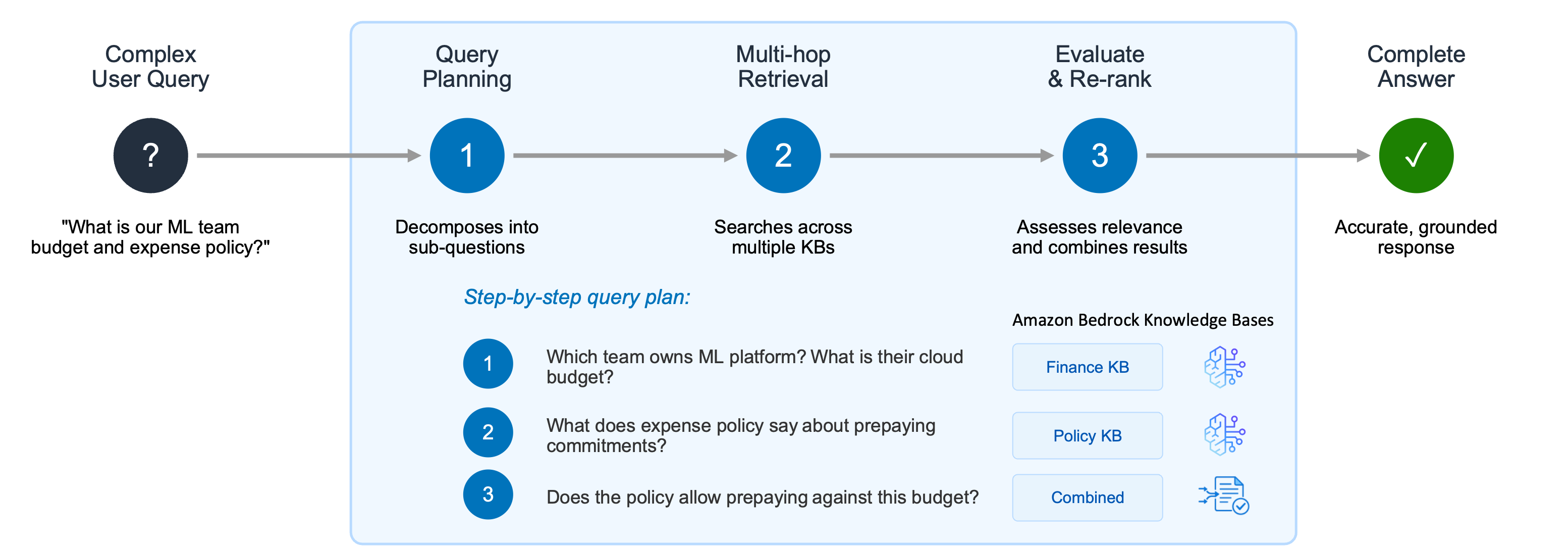
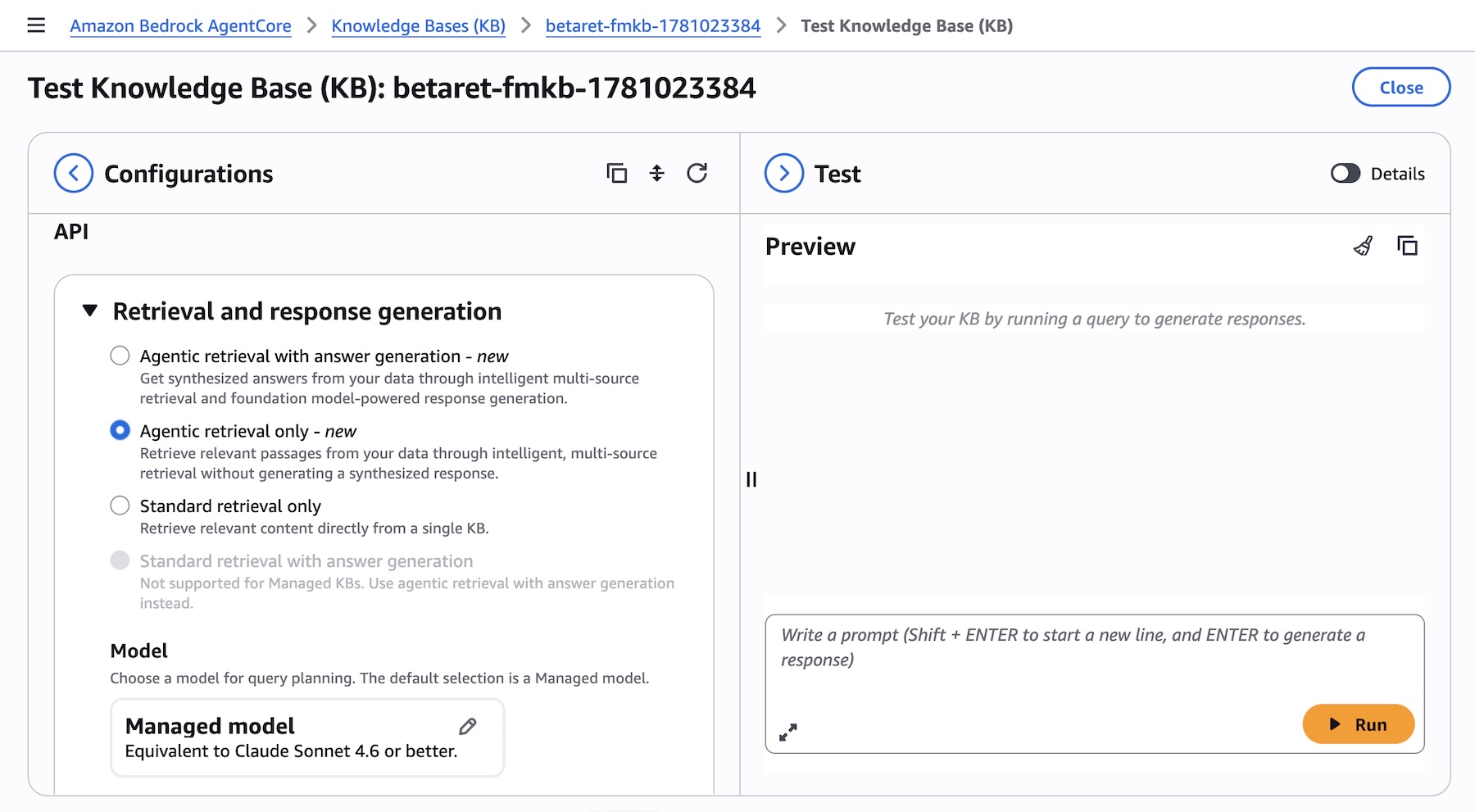
- Agentic Retriever: An intelligent orchestration layer that decomposes complex, multi-step queries into a logical plan, performing recursive retrieval to provide grounded, accurate answers.
- MCP Integration: By utilizing the Model Context Protocol (MCP), the service ensures that knowledge bases are discoverable and usable across a vast ecosystem of third-party frameworks, including LangChain, CrewAI, and LlamaIndex.
By shifting the burden of infrastructure management to AWS, developers can focus on the business logic of their agents rather than the technical debt of maintaining an evolving RAG stack.
Chronology: From Concept to Production
The evolution toward Managed Knowledge Bases represents the culmination of a year of intensive development within the Amazon Bedrock ecosystem.

- Q1 2026: Internal testing and refinement of the Agentic Retriever logic. AWS engineers focused on solving the "multi-hop" query problem, where standard RAG models often failed to connect related data points across disconnected documents.
- Early June 2026: Preliminary rollout of the Bedrock AgentCore Gateway, which laid the groundwork for native target integration.
- June 15, 2026: Finalization of the integration between the Managed Knowledge Base and the AgentCore Gateway, enabling the use of the Model Context Protocol (MCP).
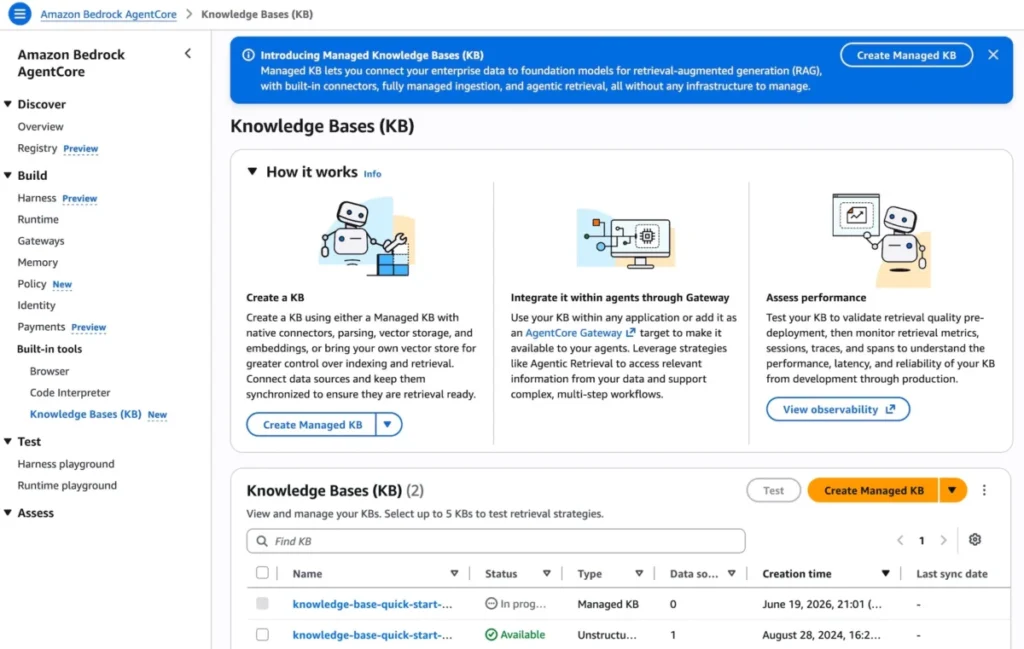
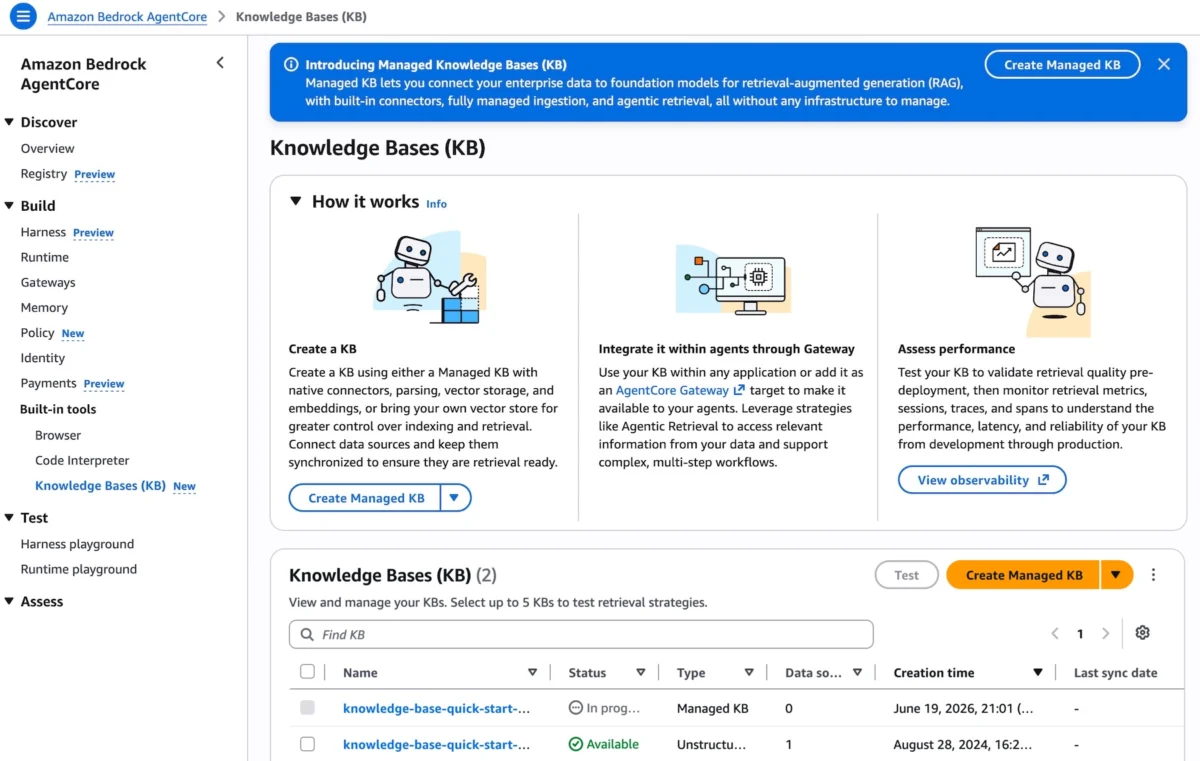
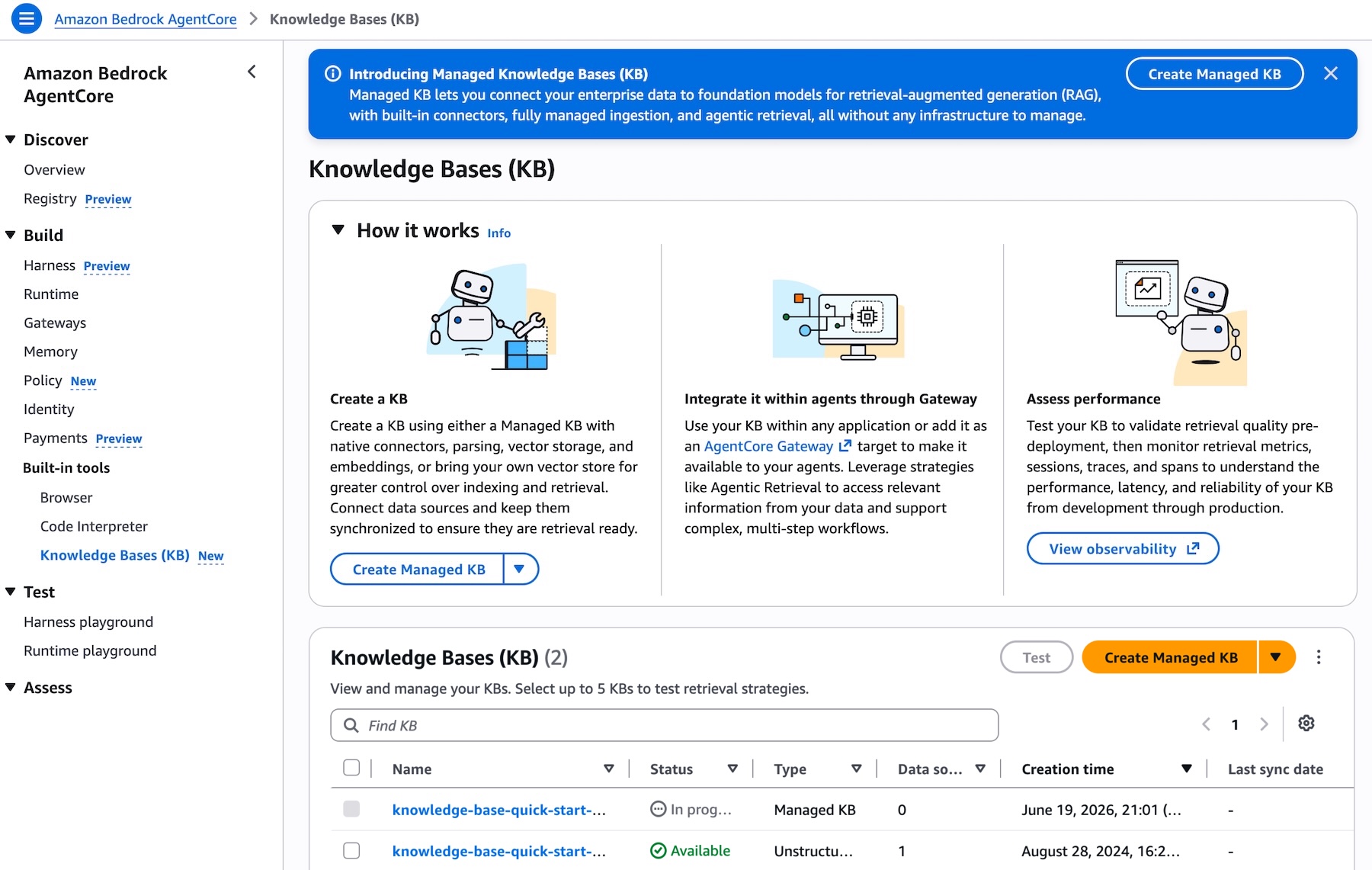
- June 19, 2026: Official public launch. Following the announcement, AWS updated documentation and provided the final user interface screenshots, ensuring parity between the console experience and the developer workflow.
Supporting Data: Why "Smart" Matters
Industry analysts have noted that the primary bottleneck in enterprise AI adoption is not the quality of the Large Language Model (LLM), but the quality of the context provided to it.
The Problem of Complex Queries
Consider the standard enterprise scenario: an employee asks, "What is our cloud infrastructure budget for the ML team, and does the policy allow for annual prepayments?" In a traditional system, a single-shot retrieval often captures only half of this information—usually the budget figures.
The Agentic Retriever solves this through systematic decomposition:
- Step One: Identify team ownership and budget constraints.
- Step Two: Locate the specific clause in the expense policy.
- Step Three: Synthesize the two findings to provide a "Yes/No" recommendation based on corporate governance.
Internal AWS benchmarks suggest that this multi-hop reasoning approach significantly reduces the "hallucination rate" of generative agents by ensuring that every assertion made by the model is backed by a verifiable step-by-step audit trail from the source data.
Flexibility and Cost-Efficiency
Unlike proprietary "black box" platforms that force users into a single model architecture, Amazon Bedrock Managed Knowledge Base maintains a modular design. Developers retain the freedom to:
- Swap embedding models as more efficient or accurate options emerge.
- Implement custom re-ranking strategies without re-architecting the data ingestion pipeline.
- Scale costs according to usage, utilizing the "pay-for-what-you-use" model that prevents the bloat associated with idle server capacity.
Implications: A New Era for Agentic Search
The introduction of Managed Knowledge Base has profound implications for the enterprise AI market, particularly regarding how companies build "agents."
Eliminating Tool Fatigue
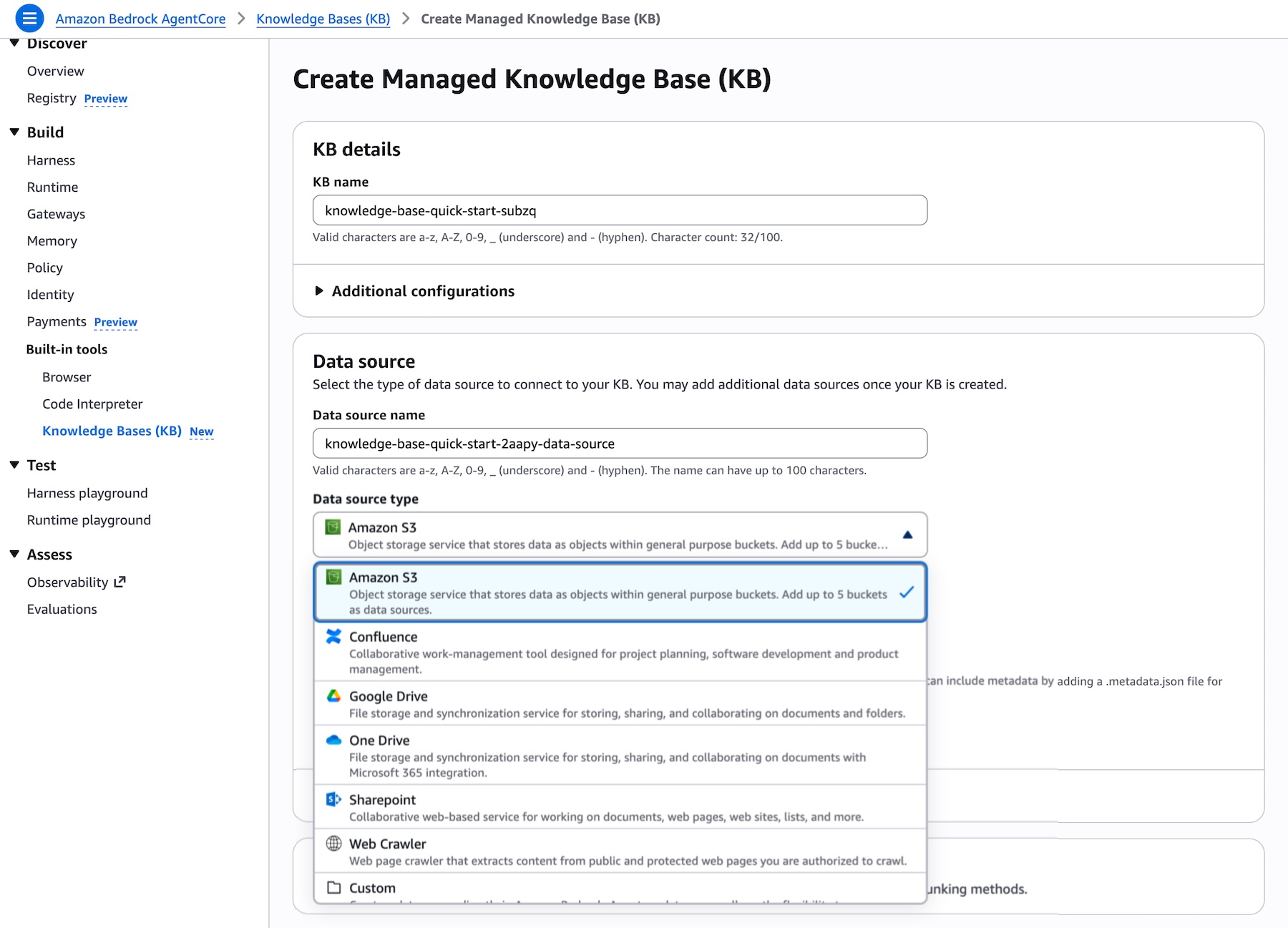
Prior to this release, developers had to build custom "connectors" for each data source (SharePoint, Google Drive, Confluence, etc.). With the new managed connectors, this process is reduced to a dropdown selection in the AWS console. This reduces the time-to-market for AI-powered internal search engines from months to days.
Democratizing AI Infrastructure
By exposing the Managed Knowledge Base through the Model Context Protocol (MCP), AWS is effectively turning its infrastructure into a universal utility. Whether a team uses Strands Agents, LangGraph, or LlamaIndex, the Bedrock Managed Knowledge Base acts as a plug-and-play source of truth. This move minimizes vendor lock-in at the application layer, allowing developers to use their preferred open-source frameworks while leveraging AWS’s robust, secure data ingestion capabilities.
Governance and Observability
For enterprise CTOs, the most critical aspect of this release is likely the AgentCore Observability dashboard. In a regulated industry, knowing why an AI provided a specific answer is just as important as the answer itself. The integration provides built-in role-based permissions, ensuring that sensitive data is only accessible to authorized agents and that every query is logged for compliance audits.
Official Perspective and Getting Started
Daniel Abib, a lead contributor to the Bedrock ecosystem, emphasized that the goal of this release is to remove the "undifferentiated work" that holds back innovation. "We want developers to focus on the ‘what’ and ‘why’ of their AI applications, not the ‘how’ of their data plumbing," Abib stated during the launch.
How to Begin
For organizations looking to integrate, the path is straightforward:
- Console Access: Log in to the Amazon Bedrock or AgentCore console.
- Creation: Navigate to "Knowledge Bases" and select "Create Managed KB."
- Integration: Connect data sources (S3, SharePoint, Google Drive, etc.) via the native dropdown connectors.
- Deployment: Use the AgentCore Gateway to expose the knowledge base as a tool for existing or new agents.
The service is available immediately across multiple global regions, including US East, US West, and key European and Asia Pacific hubs. AWS has also ensured that the service fits within the AWS Free Tier, allowing developers to experiment with the technology without immediate capital expenditure.
Conclusion: The Future is Agentic
As we look toward the latter half of 2026, the industry is moving away from simple chatbots toward autonomous agents capable of performing work. The Amazon Bedrock Managed Knowledge Base provides the necessary infrastructure to make these agents reliable, accurate, and secure. By lowering the barrier to entry, AWS is likely to accelerate the adoption of generative AI across sectors that were previously sidelined by the technical complexity of building custom RAG pipelines.
For those eager to dive deeper, the Bedrock Knowledge Bases Developer Guide remains the definitive resource for implementation best practices, while the AgentCore open-source repository offers the necessary tools for developers building within the MCP ecosystem.