Resurrecting the "Itanic": Developers Breathe New Life into Intel’s Fabled Itanium Architecture
Introduction
In the annals of computing history, few projects have captured the imagination and then the derision quite like Intel’s Itanium architecture. Conceived as the revolutionary successor to the ubiquitous x86, it instead became synonymous with ambitious failure, earning the moniker "Itanic" in the tech press. Despite its quiet end-of-life in 2020, the complex and enigmatic IA-64 architecture continues to fascinate a niche community of developers and retro-computing enthusiasts. Now, a groundbreaking instruction-set translator, dubbed SKI, is emerging from the efforts of Yufeng Gao and gdwnldsKSC, promising to open a window into this pivotal, albeit ill-fated, chapter of processor design. This alpha-stage project, currently version 0.1, represents a significant technical achievement, offering a tantalizing glimpse of a world where Itanium might have thrived, even if only in emulation.
Main Facts: A Digital Resurrection of a Fallen Giant
The "System for Itanium" (SKI) instruction-set translator is an ambitious open-source endeavor aimed at emulating Intel’s IA-64 architecture, more commonly known as Itanium. Developed by Yufeng Gao and gdwnldsKSC, this project seeks to make the notoriously complex VLIW (Very Long Instruction Word) architecture accessible to modern hardware, albeit in its very nascent stages.
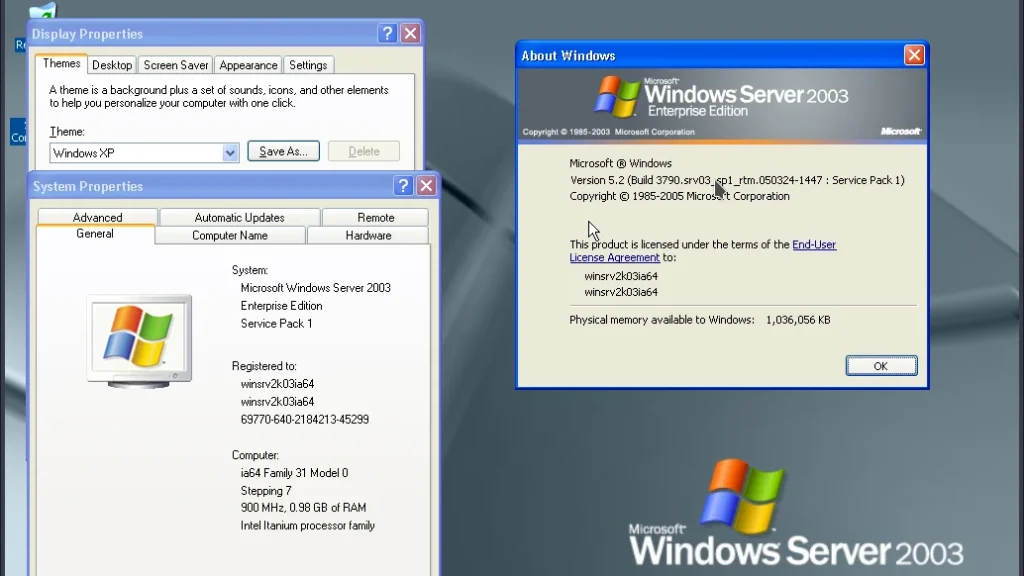
At present, SKI is a highly experimental alpha release, version 0.1, reflecting the formidable challenges inherent in emulating such a unique and intricate processor. Despite its early development status, the project has already demonstrated remarkable progress. For instance, it successfully boots Windows Server 2003 and Windows XP-64, two operating systems that once represented a segment of Itanium’s targeted market. Furthermore, it can achieve a functional shell with Gentoo Linux, provided users stick to Kernel 6.6 or older, indicating a degree of compatibility with contemporary open-source environments.
However, the journey is far from complete. Critically, two operating systems that defined Itanium’s limited market success – HP-UX and OpenVMS – are not yet bootable. This presents a poignant irony, as Itanium’s primary legacy lies in its ability to secure these bespoke Unix and VMS systems, thereby replacing the proprietary architectures developed by Hewlett-Packard (HP) and Digital Equipment Corporation (DEC).
Performance-wise, SKI is, understandably, not a speed demon. Running on modern Ryzen 5000 series hardware, the emulated Itanium environment delivers speeds comparable to a 486-era processor. This stark performance differential underscores the inherent difficulties in translating and executing IA-64’s complex VLIW instructions dynamically on an x86-64 host. The original Itanium architecture was designed for compilers to extract explicit instruction-level parallelism, a task that becomes exponentially harder and slower when attempting to emulate in real-time without the benefit of a dedicated hardware scheduler.
The developers’ motivation appears to stem more from a deep technical curiosity and the sheer challenge of the undertaking rather than a nostalgic yearning for obsolete server hardware. Intel’s Itanium, with its Explicitly Parallel Instruction Computing (EPIC) paradigm, was famously difficult to program for, particularly in optimizing compilers to fully leverage its parallelism. To successfully emulate such an architecture, even at an early stage, is a testament to the developers’ skill and perseverance. This project not only serves as a technical marvel but also plays a crucial role in preserving a significant, if controversial, piece of computing history, potentially paving the way for Itanium to join the ranks of other emulated systems in virtual museums.
Chronology: The Rise, Fall, and Digital Rebirth of Itanium
To fully appreciate the significance of the SKI project, it is essential to contextualize it within the tumultuous history of Intel’s Itanium architecture. What began as a grand vision for the future of computing ultimately transformed into a cautionary tale of architectural ambition clashing with market realities.
The Dawn of a Dream: Intel’s Vision for IA-64 (Late 1990s – Early 2000s)
The story of Itanium begins in the mid-1990s, born from a strategic alliance between Intel and Hewlett-Packard. Both companies recognized the looming limitations of the traditional CISC (Complex Instruction Set Computing) x86 architecture, particularly in handling the demanding workloads of high-performance servers and workstations. The solution, they believed, lay in a radical departure: the Explicitly Parallel Instruction Computing (EPIC) architecture, implemented in the IA-64 instruction set.
Intel officially announced the IA-64 architecture in 1997, positioning it as the next evolutionary step beyond x86. The core philosophy behind EPIC was to shift the burden of instruction scheduling and parallelism detection from the hardware (which x86 relied on heavily with techniques like out-of-order execution) to the compiler. Itanium processors would execute "very long instruction words" (VLIW), each containing multiple independent operations that the compiler had explicitly grouped together. This design promised greater efficiency, higher clock speeds, and superior performance for computationally intensive tasks, as the hardware would be simpler and more focused on execution rather than complex instruction decoding and reordering.
The first Itanium processor, codenamed "Merced," was launched in 2001. It was touted as a revolutionary chip capable of delivering unprecedented performance for enterprise-level applications, scientific computing, and high-end databases. Intel invested billions of dollars in its development, and major industry players, including Microsoft, IBM, and various Linux distributors, announced support for the new architecture. The optimism was palpable; Itanium was not just an incremental upgrade but a fundamental rethinking of processor design, poised to usher in a new era of 64-bit computing.
The Mid-Life Crisis: Challenges, Competition, and Criticism (Early 2000s – Mid 2000s)
Despite the initial hype, Itanium quickly ran into significant headwinds. The promise of EPIC architecture hinged entirely on the sophistication of its compilers. Developing compilers capable of consistently extracting sufficient parallelism from diverse codebases proved far more challenging than anticipated. Programs compiled for Itanium often failed to realize the expected performance gains, and in some cases, even underperformed well-optimized x86 applications. This compiler immaturity meant that Itanium systems frequently struggled to justify their premium price tags.
Another major hurdle was the lack of native software. Porting applications to a completely new instruction set, especially one as unconventional as IA-64, was a costly and time-consuming endeavor. The Itanium architecture required a complete recompile of existing software, unlike the backward compatibility inherent in x86 evolutions. This created a classic chicken-and-egg problem: developers were hesitant to invest in porting software without a substantial market, and customers were reluctant to adopt Itanium without a robust software ecosystem.
Compounding these issues was the emergence of a formidable competitor from an unexpected quarter: AMD. In 2003, AMD introduced its Opteron processor, which featured the x86-64 instruction set (also known as AMD64). This was a brilliant move, as it extended the familiar x86 architecture to 64-bit capabilities while retaining full backward compatibility with existing 32-bit x86 software. This meant that users could upgrade to 64-bit systems without having to recompile their entire software stack, a stark contrast to Itanium’s demands. Intel eventually licensed and adopted AMD64 for its own x86 processors, effectively sealing Itanium’s fate as the mainstream 64-bit solution.
It was during this period that the derisive nickname "Itanic" – a portmanteau of "Itanium" and "Titanic," alluding to its grand aspirations and ultimate failure – gained widespread traction in the tech press and among industry observers. The initial enthusiasm waned, replaced by skepticism and growing disillusionment.
A Slow Descent: Market Retreat and End-of-Life (Mid 2000s – 2020)
As x86-64 rapidly became the de facto standard for 64-bit computing across desktops and servers, Itanium’s market shrunk dramatically. Its only significant foothold remained in mission-critical enterprise systems, primarily those running HP-UX and OpenVMS on HP’s Integrity servers. HP, having been a co-developer and a major proponent of Itanium, remained committed to the architecture for its high-end Unix and VMS customers, as these operating systems had been deeply optimized for IA-64 and provided a migration path from HP’s older PA-RISC and DEC’s Alpha architectures.
However, even HP’s commitment could not reverse the tide. Intel gradually scaled back its investment in Itanium, shifting its focus and resources back to the massively successful x86-64 roadmap. Subsequent generations of Itanium processors, such as Montecito, Tukwila, and Kittson, offered incremental improvements but failed to capture broader market share. The development cadence slowed, and the chips became increasingly expensive and niche.
In 2017, Intel announced that the Itanium 9700 series (codenamed Kittson) would be the final generation of Itanium processors. Production officially ceased in 2020, bringing a quiet, unceremonious end to a processor line that had once been hailed as the future. Its market share had dwindled to negligible levels, primarily serving a shrinking installed base of HP Integrity servers.
The Resurrection Effort: SKI Emerges (2023-Present)
Against this backdrop of grand ambition and eventual decline, the emergence of the SKI instruction-set translator in the present day is particularly notable. Yufeng Gao and gdwnldsKSC’s project represents a fascinating postscript to the Itanium saga. Their work is not about commercial revival but about historical preservation and the intellectual challenge of understanding and re-implementing a complex, unique, and ultimately failed architecture.
This project picks up where Intel left off, allowing enthusiasts and researchers to explore Itanium’s peculiarities without requiring access to increasingly rare and expensive original hardware. It bridges the gap between a dead architecture and modern computing, providing a crucial tool for digital archaeologists and a testament to the enduring curiosity of the open-source community.
Supporting Data: Unpacking the Architectural Quirks and Emulation Challenges
The Itanium architecture, with its EPIC and VLIW design principles, represents a significant departure from conventional processor paradigms. Understanding these unique characteristics is key to appreciating both its original promise and the formidable challenges faced by the SKI emulator developers.
Architectural Nuances: The VLIW Paradigm
At the heart of Itanium’s design was the Very Long Instruction Word (VLIW) architecture and the Explicitly Parallel Instruction Computing (EPIC) philosophy. Unlike traditional CISC (like x86) or RISC processors, where the hardware dynamically detects and exploits parallelism at runtime (e.g., through out-of-order execution, branch prediction), Itanium delegated this responsibility primarily to the compiler.
An Itanium instruction bundle consisted of three 41-bit instructions, combined into a 128-bit VLIW "bundle." Crucially, the compiler would explicitly tag these instructions to indicate which ones could be executed in parallel without data dependencies. This explicit parallelism was supposed to simplify the hardware, allowing for more execution units and higher clock speeds, as the complex logic for dynamic scheduling was removed from the chip itself.
Key features of IA-64 included:
- Large Register Files: Itanium featured 128 integer registers and 128 floating-point registers, significantly more than typical x86 processors, to facilitate parallel operations and reduce memory access.
- Predication: Most instructions could be predicated, meaning their execution was conditional on the value of a predicate register. This technique reduced the need for costly branch instructions, improving pipeline efficiency.
- Speculation: Compilers could issue instructions speculatively (before it was known if they would be needed), with hardware support to handle potential exceptions if the speculation was wrong.
- Software Pipelining: A technique used by compilers to parallelize loops, effectively overlapping iterations to keep execution units busy.
While theoretically powerful, this heavy reliance on the compiler proved to be Itanium’s Achilles’ heel. Compilers struggled to consistently generate highly parallel, optimized code across diverse workloads. Any misstep by the compiler could lead to significant performance degradation, as the hardware had little ability to recover or reorder instructions dynamically.
Performance Benchmarks (Early Stage): The "486-level" Conundrum
The observation that SKI runs at "486-level speeds" on modern Ryzen 5000 series hardware is a critical piece of supporting data. This isn’t merely a reflection of the emulator’s early stage; it highlights the inherent difficulty of emulating a VLIW/EPIC architecture on a conventional x86-64 host.
When an x86-64 processor runs Itanium code via an emulator like SKI, several layers of translation and overhead are introduced:
- Instruction Decoding: Each Itanium instruction bundle (128 bits) must be decoded into its constituent 41-bit instructions.
- VLIW Scheduling Emulation: The emulator must then interpret the compiler’s explicit parallelism hints and attempt to map these parallel Itanium operations onto the available execution units of the host x86-64 processor. This is where the core challenge lies: the host processor’s architecture is fundamentally different. Itanium offloaded scheduling to the compiler; x86-64 relies on complex hardware schedulers. The emulator must essentially "re-schedule" the statically scheduled Itanium instructions for dynamic execution on x86-64.
- Register Mapping: Itanium’s vast register files (128 integer, 128 floating-point) must be mapped to the x86-64’s much smaller set of general-purpose registers, often requiring frequent spilling to memory, which is a slow operation.
- Memory Access Translation: Itanium’s memory model and addressing modes need to be translated to the host system.
- I/O and Peripheral Emulation: Simulating the various I/O devices, controllers, and system calls that an Itanium OS expects is another layer of complexity and overhead.
Each of these steps adds latency. While Just-In-Time (JIT) compilation can mitigate some of this by translating Itanium code blocks into native x86-64 code, the fundamental architectural mismatch of VLIW on a superscalar, out-of-order x86-64 processor remains a performance bottleneck. The "486-level" speed is therefore not surprising, but rather a stark indicator of the computational intensity involved in such a translation. It underscores why projects like SKI are considered highly impressive even in their early, unoptimized state.
Software Ecosystem: A Critical Barrier Itanium Couldn’t Overcome
The original article highlights that HP-UX and OpenVMS are not yet bootable on SKI, while Windows Server 2003 and XP-64 are. This reflects the historical reality of Itanium’s software ecosystem.
Initially, Intel garnered significant support from major software vendors. Microsoft released Itanium versions of Windows XP 64-Bit Edition and Windows Server 2003, 2008, and 2008 R2. Linux distributions like Red Hat, SUSE, and Gentoo also provided IA-64 ports. However, the limited adoption of Itanium hardware meant that these ports often lagged in development and support compared to their x86-64 counterparts. Microsoft eventually dropped Itanium support after Windows Server 2008 R2.
The enduring strongholds for Itanium were HP-UX (HP’s proprietary Unix) and OpenVMS (DEC’s venerable operating system, acquired by HP). HP invested heavily in porting and optimizing these OSes for Itanium, making them key differentiators for their Integrity server line. These systems were critical for specific enterprise workloads where reliability, scalability, and long-term support were paramount. The fact that SKI can boot Windows XP-64 and Gentoo but not yet HP-UX or OpenVMS indicates the depth of integration and complexity involved in emulating the full system environment, particularly for highly specialized proprietary operating systems.
The Developers’ Drive: Technical Curiosity vs. Nostalgia
Yufeng Gao and gdwnldsKSC’s motivation is likely a blend of technical curiosity, a passion for understanding complex systems, and a desire for digital preservation. It’s improbable that anyone genuinely "misses" Itanium for its practical utility, given its performance and ecosystem issues. Instead, the allure lies in the intellectual challenge:
- Reverse Engineering: Deciphering and implementing a complex, discontinued instruction set.
- System Building: Creating a functional environment from the ground up that can host historical software.
- Historical Preservation: Ensuring that a significant, albeit failed, architectural experiment is not lost to time but can be studied and run by future generations.
The project’s GitHub repository (TheBrokenPipe/ski) serves as a public ledger of this technical journey, allowing other enthusiasts to contribute and learn. It embodies the spirit of open-source development in tackling obscure but fascinating problems.
Official Responses: Echoes from the Past
While there will be no "official response" from Intel or HP to an alpha-stage open-source emulator, examining their historical positions regarding Itanium provides crucial context.
Intel’s Historical Stance: From Vision to Pragmatism
Intel’s journey with Itanium was a dramatic arc from unbridled optimism to pragmatic withdrawal. In the late 1990s and early 2000s, Intel genuinely believed IA-64 was the future. Their public statements and marketing efforts positioned Itanium as the premium, high-performance architecture that would dominate the server and high-end computing markets. They invested heavily in R&D, manufacturing facilities, and fostering a software ecosystem.
However, as the technical hurdles mounted and AMD’s x86-64 gained traction, Intel’s narrative began to shift. They eventually embraced x86-64 (initially calling it EM64T, later Intel 64) for their mainstream processors, effectively creating a fork in their 64-bit strategy. Itanium was increasingly relegated to a niche for "mission-critical" workloads, where its specific features (like advanced error handling) and HP’s strong support provided a rationale for its continued existence. By the late 2000s, Intel’s public statements acknowledged Itanium’s specialized role, downplaying its initial ambition as a universal x86 replacement. The quiet end-of-life announcement in 2017 and cessation of shipments in 2020 represented a final, albeit understated, admission that the grand experiment had concluded. Intel’s focus remains firmly on x86-64 and, more recently, ARM-based alternatives for specific markets.
HP’s Commitment: A Loyal, Yet Ultimately Constrained, Partner
Hewlett-Packard was Itanium’s most ardent and enduring champion. Their investment in Itanium was massive, as it formed the core of their high-end enterprise server strategy, particularly for their HP-UX and OpenVMS customers. Itanium was HP’s chosen path to migrate these customers from their legacy PA-RISC and Alpha architectures, offering a standardized, modern platform.
HP’s commitment to Itanium was a double-edged sword. It provided Itanium with its only significant market and kept the architecture alive for far longer than it might have otherwise survived. However, it also tethered HP to a declining platform, eventually forcing them to offer alternative solutions, including x86-64 based servers for their enterprise customers. HP’s public statements consistently reiterated their long-term roadmap for Itanium and their support for their customer base, even as the broader industry moved on. The eventual sunsetting of Itanium was a difficult but necessary decision for HP, allowing them to fully embrace industry-standard architectures for future server development. The inability of SKI to yet boot HP-UX and OpenVMS is a stark reminder of how deeply intertwined these operating systems were with the specific hardware and firmware nuances of HP’s Itanium implementations.
The Open-Source Community’s Role: Preservation and Exploration
While not an "official response" in the corporate sense, the open-source community’s engagement with projects like SKI is a vital part of this narrative. It embodies a collective desire for knowledge, preservation, and the freedom to explore defunct technologies. Emulators for older systems like the Apple II, Commodore 64, various arcade machines, and even early mainframes are abundant. Itanium, despite its complex nature and short life, represents a unique branch on the computing family tree, and its emulation ensures that this branch is not entirely forgotten. The developers of SKI are part of a broader movement to archive digital history, providing access to systems that are otherwise becoming inaccessible due to hardware scarcity and degradation.
Implications: Lessons from the Past, Bridges to the Future
The emergence of the SKI instruction-set translator for Intel’s Itanium architecture carries several significant implications, extending beyond mere technical curiosity to touch upon digital preservation, architectural lessons, and the future of retro-computing.
Preserving Digital History: A Virtual Museum Piece
One of the most immediate and profound implications of SKI is its contribution to digital preservation. Computing history is littered with brilliant, bizarre, and ultimately failed architectures. Without active efforts to preserve them, these pieces of technological heritage risk being lost forever as hardware degrades and operating environments become obsolete. Itanium, with its unique VLIW/EPIC design, represents a bold, albeit unsuccessful, attempt to redefine computing paradigms.
Projects like SKI are digital archaeology. They provide a means for researchers, historians, and enthusiasts to interact with, study, and understand these "dead" architectures without needing to acquire and maintain increasingly rare and fragile original hardware. The original article notes that Itanium is probably one of the few systems not yet in the Virtual OS Museum; SKI could change that, allowing Itanium to take its rightful place alongside other historical operating systems and hardware platforms, ensuring its legacy is accessible for future generations. This work helps complete the historical record, offering insights into why certain technological paths were pursued and why others ultimately prevailed.
Lessons Learned for Chip Design: The Ecosystem is King
Itanium’s failure offers crucial lessons for the semiconductor industry, lessons that SKI’s existence helps to underscore. The most significant takeaway is the overwhelming importance of the software ecosystem. Intel’s grand vision for EPIC failed not primarily because the hardware was fundamentally flawed, but because it demanded a radical shift in software development and compilation that the industry was not ready or willing to embrace.
The success of x86-64, conversely, demonstrated the power of backward compatibility and incremental evolution. It showed that even a technically "inferior" or less elegant architecture could triumph if it had a robust, established software base and offered an easy migration path. Itanium’s story serves as a cautionary tale: revolutionary architectural shifts, no matter how theoretically superior, must overcome immense inertia in the software world. This lesson continues to influence chip design today, where compatibility, developer tools, and ecosystem support are often prioritized alongside raw performance. SKI allows a hands-on exploration of this lesson, letting users experience the challenges of the Itanium environment firsthand.
The Future of Emulation and Retro-Computing: A Growing Field
The development of SKI is part of a broader, accelerating trend in retro-computing and hardware emulation. Driven by nostalgia, educational pursuits, and the inherent technical challenge, the community dedicated to resurrecting and running old systems is thriving. As modern computing power continues to increase, the feasibility of accurately emulating even complex, esoteric architectures like Itanium becomes more realistic.
The "486-level speeds" on modern hardware, while seemingly slow, still represent a powerful capability. Further optimization of SKI through advanced JIT compilation techniques, better register allocation, and more efficient translation of IA-64’s unique features could significantly improve performance. This project pushes the boundaries of what is possible in emulation, especially for architectures that deviate so dramatically from current norms. It highlights the potential for future projects to tackle even more obscure or challenging hardware, expanding the digital historical record.
Potential for Further Development: A Long Road Ahead
For SKI itself, the road ahead is long but promising. Future development will likely focus on:
- Expanding OS Compatibility: Getting HP-UX and OpenVMS to boot would be a monumental achievement, unlocking access to the operating systems that truly defined Itanium’s market presence. This would require deep dives into HP’s specific firmware, I/O, and memory management implementations.
- Performance Optimization: While never matching native speeds, significant gains can be made through advanced JIT compilation, caching mechanisms, and more intelligent instruction translation.
- Hardware Feature Emulation: Implementing more of Itanium’s specific hardware features, such as advanced error correction, I/O subsystems, and firmware interfaces, will enhance accuracy and compatibility.
- Debugging and Tooling: Providing better debugging tools and diagnostics for the emulated environment will be crucial for both developers and users.
The SKI project, even in its infancy, stands as a powerful reminder of the ambition, complexity, and ultimately, the enduring fascination with Intel’s "Itanic." It bridges the gap between a historical curiosity and a living, if slow, digital experience, ensuring that the lessons and legacy of this unique architecture continue to inform and inspire.