The Future of Mobile Intelligence: Decoding the "Jetpacker" AI Blueprint
By Android Developer Relations
Integrating Generative AI (GenAI) into mobile applications is no longer a futuristic aspiration—it is the current baseline for developers looking to build next-generation user experiences. However, the path from a basic mobile interface to an intelligent, agentic application is fraught with architectural trade-offs. To demystify this process, the Android Developer Relations team has launched "Jetpacker," a comprehensive, open-source technical showcase designed to illustrate how modern AI can be woven into the fabric of Android development.
The Architecture of Intelligent Design: Introducing Jetpacker
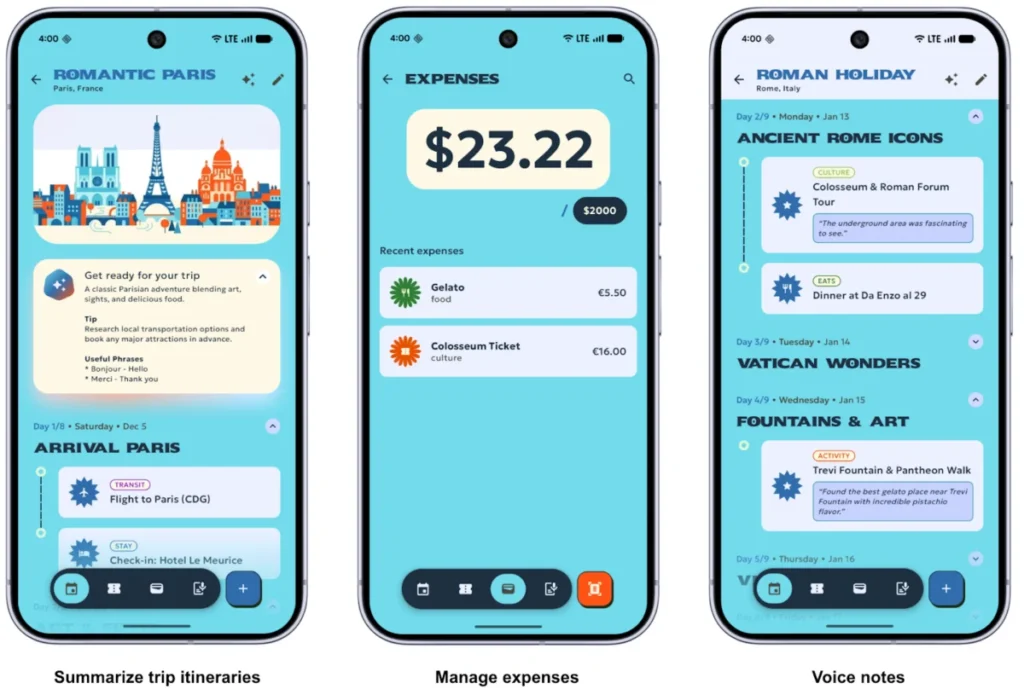
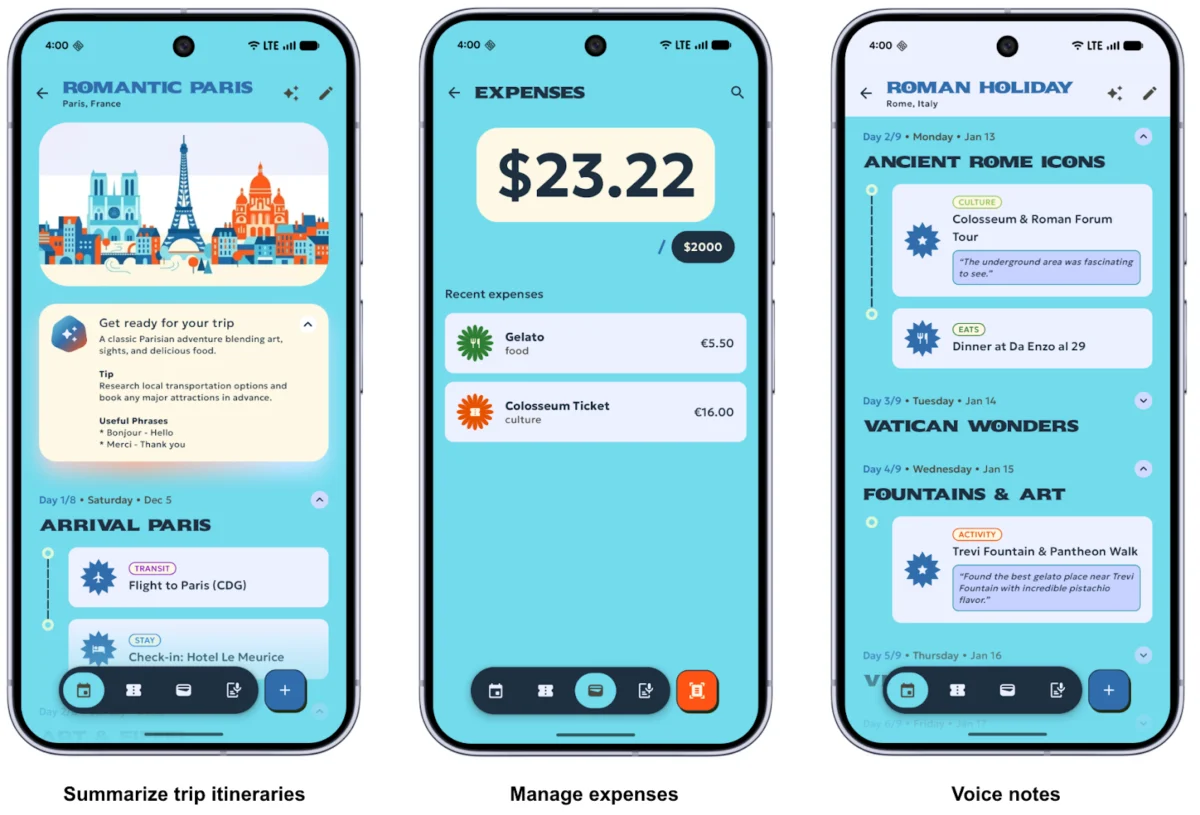
Jetpacker is not merely a demo; it is a masterclass in modern Android engineering. Unveiled at Google I/O, the application serves as a fully functional travel companion that allows users to organize trips, manage itineraries, and track event details. Built with a sophisticated Material Design interface, the application adheres to the latest Android best practices, providing a stable foundation for the integration of complex AI workflows.
The project is now the centerpiece of a multi-part technical blog series that provides developers with the source code, architectural patterns, and implementation strategies required to build similar intelligent features. By leveraging Jetpacker, the Android team aims to show that the shift toward AI-powered applications is not just about adding a chatbot—it is about rethinking how users interact with their data through on-device, cloud, and hybrid inference models.

Chronology of Development: From Static to Agentic
The development journey of Jetpacker was designed to reflect the natural evolution of an intelligent application. The roadmap follows a clear progression:
- Phase One: Foundation: Establishing a robust, UI-focused travel application using modern Android development tools.
- Phase Two: On-Device Intelligence: Implementing features that prioritize user privacy and offline functionality by running models locally on the device hardware.
- Phase Three: Cloud and Hybrid Inference: Scaling capabilities by integrating cloud-based models for tasks requiring massive context windows and real-world data grounding.
- Phase Four: System-Level Integration: Opening up app capabilities to the Android OS using the AppFunctions API.
- Phase Five: Agentic Workflows (Forthcoming): Moving beyond simple queries to multi-step, autonomous tasks using AI agents.
Supporting Data: The Case for Privacy and Performance
One of the most critical decisions in the Jetpacker architecture was the reliance on on-device inference for specific, sensitive features. For developers, the choice between on-device and cloud inference is often a trade-off between privacy and computational power.
The On-Device Advantage
By deploying models directly on the user’s hardware, Jetpacker eliminates the need for cloud inference, significantly reducing server-side costs and latency. More importantly, it addresses the paramount concern of user privacy. Because data—such as personal itineraries, expense logs, and private voice notes—never leaves the local environment, the application ensures a "privacy-first" security posture. This is achieved through the use of advanced toolsets like ML Kit’s GenAI APIs and Gemini Nano, which allow for efficient, localized processing.
The Cloud and Hybrid Model
Conversely, some features require "world knowledge" or complex reasoning that exceeds the capabilities of an on-device model. For these instances, Jetpacker utilizes cloud-based inference. The real innovation, however, lies in the hybrid inference model. By dynamically choosing between on-device and cloud processing at runtime, the application maximizes efficiency. When a device is capable and the task is simple, it stays local. When a task requires deeper context or broader search capabilities, it offloads to the cloud. This hybrid approach ensures that the app remains functional across the entire spectrum of Android devices, from entry-level hardware to high-end flagships.

Official Technical Insights: Bridging the Gap
The Android team has structured the technical documentation into distinct pillars, each addressing a specific facet of AI integration.
Grounding and Real-World Context
A key challenge in GenAI is the "hallucination" factor. To mitigate this, Jetpacker’s cloud-integrated features—such as the Museum Assistant and the Restaurant Review drafter—utilize Firebase AI Logic. This allows the app to "ground" the AI’s responses in real-world data, such as live Google Maps information or up-to-the-minute web context. This ensures that when the AI provides a recommendation, it is based on factual, real-time data rather than stale training sets.
The AppFunctions API
Perhaps the most significant leap for Android intelligence is the integration of the AppFunctions API. This allows the Android operating system itself to interact with the application’s core features. For the user, this means that the intelligence is not siloed within the Jetpacker app. Instead, the OS can trigger specific functions within the app, creating a seamless ecosystem where the user’s intent is understood by the system and executed by the application.
Implications for the Android Ecosystem
The release of the Jetpacker source code and the accompanying documentation signals a major shift in the Android developer community.

1. The Democratization of AI Development
By open-sourcing Jetpacker, Google is effectively lowering the barrier to entry for developers who are intimidated by the complexity of large language models (LLMs). The detailed implementation steps—ranging from how to set up the environment to how to manage model orchestration—provide a clear path for independent developers to integrate advanced features that were previously the domain of large tech enterprises.
2. Shifting to "Agentic" User Experiences
The most ambitious aspect of the Jetpacker project is its move toward "agentic" workflows. Unlike traditional chatbots, which respond to prompts, an agentic system is goal-oriented. It possesses the ability to reason, use external tools, and adapt its strategy based on the outcome of previous steps.
The upcoming booking assistant feature exemplifies this. By utilizing the ADK (Android Development Kit) and A2UI (Agent-to-User Interface), the application acts as an autonomous agent that can navigate flight booking systems, handle errors, and request user confirmation at critical junctures. This represents a fundamental change in UI design: the application is no longer a collection of buttons and forms, but an active participant that helps the user achieve their goals.
3. Sustainability and Cost Management
For developers, the financial implications of AI are significant. Cloud inference costs can spiral out of control if not managed correctly. Jetpacker serves as a blueprint for cost-effective AI. By prioritizing on-device processing and only utilizing cloud resources when strictly necessary, developers can create applications that are both highly capable and economically sustainable.

Looking Ahead: The Future of the "Jetpacker" Series
The Android Developer Relations team has laid out a comprehensive learning path for those ready to dive deeper:
- Part 1: The Blueprint: An overview of the Jetpacker architecture and the vision for an intelligent mobile future.
- Part 2: On-Device Intelligence: A technical deep-dive into utilizing Gemini Nano and ML Kit for itinerary summarization and local audio analysis.
- Part 3: Cloud and Hybrid Reasoning: Strategies for grounding LLMs in real-world data and managing hybrid model selection.
- Part 4: System Integration: Leveraging the AppFunctions API to connect the app to the broader Android intelligence ecosystem.
- Part 5: Agentic Workflows (Coming Soon): A tutorial on building an end-to-end booking assistant using A2UI and ADK.
Conclusion
The Jetpacker project stands as a testament to the fact that the next era of Android development will be defined by intelligence, privacy, and autonomy. By moving beyond simple API wrappers and into the realm of local-cloud hybrid architectures and agentic orchestration, the Android platform is providing the tools necessary to build a more intuitive, helpful digital world. For developers, the message is clear: the tools are available, the architecture is documented, and the time to start building is now.
To explore the Jetpacker source code and start building your own intelligent features, visit the official Android AI samples repository on GitHub.