The Sky on the Ceiling: How a Maker Transformed His Home into a Real-Time Aviation Hub
In the quiet suburbs surrounding San Francisco International Airport (SFO), the peace is frequently punctuated by the thunderous roar of jet engines. For most residents, the "departure push"—a period of intense activity where aircraft take off in rapid succession—is a source of noise pollution to be tolerated. For maker and software engineer Cameron Paczek, however, these mechanical giants flying a mere 600 to 800 feet above his roof became a source of creative inspiration.
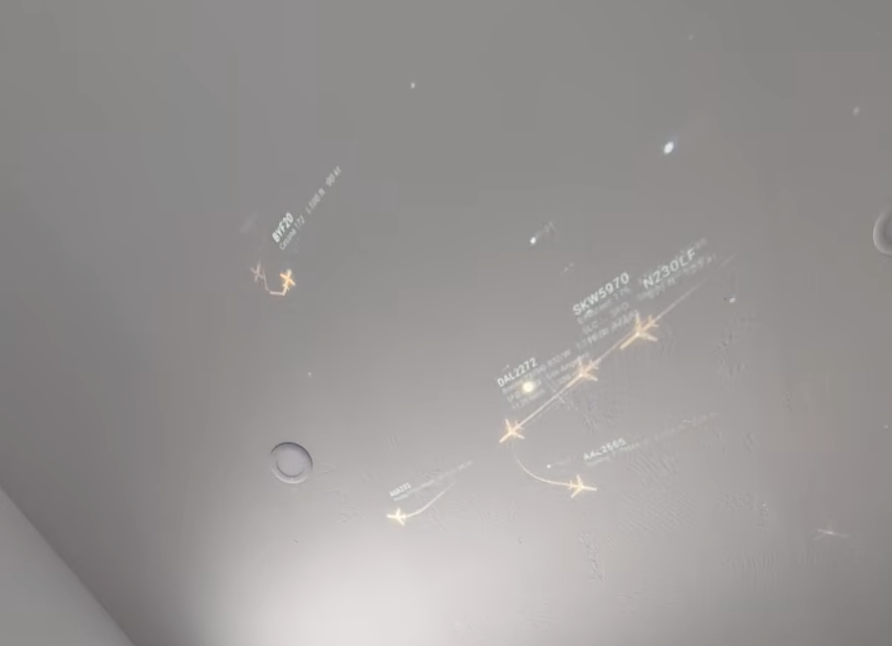
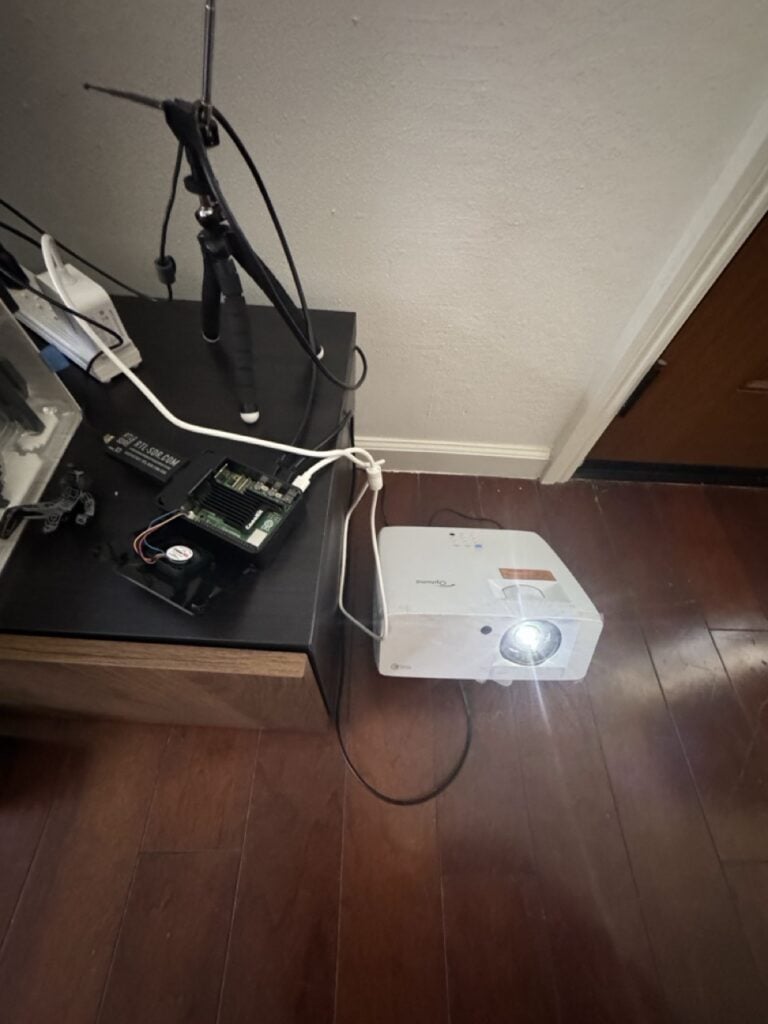
Paczek has developed "Skylight," a sophisticated DIY system that uses a Raspberry Pi 5, software-defined radio (SDR), and projection mapping to track and visualize overhead aircraft in real-time. By projecting flight data directly onto his ceiling and streaming high-definition, AI-tracked footage to his television, Paczek has effectively turned his living room into a private air traffic control tower.
Main Facts: The Intersection of Aerospace Data and Home Automation
The Skylight project represents a remarkable convergence of several high-level technologies: radio frequency (RF) interception, geospatial geometry, computer vision, and augmented reality. At its core, the system relies on the Automatic Dependent Surveillance-Broadcast (ADS-B) protocol, the global standard for modern flight tracking.
The Technological Components
- Processing Power: The project utilizes the Raspberry Pi 5, the latest flagship from the Raspberry Pi Foundation. Its increased CPU and GPU capabilities are essential for handling the concurrent tasks of radio signal processing, AI-driven object detection, and high-definition video streaming.
- Signal Acquisition: An RTL-SDR (Software Defined Radio) dongle tuned to the 1090MHz frequency intercepts unencrypted ADS-B signals transmitted by aircraft. These signals contain critical telemetry data, including altitude, airspeed, heading, and GPS coordinates.
- Visual Representation: Through projection mapping—a technique often seen in large-scale art installations—Paczek projects a digital canvas onto his ceiling. This canvas displays the relative position of aircraft as they pass over his home, turning a static architectural surface into a dynamic data visualization tool.
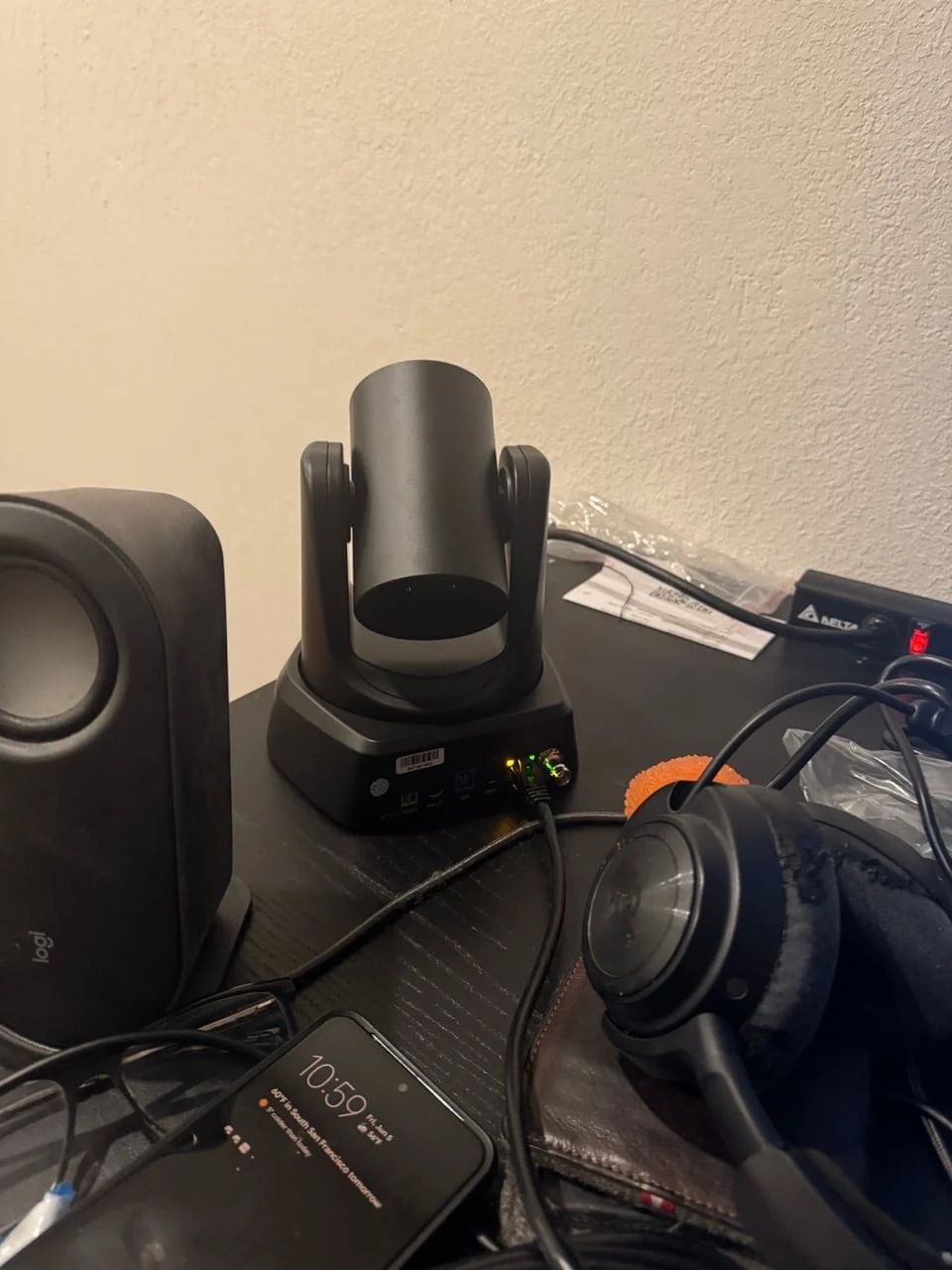
- Automated Tracking: To bridge the gap between digital data and visual confirmation, the system employs a VISCA-enabled PTZ (Pan-Tilt-Zoom) camera. Using the YOLOX-Nano object detection model, the camera automatically locates the aircraft in the sky, zooms in, and tracks it across the horizon.
Chronology: From Noise Complaint to Engineering Feat
The genesis of Skylight was born out of a common modern habit: checking a smartphone when a loud noise occurs. When Paczek moved into his new home directly under the SFO departure path, he found himself constantly refreshing FlightRadar24 to identify the planes shaking his windows.
The Spark of Inspiration
The project moved from a curiosity to a development phase when Paczek began exploring projection mapping on TikTok. He realized that the "hidden" data of the sky—the invisible radio waves carrying flight info—could be made visible. Instead of looking down at a small screen, he envisioned looking up at the ceiling to see a "ghost" of the plane passing through his roof.
Development and Implementation
- RF Interception: The first step involved setting up the RTL-SDR. Paczek had to ensure the antenna was positioned to receive clear signals despite the structural interference of a residential building.
- The Geometry Engine: Once the raw ADS-B data (latitude and longitude) was captured, Paczek had to write code to translate those global coordinates into a local coordinate system relative to his house. This required calculating the distance and bearing of the aircraft to plot its movement accurately on a 2D ceiling canvas.
- The Visual Layer: Using "kiosk mode" on the Raspberry Pi, he created a web-based interface that would serve as the projection source. This interface updates in real-time as new packets of data are received from the sky.
- AI Integration: The final and most complex stage was the physical tracking. Relying solely on GPS data to aim a camera is often inaccurate due to latency and signal drift. By integrating YOLOX-Nano, a lightweight and efficient deep-learning model, Paczek enabled the system to "see" the plane. Once the ADS-B data points the camera in the general direction, the AI takes over to center the aircraft in the frame.
Supporting Data: The Mechanics of ADS-B and Edge Computing
To understand the complexity of Paczek’s achievement, one must look at the sheer volume of data being processed at the "edge"—meaning, locally on the Raspberry Pi without relying on cloud servers.
ADS-B: The Open Sky Protocol
Most commercial aircraft are required to broadcast ADS-B signals. These are pulses of data sent twice per second. Because these signals are unencrypted, hobbyists can intercept them using inexpensive hardware. Paczek’s system processes:
- ICAO 24-bit Address: A unique identifier for each aircraft.
- Callsign: The flight number (e.g., UAL123).
- Altitude: Critical for determining how "large" the icon should appear on the projection.
- Velocity: Used to smooth the movement of the icons on the ceiling.
The Role of Raspberry Pi 5
Previous iterations of the Raspberry Pi would have struggled with this workload. The Pi 5’s Broadcom BCM2712 processor provides a significant boost in performance. Running an SDR receiver is CPU-intensive, as it involves digital signal processing (DSP) to turn radio waves into readable data. Simultaneously running a YOLOX-Nano inference engine for real-time video tracking pushes the hardware to its limits, demonstrating the viability of the Pi 5 for advanced robotics and AI applications.
Official Responses and Community Impact
While official bodies like the Federal Aviation Administration (FAA) or SFO airport management have not issued specific statements regarding this individual project, the "maker" and "aviation enthusiast" communities have responded with overwhelming enthusiasm.
The Open Source Ethos
In keeping with the spirit of the maker movement, Paczek has released the entire codebase for Skylight on GitHub. This move has been hailed by hobbyists as a significant contribution to the "citizen science" of aviation tracking. By providing the geometry calculations and the camera tracking logic, Paczek has lowered the barrier to entry for others living near airports.
Privacy and Regulation
The project operates within a legal "gray area" that is generally accepted in the United States. Intercepting ADS-B signals is legal, as they are public broadcasts intended for safety and situational awareness. However, the use of automated cameras to film aircraft has occasionally raised privacy concerns in other contexts. In Paczek’s case, the system focuses on public airspace and commercial entities, aligning with standard photography laws.
Implications: The Future of the "Aware" Home
The Skylight project is more than just a novelty for plane spotters; it serves as a proof of concept for the next generation of smart home technology.
Augmented Reality Without Goggles
Most discussions of Augmented Reality (AR) involve headsets like the Apple Vision Pro. Paczek’s project demonstrates "spatial AR," where the environment itself is modified. This suggests a future where our homes can display information about the outside world—weather patterns, satellite passes, or even local transit—directly on the walls and ceilings without the need for wearable hardware.
Democratization of Surveillance and Tracking
Historically, the ability to track and film objects in the sky with high precision was reserved for military or well-funded scientific organizations. The fact that a single individual can build such a system for a few hundred dollars using off-the-shelf components highlights the rapid democratization of technology.
Educational Potential
Beyond the "cool factor," Skylight has significant educational implications. It serves as a multidisciplinary teaching tool for:
- Physics: Understanding radio wave propagation and the Doppler effect.
- Mathematics: Applying trigonometry and spherical geometry to real-world tracking.
- Computer Science: Learning about real-time data streams, AI model deployment, and hardware-software integration.
Conclusion: A New Horizon for Hobbyists
Cameron Paczek’s Skylight project is a testament to the power of modern DIY electronics. By turning a localized nuisance—the noise of SFO departures—into an immersive data experience, he has provided a roadmap for how we might interact with our surroundings in the digital age.
As the Raspberry Pi and similar platforms continue to grow in power, the line between professional-grade aerospace systems and home-built gadgets will continue to blur. For now, Paczek can rest on his couch, look up at his ceiling, and see the invisible world of aviation brought to life in vibrant light. For those who wish to follow in his footsteps, the blueprints are already waiting on GitHub, inviting a new generation of makers to look up and start coding.