Amazon Revolutionizes Generative AI Deployment with Managed Knowledge Base for Bedrock
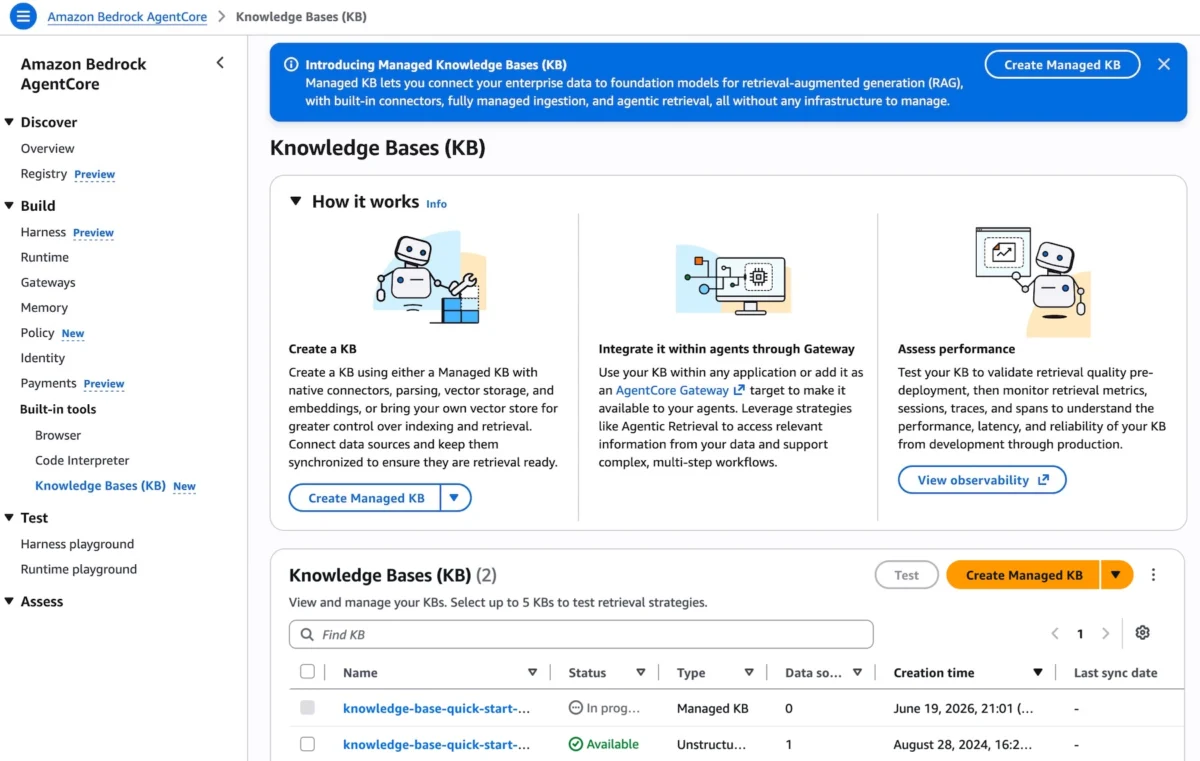
In a significant leap forward for enterprise-grade generative AI, Amazon Web Services (AWS) has unveiled the Amazon Bedrock Managed Knowledge Base. This new suite of capabilities is designed to dismantle the complex infrastructure barriers that have long hindered organizations from effectively deploying Retrieval-Augmented Generation (RAG) applications. By abstracting the heavy lifting of data ingestion, orchestration, and multi-step reasoning, AWS is enabling developers to transition from proof-of-concept to production-ready agentic AI in a matter of minutes.
Main Facts: A New Paradigm for RAG
The core value proposition of the Amazon Bedrock Managed Knowledge Base lies in its ability to serve as a "managed primitive." Historically, building an effective RAG pipeline required a daunting stack of disparate technologies: managing vector databases, fine-tuning embedding models, configuring re-rankers, and manually orchestrating retrieval logic.
With this launch, AWS consolidates these components into a single, cohesive service. Developers no longer need to manually select or maintain the underlying infrastructure. By default, the service provides an optimized stack—selecting the appropriate embedding models, re-rankers, and foundational models—to ensure immediate performance. However, this ease of use does not come at the cost of flexibility; users retain the ability to swap models as their specific use cases evolve or as new, more efficient foundation models enter the market.
The Chronology of Development: Solving the "Undifferentiated Heavy Lifting"
For the past two years, the primary bottleneck for enterprise AI adoption has not been the lack of sophisticated models, but the difficulty of connecting those models to proprietary, siloed enterprise data.
- Phase 1: The Manual Era: Early adopters spent months building bespoke pipelines, struggling with data parsing, vector storage costs, and the inability of models to "reason" across multiple document sources.
- Phase 2: The Integration Phase: AWS introduced basic knowledge base connectors, allowing for easier ingestion. Yet, the challenge remained: how to handle complex, multi-part queries that required "chain-of-thought" retrieval.
- Phase 3: The Managed Transformation (Current): With the June 2026 release of the Managed Knowledge Base, AWS has shifted the focus from infrastructure assembly to outcome-driven development. The integration with the Amazon Bedrock AgentCore Gateway marks the final step in this evolution, allowing these knowledge bases to act as native tools for autonomous agents.
Supporting Data: Why "Smart Parsing" and "Agentic Retrieval" Matter
The true power of the new Managed Knowledge Base is demonstrated through two core innovations: Smart Parsing and the Agentic Retriever.
Smart Parsing: The End of Data Preparation Headaches
Data ingestion has traditionally been the most time-consuming phase of AI deployment. Documents come in various formats—PDFs, spreadsheets, technical documentation, and web-scraped content—each requiring different parsing strategies. Smart Parsing eliminates the weeks of manual configuration typically required to achieve high retrieval accuracy. It automatically analyzes the data source, selects the optimal parsing strategy, and prepares the information for vectorization without requiring a single line of custom code.

The Agentic Retriever: Multi-Hop Reasoning
Standard RAG systems often fail when presented with questions that require "multi-hop" logic—that is, answering a complex question by synthesizing information from multiple distinct documents.
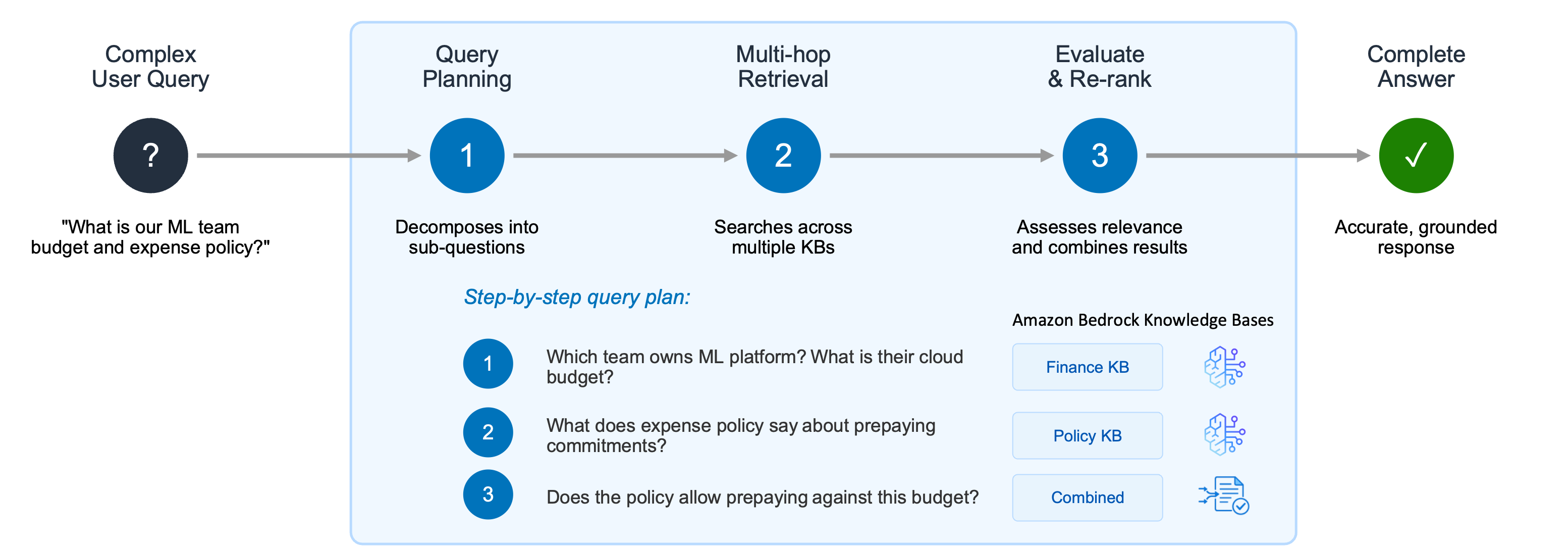
For instance, if an employee asks, "Does our expense policy allow for prepaying annual cloud commitments within our current budget?" a standard system might surface only the budget document. The new Agentic Retriever decomposes this query into a logical sequence:
- Identify the budget owner and the current allocation.
- Retrieve the specific expense policy regarding prepayments.
- Synthesize the findings to provide a definitive answer.
This automated reasoning layer effectively removes the need for developers to write complex orchestration logic, allowing the agent to "think" through the retrieval process in real-time.
Implications for the Enterprise
The release of this service has profound implications for how businesses operate.
1. Democratization of Agentic AI
By lowering the barrier to entry, AWS is effectively democratizing access to high-end AI. Small-to-medium enterprises (SMEs) that previously lacked the engineering talent to maintain a complex RAG pipeline can now leverage the same sophisticated retrieval architecture as large-scale global enterprises.
2. The Model Context Protocol (MCP) and Interoperability
Perhaps the most forward-thinking aspect of this release is the native support for the Model Context Protocol (MCP). By exposing the knowledge base through the AgentCore Gateway, AWS has ensured that these agents are not trapped in a "walled garden." Developers can use the Bedrock Managed Knowledge Base as a tool for any MCP-compatible framework, including LangChain, CrewAI, LlamaIndex, and LangGraph. This interoperability is a massive win for developers who want to avoid vendor lock-in while still benefiting from the performance of AWS-managed infrastructure.
3. Cost-Performance Optimization
With a pay-as-you-go pricing model based on indexed data size and retrieval volume, businesses are protected from high upfront capital expenditures. This aligns the cost of the AI infrastructure directly with the value generated by the application, making the ROI of generative AI initiatives significantly easier to justify to stakeholders.
Official Responses and Strategic Direction
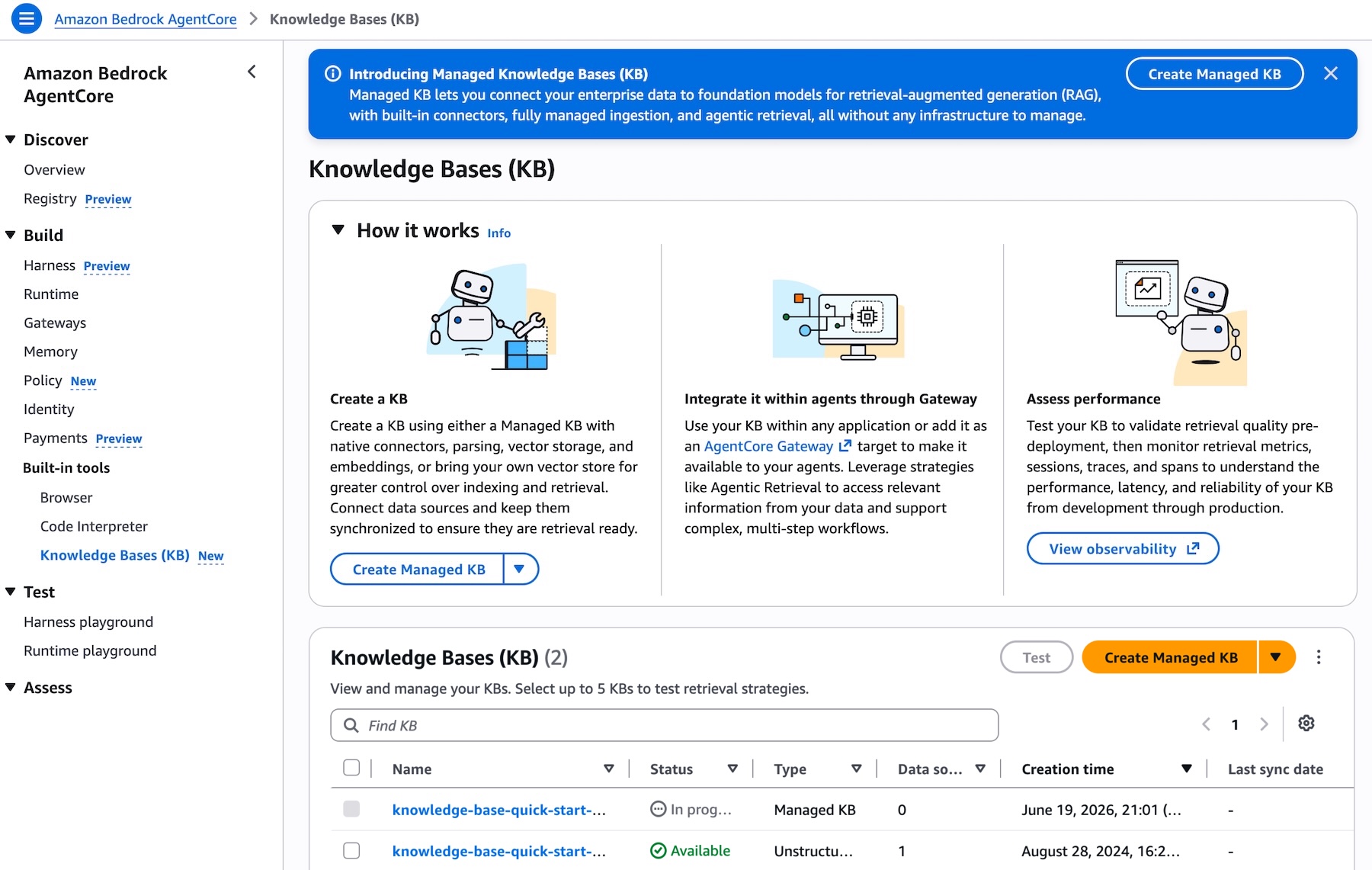
Daniel Abib, a lead architect at AWS, emphasized during the announcement that the goal is to allow developers to "focus on business outcomes rather than infrastructure management." This sentiment reflects the broader strategy at Amazon: to turn complex, high-friction technical tasks into simple, abstracted services.
The update on June 19, 2026, which refined the UI and documentation for the "Create Managed KB" workflow, highlights a commitment to user experience. By streamlining the path from console setup to deployment, AWS is signaling that they view generative AI not as an experimental toy, but as a standard business utility.
Future Outlook: The Road Ahead
The availability of this service in major regions, including US East, US West, Asia Pacific, Europe, and AWS GovCloud, demonstrates that AWS is ready to support global, regulated, and high-compliance industries.
As enterprises begin to integrate these managed knowledge bases, we expect to see a surge in "Agentic Search" applications. Instead of employees searching through internal wikis, they will interact with intelligent agents that can query, reason, and act upon corporate knowledge in real-time.
For developers, the message is clear: the era of building infrastructure is coming to a close, and the era of building intelligent solutions has begun. With the tools provided by Amazon Bedrock Managed Knowledge Base, the only remaining constraint on innovation is the creativity of the developers themselves.
Quick Reference for Developers
- Getting Started: Access via the Amazon Bedrock Console or AgentCore Console.
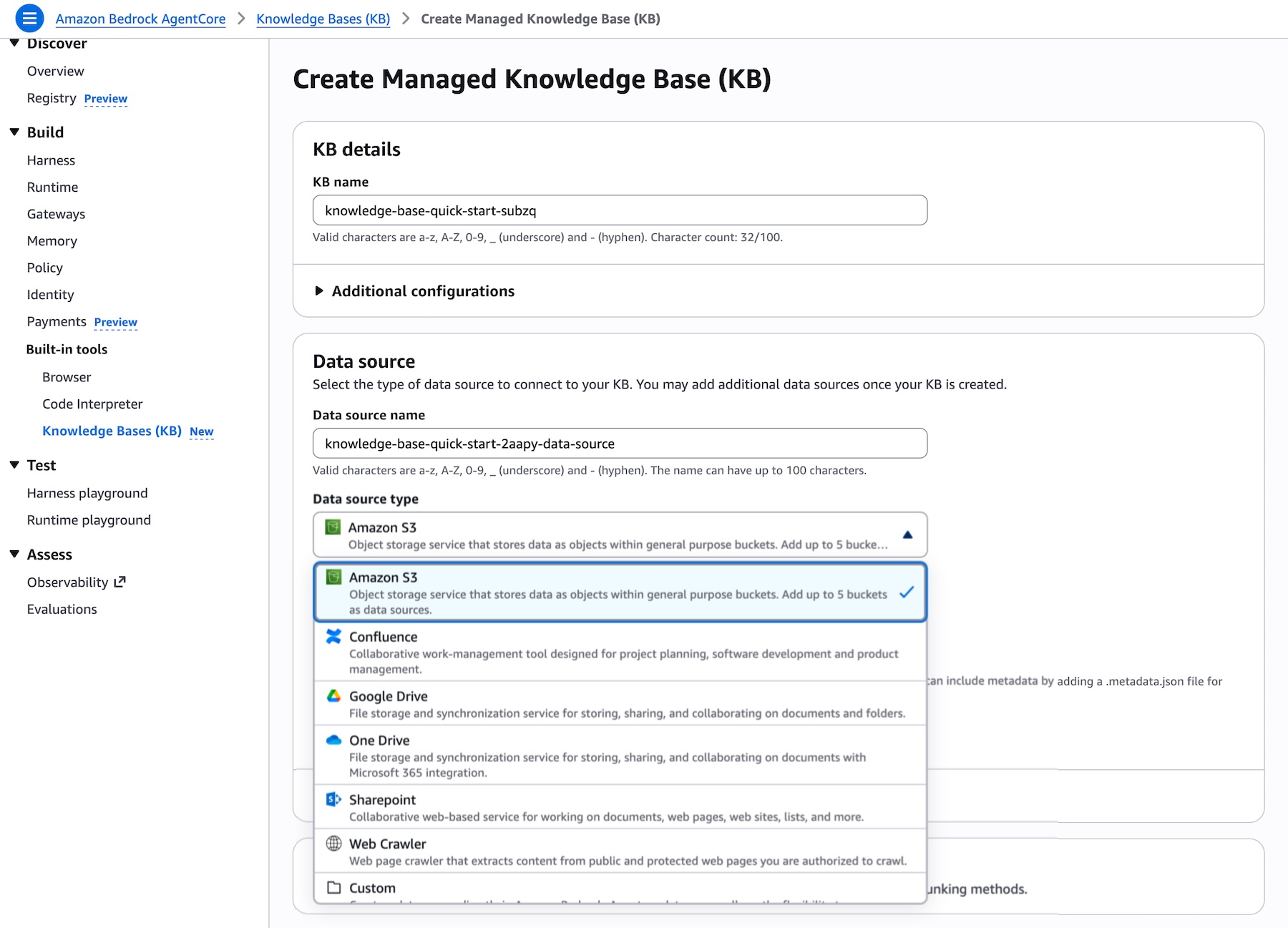
- Integrations: Native support for S3, Confluence, SharePoint, Google Drive, and OneDrive.
- Frameworks: Full support for LangChain, CrewAI, LlamaIndex, and Strands Agents via MCP.
- Documentation: Available in the Bedrock Knowledge Bases Developer Guide on the official AWS documentation portal.