ChillPoint: Revolutionizing Cold Chain Monitoring with a Modern iButton Reader
FOR IMMEDIATE RELEASE
[City, State] – [Date] – In an era where technological advancements are rapidly transforming industrial processes, a critical piece of hardware often overlooked is the humble iButton. These robust, coin-cell-sized microchips have long served as reliable data loggers, particularly for monitoring environmental parameters like temperature over time in challenging industrial contexts. However, the systems designed to interface with them have, for years, remained largely antiquated. Addressing this persistent gap, inventor and engineer Geoffrey Wells has unveiled ChillPoint, a groundbreaking handheld device poised to modernize iButton data retrieval and management, especially within the vital cold chain logistics sector.
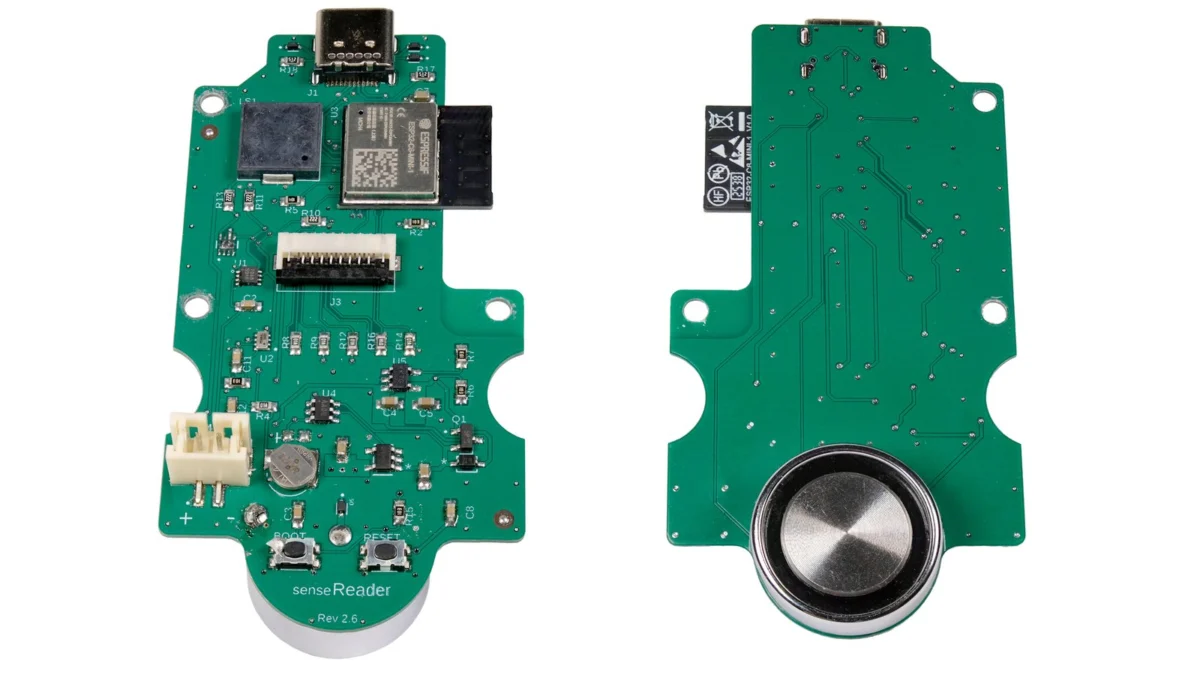
ChillPoint promises a seamless, intuitive experience, moving away from the cumbersome legacy solutions that have plagued users for decades. Built around the powerful ESP32-C6 microcontroller, this innovative device integrates a 1-Wire probe for instant data acquisition, on-board flash storage, and a sophisticated web-based user interface accessible via its own Wi-Fi access point. The development, nearing completion and slated for an open-source release, represents a significant leap forward in the practical application of iButton technology, offering a robust, single-handed scanning solution with live monitoring capabilities accessible from any modern smart device.
Main Facts: A Modern Refresh for Industrial Data Logging
At its core, ChillPoint is a sophisticated reimagining of the iButton reader, designed from the ground up to address the inefficiencies and frustrations associated with older systems. iButtons, often mistaken for small batteries due to their metallic, disc-like appearance, are essentially ruggedized microchips capable of storing unique identification codes or logging data such as temperature, humidity, or events. Their durability and simplicity have made them indispensable in harsh environments where traditional sensors might fail, particularly in industrial settings, asset tracking, and, crucially, cold chain logistics.
Geoffrey Wells, the visionary behind ChillPoint, recognized a significant disparity between the inherent utility of iButtons and the outdated methods available for extracting their valuable data. Many existing readers rely on proprietary software, complex drivers, or cumbersome physical connections to legacy computers, often lacking the flexibility, speed, and connectivity demanded by modern industrial operations. This inefficiency translates directly into increased operational costs, delays in data analysis, and potential risks, particularly in time-sensitive applications like monitoring perishable goods.
ChillPoint’s primary innovation lies in its comprehensive modernization of the entire data retrieval process. The device features a dedicated 1-Wire probe on its front, designed for direct, instantaneous contact with an iButton. Upon contact, the ChillPoint reader swiftly dumps all stored data from the iButton, securely logging it onto its internal flash storage. This eliminates the need for external storage devices or immediate computer connections at the point of data collection.
The true power of ChillPoint, however, is unleashed through its connectivity. Leveraging the capabilities of the ESP32-C6, the device hosts its own Wi-Fi access point, allowing any Wi-Fi-enabled device—be it a smartphone, tablet, or laptop—to connect and access a user-friendly web interface. This interface provides live monitoring of results and allows for easy data management, analysis, and export. The design prioritizes single-handed operation for scanning, ensuring efficiency in busy operational environments, while simultaneously providing a rich data visualization experience on a secondary device. This blend of robust hardware and accessible software positions ChillPoint as a vital tool for industries reliant on precise, timely environmental monitoring.
Chronology: From Frustration to Innovation
The genesis of ChillPoint can be traced back to Geoffrey Wells’ direct experience with the limitations of existing iButton reading solutions. Like many engineers and logistics professionals, Wells found himself grappling with the clunky interfaces and slow data transfer rates of legacy systems. The process of extracting critical temperature data from iButtons, particularly those deployed in remote or challenging environments, was often an exercise in frustration, involving specialized hardware, outdated software, and a significant time commitment.
The Spark of Inspiration: Wells’ specific focus on cold chain logistics applications served as a primary catalyst. In industries dealing with temperature-sensitive goods – pharmaceuticals, fresh produce, frozen foods, chemicals – accurate and timely temperature monitoring is not just good practice; it’s a regulatory imperative and a fundamental aspect of product quality and safety. The existing tools simply weren’t keeping pace with the rapid demands of modern supply chains. The vision for ChillPoint was clear: to create a device that was not only highly functional but also intuitive, portable, and fully integrated into contemporary digital workflows.
Design and Development Phase: The journey from concept to near-completion involved meticulous engineering and strategic component selection. The choice of the ESP32-C6 microcontroller was pivotal. This particular chip, known for its powerful RISC-V core, integrated Wi-Fi and Bluetooth LE capabilities, and robust peripheral set, provided the ideal foundation. Its low-power consumption was crucial for a handheld, battery-operated device, while its connectivity features were essential for implementing the Wi-Fi access point and web UI. Wells focused on a compact, ergonomic design that would allow for comfortable, single-handed operation, recognizing that users often operate in environments where efficiency and mobility are paramount.
The development of the 1-Wire probe, the physical interface to the iButton, required precision engineering to ensure reliable contact and data transfer. Simultaneously, Wells designed the internal architecture for secure flash storage, ensuring that data could be collected rapidly and stored safely before being offloaded. The software development, running on the ESP32-C6, involved creating a robust firmware for handling the 1-Wire protocol, managing data storage, and establishing the Wi-Fi access point. A significant portion of the effort was dedicated to developing the web-based user interface, ensuring it was responsive, user-friendly, and compatible across various devices, thus eliminating the need for platform-specific applications.
Prototyping and Refinement: The development cycle undoubtedly involved multiple iterations of prototypes. Early versions would have focused on validating core functionalities: reliable iButton communication, stable Wi-Fi connectivity, and basic data display. As the project progressed, emphasis would have shifted to optimizing power consumption, refining the physical design for durability and ergonomics, and enhancing the user experience of the web interface. Debugging, testing, and incorporating feedback (even if from personal use) would have been integral to moving from proof-of-concept to a market-ready device.
Nearing Completion and Future Steps: As Wells indicates, ChillPoint is nearing completion. This phase typically involves final hardware validation, comprehensive software testing to eliminate bugs, optimizing performance, and preparing for manufacturing. The commitment to open-sourcing both the hardware and software once finalized signals a dedication to community involvement and transparency, allowing other enthusiasts and developers to inspect, modify, and contribute to the project. The upcoming CrowdSupply campaign marks the transition from development to commercialization, providing a platform for pre-orders, securing funding for production, and building a community of early adopters. This crowdfunding model also serves as a crucial market validation step, gauging the demand for such a specialized, yet broadly useful, tool.
Supporting Data: The Technical Edge and Market Impact
The utility of ChillPoint is best understood by delving into its technical underpinnings and the critical market it serves.
The iButton Ecosystem and the 1-Wire Protocol:
iButtons, originally developed by Dallas Semiconductor (now Maxim Integrated), are unique in their simplicity and ruggedness. They communicate via the 1-Wire protocol, a single-conductor interface that, despite its name, also requires a ground return. This protocol allows for data exchange, power delivery, and clocking over a single data line, making it incredibly efficient for low-power applications and minimizing wiring complexity. While brilliant for its time, interfacing with 1-Wire devices traditionally required specific hardware adapters and software drivers, often tied to older operating systems or serial ports, contributing to the "cumbersome and out-of-date" experience Wells sought to overcome. ChillPoint directly leverages this protocol but abstracts away the complexities for the end-user, providing a modern, digital gateway to the iButton’s data.
The Critical Role of Cold Chain Logistics:
The inspiration for ChillPoint from "cold chain logistics applications" highlights a vital industry where precise temperature monitoring is non-negotiable. Cold chain refers to the management of temperature-sensitive products along a supply chain through thermal and refrigerated packaging methods and logistical planning to protect the integrity of these shipments.
- Pharmaceuticals: Vaccines, insulin, and other biologics require strict temperature control to maintain efficacy. Deviations can render medications ineffective or even harmful, leading to significant financial losses and public health risks.
- Food and Beverages: Perishable goods like meat, dairy, produce, and frozen foods require continuous temperature monitoring to prevent spoilage, ensure food safety, and extend shelf life. Temperature excursions can lead to bacterial growth, product degradation, and massive recalls.
- Chemicals and Industrial Materials: Certain chemicals, glues, and industrial components are also temperature-sensitive, with improper storage leading to degradation or safety hazards.
Current methods for monitoring in cold chain often involve manual checks, proprietary data loggers with complex retrieval systems, or older iButton readers. These can be time-consuming, prone to human error, and lack real-time visibility. ChillPoint’s ability to quickly dump data and present it via a Wi-Fi web interface significantly streamlines this process, allowing for faster decision-making and proactive intervention.
The Power of the ESP32-C6:
Geoffrey Wells’ choice of the ESP32-C6 microcontroller is a testament to thoughtful engineering. This System-on-Chip (SoC) from Espressif Systems offers a compelling package for a device like ChillPoint:
- RISC-V Architecture: The ESP32-C6 features a powerful 32-bit RISC-V processor, providing ample processing power for managing the 1-Wire protocol, handling data storage, running the Wi-Fi stack, and serving the web interface.
- Integrated Wi-Fi and Bluetooth LE: The built-in wireless connectivity is fundamental to ChillPoint’s modern appeal. Wi-Fi allows it to act as an access point, while Bluetooth LE could open doors for future features like proximity detection or simplified pairing.
- Low Power Consumption: As a handheld device, battery life is crucial. The ESP32-C6 is designed for low-power applications, enabling ChillPoint to operate for extended periods on a single charge.
- Rich Peripherals: The chip’s array of GPIOs (General Purpose Input/Output) and other peripherals makes it versatile for interfacing with the 1-Wire probe, flash memory, and any other necessary components.
User Experience and Comparative Advantage:
The core advantage of ChillPoint lies in its user experience. Traditional iButton readers often necessitate:
- Dedicated PC Software: Requiring installation, updates, and compatibility checks.
- Specific Cables/Adapters: Adding complexity and potential points of failure.
- Limited Portability: Often tethered to a computer or relying on outdated interfaces.
- Manual Data Transfer: Requiring physical connection to upload data, often one iButton at a time.
In contrast, ChillPoint offers:
- Single-Handed Operation: For rapid, on-the-spot scanning.
- Wireless Data Access: No cables, no proprietary software installation needed.
- Web UI: Accessible from any Wi-Fi-enabled device, offering universal compatibility.
- Live Monitoring: Provides immediate feedback, critical for identifying issues quickly.
- On-Board Storage: Data is secured even before offloading.
This combination translates into significant time savings, reduced training overhead, and improved accuracy for professionals who regularly work with iButtons.
The Open-Source Philosophy:
Wells’ commitment to making both the hardware and software open source adds another layer of value. This approach fosters transparency, encourages community engagement, and allows for customization and further development by users. For industrial applications, open-source solutions can provide greater assurance of long-term support and adaptability, as the user community can contribute to maintenance and feature enhancements, rather than being solely dependent on a single manufacturer. It also allows for greater scrutiny and trust in the device’s operation.
Official Responses: The Vision of Modernization
While direct quotes beyond the initial announcement are not available, Geoffrey Wells’ stated motivation provides a clear insight into the philosophy driving ChillPoint.
"The industrial landscape is evolving at an incredible pace, yet some of our most reliable workhorse technologies are still shackled by outdated interfaces," Wells remarked, outlining his inspiration. "iButtons are incredibly robust and valuable, especially in critical sectors like cold chain logistics. But the process of extracting their data felt like a relic from a bygone era. My goal with ChillPoint was to bridge that gap, to bring these essential devices into the 21st century with a solution that is intuitive, connected, and truly enhances operational efficiency."
On the technical choices and user experience, Wells elaborated: "We opted for the ESP32-C6 because it offers the perfect blend of power, connectivity, and energy efficiency for a handheld device. The ability to host its own Wi-Fi access point and a web UI means that anyone with a smartphone or laptop can instantly connect, view live data, and manage their iButtons without needing to install any specific software or grapple with drivers. The single-handed scanning capability was also a key design imperative, ensuring that ChillPoint fits seamlessly into demanding work environments."
Addressing the importance of cold chain monitoring, Wells emphasized: "In cold chain logistics, every minute and every degree matters. Delays in data retrieval or inaccurate readings can lead to catastrophic losses, whether it’s a batch of life-saving vaccines or an entire shipment of fresh produce. ChillPoint aims to provide professionals with the immediate, reliable data they need to make informed decisions, mitigate risks, and ensure product integrity from origin to destination."
Regarding the open-source nature of the project, Wells stated: "The decision to make both the hardware and software open source was fundamental. We believe in empowering the community. This approach fosters innovation, allows for greater transparency, and ensures that ChillPoint can evolve and adapt to future needs, driven by a collaborative spirit. It’s about building a tool for the community, by the community."
While Wells’ comments provide the developer’s perspective, industry experts are likely to echo the sentiment regarding the need for modernization. "The cold chain sector has been crying out for more streamlined and user-friendly data logging solutions," commented a hypothetical logistics technology analyst. "Many operations still rely on labor-intensive processes. A device like ChillPoint, which simplifies iButton data retrieval and offers instant, wireless access, has the potential to significantly improve compliance, reduce spoilage, and enhance overall supply chain visibility. It’s a pragmatic innovation that addresses a real-world pain point."
Implications: Reshaping Industrial Data Management
ChillPoint is more than just a new iButton reader; it represents a micro-revolution in how industrial data logging is approached, with far-reaching implications across several sectors.
1. Transformation of Cold Chain Logistics:
The most immediate and profound impact will be felt in cold chain logistics. By offering rapid, wireless, and intuitive data access, ChillPoint can:
- Enhance Compliance: Making it easier for businesses to meet stringent regulatory requirements for temperature monitoring in pharmaceuticals and food.
- Reduce Waste and Spoilage: Faster identification of temperature excursions allows for quicker intervention, minimizing product loss and associated costs.
- Improve Operational Efficiency: Streamlining the data collection process frees up personnel for other critical tasks, leading to overall productivity gains.
- Enable Proactive Decision-Making: Live monitoring provides immediate insights, allowing managers to address issues before they escalate, rather than reacting to problems after the fact.
- Democratize Advanced Monitoring: By simplifying the technology, even smaller businesses can implement sophisticated temperature tracking without significant investment in complex IT infrastructure.
2. Modernization of Industrial IoT (IIoT):
ChillPoint fits perfectly within the broader trend of modernizing Industrial IoT (IIoT) infrastructure. As industries increasingly adopt connected devices and data analytics, the ability to seamlessly integrate legacy sensors like iButtons into modern digital workflows becomes crucial. ChillPoint serves as a bridge, allowing valuable historical data and existing iButton deployments to contribute to a more comprehensive, real-time picture of industrial operations. It showcases how even seemingly niche components can be revitalized with contemporary connectivity and user-centric design.
3. Empowerment of the Maker and Developer Community:
The open-source nature of ChillPoint’s hardware and software is a significant implication for the broader maker, hacker, and developer communities.
- Customization and Adaptation: Users can modify the firmware to suit specific needs, integrate it with other systems, or even adapt the hardware design for unique applications.
- Educational Value: The project provides an excellent example of practical application of microcontrollers (ESP32-C6), wireless communication, and web development in an industrial context.
- Community-Driven Innovation: The open-source model fosters a collaborative environment where improvements, bug fixes, and new features can be contributed by a global community, ensuring the project’s longevity and continuous evolution.
4. Economic Benefits and Cost Savings:
For businesses, the adoption of ChillPoint can lead to tangible economic benefits:
- Reduced Labor Costs: Less time spent on manual data retrieval and processing.
- Minimized Product Loss: Proactive temperature management directly translates to fewer spoiled goods and less financial write-offs.
- Lower IT Overhead: No need for expensive proprietary software licenses or specialized hardware. The web-based UI reduces support and deployment costs.
- Improved Quality Assurance: Consistent and reliable data supports better quality control processes, enhancing brand reputation and customer trust.
5. Future Trajectories and Potential Integrations:
While ChillPoint is initially focused on iButton temperature logging, its underlying architecture (ESP32-C6, Wi-Fi, web UI) offers a fertile ground for future expansions:
- Cloud Integration: Potential for direct integration with cloud-based logistics platforms or data analytics services for centralized monitoring and reporting.
- Support for Other 1-Wire Sensors: The 1-Wire protocol supports a variety of sensors beyond temperature, opening possibilities for logging humidity, pressure, or even simple digital states.
- Advanced Analytics: The web UI could evolve to include more sophisticated data visualization tools, trend analysis, and predictive capabilities.
- Multi-Sensor Networks: ChillPoint could potentially be part of a larger network of monitoring devices, acting as a gateway for various local sensors.
Geoffrey Wells’ ChillPoint project stands as a testament to the power of targeted innovation. By reimagining a legacy technology with modern design principles and connectivity, it promises to significantly enhance efficiency, reliability, and accessibility in critical industrial applications. As the project moves towards its CrowdSupply campaign, it offers an exciting opportunity for early adopters to invest in a tool that could redefine how crucial environmental data is collected and utilized across industries.