AWS Transforms Certificate Lifecycle Management with Native ACME Support in AWS Certificate Manager
In a move that significantly streamlines infrastructure security for organizations of all sizes, Amazon Web Services (AWS) has announced native support for the Automatic Certificate Management Environment (ACME) protocol within AWS Certificate Manager (ACM). This development marks a pivotal shift in how enterprises manage TLS/SSL certificates, moving away from fragmented, manual workflows toward a fully unified, automated, and governed security posture.
The introduction of ACME support arrives at a critical juncture for the internet security landscape. With the Certification Authority (CA)/Browser Forum mandating a drastic reduction in certificate validity periods—down to 100 days by March 2027 and a further 47 days by 2029—the traditional, manual approach to certificate renewal has become operationally unsustainable. By integrating ACME, AWS is providing the tools necessary for teams to survive this transition without sacrificing security or operational uptime.

The Core Transformation: Moving Beyond Manual Management
For years, the management of TLS certificates has been a high-friction task for DevOps and security teams. When a certificate expires, the consequences are immediate and damaging: customer-facing services go offline, security warnings proliferate in browsers, and brand reputation suffers.
Previously, administrators often relied on a hybrid approach. They would use ACM for some services while employing external ACME-based CAs for others. This created a "fragmented visibility" problem. Security teams lacked a single pane of glass to monitor certificate expiration, usage, and provenance, making it nearly impossible to maintain a comprehensive audit trail or enforce organization-wide security policies.

With the new ACME server endpoint in ACM, that fragmentation is resolved. Organizations can now utilize any ACMEv2-compatible client—such as Certbot, cert-manager for Kubernetes, or acme.sh—to request, renew, and revoke public TLS certificates issued by Amazon Trust Services. This integration bridges the gap between modern cloud-native orchestration and standardized, industry-wide automation protocols.
Chronology: A Response to Evolving Security Standards
The journey toward this announcement reflects the broader evolution of the web’s trust infrastructure.
- Early 2020s: The rise of Let’s Encrypt popularized the ACME protocol, demonstrating that automated, short-lived certificates significantly reduce the attack surface by minimizing the window of opportunity for compromised keys.
- 2025 – The Industry Mandate: The CA/Browser Forum finalized the roadmap for reducing certificate lifespans. Recognizing that human-driven renewal processes would fail under a 47-day cycle, the industry began a collective pivot toward automation.
- June 2026: AWS officially launches native ACME support within ACM, providing a managed, enterprise-grade server endpoint. This release signals that AWS is positioning itself not just as a certificate provider, but as a centralized authority for certificate lifecycle governance.
How the System Operates: Technical Implementation
The beauty of the new ACM integration lies in its ability to separate "infrastructure authority" from "application deployment."
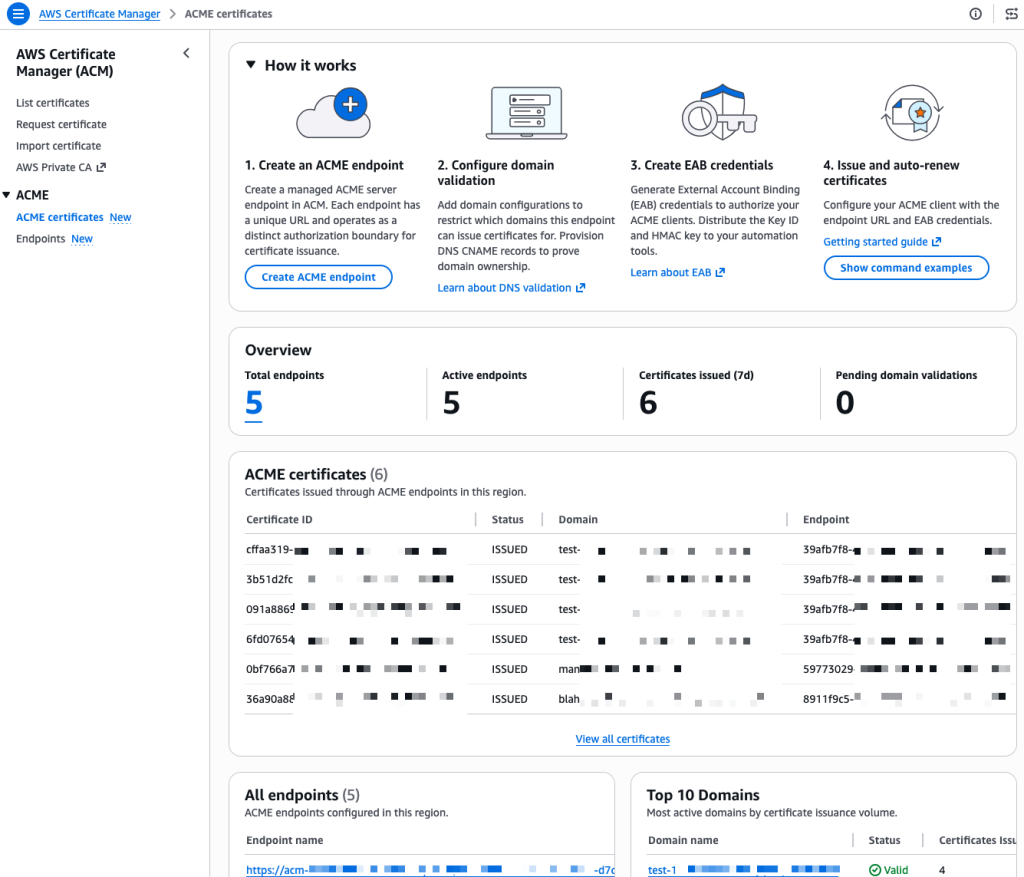
1. Setting the Stage: The ACME Endpoint
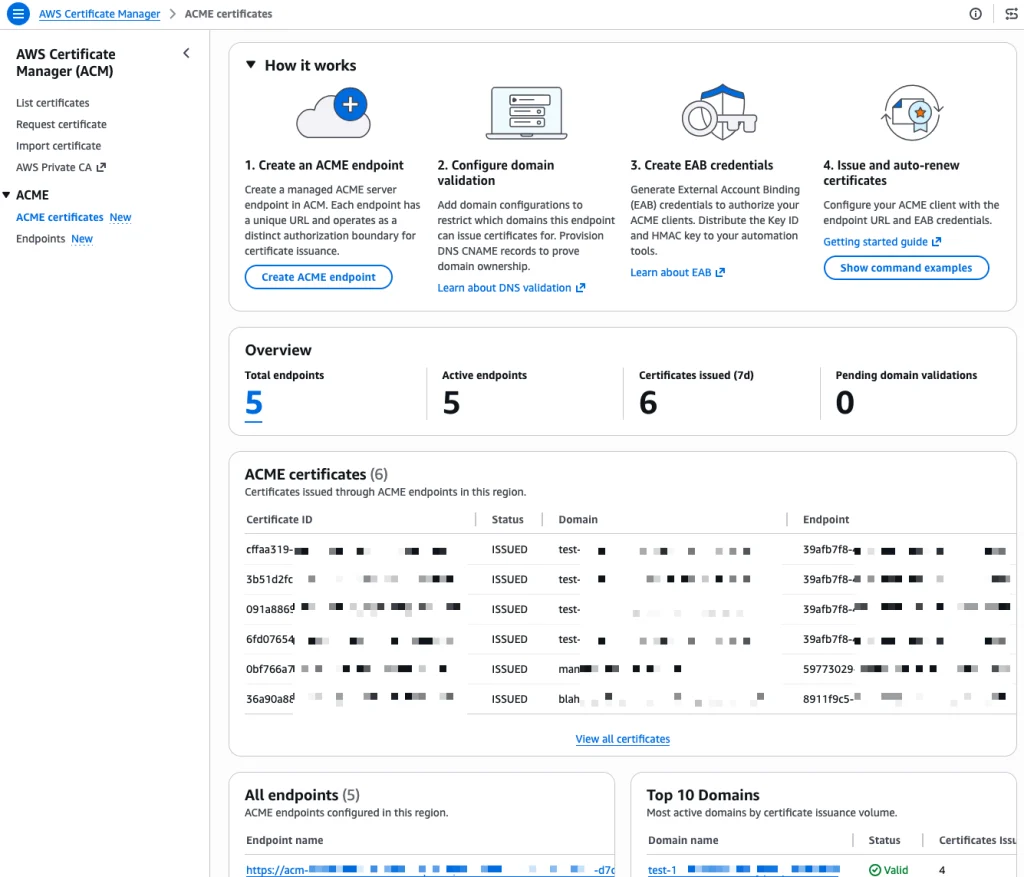
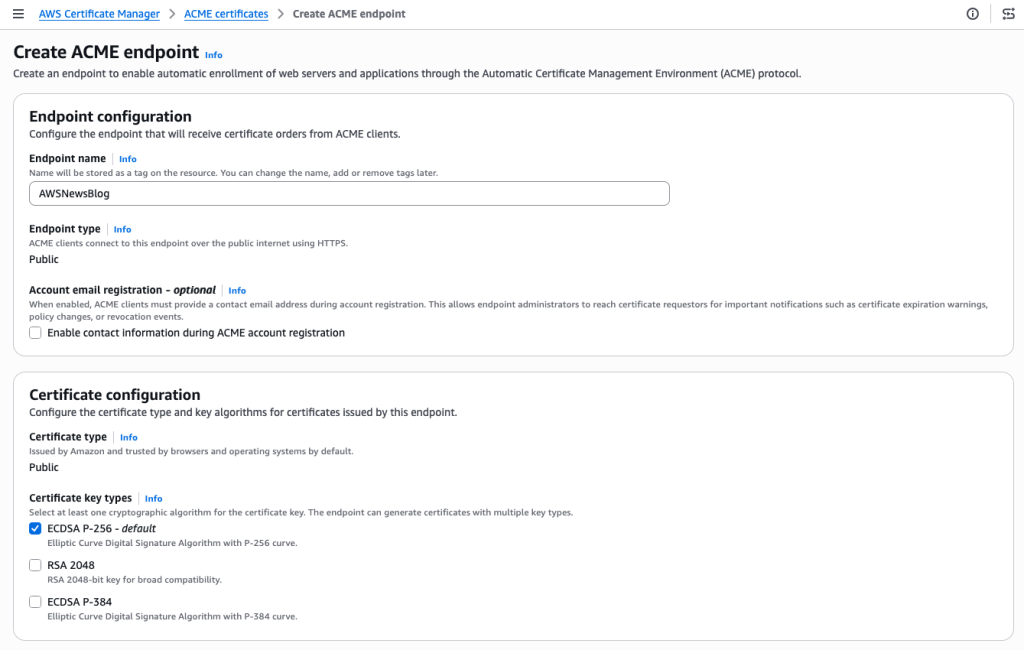
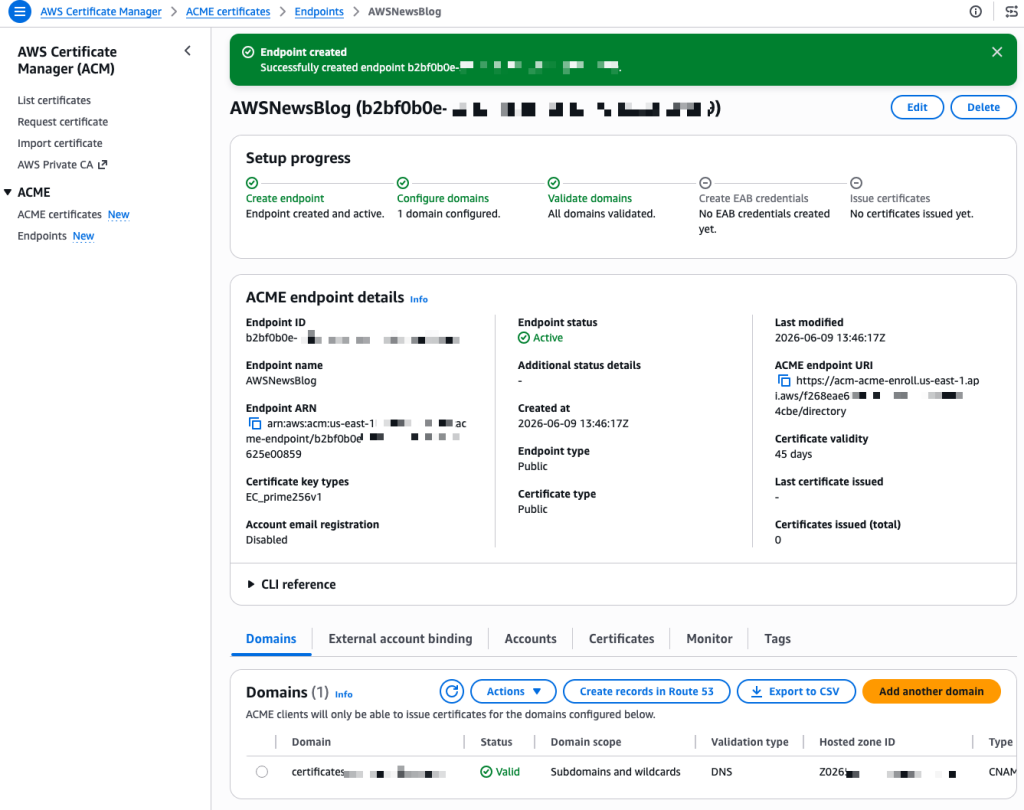
Administrators start by creating a dedicated ACME endpoint within the ACM console. This endpoint acts as the gatekeeper for all certificate requests. Users define the certificate type (Public) and the key type (ECDSA P-256, RSA 2048, or ECDSA P-384).
2. Domain Scoping and Governance
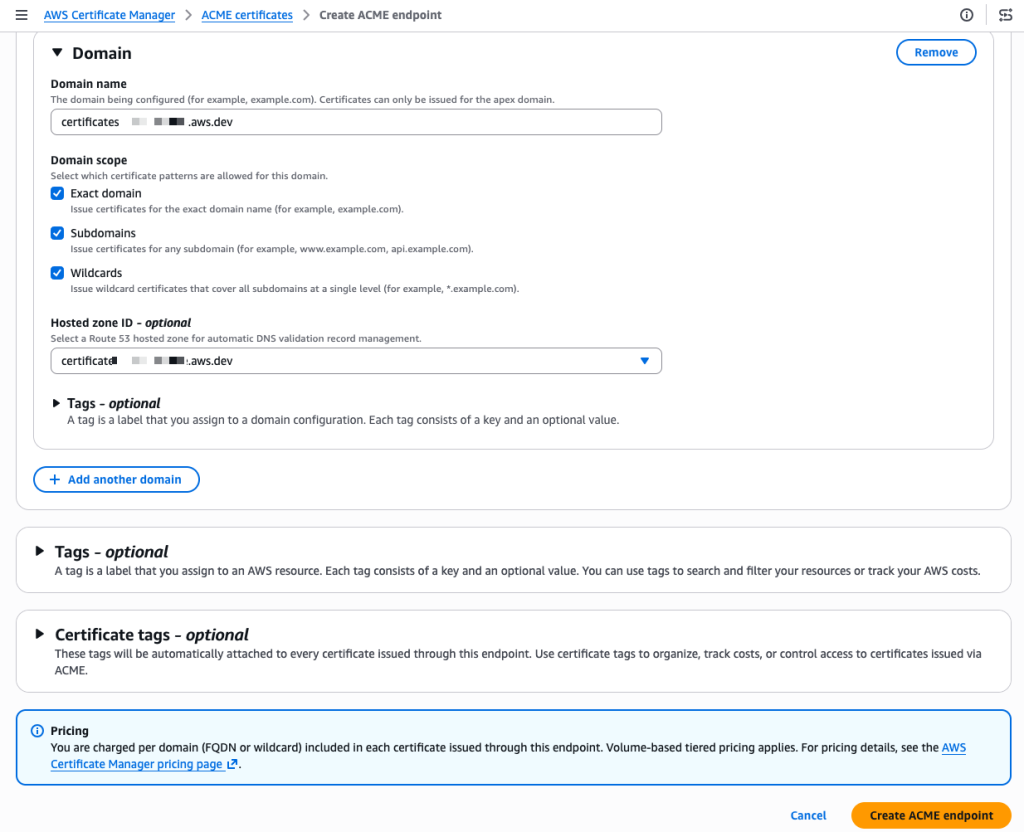
One of the most powerful features of this update is the ability to enforce "Domain Scopes." Administrators can decide whether an endpoint is authorized to issue certificates for exact domain matches, subdomains, or wildcard domains. This prevents developers from accidentally requesting certificates they aren’t authorized to use, reinforcing a "least privilege" security model.
3. External Account Binding (EAB)
The system utilizes External Account Binding (EAB) to verify the identity of the ACME client. An administrator generates a Key ID and an HMAC key pair, which is then provided to the client. This ensures that only authorized entities can interact with the ACME endpoint, providing a robust layer of security that simple public-key authentication cannot match.
4. Automated DNS Validation
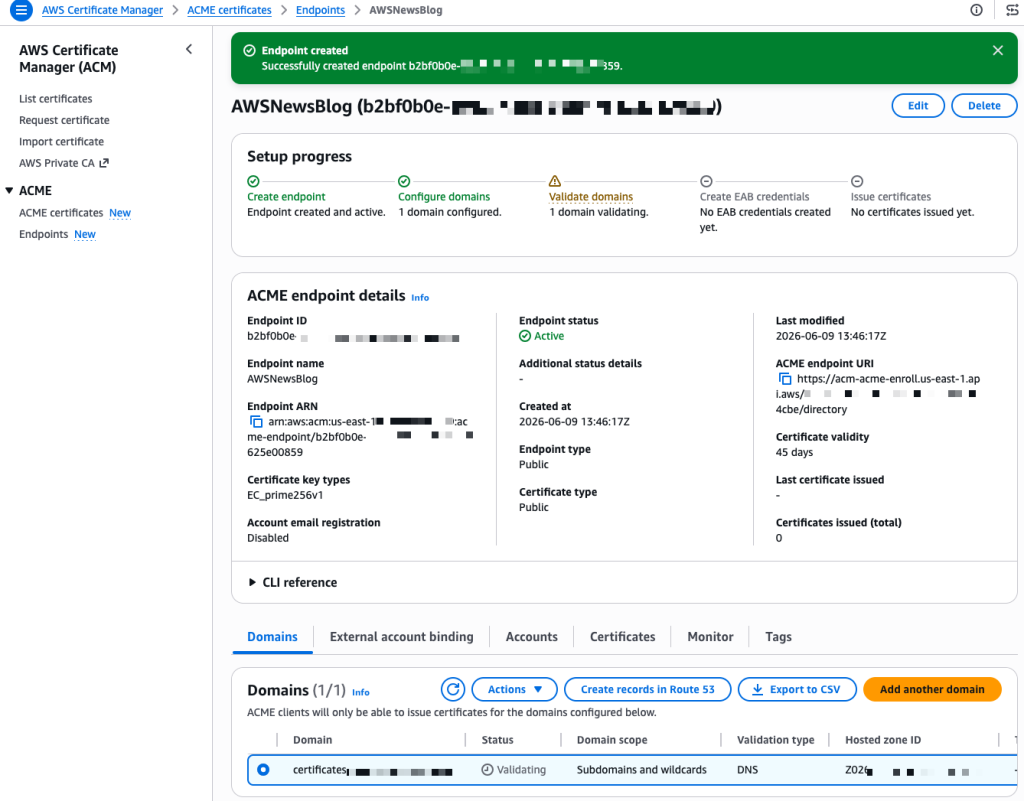
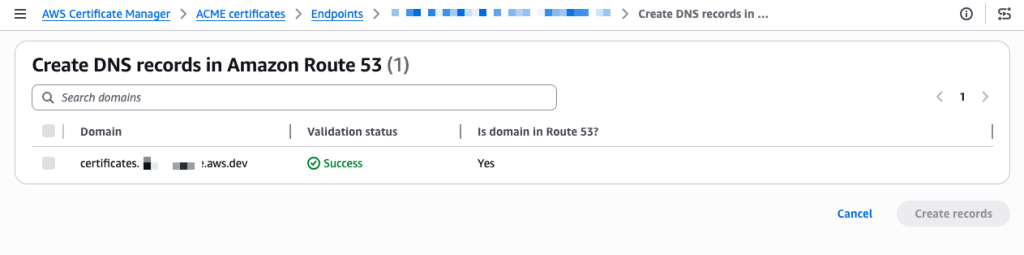
For customers using Amazon Route 53, the validation process is seamless. ACM automatically creates the necessary CNAME records to verify domain ownership. If a customer manages their DNS externally, they can manually create the provided CNAME record. This centralization ensures that DNS keys—often the "keys to the kingdom"—never need to be distributed to individual application teams or developers.
Supporting Data and Strategic Implications
The implications of this release extend far beyond convenience. By integrating ACME directly into AWS, organizations can leverage existing AWS services for superior governance:
- Auditability: Every request is logged via AWS CloudTrail, providing a transparent, unchangeable record of which identities requested which certificates.
- Operational Intelligence: Amazon CloudWatch metrics track issuance patterns, while built-in expiry notifications ensure that, even with automation, teams have visibility into the health of their certificate fleet.
- Cost Efficiency: Organizations no longer need to invest in third-party certificate management platforms or custom-built middleware to handle the automation logic. The "built-in" nature of the solution removes the operational overhead associated with maintaining secondary infrastructure.
Official Perspective and Future Outlook
AWS has framed this release as a foundational pillar for the next generation of cloud security. By moving certificate management into the AWS console, the company is effectively lowering the barrier to entry for robust security.
As one architect noted during the product rollout: "The goal is to make security the default state. By making automation easy, we ensure that companies don’t just ‘do’ security because they are forced to by compliance—they do it because it’s the most efficient way to operate."
Availability and Pricing
The service is currently available in all commercial AWS Regions. AWS has indicated that support for AWS GovCloud (US), China Regions, and the AWS European Sovereign Cloud partitions will follow.
The pricing model is designed for scalability. It is based on the number of domains included in each certificate at the time of issuance, with distinct tiers for fully qualified domain names and wildcards. Volume-based discounts are automatically applied based on the total number of domain occurrences per month, ensuring that as an organization grows, its security costs remain predictable and optimized.
Conclusion: The Path Forward
The integration of ACME into AWS Certificate Manager is more than just a feature update; it is a strategic alignment with the future of the internet. As certificate validity periods continue to contract, the manual management of TLS will soon become a relic of the past.
For organizations currently struggling with the complexity of multi-platform certificate lifecycles, this update provides a clear roadmap. By centralizing control, automating issuance, and tightening governance through EAB and IAM, AWS is empowering teams to reclaim their time from the "renewal treadmill" and refocus their energy on building resilient, secure applications. As of today, the tools required to meet the challenges of the 2027 and 2029 industry mandates are not just available—they are fully integrated into the fabric of the AWS cloud.