Introducing Wake Vision: A High-Quality, Large-Scale Dataset for TinyML Computer Vision Applications

CAMBRIDGE, Mass. — In the rapidly evolving landscape of artificial intelligence, a quiet revolution is taking place at the very edge of computing. Tiny Machine Learning, or TinyML, has emerged as a groundbreaking subfield that allows complex machine learning models to operate on ultra-low-power microcontrollers and resource-constrained edge devices, often running on mere milliwatts of power.
However, until recently, this promising frontier has hit a formidable roadblock: a severe drought of high-quality, large-scale training data tailored explicitly for miniature architectures.
Addressing this critical bottleneck head-on, a team of researchers from Harvard University—comprising Colby Banbury, Emil Njor, Andrea Mattia Garavagno, and Vijay Janapa Reddi—has unveiled Wake Vision. Touted as a monumental leap forward for edge AI, Wake Vision is a high-quality, large-scale dataset boasting approximately 6 million images. It is specifically engineered to turbocharge research, development, and deployment in TinyML computer vision applications, marking a seismic shift in how ultra-compact neural networks are trained and evaluated.
Main Facts: What is Wake Vision and Why Does it Matter?
At its core, Wake Vision is designed to tackle the foundational computer vision task for ultra-low-power devices: person detection. Whether it is a smart home device waking up when a human enters the room, an automated lighting system reacting to presence, or an industrial safety sensor preventing accidents, efficient person detection is the bedrock of interactive edge applications.
The numbers surrounding Wake Vision underscore its unprecedented scale:

- Massive Scale: Containing roughly 6 million images, Wake Vision is nearly 100 times larger than the Visual Wake Words (VWW) dataset, which has long served as the de facto standard for person detection in TinyML.
- Dual Training Paradigms: The dataset offers two distinct training sets, allowing researchers to experiment dynamically with the trade-offs between dataset volume and label fidelity.
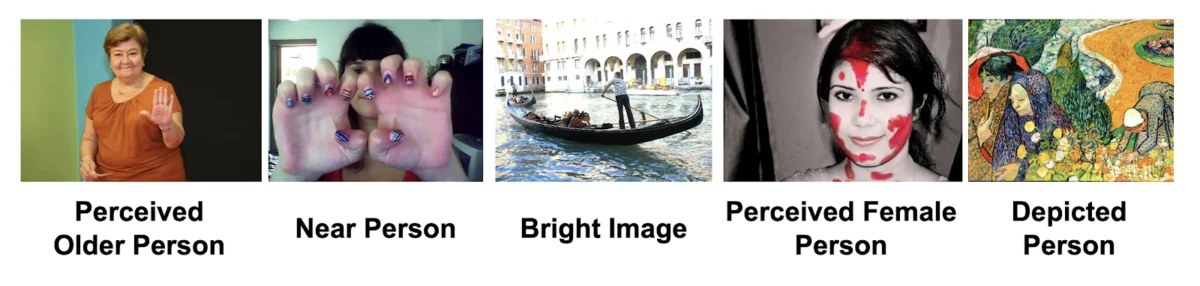
- Granular Real-World Benchmarks: Unlike conventional datasets that offer sweeping, generalized metrics, Wake Vision introduces fine-grained testing frameworks that evaluate model robustness across diverse environmental and demographic conditions.
- Open Accessibility: Released under a permissive Creative Commons license (CC-BY 4.0), the dataset is fully integrated into popular machine learning repositories, complete with a dedicated public leaderboard.
Chronology: The Evolution of TinyML Data Constraints
To understand the magnitude of the Wake Vision release, it is essential to look at the historical trajectory of TinyML computer vision and the data challenges that preceded it.
The Era of Overparameterization and Massive Datasets
In traditional machine learning, the prevailing philosophy has long been dictated by massive, cloud-scale models. Datasets like ImageNet revolutionized deep learning by providing millions of richly annotated images. Because these conventional models are heavily overparameterized—possessing tens or hundreds of millions of parameters—they possess an innate capacity to absorb, adapt to, and ultimately overlook noise or errors in training labels. For years, the artificial intelligence community operated under the generalized assumption that when it comes to big data, quantity almost always trumps quality.
The Birth of TinyML and the VWW Milestone
As the demand for smart, responsive, privacy-preserving local devices grew, researchers began pushing machine learning models down to microcontrollers with limited memory (often restricted to a few hundred kilobytes) and negligible processing power. Standard datasets like ImageNet proved entirely unsuitable for these highly constrained environments, which required models compact enough to fit on a chip smaller than a postage stamp.
In response, the research community developed the Visual Wake Words (VWW) dataset. VWW provided a crucial stepping stone, establishing a standardized benchmark for binary person detection on resource-constrained hardware. For several years, VWW enabled the initial wave of TinyML academic papers and commercial prototypes. However, as edge AI matured, the limitations of VWW became glaringly apparent. Its smaller scale and narrow variety made it difficult to train production-grade models capable of generalizing across the unpredictable chaos of the real world.
The Harvard Breakthrough
Recognizing that the field had outgrown its foundational data infrastructure, the Harvard University research team embarked on the multi-year effort to conceptualize, curate, filter, and release Wake Vision. By bridging the gap between massive data scale and rigorous label quality, the team has established a new baseline for what edge-compatible computer vision can achieve.

Supporting Data: Quality vs. Quantity in Micro-Models
One of the most profound insights emerging from the Wake Vision project challenges a long-held dogma in deep learning: Does data quantity always reign supreme over data quality?
While traditional overparameterized models thrive on sheer volume even when plagued by noisy labels, the Harvard researchers discovered that TinyML tells a fundamentally different story.
The Under-Parameterization Paradox
Because TinyML models are intentionally under-parameterized—often operating with parameter counts ranging from a modest 78,000 to roughly 11 million—they lack the massive internal capacity required to filter out noise and correct for erroneous labels in the training set.
Empirical evaluations conducted using Wake Vision demonstrate conclusively that high-quality, clean labels (lower error rates) yield significantly better performance for under-parameterized models than simply feeding them larger, noisier datasets. In short, a smaller, highly curated dataset often outperforms a sprawling, unrefined one when training micro-controllers.
The Best of Both Worlds
Rather than forcing researchers to choose between pristine quality and massive scale, Wake Vision offers a strategic solution: two distinct training subsets.

- The Quality-First Subset: Optimized for high-fidelity labeling, allowing micro-models to learn robust feature representations without getting confused by label noise.
- The Scale-First Subset: Providing raw volume to capture a wider distribution of visual phenomena.
Sophisticated training pipelines demonstrated that combining these approaches—using the massive dataset for initial pre-training followed by fine-tuning on the high-quality subset—produces state-of-the-art results, unlocking unprecedented accuracy levels for ultra-low-power hardware.
Official Responses and Perspectives from the Research Community
The launch of Wake Vision has generated considerable excitement across academic and industrial circles focusing on embedded systems and efficient machine learning.
Lead researchers Colby Banbury, Emil Njor, Andrea Mattia Garavagno, and Vijay Janapa Reddi emphasized that the project was born out of a practical necessity observed in the laboratory. “The growth of TinyML has consistently been bottlenecked not by our ability to design clever architectures, but by the absence of datasets that reflect the actual constraints and challenges of edge environments,” note the researchers in their project documentation. “With Wake Vision, we wanted to provide an ecosystem—not just a static folder of images—that empowers the community to rigorously test, evaluate, and push the boundaries of what microcontrollers can see and understand.”
Industry experts have similarly lauded the inclusion of fine-grained benchmarks. By moving beyond simple accuracy percentages, Wake Vision allows developers to probe how models perform under specific demographic, lighting, and spatial conditions. Early feedback from engineers developing smart-building sensors and wearable tech indicates that the dataset significantly reduces the trial-and-error phase typically associated with deploying neural networks to edge hardware.
Implications: What Wake Vision Means for the Future of Edge AI
The release of Wake Vision carries profound implications for multiple sectors, ranging from consumer electronics to industrial automation and privacy-centric security.

1. Enhanced Reliability in Real-World Scenarios
Consumer expectations for smart devices are exceptionally high. A smart home camera or presence detector that frequently triggers false positives—or worse, fails to detect a person altogether—quickly frustrates users. The fine-grained benchmarks embedded in Wake Vision—testing performance across varying illumination, proximity, and diverse human subjects—ensure that developers can catch and mitigate these failure modes during the design phase rather than after deployment.
2. Democratizing TinyML Research
By making Wake Vision freely accessible through major dataset platforms and pairing it with a public leaderboard, the Harvard team has lowered the barrier to entry for students, independent developers, and academic institutions worldwide. Researchers no longer need massive industrial compute clusters or proprietary data collection pipelines to innovate in edge computer vision.
3. Advancing Privacy-Preserving Computing
One of the core promises of TinyML is enhanced privacy. Because TinyML models run locally on edge devices, video feeds do not need to be streamed continuously to the cloud for processing. By supercharging the accuracy and reliability of local person detection, Wake Vision directly accelerates the deployment of privacy-first smart devices that process information on the local chip, keeping sensitive visual data securely in the hands of the user.
Getting Started and the Wake Vision Leaderboard
For engineers, researchers, and hobbyists eager to dive into this new era of edge intelligence, the Wake Vision team has ensured that adoption is seamless.
- Accessibility: The dataset is fully available through popular dataset repositories, lowering integration hurdles.
- Licensing: Governed by a permissive CC-BY 4.0 license, Wake Vision can be freely utilized, modified, and integrated into commercial and academic projects alike.
- The Leaderboard: To foster a spirit of collaborative competition, the official Wake Vision website hosts a dynamic leaderboard. This platform tracks and ranks top-performing models based on rigorous metrics, including accuracy, error rates, and real-world robustness. Practitioners are actively encouraged to submit their own architectures to test their mettle against the global TinyML community.
As edge computing continues its exponential expansion, datasets like Wake Vision serve as the essential scaffolding upon which the next generation of intelligent, ultra-low-power devices will be built. By solving the data quality and scale dilemma, Harvard’s Wake Vision has not only advanced the state of the art in person detection—it has illuminated the path forward for the entire TinyML ecosystem.