TensorFlow GNN 1.0 Arrives: Scaling Graph Neural Networks for Enterprise Machine Learning
SAN FRANCISCO & MOUNTAIN VIEW — In a major development for the artificial intelligence and machine learning engineering communities, a collaborative team spanning Google Research, Google Core ML, and Google DeepMind has officially announced the release of TensorFlow GNN 1.0 (TF-GNN).
Designed from the ground up to address the complex architectural needs of modern data modeling, TF-GNN is a production-tested, highly scalable library built to construct, train, and deploy Graph Neural Networks (GNNs) directly within the TensorFlow ecosystem. The launch marks a critical maturation point for machine learning, bridging the gap between traditional grid- or sequence-based deep learning and the irregular, deeply interconnected relational data structures that define the real world.
Main Facts: What is TensorFlow GNN 1.0?
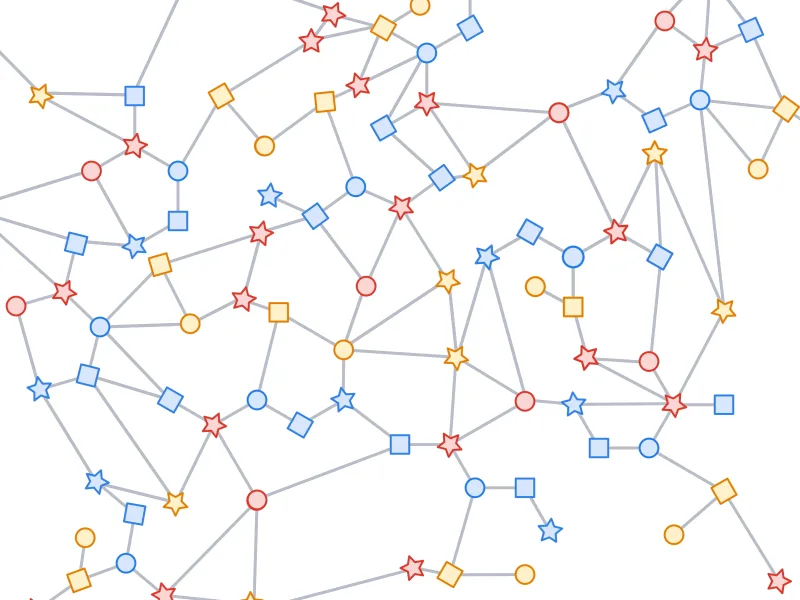
At its core, TF-GNN 1.0 provides a comprehensive framework for processing graphs—mathematical structures composed of discrete nodes (representing entities like users, products, molecules, or academic papers) connected by edges (representing relationships, interactions, or citations).
While conventional machine learning architectures excel at handling regular, uniform data formats such as pixel grids in computer vision or sequential text in natural language processing, they have historically struggled with the irregular, multi-faceted relationships found in enterprise databases, social networks, and biological systems. GNNs solve this by encoding discrete, relational information into continuous vector representations (embeddings) that can be seamlessly ingested by deep learning pipelines.
Key technical highlights of TF-GNN 1.0 include:

- Native Heterogeneous Graph Support: Built natively to handle graphs where entities and relationships belong to distinct types, mirroring real-world datasets.
- First-Class Tensor Integration: Features the
tfgnn.GraphTensorcomposite tensor type, operating as a first-class citizen within standard TensorFlow APIs liketf.data.Datasetandtf.function. - Flexible Subgraph Sampling: Offers scalable dynamic and batch sampling tools ranging from interactive Google Colab notebooks to massive distributed pipelines powered by Apache Beam.
- Keras API Compatibility: Allows developers to build GNN layers using high-level Keras abstractions or customize architectures from scratch using low-level graph primitives.
- Streamlined Training Orchestration: Includes the TF-GNN Runner, which simplifies distributed training configurations, multi-task learning objectives, and model interpretability via integrated gradients.
Chronology: The Road to Production-Grade Graph AI
The journey toward TensorFlow GNN 1.0 reflects the broader evolution of graph machine learning within industry research labs.
- Early Foundations (Mid-2010s): Initial attempts to capture graph topology in machine learning relied heavily on unsupervised node-embedding algorithms such as DeepWalk and Node2Vec. While innovative, these methods operated separately from downstream neural network pipelines, limiting their end-to-end utility.
- The Rise of Message-Passing Architectures: Academic and industrial research quickly pivoted toward Graph Neural Networks and Message-Passing Neural Networks (MPNNs), which allowed models to learn node representations iteratively by aggregating information from local neighborhoods. However, implementing these models at scale remained exceptionally difficult due to a lack of unified, production-ready software frameworks.
- Internal Incubation at Google: Recognizing the ubiquity of graphs in Google’s own products—ranging from knowledge graphs and search ranking to maps and security infrastructure—teams across Google Research, Core ML, and DeepMind began collaborating on a unified framework.
- Research Paper and Pre-releases (2022–2023): The foundational concepts behind the tooling were formalized in research literature, including a foundational paper presented in mid-2022. Iterative versions of the library were refined and tested against internal workloads.
- The 1.0 Release (February 2024): Following rigorous production-testing, the consortium officially debuted TensorFlow GNN 1.0, accompanied by public-facing documentation, user guides, benchmark integrations (such as OGBN-MAG), and collaborative research blog posts.
Supporting Data and Technical Architecture
To understand the engineering achievement of TF-GNN 1.0, one must examine how it handles scale. Real-world graphs can grow to astronomical proportions, often comprising hundreds of millions of nodes and billions of edges (such as enterprise supply chains or global financial transaction networks). Training a neural network on graphs of this magnitude is computationally prohibitive if attempted all at once.
Subgraph Sampling and Message Passing
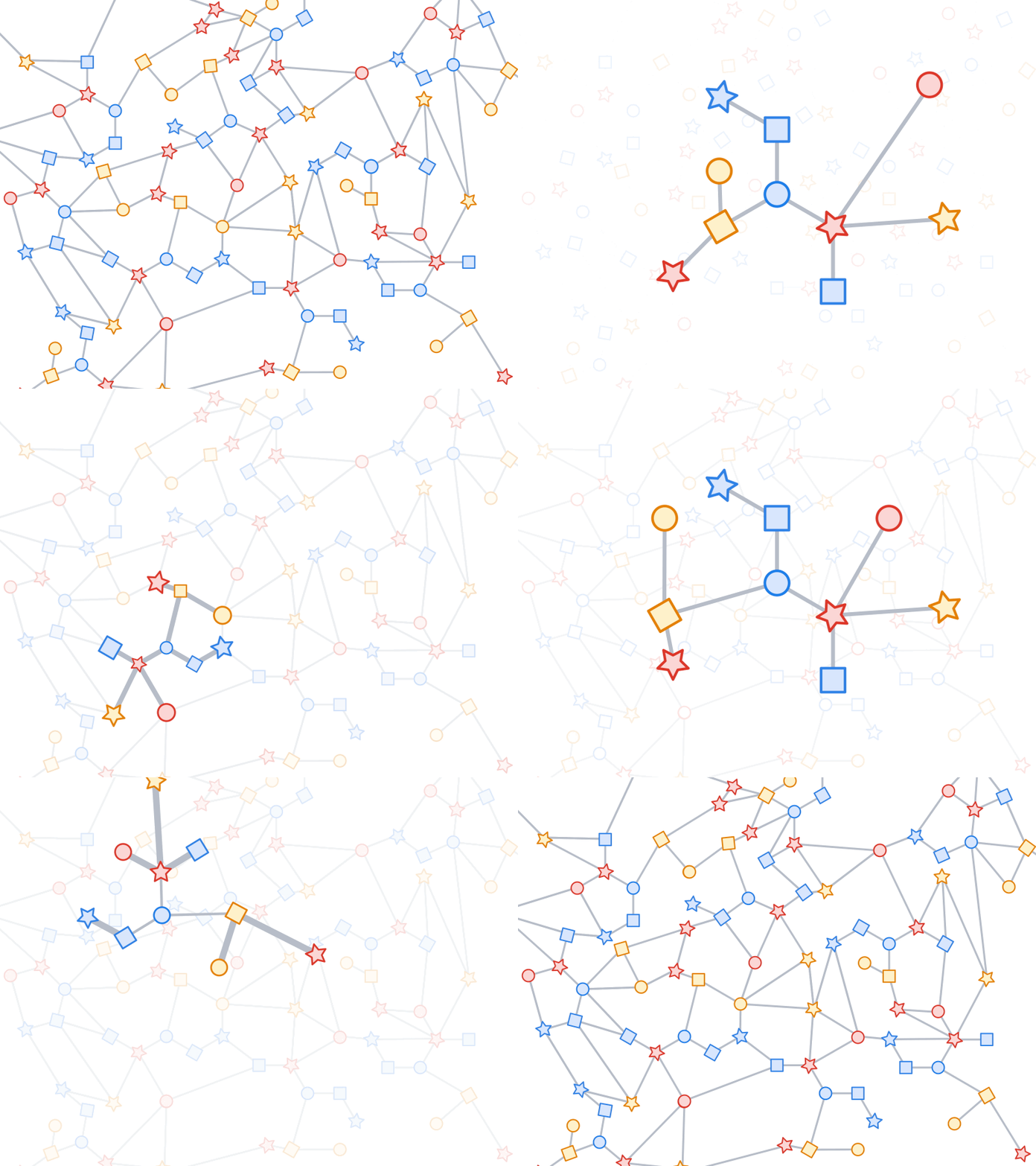
TF-GNN addresses the scalability challenge through subgraph sampling. Rather than loading an entire planetary-scale graph into memory, the training process streams small, tractable subgraphs. Each subgraph contains sufficient contextual data around a targeted "root node" to compute accurate training updates.
[Massive Global Graph]
       │
       ▼ (Dynamic / Apache Beam Sampling)
[Tractable Subgraph]
       │
       ▼ (Message Passing over n-rounds)
[Root Node Hidden State Aggregation]
       │
       ▼
[Prediction / Loss Calculation via Backpropagation]
Through iterative rounds of message passing (e.g., $n = 2$ hops), nodes exchange information with their immediate neighbors along incoming edges. This aggregates local topological context into the root node’s hidden latent state, allowing the model to make highly accurate predictions—such as classifying the subject area of an academic paper within a massive citation network.
Multi-Task Training and Unsupervised Objectives
Beyond standard supervised tasks (like binary classification or regression), TF-GNN 1.0 natively supports multi-task training frameworks. Engineers can combine supervised loss objectives with unsupervised contrastive learning tasks—such as Deep Graph Infomax (DGI)—to inject powerful inductive biases into the model’s continuous representations.
Official Responses and Collaborative Development
The release of TF-GNN 1.0 represents a massive, cross-organizational engineering effort. The project was spearheaded by a multidisciplinary roster of researchers and software engineers from three of Alphabet’s premier AI divisions:
- Google Research: Sami Abu-El-Haija, Neslihan Bulut, Bahar Fatemi, Johannes Gasteiger, Pedro Gonnet, Jonathan Halcrow, Liangze Jiang, Silvio Lattanzi, Brandon Mayer, Vahab Mirrokni, Bryan Perozzi, Anton Tsitsulin, and Dustin Zelle.
- Google Core ML: Arno Eigenwillig, Oleksandr Ferludin, Parth Kothari, Mihir Paradkar, Jan Pfeifer, and Rachael Tamakloe.
- Google DeepMind: Alvaro Sanchez-Gonzalez and Lisa Wang.
"Objects and their relationships are ubiquitous in the world around us," noted Dustin Zelle and Arno Eigenwillig in the release documentation. By releasing TF-GNN 1.0, the engineering collective aims to lower the barrier to entry for developers looking to incorporate relational graph data into standard machine learning workflows.
Rather than treating graph analytics as a siloed domain, the framework ensures that graph-derived embeddings can act as first-class inputs to deep learning models across diverse application verticals.
Implications for Enterprise AI and Industry Adoption
The launch of TensorFlow GNN 1.0 carries profound implications for multiple industries where relational data forms the backbone of operations:
- Pharmaceuticals and Drug Discovery: Molecular structures are naturally represented as graphs, where atoms are nodes and chemical bonds are edges. TF-GNN provides robust infrastructure for predicting molecular properties, toxicity, and drug-target interactions at scale.
- Financial Services and Fraud Detection: Financial transactions form complex, highly heterogeneous graphs of accounts, devices, and merchants. GNNs excel at identifying suspicious ring patterns and anomalous transaction chains that evade traditional flat-file tabular machine learning models.
- Supply Chain and Logistics: Global transportation networks, manufacturing dependencies, and inventory flows are classic graph problems. Enterprises can leverage TF-GNN to optimize routing, predict bottlenecks, and stress-test supply chain resilience against disruptions.
- Recommendation Systems and Knowledge Graphs: E-commerce platforms and search engines rely heavily on knowledge graphs to link products, queries, and user intent. By generating high-quality continuous embeddings from discrete relational structures, developers can significantly sharpen recommendation relevance.
Accessibility and Getting Started
To encourage rapid adoption, the development team has ensured that developers can test the library immediately without complex local installations. A fully interactive Colab demo utilizing the popular OGBN-MAG benchmark is available directly in the browser.
Furthermore, comprehensive user guides covering in-memory sampling, Apache Beam distributed processing, Keras-based model construction via templates like mt_albis, and model attribution using integrated gradients have been published alongside the open-source repository on GitHub.
As enterprise data grows increasingly interconnected, tools like TensorFlow GNN 1.0 provide the crucial bridge needed to transform raw, discrete relationship maps into actionable, high-performance predictive intelligence.