The Evolution of Rust: Polonius Alpha and the Future of the Borrow Checker
In a significant milestone for the Rust programming language, the Rust team has officially enabled "Polonius Alpha"—the next iteration of the language’s core borrow checker—on the nightly compiler channel. This move marks the beginning of a final testing phase intended to lead to full stabilization within the coming months. By introducing more sophisticated, flow-sensitive analysis to the borrow checker, the Rust team aims to resolve some of the most persistent frustrations developers face when working with complex lifetimes and nested references.
Main Facts: What is Polonius Alpha?
At its core, Rust’s borrow checker is the mechanism that ensures memory safety without the need for a garbage collector. It enforces strict rules about how references are created, used, and dropped. The current implementation, known as Non-Lexical Lifetimes (NLL), replaced the original "AST borrowck" in 2019, revolutionizing how the compiler tracks the liveness of references.
Polonius Alpha is an evolution of that system. While NLL brought immense improvements, it remains "flow-insensitive" in its analysis of certain lifetime relationships. This means that if a reference is borrowed in one branch of an if-else statement, the compiler often assumes that borrow persists across the entire function scope, even if it is logically unused in other branches.
Polonius Alpha introduces flow-sensitive borrow checking. It tracks the "liveness" of a borrow based on the actual control-flow path of the code. This allows the compiler to "forget" a borrow when it is no longer needed, enabling the creation of more complex data structures and patterns—such as certain types of recursive maps or reborrowing patterns—that previously triggered compilation errors.
A Chronology of the Borrow Checker
To understand the weight of this update, one must look at the long road the Rust team has traveled to reach this point.
The Legacy Era (Pre-2019)
The original "AST borrowck" was the first implementation of Rust’s safety guarantees. While functional, it was highly restrictive and notoriously difficult for beginners to navigate. It relied on lexical scoping, meaning it often held onto references longer than necessary, leading to the infamous "fighting the borrow checker" phenomenon.
The NLL Revolution (2019–2022)
In 2019, the team introduced Non-Lexical Lifetimes (NLL). This shift allowed the borrow checker to understand the lifetime of a variable based on its usage rather than its static scope. By 2022, the "migrate mode"—a bridge between the old and new systems—was officially removed, cementing NLL as the standard.

The Polonius Saga (2018–2023)
The Polonius project began in 2018 as an ambitious research effort to formalize and improve upon the NLL implementation. Early versions of Polonius were mathematically sound and capable of accepting code that NLL rejected. However, the performance costs were prohibitive; some test programs slowed down significantly, rendering the initial implementation impractical for production use. After years of exploring different architectures and failing to reconcile the performance gap, the team pivoted in 2023.
The Path to Alpha (2024–Present)
The current "Polonius Alpha" is a refined, slimmed-down formulation. It avoids the heavy rearchitecting of previous attempts, focusing instead on a subset of features that provide the most utility for the lowest performance cost. After delays in 2024, the team has finally reached a point where they are confident enough to ship the feature to nightly users for real-world stress testing.
Supporting Data: Performance and Impact
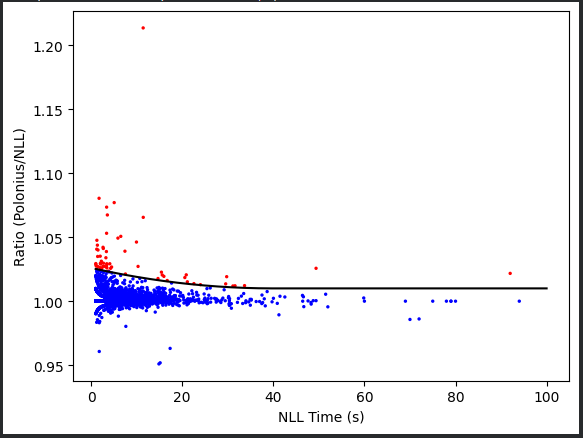
One of the primary concerns when updating a compiler’s core logic is the impact on compile times. The Rust team has been conducting rigorous benchmarks on the top 10,000 crates on crates.io to monitor for regressions.
The data indicates that while Polonius Alpha performs strictly more work than NLL, the impact is largely negligible for the vast majority of the ecosystem. In testing, the vast majority of leaf crates (crates without dependencies) showed no significant degradation. Among the top 10,000 crates, only a small minority triggered a "significant" regression, defined by the team as a 1% or greater slowdown scaled against the total compile time.
Even in the "worst-case" scenarios—typically crates that make heavy, unconventional use of complex borrow patterns—the slowdown is observed to be within a 2x to 3x range. While the team acknowledges these outliers, they view them as an acceptable trade-off for the added functionality. Ongoing efforts are currently focused on triaging these specific cases to see if further optimizations can be made before the final release.
Implications for the Developer Experience
The primary benefit of Polonius Alpha is the reduction of "unnecessary" borrow checker errors. Developers often encounter situations where they know their code is safe, but the compiler cannot prove it.
Consider the common pattern of get_mut_or_default for a HashMap:
fn get_mut_or_default<'r, K: Hash + Eq + Copy, V: Default>(
    map: &'r mut HashMap<K, V>,
    key: K,
) -> &'r mut V
    match map.get_mut(&key)
        Some(value) => value,
        None =>
            map.insert(key, V::default());
            map.get_mut(&key).unwrap()
Under current NLL, this code fails because the compiler assumes that if the Some branch returns a reference, that reference must "live" for the entire lifetime of the map, conflicting with the subsequent map.insert call. Polonius Alpha recognizes that in the None branch, the original borrow is no longer live, allowing the code to compile seamlessly.
This change is expected to lower the learning curve for intermediate Rust developers and significantly reduce the need for "workarounds" (like excessive cloning or unsafe blocks) currently used to satisfy the compiler.
Official Responses and Next Steps
The Rust team has been clear: this is not a final product, but an invitation for collaboration. The release on nightly is a diagnostic tool as much as it is a feature preview.
Opting Out
Recognizing that some projects may rely on specific compiler behaviors or may be sensitive to performance, the team has provided a clear opt-out path. Developers can disable the Polonius engine by setting RUSTFLAGS=-Zpolonius=off or by modifying their .cargo/config.toml file. The team has explicitly requested that anyone who feels the need to disable the feature should report their use case on GitHub or the T-types Zulip channel, as this feedback is critical for the final polish.
The Roadmap to Stabilization
The next few months will be defined by three key activities:
- Community Testing: Monitoring issue trackers for reports of incorrect code acceptance or performance regressions.
- Internal Documentation: Finalizing the documentation of the Polonius Alpha implementation to ensure it is maintainable for future generations of Rust contributors.
- Refinement: Addressing the performance outliers identified during the benchmarking phase.
Perhaps most interestingly, the team has signaled that they do not plan to continue active "feature work" on Polonius immediately after this stabilization. The philosophy is to solve the most painful, commonly encountered borrow-checker issues and then shift focus to other high-priority areas of the language. This suggests that while Polonius is a massive improvement, the team is cautious about over-engineering a system that is already approaching a high degree of maturity.
As the Rust ecosystem grows, the ability to write expressive, safe, and performant code remains the language’s greatest strength. By enabling Polonius Alpha, the Rust team is once again demonstrating its commitment to balancing cutting-edge language research with the practical needs of the engineers building the world’s software. Whether this marks the "end" of the borrow checker’s evolution remains to be seen, but for now, the future of Rust looks sharper and more flexible than ever.